


Finding the perfect decoration for a birthday can become an endless search. Edible wafers stand out today as an elegant and creative option, capable of transforming any dessert into something special. For parents in Central Europe, the interest in quality and variety is combined with the desire to personalize unique designs. The versatility of wafers, from traditional crispy cookies to modern printed versions, guarantees delicious and safe options for any celebration.
Table of Contents
- What edible wafers are and how they are defined
- Main ingredients and possible variations
- Types of personalized wafers and common uses
- Food manufacturing and printing processes
- European regulations and safety guarantees
- Common mistakes when choosing wafers for decoration
Summary of Key Points
| Point | Details |
|---|---|
| Versatility of Wafers | Edible wafers are versatile ingredients that adapt to different culinary styles and presentations. |
| Importance of Quality | Choosing wafers of natural and artisanal origin ensures maximum quality and flavor in decorations. |
| Food Safety Regulations | European regulations guarantee the quality and safety of edible wafers through strict controls. |
| Common Selection Mistakes | Avoiding wafers with harmful ingredients and checking certifications are key to ensuring the health and flavor of the product. |
What edible wafers are and how they are defined
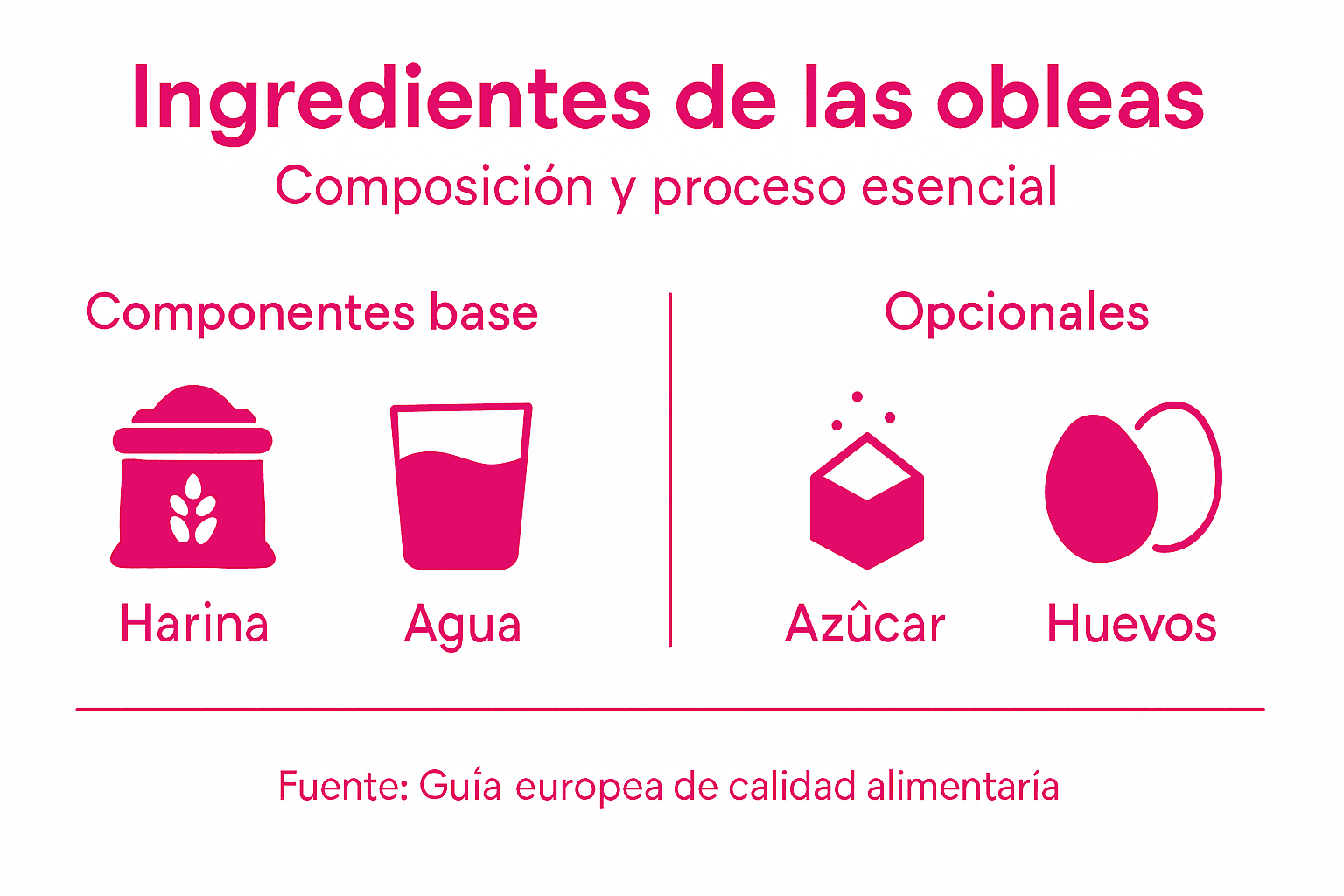
Edible wafers are delicate decorative elements used in baking, traditionally made with simple but versatile ingredients. Originally emerging in the medieval history of gastronomy, these thin sheets have evolved from their initial liturgical use to become a creative resource for decorating cakes and desserts.
Their technical definition describes them as thin and delicate pastries, mainly made with:
- Flour
- Water or milk
- Eggs (optional)
- Sugar
- Additional natural ingredients according to the regional recipe
Edible wafers can have various origins and presentations. In Central Europe, for example, they resemble very thin cookies that are used as a base or decoration for desserts. In Spain, especially in regions like Salamanca, they have a rich artisanal tradition with more than three centuries of history.
Their production involves specific manufacturing techniques, generally using molds or plates that allow the creation of uniform and thin sheets. The versatility of wafers makes them an ideal resource for personalizing children's cakes, cupcakes, and other special desserts.
Professional tip: Always choose edible wafers of natural origin and artisanal production to guarantee maximum quality and flavor in your decorations.
Main ingredients and possible variations
Edible wafers represent a versatile ingredient in modern baking, with a basic composition that allows multiple variations and culinary adaptations. Their traditional origin comes from a delicate dough made with simple but essential ingredients.
The main components of wafers include:
- Wheat flour
- Water or milk
- Eggs
- Sugar
- Salts or leavening agents to improve texture
Among the most interesting variations, we find different types of fillings and presentations, such as:
- Sweet fillings:
- Dulce de leche
- Jams
- Pastry creams
- Chocolate
- Savory fillings:
- Cheeses
- Cold cuts
- Vegetables
Contemporary manufacturing techniques allow the creation of wafers with surprising textures and flavors. Modern cuisine has transformed these delicate elements, allowing chefs to explore innovative combinations ranging from sophisticated desserts to creative appetizers.
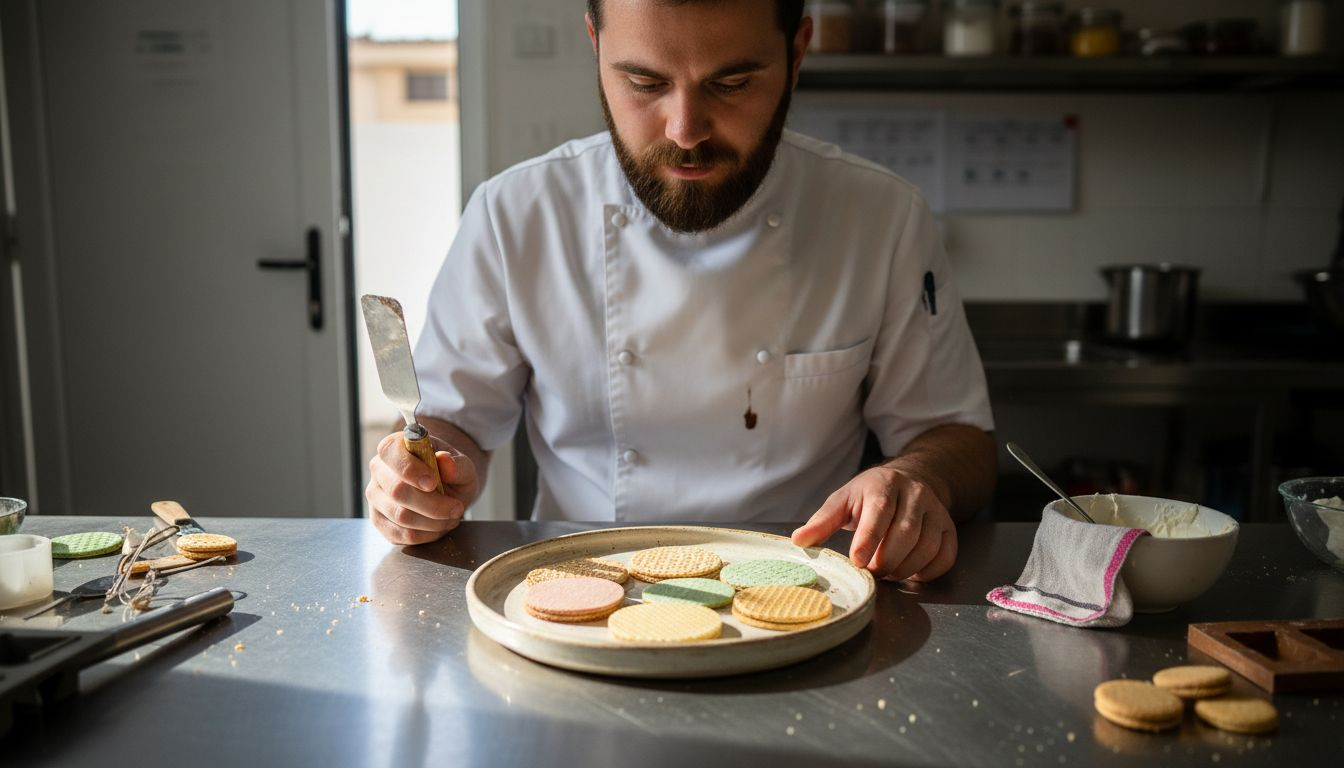
The versatility of wafers makes them an exceptional gastronomic resource, capable of adapting to different culinary styles and flavor preferences.
Professional tip: Experiment with different ingredients and filling techniques to create unique wafers that will surprise your guests.
Types of personalized wafers and common uses
Personalized wafers represent a creative and versatile resource in contemporary baking, with multiple variations depending on the region and its culinary traditions. Each type of wafer has unique characteristics that distinguish it and make it special for different occasions and purposes.
Main types of personalized wafers:
- Wafers for cake decoration:
- With children's designs
- With personalized photographs
- With special themes
- Wafers according to their origin:
- European (thin and crispy)
- Latin American (thicker and filled)
- Asian (rice-based)
Common uses of wafers:
- Decoration of desserts and cakes
- Wrapper for sweet fillings
- Base for canapés
- Decorative elements at events
- Personalized gifts
Modern culinary techniques have greatly expanded the possibilities of personalization, allowing the creation of wafers with unique designs, innovative flavors, and surprising gastronomic applications.
The versatility of wafers makes them an essential element for creative chefs and pastry chefs looking to surprise their guests with original presentations.
Below, different types of wafers and their applications in international pastry are compared:
| Wafer type | Main characteristic | Typical example | Most frequent use |
|---|---|---|---|
| European | Very thin and crispy | German wafers | Dessert base and decoration |
| Latin American | Thicker and filled | Colombian wafers | Sweet or savory fillings |
| Asian | Made with rice | Rice wafers | Rolls, sushi, decorations |
| Personalized | Edible image printing | Photo on cakes | Theme decoration |
Professional tip: Combine different personalization techniques to create wafers that are true culinary masterpieces.
Food manufacturing and printing processes
Manufacturing processes of edible wafers represent a sophisticated combination of culinary techniques and modern food technology. Current production methods integrate technical precision with gastronomic creativity.
Fundamental stages of the manufacturing process:
- Preparation of the base dough:
- Ingredient selection
- Controlled mixing
- Uniform consistency
- Cooking control:
- Hot plates
- Precise temperature
- Crispy texture
Food printing techniques:
- Digital printing
- Specialized screen printing
- Edible image transfer
- Application of certified inks
Printing designs on wafers requires advanced technologies that guarantee:
- Transfer precision
- Visual quality
- Food safety
- Material safety
Technological advances have transformed wafer production, allowing the creation of personalized pieces with increasingly sophisticated and safe designs.
Professional tip: Always verify that the inks and printing processes meet health standards before using them in your products.
European regulations and safety guarantees
European regulations on food products establish strict standards to guarantee the safety and quality of elements such as edible wafers. The regulation of food contaminants represents a comprehensive protection system that covers everything from production to final distribution.
Main aspects regulated by European regulations:
- Ingredient control:
- Origin of raw materials
- Traceability
- Contaminant limits
- Manufacturing processes:
- Good manufacturing practices
- Hygiene in production
- Quality control
Supervision bodies:
- European Food Safety Authority (EFSA)
- European Food Safety Authority
- European Commission for Food Safety
The United Nations Food and Agriculture Organization actively collaborates in strengthening these systems, guaranteeing:
- Food safety
- Consumer protection
- International standards
- Continuous improvement of regulations
Manufacturers must strictly comply with these regulations, which seek to protect public health through systematic controls and constant scientific evaluations.
Professional tip: Stay up to date on the latest European regulations to ensure that your products meet all food safety standards.
Common mistakes when choosing wafers for decoration
Choosing edible wafers for decoration requires careful analysis to avoid mistakes that compromise the quality and safety of the product. The most frequent problems arise from uninformed decisions and lack of attention to critical details.
Most common mistakes in wafer selection:
- Composition mistakes:
- Excess added sugars
- Presence of harmful additives
- Artificial ingredients
- Verification mistakes:
- Lack of nutritional information
- Absence of certifications
- Not checking the expiration date
Consequences of choosing wafers incorrectly:
- Health risks
- Deterioration of presentation
- Artificial flavor
- Digestion problems
Food quality criteria recommend a meticulous selection that considers:
- Ingredient transparency
- Origin of raw materials
- Health certifications
- Production processes
The correct choice of wafers implies going beyond visual appearance, evaluating nutritional and food safety aspects.
The following factors help guarantee maximum safety and quality when choosing edible wafers:
| Quality criterion | Importance in selection | Consequence of ignoring it |
|---|---|---|
| Origin of ingredients | Guarantees absence of contaminants | Possible health risks |
| Health certifications | Confirms regulatory compliance | Product unfit for consumption |
| Expiration date | Avoids deterioration and loss of flavor | Deficient flavor and texture |
| Manufacturer transparency | Allows traceability and trust | Difficulty identifying problems |
Professional tip: Always request the technical sheet and verify the components before purchasing wafers for decoration.
Guarantee Safe and High-Quality Decorations with Our Edible Wafers
When you choose edible wafers to decorate your cakes and cupcakes, safety and quality are fundamental aspects that you cannot ignore. Strict regulation on ingredients, manufacturing processes, and European regulations requires care when selecting products that meet these standards to avoid risks and guarantee an impeccable finish. At Funbakery, we understand these needs and offer you a specialized catalog of edible paper and personalized wafers made with natural materials and certified inks that respect all health regulations.

Discover how to transform your desserts with unique designs that include children's themes, sports, and personalized photographs while taking care of food safety. Take advantage of our experience to create expressive and safe decorations that will surprise at any occasion. Visit our home page and access the full variety of options we have for you at Funbakery so that every detail counts. Do not compromise quality choose trust and creativity right now.
Frequently Asked Questions
What basic ingredients do edible wafers contain?
Edible wafers are mainly made with flour, water or milk, eggs (optional), sugar, and, in some cases, additional natural ingredients depending on the recipe.
Why is it important to verify the quality of edible wafers?
It is crucial to verify the quality of wafers to avoid health risks, ensure a natural flavor, and guarantee that they do not contain harmful additives or artificial ingredients.
What are the main types of personalized wafers available?
The main types of personalized wafers include cake decorating wafers, very thin European wafers, thicker Latin American wafers, and Asian rice wafers.
What regulations affect the safety of edible wafers?
Edible wafers must comply with European regulations governing ingredients and traceability, and require the application of good manufacturing practices to ensure food safety and quality.

