


Organizing a children's birthday party in a European country can become a challenge when you are looking to surprise with original and safe details. For parents who want personalized and creative decorations, edible paper is a modern option that transforms cakes and desserts into unique pieces. Innovation in edible printing opens the door to themed animal or sports parties, offering vibrant designs and materials certified under strict European regulations. Discover how to choose the ideal paper to achieve healthy and memorable decorations at any celebration.
Table of Contents
- Baking paper: definition and common myths
- Main types of food and edible paper
- Characteristics and uses of wafer paper and rice paper
- Safety and European regulations for papers in baking
- Common mistakes when choosing paper and suggested alternatives
Key Points
| Point | Details |
|---|---|
| Types of baking paper | There are different types of paper used in baking, each with specific properties that affect its use. |
| Food safety regulations | It is crucial to choose papers that comply with European regulations to ensure their safety in contact with food. |
| Common mistakes when choosing paper | Selecting the wrong paper can lead to problems in the baking and presentation of desserts, such as affecting adhesion or heat resistance. |
| Importance of edible paper | Edible papers have revolutionized dessert decoration, providing creative and safe options for consumption. |
Baking Paper: Definition and Common Myths
Baking paper represents a fundamental tool in modern cooking, a delicate but resistant surface that facilitates countless culinary processes. According to specialized studies, there are several types of paper with specific characteristics that professional and amateur bakers should know.
The main types of paper for baking include:
- Silicone paper: Heat resistant and non-stick
- Parchment paper: Ideal for baking and protecting molds
- Wax paper: Special for wrapping and preserving food
- Greaseproof paper: Traditionally used in delicate preparations
One of the most common myths is believing that all papers work the same in baking. However, each variety has unique technical properties that determine its specific use. The chemical differences between papers directly affect the final result of our preparations.
The fundamental properties that distinguish these papers are their thermal resistance, non-stick capacity, and behavior during baking. Not all resist the same temperatures or prevent food from sticking in the same way.
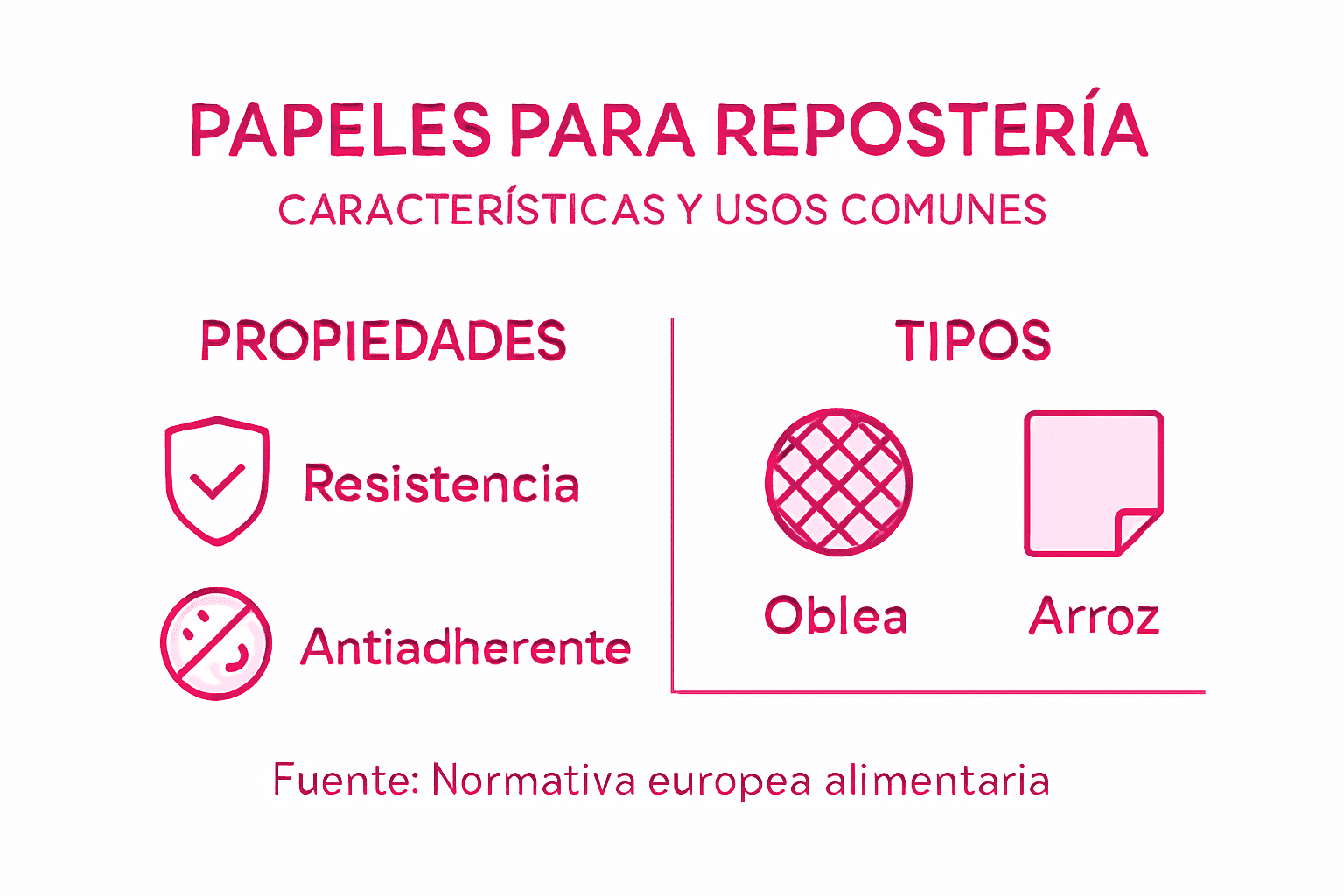
Below is a comparison table summarizing the use and characteristics of the main baking papers:
| Type of paper | Main purpose | Heat resistance | Non-stick level |
|---|---|---|---|
| Silicone | Baking desserts | Very high | Excellent |
| Parchment | Mold protection | High | Good |
| Wax | Preservation and wrapping | Moderate | Low |
| Greaseproof | Delicate preparations | Medium | Medium |
Choosing the right paper can make the difference between a perfect dessert and a ruined one.
Professional tip: Always check the maximum resistance temperature of the paper before using it to avoid unpleasant surprises in your preparations.
Main Types of Food and Edible Paper
In the world of modern baking, food and edible papers have become essential tools for the decoration and presentation of desserts. Different types of pastry paper offer creative and practical solutions for professionals and baking enthusiasts.
The main types of food paper include:
- Wafer paper: Ultra-thin and translucent, perfect for delicate decorations
- Sugar paper: Ideal for edible prints and personalized designs
- Baking paper: Heat resistant, essential for baked preparations
- Printable edible paper: Allows creating fully personalized designs
Edible printing technology has revolutionized dessert decoration, allowing bakers to transform their creations with unique and completely personalized designs. Each type of paper has specific characteristics that make it suitable for different uses in the kitchen and baking.
Food safety is a crucial aspect when working with edible papers. It is essential to choose certified products and verify that they are specifically designed for direct contact with food, ensuring that they are not only aesthetically attractive but also completely safe for consumption.
Innovation in edible papers has transformed baking from a traditional practice into a modern culinary art.
Professional tip: Always make sure to buy edible paper from certified brands and check their technical specifications before using it in your preparations.
Characteristics and Uses of Wafer Paper and Rice Paper
Wafer paper and rice paper represent two innovative solutions in contemporary pastry decoration, each with unique characteristics that make them indispensable for creative pastry chefs. Their delicacy and versatility make them fundamental tools to transform desserts into true works of art.
Main characteristics of these papers:
-
Wafer paper:
- Ultra-thin and almost transparent
- Light and fragile texture
- Ideal for delicate decorations
- Dissolves gently upon contact with moisture
-
Rice paper:
- Slightly thicker than wafer
- Greater resistance to handling
- Perfect for more complex designs
- Maintains its structure better during decoration
The main difference lies in its composition and behavior during decoration. Wafer paper is practically invisible once placed, while rice paper offers greater stability for more elaborate designs.

We present a table that will help you quickly differentiate wafer paper and rice paper according to its application in decoration:
| Characteristic | Wafer paper | Rice paper |
|---|---|---|
| Transparency | Almost invisible on the dessert | Slightly translucent |
| Resistance | Very fragile | More solid, easy to handle |
| Decorative use | Fine and floral details | Elements with defined structure |
| Reaction to moisture | Dissolves slowly | Maintains shape for longer |
The choice between wafer paper and rice paper depends entirely on the decorative effect you want to achieve in your dessert.
Professional tip: Handle these papers with clean tweezers and dry hands to prevent them from deforming or breaking during decoration.
Safety and European Regulations for Papers in Baking
Food safety is a critical aspect in modern baking, especially when it comes to the materials used to decorate and prepare food. European food safety regulations establish strict standards to ensure that the papers used in baking are completely safe for human consumption.
The main regulated aspects include:
- Chemical composition: Strict limits on substance migration
- Toxicity tests: Exhaustive material evaluations
- Traceability: Complete documentation of the origin of materials
- Quality control: Periodic inspections and certifications
The European Food Safety Authority (EFSA) meticulously supervises every aspect of the materials that come into contact with food. This means that any paper used in baking must pass through multiple safety filters before being considered suitable for use in food preparation.
In the European Union, manufacturers are obliged to comply with extremely strict regulations that protect the consumer. This includes exhaustive tests to detect possible chemical substance migrations, composition analysis, and verification that no component can represent a health risk.
European food safety regulations are considered the most demanding in the world in consumer protection.
Professional tip: Always request the food safety certificate when buying papers for dessert decoration, especially if they are imported.
Common Mistakes When Choosing Paper and Suggested Alternatives
Choosing the right paper in baking can make the difference between a successful dessert and a completely ruined one. The most common mistakes when selecting paper can compromise the quality and presentation of your culinary preparations.
The most frequent mistakes include:
- Temperature error: Using paper that does not withstand oven heat
- Adhesion problem: Selecting papers that do not prevent food from sticking
- Chemical risk: Choosing papers not suitable for food contact
- Creative limitation: Not considering the specific properties of each type of paper
Each mistake has its professional alternative. Modern paper molds offer innovative solutions that solve many traditional problems. For example, silicone mats can replace conventional baking paper, providing a non-stick and reusable surface.
The key is to understand the specific characteristics of each type of paper and its correct application. Not all papers are equal, and selecting the right one can completely transform your baking experience.
Knowing your tools is as important as mastering recipes.
Professional tip: Invest in a variety of specialized papers and perform small tests before using them in important preparations.
Discover the Perfect Solution in Edible Paper for Your Creations
We know that choosing the right paper in baking can be a real challenge. The article explains how heat resistance, non-stick, and food safety are keys to prevent your desserts from being ruined or losing quality. In addition, it highlights the importance of using specialized papers such as wafer paper or printable edible paper to achieve unique and safe decorations. At FunBakery we understand these needs and offer a wide range of personalized options that combine quality, safety, and creativity.

Do not let an unsuitable paper limit the presentation and flavor of your desserts. Visit our FunBakery homepage and explore how our edible papers and personalized wafers can transform your cupcakes and cakes into true works of art. Take advantage to design your own images or choose from themes such as animals, sports, and special days. Trust safe culinary innovation today and make a difference in every creation!
Frequently Asked Questions
What type of paper is the most suitable for baking?
Silicone paper is the most recommended for baking due to its high heat resistance and excellent non-stick capacity, which guarantees that food does not stick.
How can you choose the right paper to decorate desserts?
It is essential to consider the specific characteristics of each type of paper; for example, sugar paper is ideal for edible prints, while wafer paper is perfect for delicate decorations.
Why is it important to verify the food safety of papers?
Food safety is crucial because papers intended to be in contact with food must comply with strict regulations that guarantee they do not release harmful substances into food.
What differences exist between wafer paper and rice paper?
Wafer paper is ultra-thin and almost transparent, ideal for delicate details, while rice paper is a little thicker and more resistant, suitable for more complex designs that require greater stability.

