


Preparing a children's birthday party in Central Europe always involves the challenge of surprising and delighting the little ones and every guest. Parents are looking not only for delicious desserts but for genuine personalized creations that reflect the essence of the event and the children. Personalized decoration allows every detail to be adapted, from colors to themes, using professional techniques and materials that comply with European Union safety standards. Discover how every dessert can be a memorable and visually stunning experience at your next family celebration.
Table of Contents
- The concept of personalized dessert decoration
- Different types of edible paper and their uses
- The process of personalizing wafers and photographs
- Food safety regulations in Central Europe
- Common mistakes when decorating children's desserts
Key Aspects
| Point | Details |
|---|---|
| Personalized Decoration | Personalized dessert decoration transforms every creation into a unique and meaningful experience, reflecting the personality of the guest of honor and the event. |
| Types of Edible Paper | There are two main types of edible paper: sugar paper for sharp images and wafer paper for structured decorations. |
| Personalization Process | Personalizing wafers and photographs requires high-resolution images and precise techniques to ensure a professional finish. |
| Food Safety Regulations | Understanding and complying with European food safety regulations is essential to ensure the quality and safety of dessert decorations. |
The concept of personalized dessert decoration
Personalized dessert decoration is an artistic and emotional way to transform a simple dessert into a unique and memorable experience. It is a creative process that goes beyond simple aesthetics, allowing each cake to tell a personal story and perfectly suit the characteristics of a specific family event.
This concept is based on the idea that every dessert can be a unique work of art, designed to convey emotions and capture the essence of a special moment. Pastry professionals use advanced techniques that combine culinary and artistic skills to create decorations that are not only visually appealing but also meaningful.
Personalization involves carefully selecting elements such as colors, shapes, textures, and motifs that represent the personality of the guest of honor or the theme of the event. For example, for a child's birthday, elements that reflect the child's interests, such as cartoon characters, sports, or hobbies, can be incorporated. In the case of anniversaries or weddings, the decoration can include details that evoke the couple's history or their shared tastes.
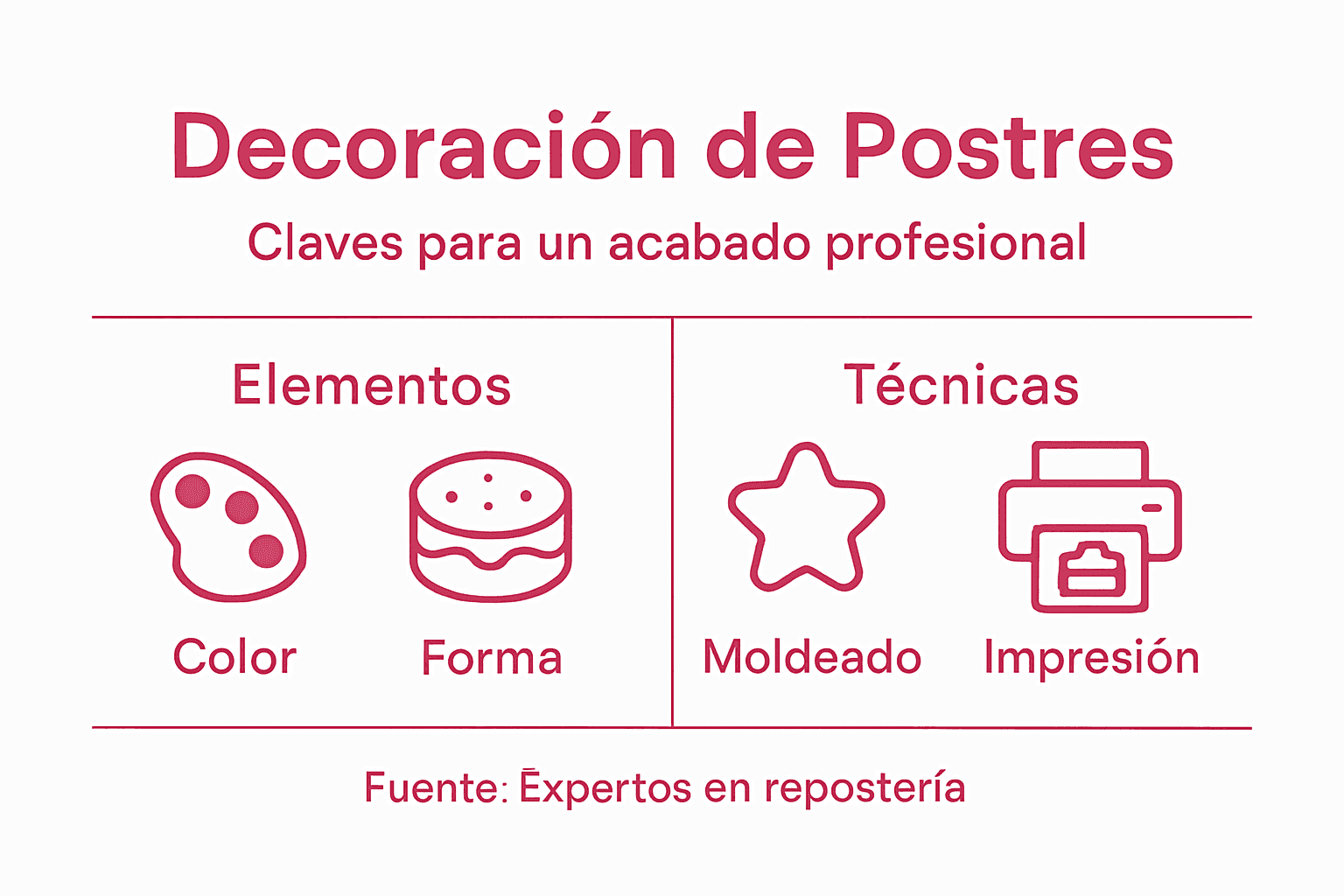
Modern decoration techniques include the use of specialized tools such as custom molds, unique cutters, and techniques for applying decorative elements that allow for millimeter precision. Every detail counts: from the choice of color to the arrangement of the decorative elements, everything contributes to creating a complete sensory experience.
Professional tip: Before starting the decoration, sketch out a preliminary design and have all the materials at hand to ensure a smooth and precise execution.
Different types of edible paper and their uses
Edible paper is a revolutionary resource in modern dessert decoration, allowing bakers and enthusiasts to create incredibly detailed and personalized designs. These special materials are made with completely safe ingredients for consumption, offering a perfect surface for transferring images, designs, and decorations directly onto cakes, cupcakes, and other desserts.
There are mainly two types of edible paper: sugar paper and wafer paper. Sugar paper for cookies is extremely versatile, with a smooth and thin texture that practically blends with the surface of the dessert. It is characterized by its ability to absorb colors and designs with surprising sharpness, allowing for almost perfect photographic reproductions.
Wafer papers, on the other hand, have a slightly stiffer texture and are ideal for decorations with relief and more structured designs. They can be found in transparent or white versions, making them perfect for different decoration styles. Some professionals use them to create delicate layers of decoration, while others use them to make three-dimensional figures or decorative elements with great precision.
The key differences between the types of edible paper are summarized below:
| Type of paper | Texture | Main uses | Key advantage |
|---|---|---|---|
| Sugar paper | Smooth and thin | Sharp images on desserts | Reproduces photographic details |
| Wafer paper | Stiffer | Structured decorations | Ideal for three-dimensional figures |
Applying these edible papers requires specific techniques. Some are applied directly onto smooth surfaces such as fondant or buttercream, while others require a prior treatment such as light moistening or the use of special edible adhesives. The key is to handle them with delicacy and precision to achieve professional results.
Professional tip: Always keep edible paper in a cool, dry environment, and handle it with clean, dry hands to preserve its quality and texture.
The process of personalizing wafers and photographs
Personalizing wafers and photographs for desserts is an art that combines technological creativity with culinary precision. Edible wafers with photos represent an innovation that allows any dessert to be transformed into a personalized canvas with unique memories, images, and designs.
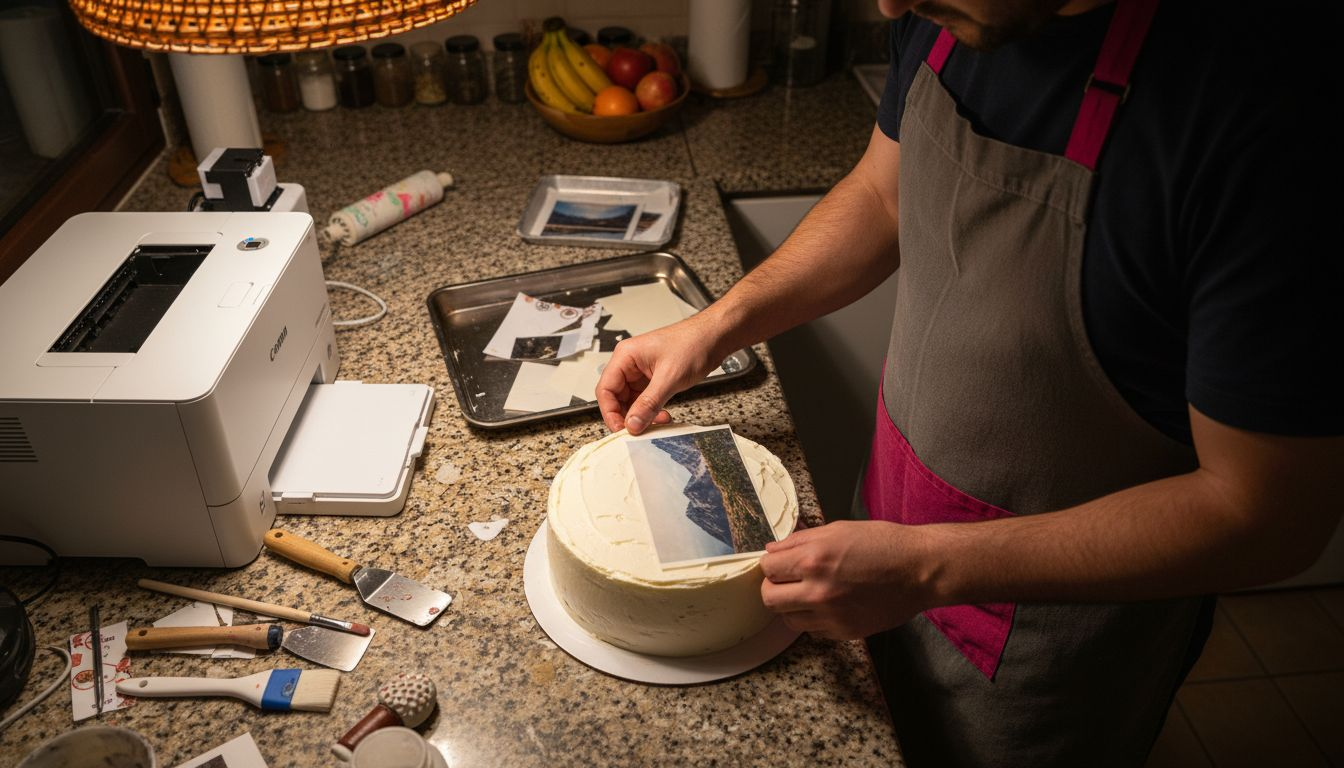
The personalization process begins with the careful selection of the image or design. It is essential to have a high-resolution photograph, preferably with good lighting and contrast, to ensure a sharp and detailed print. The images are digitally processed to adjust the colors, brightness, and size, ensuring that they fit perfectly with the dimensions of the wafer.
The printing is done using specialized printers with completely edible inks, certified for food use. These inks guarantee vibrant and long-lasting colors that do not alter the flavor of the dessert. Once the image is printed, the wafer is cut with millimeter precision, leaving clean and uniform margins that make it easier to apply it to cakes, cupcakes, or cookies.
The application technique is crucial: a smooth surface of fondant or buttercream, lightly moistened, is required to adhere the wafer. It should be placed gently, avoiding wrinkles or air bubbles, which guarantees a professional and flawless finish. This technique allows for the creation of personalized decorations that tell stories, celebrate special moments, or simplify the decoration of family events.
Here is an overview of the professional process for personalizing edible photographs:
| Stage | Objective | Technical requirement | Impact on the result |
|---|---|---|---|
| Image selection | Choose a suitable photo | High resolution | Sharpness and visual quality |
| Digital editing | Adjust size and color | Editing software | Natural colors and accuracy |
| Printing with edible inks | Transfer the image | Certified inks | Safety and intact flavor |
| Application on dessert | Precise placement | Smooth, moist surface | Professional and long-lasting finish |
Professional tip: Always save digital images in high-resolution PNG format to get the best edible prints.
Food safety regulations in Central Europe
Food safety in Central Europe represents a complex and rigorous regulatory system that protects consumer health at every stage of food production and processing. European food safety regulations guarantee precise standards for all food products, including those used in dessert decoration.
The regulatory framework covers multiple fundamental aspects, starting with ingredient traceability, manufacturing process control, and raw material quality verification. Every product intended for consumption, especially those related to food decoration, must meet strict requirements that include health certifications, component analysis, and evaluation of edible inks and materials.
Regulatory bodies conduct thorough inspections to verify that the materials used in dessert decoration comply with hygiene and safety standards. This involves detailed scientific evaluations of every component, from edible papers to inks and adhesives, ensuring that they do not pose any risk to human health. Companies dedicated to the production of decorative elements must undergo periodic audits and maintain documentation that supports the safety of their products.
For pastry professionals and enthusiasts, understanding these regulations means ensuring that every decorative element meets the highest quality standards. The regulations not only protect the consumer but also establish a framework of trust and professionalism in the pastry and dessert decoration industry.
Professional tip: Always request food safety certificates when purchasing materials for dessert decoration, verifying their compliance with European regulations.
Common mistakes when decorating children's desserts
Decorating children's desserts is a delicate art that requires practice and specific knowledge. Common mistakes in baking can completely ruin the experience and the final result of a dessert intended for children.
One of the most recurring mistakes is the lack of prior planning. Many parents and amateur bakers start decorating without having a clear design, which results in improvised and unprofessional work. It is essential to make a preliminary sketch, select the colors in advance, and prepare all the necessary materials before starting.
Temperature plays a crucial role in dessert decoration. Decorating a cake when it is still hot can cause creams to melt, fondant to soften, and decorations to lose their shape. It is important to let the dessert cool completely at room temperature, and even refrigerate it slightly, before starting any decoration process. Equally relevant is maintaining the stability of ingredients such as chocolate or creams, avoiding sudden temperature changes.
Another common mistake is the improper choice of materials. Not all decorative elements are suitable for children, and it is essential to verify that they are completely edible and safe. Some dyes, glitter, or decorations may contain components that are not suitable for children's consumption, so you must be extremely careful when selecting each element.
Professional tip: Always perform a preliminary decoration test on a small surface to verify the consistency and the final result before working on the complete dessert.
Take your personalized dessert decoration to the next level
Personalized dessert decoration is essential for creating unforgettable moments at family events. We know that one of the biggest challenges bakers face is achieving a combination of unique and meaningful designs with high-quality materials that are safe and easy to apply. With concepts such as the use of edible paper and wafers with personalized photos, every detail can tell a story and reflect the personality of the guest of honor.
At FunBakery, we offer practical and professional solutions to overcome these challenges. Our extensive catalog of edible paper and personalized wafers includes designs for all ages and tastes: from pets and sports to adult themes. You can also create your own images or add text so that your desserts are truly original and special.

Do you want your desserts to be the centerpiece of your family celebrations with flawless and completely personalized decoration? Visit FunBakery and discover how our edible paper and photo wafer options will make every event unforgettable. Don't wait any longer to surprise your loved ones with details that convey emotions and creativity. Start personalizing your desserts now with ease and professional quality.
Discover all the available options for your creations on sugar paper for cookies and learn more about how to personalize your wafers and photographs into edible wafers with photos.
Frequently Asked Questions
What is personalized dessert decoration?
Personalized dessert decoration is a creative process that transforms a dessert into a unique experience, using specific elements that reflect the personality of the guest of honor or the theme of the event.
What are the most commonly used modern techniques for decorating desserts?
Modern techniques include the use of custom molds, unique cutters, and precise application techniques that allow for the creation of visually appealing and meaningful decorations.
What types of edible paper can be used in dessert decoration?
The two main types of edible paper are sugar paper, ideal for sharp images, and wafer paper, which is used for structured decorations and three-dimensional figures.
What are the common mistakes that should be avoided when decorating children's desserts?
Common mistakes include a lack of prior planning, decorating hot desserts, and choosing unsuitable materials that are not safe for children. It is important to make a sketch and use safe ingredients.

