


Finding the perfect way to make your child's next birthday or a First Communion stand out sometimes seems like an impossible mission. Every detail matters when you want the cake to look spectacular and be completely safe for children. The good news is that personalized edible paper allows you to transform any cake into a unique and memorable creation, combining innovation, style, and peace of mind in a single solution suitable for all family events in Central Europe.
Table of Contents
- What is edible paper and how does it work
- Types of edible paper and current applications
- Personalizing wafers for special events
- Food safety and regulations in Central Europe
- Common mistakes when using edible paper
Key Points Summary
| Point | Details |
|---|---|
| Edible Paper | It is a safe, biodegradable material made from natural ingredients that can be personalized without altering the flavor of the dessert. |
| Types and Uses | There are different types of edible paper, such as rice and starch paper, each with specific properties for various baking applications. |
| Safety Regulations | In Central Europe, edible paper must comply with strict regulations that ensure its safety for consumption, including transparency regarding its composition. |
| Common Mistakes | Avoiding applying the paper to wet surfaces and selecting the right type of paper is crucial to ensuring optimal results in cake decorating. |
What is edible paper and how does it work
Edible paper is an innovative material made from completely safe-to-eat ingredients. It is made with starch, plant-derived cellulose, and other natural components that are transformed into thin, translucent sheets. These materials are processed by isolating and compacting non-toxic plant fibers, creating a versatile product that can decorate your cakes without adding an unpleasant flavor.
Unlike traditional paper, this material is specifically designed to be eaten. It can be printed directly with custom designs, photographs, or special messages. Simply place it on the cake's frosting or cream, and it adheres naturally without the need for harmful chemical adhesives. The result is a professional decoration that is an integral part of the dessert.
The way it works is surprisingly simple. The paper is produced through a process that ensures it is completely biodegradable and safe for human consumption. Unlike rice or seaweed paper, which offers specific flavors, standard edible paper is practically tasteless, allowing the flavor of your cake to take center stage.
For parents in Central Europe, this means you can completely personalize your children's birthday cakes without worrying about questionable ingredients. A five-year-old child with a nut allergy can enjoy a cake decorated with their favorite superhero, knowing that the decoration is completely safe. The same applies to First Communions, weddings, or any special celebration where you want every detail to be perfect and personal.
Edible paper offers an endless range of designs. You can choose from animal, sports, special occasion, or hobby themes, or even create your own custom image with photographs and text. This transforms any ordinary cake into a decorative masterpiece that reflects exactly what you want to celebrate.
Professional tip: When applying the edible paper, make sure the surface of the cake is smooth and lightly covered with frosting or ganache, as this helps the paper adhere perfectly without wrinkles.
Types of edible paper and current applications
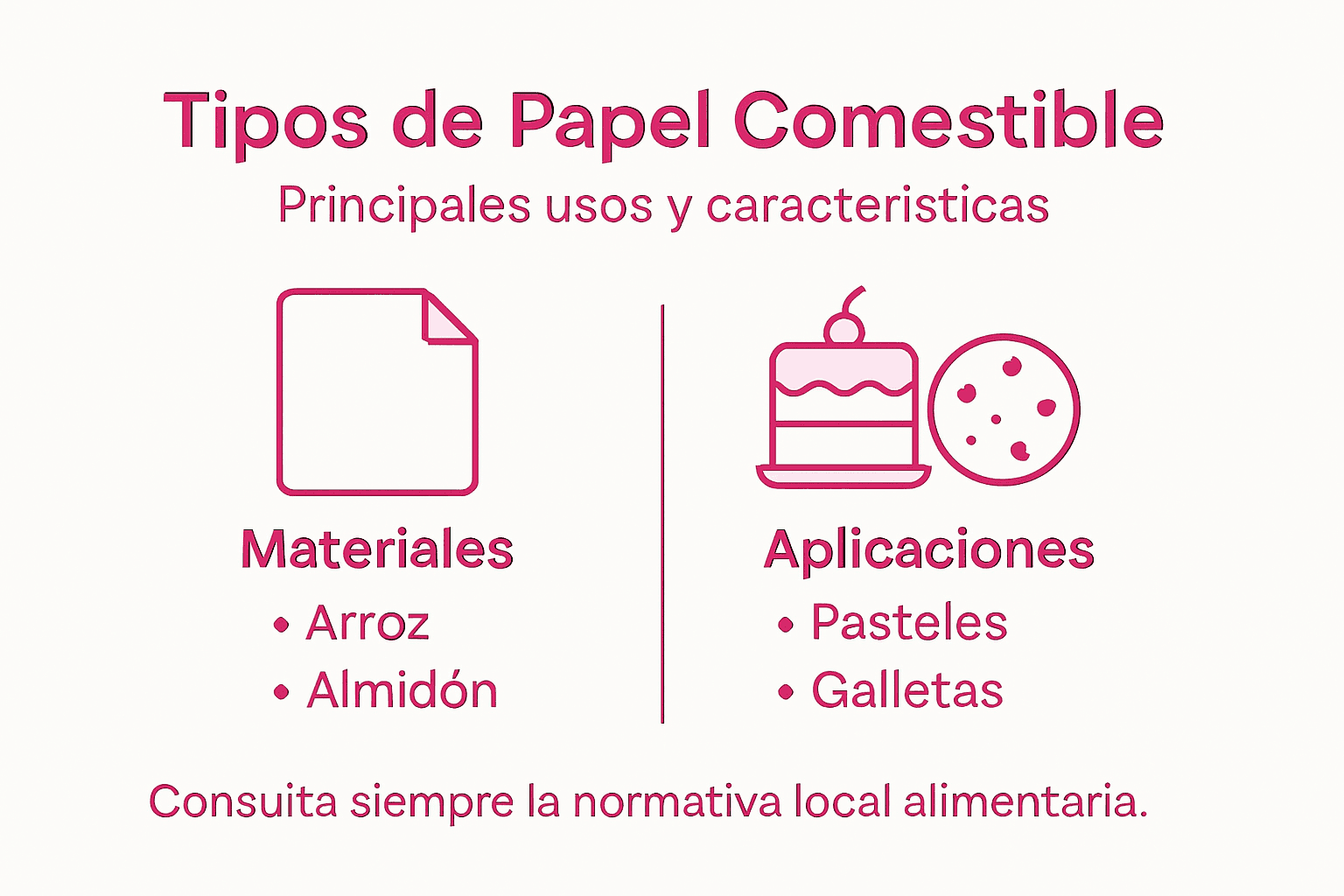
Not all edible papers are the same. There are several options that vary depending on their raw material and how you use them. Rice paper is made from rice flour or rice straw and is one of the most popular in the kitchen. It is thin, fragile, and absorbs moisture quickly, making it ideal for certain types of applications but requiring care when handling.
Starch paper is another versatile option. This type is made from pure starch and offers a more durable texture than rice paper. It is excellent for cake decorations because it maintains its integrity even when in contact with wet frostings or creams. Gelatin paper, on the other hand, has unique properties. It absorbs flavors slightly and works well for applications where you want the paper to be almost invisible.
The current applications of these materials are surprisingly broad. For cakes and cupcakes, edible paper is printed with custom designs ranging from animal themes to photographs with text. Candy wafers offer another possibility: they are thin papers that wrap candies or chocolates without affecting their flavor. There are also edible papers with natural coatings that withstand moisture and moderate heat, perfect for safely wrapping fresh foods or snacks.
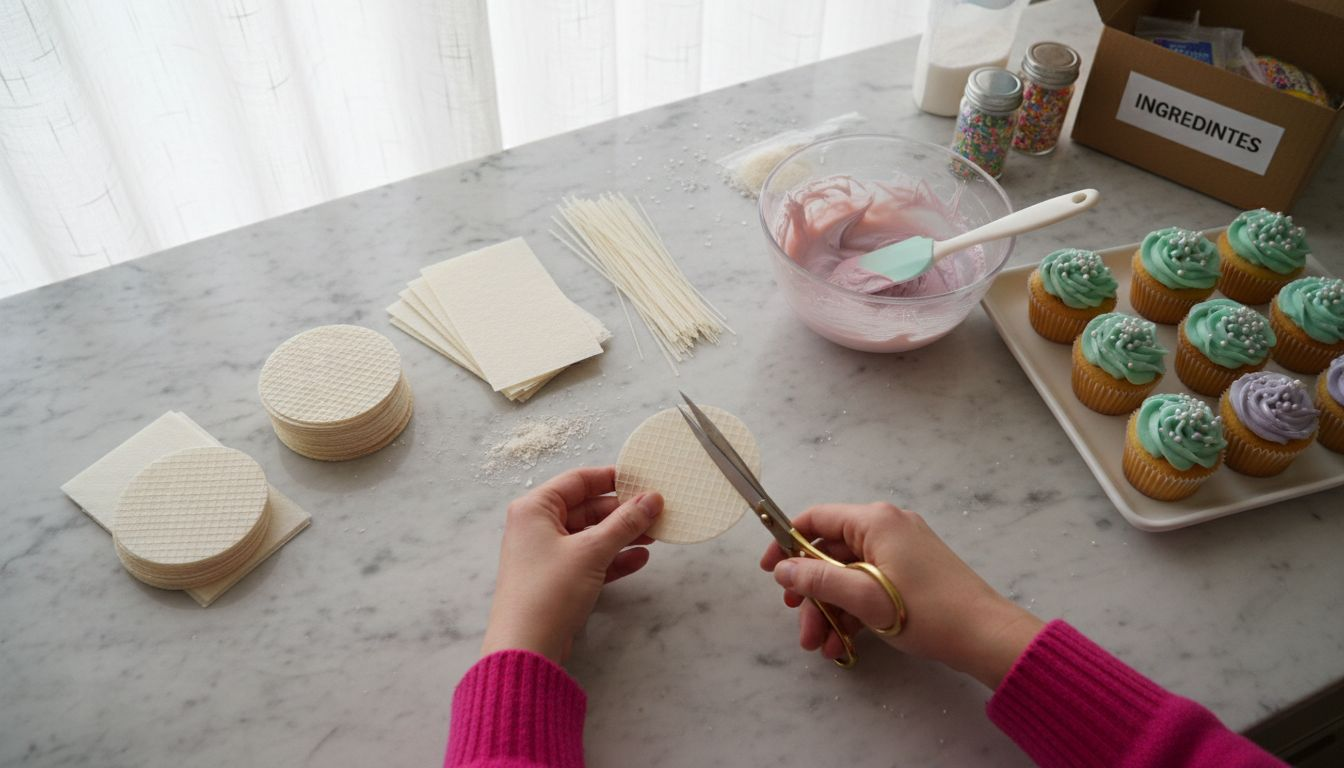
As a parent celebrating a child's birthday, you have multiple options. If you want a decoration that remains intact throughout the party, choose starch paper. If you are looking for something that blends completely with the dessert without leaving a visual trace, gelatin paper is your option. You can decorate anything from a simple homemade cake to personalized cookies with specialized papers.
Innovation continues to grow in this sector. Now you can create completely custom designs using your own photos. Imagine a First Communion cake with a photograph of your child or a wedding where the details reflect your vision exactly. Edible paper makes this possible without compromising food quality or safety.
Professional tip: Choose the type of paper according to the moisture of the frosting: use starch paper for wet creams and rice paper for drier toppings or fondant.
Below is a comparative summary of the main types of edible paper and their applications.
| Type of paper | Texture and appearance | Ideal use | Main considerations |
|---|---|---|---|
| Rice paper | Very thin and fragile | Dry fondant topping | Absorbs moisture quickly |
| Starch paper | Firm and durable | Cakes with a lot of frosting | Holds its shape longer |
| Gelatin paper | Transparent and flexible | Discreet decorations | Blends visually with the dessert |
Personalizing wafers for special events
Personalizing wafers transforms any celebration into something truly memorable. You no longer have to settle for generic decorations bought in stores. Now you can create designs that reflect exactly what that special moment means to your family.
For a child's birthday, the possibilities are endless. You can use a photo of your child with their favorite superhero, their name written in large letters, or a composition with all their friends. Edible wafers with photos allow you to capture those moments that matter: the smile of a five-year-old child, the costume of their favorite character, or a family photo that everyone will remember.
For weddings and First Communions, elegance is key. You can choose sophisticated designs with monograms, special dates, or personalized messages. Imagine cake wafers with the couple's monogram or the name of the child celebrating their First Communion. These small details show that every guest is important and that the celebration has been planned with care.
The process is surprisingly accessible. You provide your photograph, text, or design, and the experts print it directly on the wafer. You do not need special artistic skills or expensive equipment. The printing is high quality, and the colors remain vibrant on the dessert.
For specific children's events, such as themed parties, personalized wafers for children's cakes offer pre-designed themes that you can combine with your own photos. A child who loves dinosaurs can have a cake that combines the theme with their image. A girl passionate about ballet can enjoy a design that mixes tutus and her photograph.
The best part is that wafers fit any cake size, from individual cupcakes to multi-tiered cakes. Every guest at your celebration will see that you paid attention to the details and that the decoration tells the story of who you are and what you are celebrating.
Professional tip: Send your photograph or design at least one week in advance to ensure that the result is exactly what you envision, especially if you need adjustments in colors or composition.
Food safety and regulations in Central Europe
When you buy edible paper to personalize your cakes, your family's safety comes first. In Central Europe, there is a rigorous system of regulations that ensures everything you place on food is completely safe. It is not something you should leave to chance.
The European Union establishes strict rules for any material that comes into contact with food, including edible paper. These regulations standardize food safety procedures across all member countries, ensuring that health standards are consistent regardless of where you buy the product. The European Union controls the authorization of substances, verifies contaminants, and establishes preventive measures throughout the food chain.
A key regulation is Regulation (EU) No 10/2011, which specifically regulates materials in contact with food. This regulation requires manufacturers to demonstrate that their products do not transfer harmful substances to food. Requirements include composition control, limitation of chemical substance migration, clear labeling, and full product traceability.
For you as a parent in Central Europe, this means that the edible paper you buy has undergone exhaustive testing. Manufacturers must document everything, from raw materials to the final product. If something goes wrong, it can be traced exactly where the problem occurred.
Responsible suppliers provide certificates of conformity with these standards. When buying personalized edible paper for your children's birthdays or First Communions, look for suppliers that show these certifications. This guarantees that the decoration you place on the cake complies with the highest European standards.
Professional tip: Always request the EU certificates of conformity from your supplier before buying edible paper, especially if it is for celebrations of children with allergies or food sensitivities.
Quick overview of key regulations and recommendations to ensure safety in the use of edible paper in Central Europe.
| Regulatory aspect | Essential requirement | Importance for the consumer |
|---|---|---|
| Certificates of conformity | Suppliers must provide them | Confirms that the product is safe |
| Regulation (EU) No 10/2011 | Controls chemical substance migration | Guarantees absence of toxins |
| Labeling and traceability | Clear labeling and documented tracking | Possibility to investigate incidents |
Common mistakes when using edible paper
Many parents make avoidable mistakes when using edible paper for the first time. These mistakes can ruin a celebration you carefully planned. The good news is that they are completely preventable if you know what to look for.
The most common mistake is applying the paper to a wet or poorly prepared surface. If the frosting is too wet, the paper dissolves or becomes translucent sooner than you want. Edible paper needs a firm base to adhere correctly. A well-worked buttercream, warm ganache, or fondant are ideal options. If you use liquid royal icing, wait for it to dry a bit before placing the paper.
Another serious mistake is using inappropriate paper for your specific application. Not all edible papers are the same. If you buy ultra-thin rice paper for a cake with very wet frosting, the paper will disintegrate. If you need greater resistance, choose starch or gelatin paper. Each type has different properties, and you must match them with your recipe.
Some people forget to hydrate before applying. Some papers need a light moistening to become flexible. Others are ready to use directly. Always read the manufacturer's instructions. Applying water when it is not appropriate causes stains. Not applying it when it is necessary causes wrinkles.
One mistake that surprises many parents is not leaving enough time. Edible paper needs time to adjust to the temperature and humidity of the cake. If you apply it immediately after taking it out of the refrigerator, it may condense. Let the decorated cake rest for 10 to 15 minutes before serving.
Some forget that personalized cookies with sugar paper require a different treatment than large cakes. Small cookies cool down faster, and the paper adheres almost instantly. Large cakes need more care and time.
Professional tip: Test the edible paper on a test cake first; this allows you to understand how it works with your specific frosting before trying it on the main celebration.
Bring your celebrations to life with personalized edible paper
Do you want your cake decorations to reflect all the excitement and personalization your special events deserve? If you are looking to solve the challenge of finding edible paper that is safe, durable, and completely adaptable to your tastes, at Funbakery we have the ideal solution. We know that rice, starch, or gelatin paper has unique characteristics and that applying the correct decoration can make a difference in the presentation and experience of your cake.

Discover our wide catalog of themed designs and the permission to create your own wafers with personalized photos and text. This way, you can avoid common mistakes such as choosing the wrong paper or applying it to wet surfaces. Now it is easier than ever to turn every birthday, First Communion, or wedding into an unforgettable moment for you and your family.
Visit Funbakery to explore all the options and get a perfect decoration that respects European regulations and guarantees a safe party full of style. Do not wait any longer to give your dessert the personality it deserves and celebrate with confidence and creativity!
Frequently Asked Questions
What is edible paper and how is it used?
Edible paper is a material made from ingredients safe for human consumption, specifically designed for decorating desserts. It is placed on cake icing and adheres without the need for chemical adhesives.
What are the different types of edible paper and their uses?
The most common types are rice paper, starch paper, and gelatin paper. Rice paper is suitable for decorations on dry fondant, starch paper is ideal for cakes with moist icings, and gelatin paper blends visually with the dessert, although it may absorb flavors.
How is the food safety of edible paper ensured?
The food safety of edible paper is regulated in Europe, where strict regulations must be met to ensure that harmful substances are not transferred to food. Suppliers must provide certificates of conformity with these regulations.
What common mistakes should I avoid when using edible paper?
It is important not to apply the paper to wet surfaces, to use the correct type of paper for each application, and to allow enough time for the paper to adjust to the temperature of the cake. It is also recommended to do preliminary tests on practice cakes.

