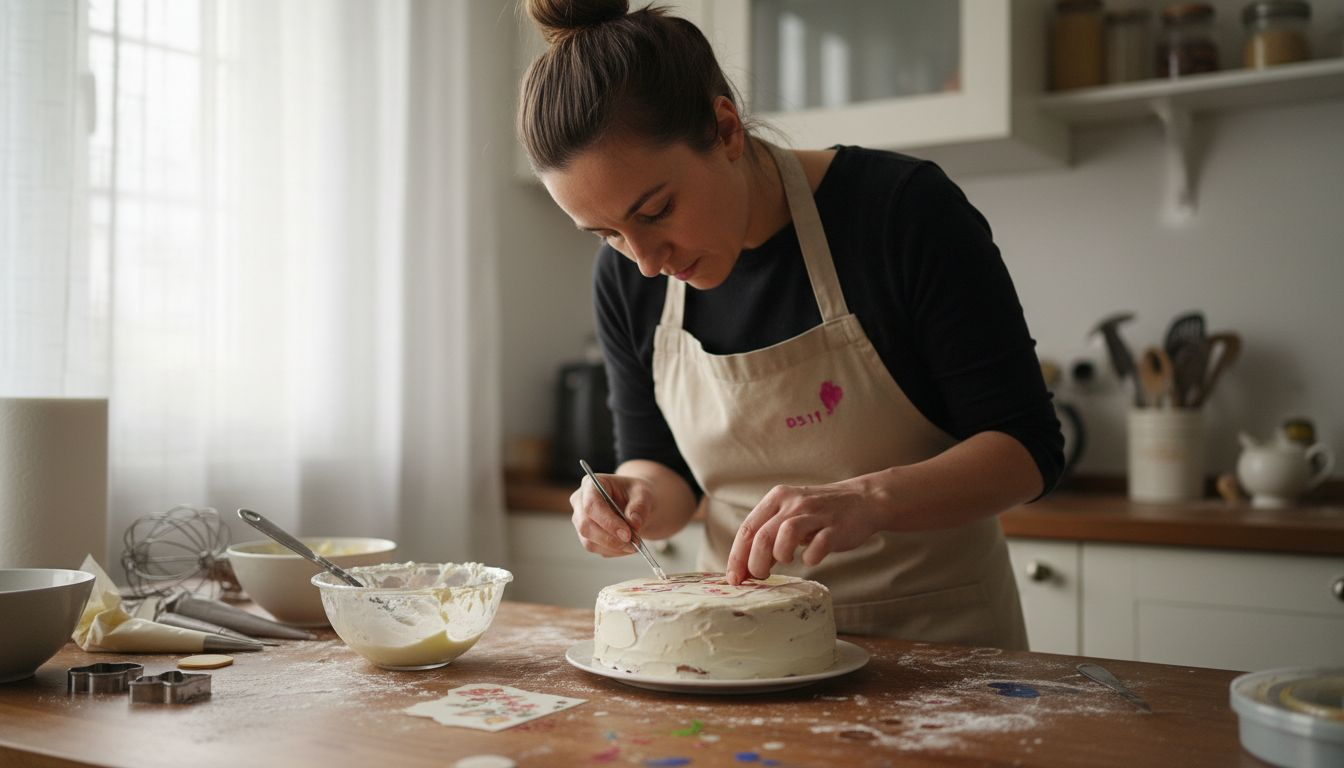
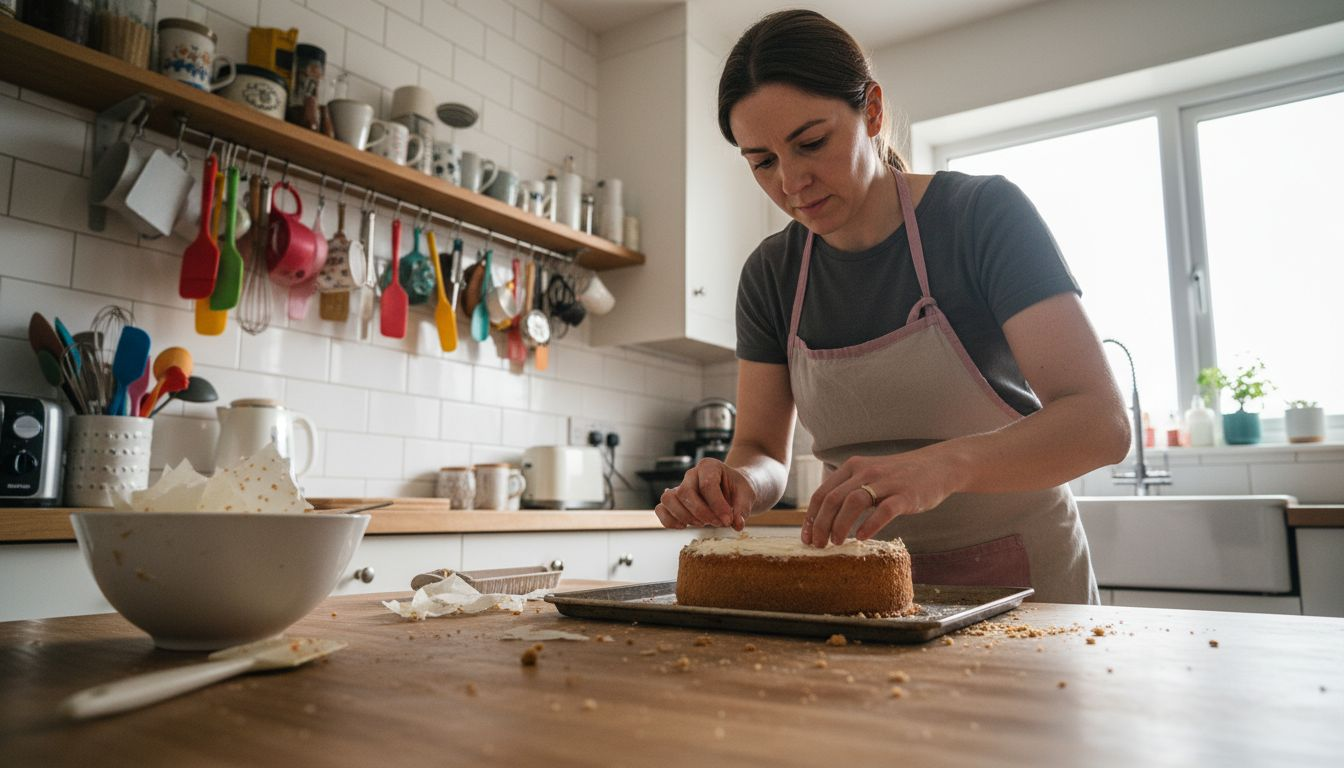
Every children's birthday is usually a reason for joy, but often, finding an option that makes the cake truly special can be a challenge. The ability to personalize desserts with edible images allows parents in Central Europe to bring their children's favorite characters and themes to life, creating unique memories at every celebration. Discover how total personalization and modern food printing techniques turn any cake into an unparalleled visual experience.
Table of Contents
- Definition and advantages of edible images
- Main types of baking paper
- How images are created and applied
- Practical applications at children's parties
- Safety requirements and common mistakes
Key Points Summary
| Point | Details |
|---|---|
| Edible Images | They transform desserts into personalized experiences using food printing. |
| Types of Baking Paper | There are different types of paper, each suitable for specific uses, which affect the quality of the final product. |
| Food Safety | Maintaining high hygiene standards and using certified materials is crucial to avoid health problems. |
| Applications at Children's Parties | Edible images are ideal for personalizing events, increasing excitement and creating lasting memories. |
Definition and advantages of edible images
Edible images are graphic representations specially designed to be applied directly to cakes, cupcakes, and other desserts, created with specialized food printing
This innovative decoration resource allows any dessert to be transformed into a completely personalized visual and gustatory experience. Basically, it is a culinary technique that combines printing technology with ingredients that are completely safe for human consumption.
The main advantages of edible images include:
- Total personalization: Adaptation of designs to any event theme
- Professional quality: High-resolution, sharp finishes
- Versatility: Applicable to various desserts and baked goods
- Ease of use: No special decorating skills are required
From a technical standpoint, these images are produced using special food inks printed on sugar paper or edible films that can be transferred directly onto frosting, fondant, or chocolate surfaces.
Edible images make it possible to turn an ordinary dessert into a personalized work of art.
Professional tip: Make sure to buy only food-safe certified images from specialized suppliers to guarantee their quality and safety.
Main types of baking paper
Baking papers are essential tools that vary according to their function and specific food-use characteristics. These materials play a crucial role in the preparation and presentation of desserts, offering solutions tailored to different culinary needs.
There are several types of paper essential in baking, each with specific properties and uses:
- Sugar paper: Ideal for printing edible images
- Parchment paper: Non-stick for baking
- Greaseproof paper: Resistant to high temperatures
- Edible paper: Completely safe for direct consumption
- Eco-friendly paper: Made from sustainable materials
Modern baking papers not only serve practical functions but also represent a technological evolution in the food industry. Many of these materials have international certifications that guarantee their safety and quality.
Choosing the right paper can make the difference between an ordinary dessert and an exceptional culinary creation.
From a technical standpoint, eco-friendly papers offer sustainable alternatives that combine functionality and environmental responsibility. These materials are designed to protect, preserve, and present food while minimizing their environmental impact.
The key differences between the main types of baking papers are summarized below:
| Paper type | Main use | Heat resistance | Sustainability |
|---|---|---|---|
| Sugar paper | Printing edible images | Medium | Low |
| Parchment paper | Non-stick baking | High | Medium |
| Greaseproof paper | Molding and baking | Very high | Medium |
| Eco-friendly paper | Sustainable presentation and packaging | Variable | High |
| Edible paper | Decoration and direct consumption | Medium | Low |
Professional tip: Always check that the papers you use are certified for food contact and are suitable for the temperature of your baking process.
How images are created and applied
Creating edible images is a technical process that requires specialized tools and knowledge. The design and printing procedure involves several crucial steps to ensure a professional and safe result.
The main stages for creating edible images include:
- Preparation of the digital design
- Selection of suitable edible paper
- Printing with food inks
- Cutting and finishing the image
- Application on the dessert
To achieve a high-quality image, it is essential to have specific equipment such as printers compatible with food inks and certified sugar paper. These tools allow digital designs to be transferred with precision and clarity.
The quality of the image depends directly on technical precision and the materials used.
The technical aspects of applying images require a professional approach to food styling. This means considering factors such as the moisture of the cake, the ambient temperature, and the transfer technique to prevent the image from deteriorating or losing its definition.
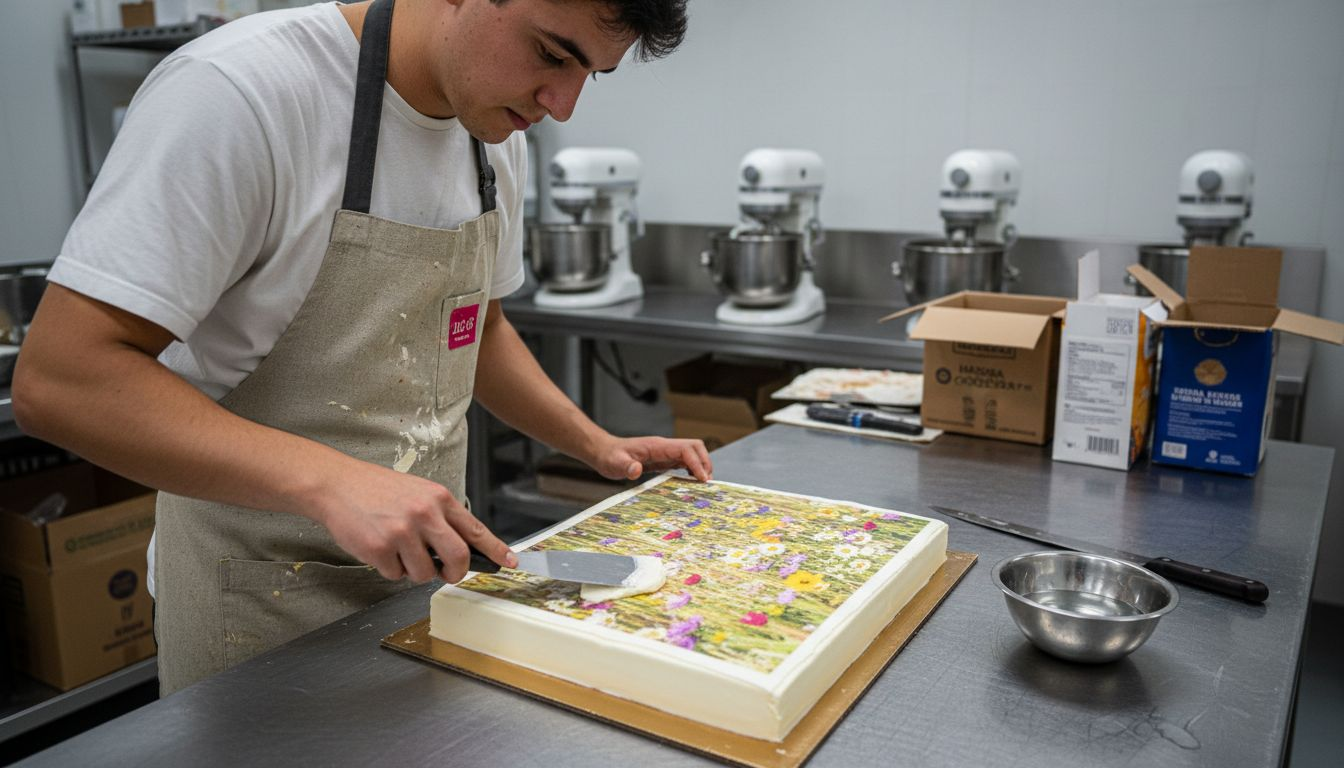
Professional tip: Keep the edible image in a cool, dry environment before application to preserve its quality and clarity.
Practical applications at children's parties
Edible images have become a magical tool to transform children's celebrations into unique visual experiences. They allow desserts to be personalized with designs that capture children's imagination and joy, turning every party into a memorable moment.
Some creative applications for edible images at children's parties include:
- Superhero themes: Personalizing cakes with favorite characters
- Birthdays: Including photos of the birthday child or personalized messages
- Animals: Decorating with images of fun creatures
- Sports: Representing teams or activities that children enjoy
- Movies and series: Reproducing cartoon scenes
Benefits of using edible images at children's parties:
- They increase children's excitement and participation
- They create lasting visual memories
- They allow total personalization of the event
- They are safe and completely edible
- They add a professional touch to the decoration
Edible images transform an ordinary cake into the center of attention at any children's celebration.
Personalized designs can be adapted to any children's theme or interest, from princesses and dinosaurs to video games and sports, offering a creative solution to make every party unique.
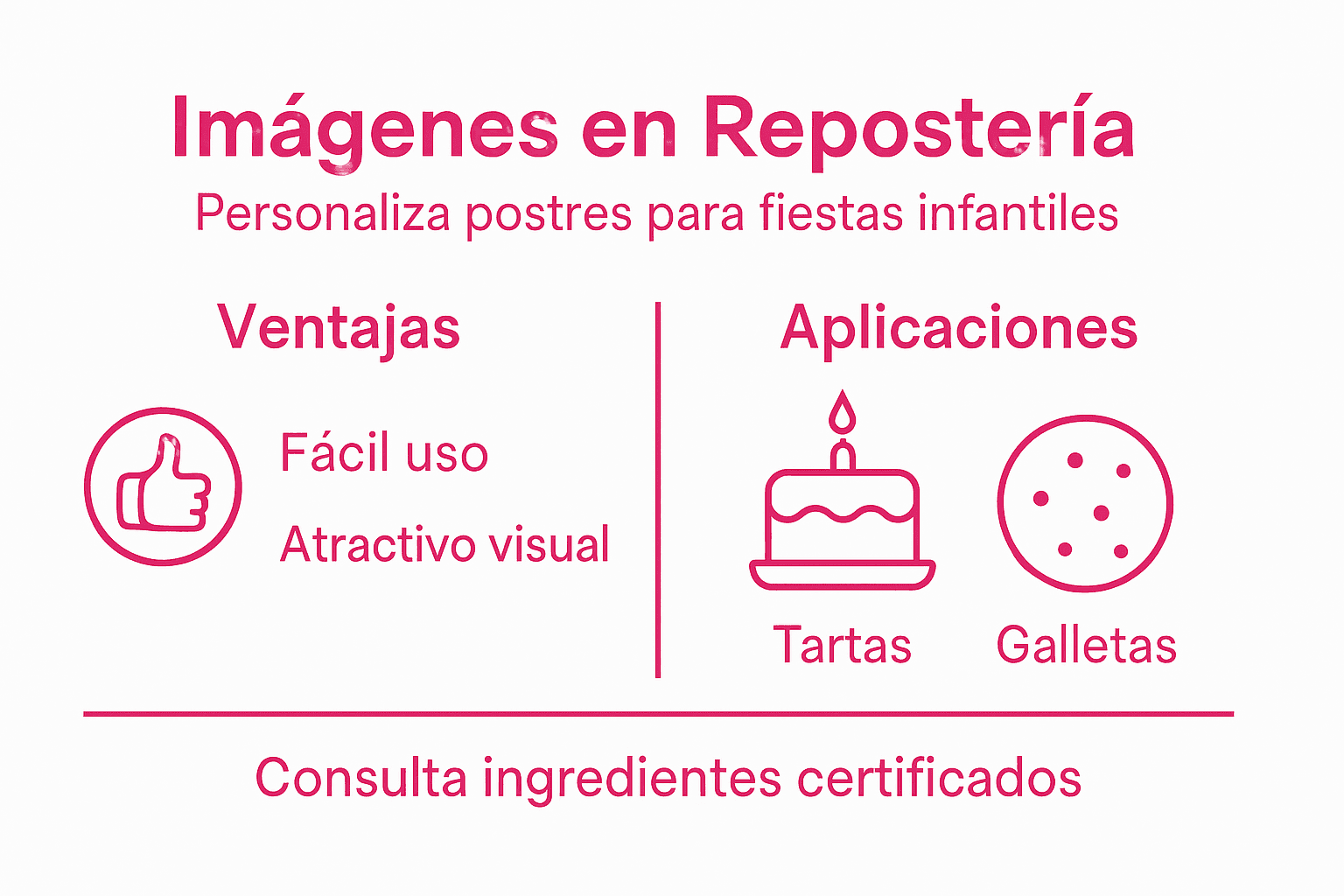
Professional tip: Consult with the parents or the birthday child about their favorite characters or themes to create an edible image that will truly excite the children.
Safety requirements and common mistakes
Food safety is essential when working with edible images. Good manufacturing practices establish strict standards to guarantee the quality and safety of products.
The main safety requirements include:
- Personal hygiene: Hand washing, use of gloves
- Equipment cleaning: Disinfection of printers and utensils
- Food certifications: Use of approved inks and papers
- Temperature control: Proper storage
- Traceability: Record of materials used
Common mistakes to avoid:
- Using materials not certified for food use
- Handling images without proper protection
- Storing in inadequate humidity conditions
- Not checking the quality of food inks
- Ignoring expiration dates
Food safety is not an option; it is a fundamental obligation in baking.
Control methods and regulations are crucial to prevent potential risks during the production and handling of edible images.
Professional tip: Keep a detailed record of edible material suppliers and their certifications to ensure maximum food safety.
This chart shows how safety and quality impact successful edible images:
| Success factor | Impact on the product | Key recommendation |
|---|---|---|
| Hygiene | Avoids contamination | Hand washing and clean gloves |
| Certification | Guaranteed quality and purity | Buy certified materials |
| Storage | Preserves definition and flavor | Keep in a cool, dry environment |
| Material control | Regulatory compliance | Record batches and suppliers |
Transform Your Children's Parties with Personalized Edible Images
Do you want your celebrations to be unforgettable and full of magic for children? The key is total personalization using high-quality edible images like those you can find at Funbakery. Our catalog includes super popular themes such as Roblox and Frozen, which capture the imagination of little ones, creating moments that will last forever in their memories.

Don't wait any longer to bring your cakes to life with a professional finish that excites and surprises. Discover our custom design service and choose from our wide variety of edible wafers and sugar paper specially designed for children's parties and all types of events. Visit Funbakery now and start creating sweet memories that will make a difference at any celebration.
Frequently Asked Questions
What are edible images in baking?
Edible images are graphic representations printed with food inks on edible paper, designed to be applied directly to cakes and other desserts.
What are the advantages of using edible images in my desserts?
Edible images offer total personalization, professional quality, versatility in application, and are easy to use, without requiring special decorating skills.
What types of paper are suitable for printing edible images?
The most common types of paper for edible images are sugar paper and edible paper, which are suitable for printing and consumption, in addition to other papers such as parchment paper and eco-friendly paper for different uses in baking.
How should I apply edible images to my desserts?
To apply edible images, make sure the dessert is in a cool, dry environment, and use proper transfer techniques to prevent the image from deteriorating or losing definition.