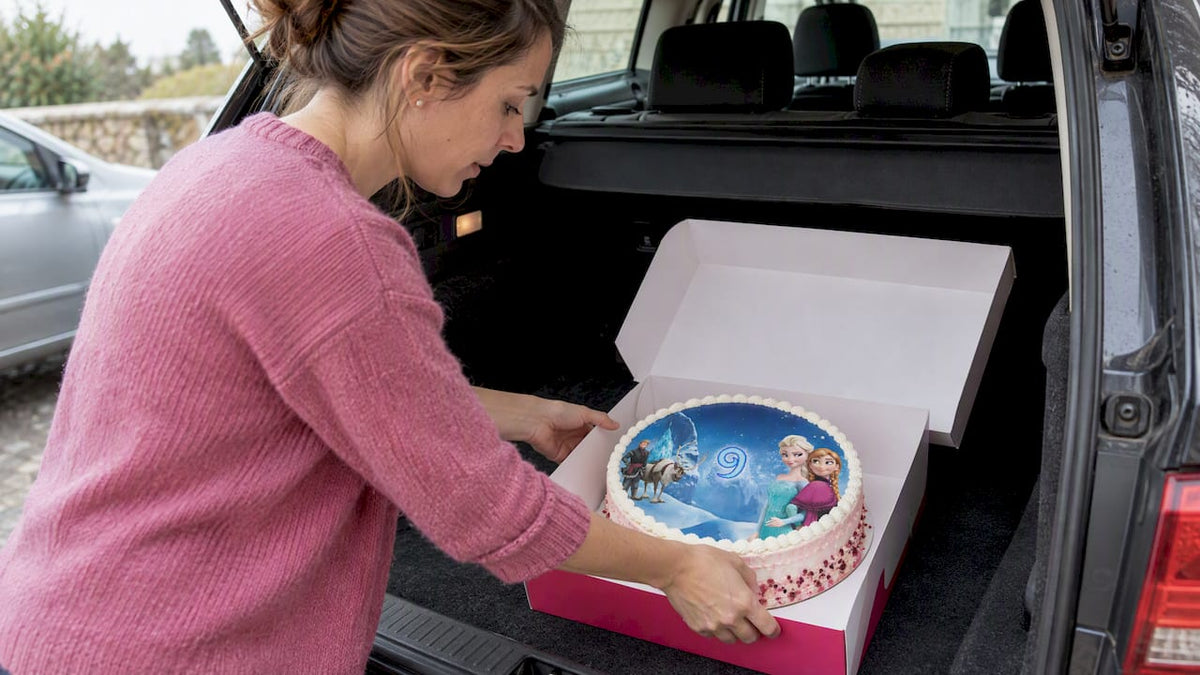
Yes, it is possible to create a reliable edible QR code for cakes and sweets, provided three conditions are met: printing with dedicated food-grade equipment and following good hygiene practices, a design with adequate contrast and size for scanning, and careful application on the dessert. Custom designs and printing on wafer paper or icing sheets that meet these requirements are available.
In summary:
- Use a dedicated food printer and certified edible ink; keep records of cleanings, cartridge changes, and sheet storage.
- To make it easier to scan, choose dark modules on a light background, leave a clear margin, and test the file before the final print.
- Apply the wafer paper or icing sheet shortly before serving, on a dry and firm topping; fresh whipped cream and hot ganache can deform it.
- Link the code to a personal video, photo album, coupon, or social media page; if there is no useful content, use the space for a name or photo instead.
Table of Contents
- Practical uses and creative ideas for edible QR codes on cakes and sweets
- Food hygiene and essential legal requirements
- How to design a QR code that is easy to scan for edible printing
- Printing: equipment, materials, and practical steps
- How to safely apply the QR code to a cake, cupcake, or cookie
- Common troubleshooting
- Why edible QR codes add value to an order
- Order your edible QR code from the FunBakery team
- Frequently asked questions
- Sources
Practical uses and creative ideas for edible QR codes on cakes and sweets
An edible QR code is only worth it when it leads guests to something that makes picking up their phone at the table worthwhile. It works well when linked to a personalized video message for the guest of honor, an event photo gallery, a discount coupon for their next order, or the confectioner's social media pages.
- A birthday or proposal video that plays when the cake is cut.
- A shared photo album from the party, accessible directly from the cookie.
- A coupon or promotional code to build customer loyalty at corporate events.
- A link to the confectioner's Instagram or TikTok page, ideal for visibility at public events.
In these cases, the code adds real value to the order and justifies the space it takes up in the decoration. When there is no relevant digital content behind it, the QR code becomes an empty graphic element, and it is better to use that space for a personalized photo or a featured name instead. Placing a short text next to the code, such as "scan here" or the recipient's name, helps explain the gesture without cluttering the design.
Food hygiene and essential legal requirements
The printing of any edible element, including a QR code, is subject to the same hygiene rules as any other food preparation. Regulation (EC) No 852/2004 establishes the principles of food hygiene that also apply to pastry shops and bakeries producing edible decorations, and applying HACCP principles to this process means identifying where contamination may occur and controlling that point systematically.
In practice, this means never using an office printer to print on wafer paper or icing sheets. Standard inks contain solvents and pigments that are not approved for consumption, and the residues left on the rollers and printheads of home printers were not designed for food contact. A dedicated food printer with certified edible ink eliminates this risk and is the foundation of any safe process.
Keeping a simple record of when cartridges are changed, the equipment is cleaned, and edible sheets are stored helps ensure traceability if a complaint arises. A routine preventive cleaning before and after each printing session reduces the buildup of sugar dust and ink residues that could compromise subsequent batches.

How to design a QR code that is easy to scan for edible printing
The reliable scanning of a QR code depends on three factors that become more sensitive when printed on an irregular edible surface such as wafer paper.
- Ensure the print size is large enough for the phone camera to capture all the modules.
- Maintain a clear margin around the code, without text or images touching the edges.
- Always choose dark modules on a light background, never the other way around, because low contrast is the most common cause of failed scanning on icing sheets.
Professional tip: before ordering the final print, test the QR file on a screen and print a sample on regular paper to confirm that it scans without hesitation from different lighting angles.
The slightly translucent texture of wafer paper and the shine of icing sheets can reduce the contrast perceived by the camera, so it is worth choosing solid colors and avoiding gradients or decorative textures overlaid on the code.
Printing: equipment, materials, and practical steps
Wafer paper and icing sheets behave differently in the printer. Wafer paper is thinner, more brittle, and absorbs less ink, while icing sheets always come attached to a rigid backing sheet that makes feeding easier but needs to be removed carefully after printing.
- Insert the sheet through the rear tray, with the edible side facing the printhead, following the manufacturer's orientation.
- Avoid touching the area where the QR code will be printed, because finger moisture and oils alter the ink's adhesion.
- Prefer equipment with built-in ink cartridges, which reduce manual contact with the ink channels and simplify hygienic maintenance.
- Set the resolution to the highest available and check the colors before printing, as icing sheets tend to slightly intensify the tones.
Professional tip: clean the rollers and the printer's output area after each session, because crystallized sugar residues damage mechanisms and compromise the next print.
These food and maintenance precautions are described in more detail in a step-by-step guide for printing edible photos, which applies directly to printing QR codes.
How to safely apply the QR code to a cake, cupcake, or cookie
The moment of applying the edible element is just as important as the printing. Apply the wafer paper or icing sheet shortly before serving, on a dry and smooth surface, smoothing from the center to the edges with clean hands or a thin spatula so as not to deform the QR modules.
Very moist toppings, such as fresh whipped cream or still-hot ganache, tend to dissolve the wafer paper and distort the code, so it works best on fondant, firm buttercream, or a dry layer of powdered sugar. It is always important to confirm that the edible paper and ink used are food-certified, and, when the recipe includes allergens such as gluten, soy, or specific dyes, a simple label next to the sweet informs those who will consume it.

Common troubleshooting
Most problems with edible QR codes have an identifiable cause and a quick fix.
- If the code is not scanned, first check the contrast and increase the print size before testing another camera.
- In case of a jam, stop the printer immediately and remove the sheet carefully by the edges, never by the center, so as not to tear the wafer paper.
- Smudges or blurs usually indicate excess ink or a dirty printhead, and in these cases it is better to reprint than to try to fix the already smudged sheet.
When the final quality is in doubt, the safest thing is to discard the sheet and print again: the cost of a wafer paper is always less than the risk of delivering an unreadable QR code.
Why edible QR codes add value to an order
Working with edible images shows that the detail that impresses the most is not always the largest, but the most personal. A well-printed QR code can transform a decorated cake into a moment of interaction, which influences the final customer's perception of quality.
We have already written about how to achieve vibrant colors in edible images and about safety in edible toppers, two topics that directly intersect with the quality of a well-made QR code.
— David
Order your edible QR code from the FunBakery team
Gathering a dedicated printer, tested design, and careful application takes work when done for the first time, and that is why our design studio takes care of the entire process for you, from the QR file to the edible sheet ready to apply.

- Choose between Rectangular Design, Round Design, or Cupcake Design to integrate the QR code directly into your cake design.
- Order one of the available design services and receive the tested and validated code before printing.
- Be inspired by examples such as the Las Guerreras K-Pop Demon Hunters edible image or the Pokémon edible photo to combine QR codes with themed designs.
Just send us the content you want to link to the code and our designers will take care of the rest, ensuring reliable scanning and a safe edible finish.
Frequently asked questions
What is an edible QR code?
It is a QR code printed with edible ink on wafer paper or icing sheet, designed to decorate and be consumed along with a cake, cupcake, or cookie. When scanned by a phone camera, it opens a digital link chosen by the person who ordered the decoration.
Can I print an edible QR code on a regular printer?
It is not safe: an office printer uses inks with solvents and pigments that are not approved for consumption, which contradicts the food hygiene principles of Regulation (EC) No 852/2004. A dedicated food printer with certified edible ink is required.
What is the difference between wafer paper and icing sheet for a QR code?
Wafer paper is thinner and more brittle, absorbs less ink, and practically melts in the mouth, while icing sheet comes attached to a backing sheet and maintains a softer texture after application. The choice depends on the cake topping and the final texture you want.
How do I ensure that the QR code remains scannable after application?
Use strong contrast between dark modules and a light background, maintain a clear margin without elements around it, and apply the edible sheet on a dry surface, smoothing it without deforming it. Testing the code on a screen before printing avoids surprises after it is attached to the sweet.
What type of content is worth linking to an edible QR code?
Personalized message videos, event photo albums, discount coupons, or the confectioner's social media pages are the options that bring the most value to the guest's experience. When there is no relevant content to share, the code ends up being merely decorative.