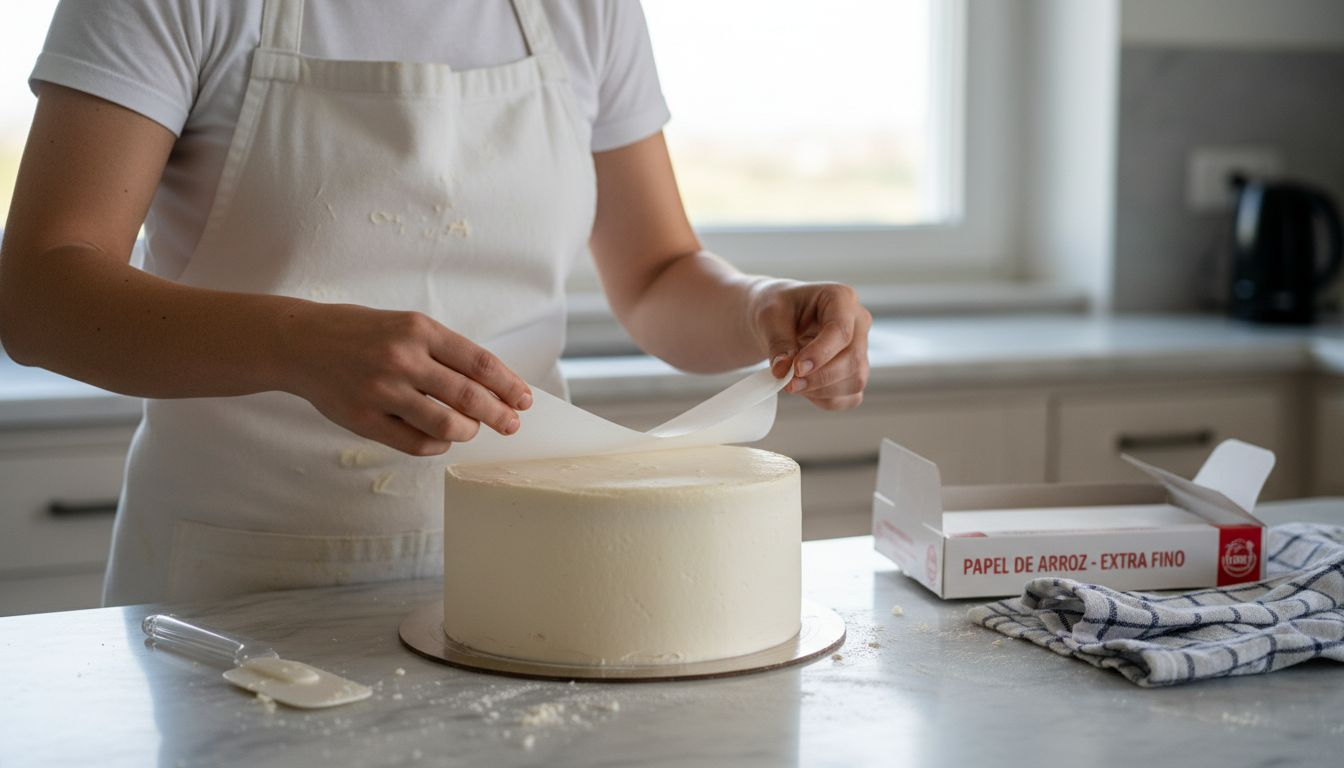
Personalized wafers are not all the same. A technical study reveals that differences in print resolution can vary by up to 600 dpi between technologies, drastically affecting the quality of the final design. For parents in Spain looking to surprise at birthdays and children's events, choosing the right supplier makes the difference between a professional decoration and a disappointing result. This article guides you step by step through the technical process, certified materials, and key decisions to ensure safe and spectacular wafers.
Table of contents
- Key points
- Introduction to personalized wafers
- Materials and food safety in wafers
- Technical creation and personalization process
- Common mistakes and myths about personalized wafers
- Comparison of technologies and materials for wafers
- Practical recommendations for ordering personalized wafers
- Conclusion and next steps for ordering personalized wafers
- Discover how FunBakery can help you with personalized wafers
- Frequently asked questions
Key points
| Point | Details |
|---|---|
| The process combines design and technology | Creating personalized wafers requires high-resolution graphic files and certified inkjet printing equipment to ensure perfect definition. |
| Child-safe materials | The wafers use food-grade inks compliant with European regulations, gluten-free and without common allergens, ideal for children with dietary restrictions. |
| Superior inkjet technology | Digital printing reaches up to 600 dpi, offering sharp colors and precise details that other technologies cannot achieve. |
| Avoid common mistakes | Confusing image resolution, printing technologies, or being unaware of certifications leads to disappointing results and possible food safety risks. |
| Planning and a reliable supplier | Ordering wafers 3 to 7 days in advance and verifying the supplier's experience ensures on-time delivery and guaranteed quality. |
Introduction to personalized wafers
Personalized edible wafers are thin sheets made with starches and sugars, printed with unique designs using food-grade inks. They are mainly used to decorate cakes, cupcakes, and muffins at children's celebrations, offering a modern alternative to traditional fondant or cream decorations.
Personalization allows incorporating photographs, names, ages, and favorite characters directly onto the edible surface. This capability transforms an ordinary cake into the center of attention at the event, creating surprise and joy among children and families.
Wafers for children's cakes have gained popularity in Spain due to their versatility. You can choose from pre-designed designs with superheroes, animals, and sports, to completely personalized creations with family photographs or exclusive illustrations.
The main advantages include:
- Speed of application on the cake without the need for advanced baking skills
- Designs impossible to achieve by hand with fondant or icing
- Absolute personalization adapted to any theme or children's preference
- Durability and ease of transport without risk of deformation
In addition to the visual aspect, wafers offer practicality. While decorating with fondant requires technique and time, applying a wafer takes minutes and guarantees professional results. This feature is especially valuable for busy parents who want memorable celebrations without spending hours preparing.
Professional tip: Clearly communicate the theme of the event to the supplier. Details such as favorite colors, specific characters, or design styles ensure that the final result exceeds expectations and integrates perfectly with the overall decoration.
Materials and food safety in wafers
The composition of edible wafers is mainly based on potato starch, corn starch, and natural sugars. These ingredients create a light, flexible, and fully edible sheet that adheres easily to moist surfaces such as creams or frostings.
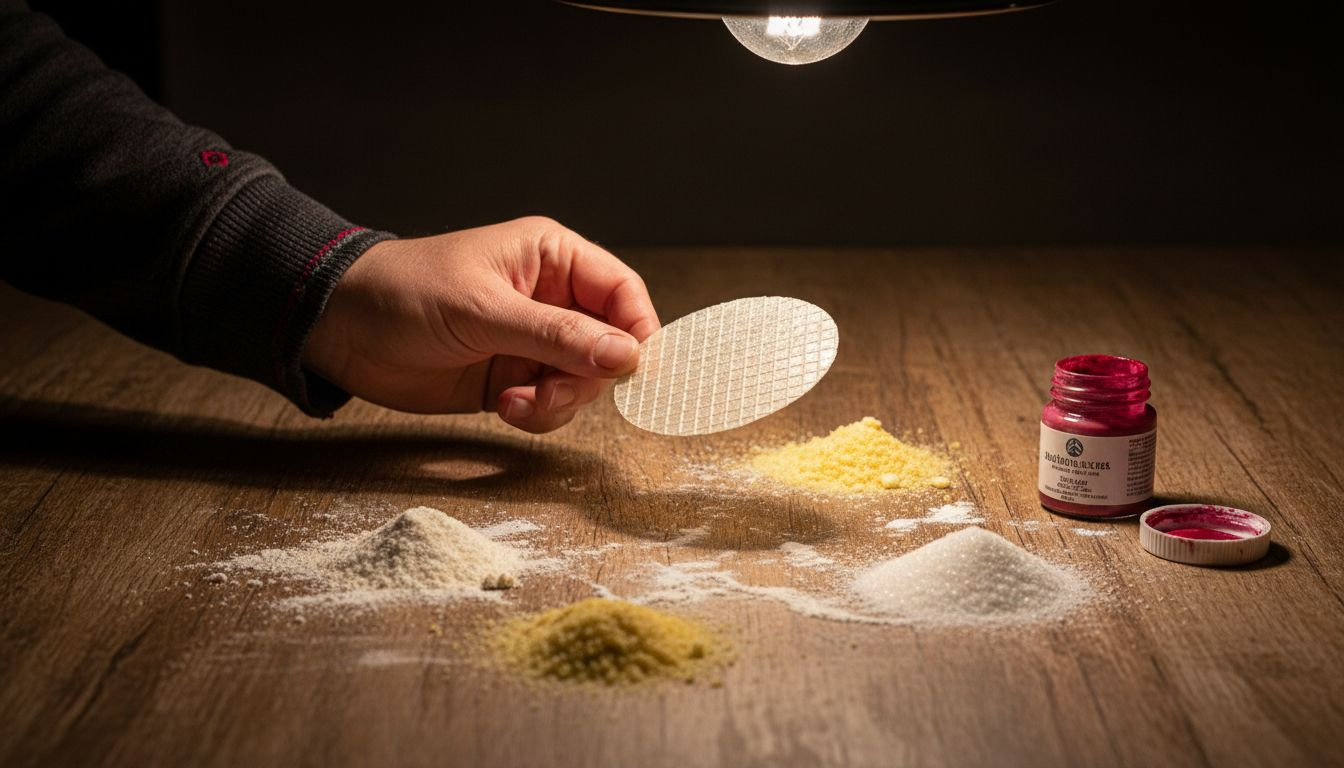
Personalized wafers are produced with food-grade inks compliant with the European Directive for food contact, ensuring that every component used in the printing meets strict health standards. These inks are formulated exclusively with colorants approved for human consumption, without toxic chemicals or heavy metals.
For families with children who have allergies or intolerances, many wafers are certified gluten-free and free from the most common allergens such as dairy, nuts, and eggs. This feature allows practically any child to enjoy a personalized cake without medical concerns.
Food safety certifications include:
- Compliance with European Union regulations on food contact materials
- Periodic microbiological analyses that verify the absence of contaminants
- Complete traceability from raw materials to the final product
- Clear labeling detailing ingredients and possible allergens
Professional tip: Before ordering wafers for a children's event, request updated food safety certificates from the supplier. Reliable suppliers offer this documentation without issues and demonstrate transparency in their production processes.
The content of edible wafers also influences their durability. Formulations with low moisture content prevent bacterial proliferation and allow for prolonged storage under suitable conditions, generally between 6 and 12 months in closed containers.
Safe printing for parties does not only depend on certified materials, but also on printing equipment exclusive for food use. Home or office printers should never be used, as they contain residues of toxic inks and industrial oils incompatible with human consumption.
For greater peace of mind, verify that the supplier complies with current European food safety regulations. This verification protects children's health and guarantees that the celebration is memorable for the right reasons.
Technical creation and personalization process
The process of creating personalized wafers combines professional graphic design with advanced food printing technology. Understanding each stage allows you to communicate clear expectations and obtain optimal results.
The typical production flow follows these sequential steps:
- Selection or submission of the design with a minimum resolution of 300 dpi to guarantee sharpness in the final print
- Preparation of the graphic file by specialized designers who adjust colors, size, and proportions according to the wafer's technical specifications
- Loading the file into a food inkjet printer calibrated with specific color profiles for edible inks
- Direct printing on the wafer sheet with technology reaching up to 600 dpi, ensuring precise details and vibrant colors
- Natural or assisted drying that sets the inks without altering the flexibility of the wafer
- Cutting to size according to the desired shape and airtight packaging to preserve freshness until the moment of use
- Shipping with adequate protection that prevents breakage and exposure to moisture during transport
Inkjet technology represents the current standard in safe edible printing. This method atomizes food inks into microscopic drops that are deposited with millimeter precision, recreating color gradients and photographic details impossible with traditional methods.
The European directive on food inks establishes strict limits on the migration of substances from printed materials to food, especially protecting the vulnerable child population.
Post-printing handling is critical to maintain quality. Wafers must be stored in dry environments with relative humidity below 50%, as they absorb ambient moisture quickly, causing deformations and loss of definition in the design.
Production times vary depending on the complexity of the design and the volume of the order. Pre-designed designs are usually ready in 3 to 5 business days, while completely personalized creations with photographs or exclusive illustrations may require 5 to 7 days to ensure reviews and final adjustments.
Professional tip: Request a digital proof of the design before the final print. This preventive step allows you to verify colors, texts, and the arrangement of elements, avoiding unpleasant surprises and guaranteeing that the result exactly matches your expectations.
Common mistakes and myths about personalized wafers
Many parents face disappointments when ordering wafers due to incorrect information or erroneous assumptions about the product. Debunking these myths prevents problems and optimizes results.
One of the most widespread myths claims that all wafers contain gluten and pose risks to children with celiac disease. The reality is that many wafers are certified gluten-free and free from common allergens, being completely safe for children with these dietary restrictions. Always verify specific certifications before buying.
Another frequent mistake consists of sending low-resolution photographs taken with old smartphones or downloaded from social networks. These images appear pixelated when enlarged to the size of the wafer, resulting in blurry and unprofessional designs. Always use files of at least 300 dpi in full size.
The main confusions include:
- Believing that any printer can safely produce edible wafers
- Assuming that all printing technologies offer identical quality
- Thinking that the lowest price guarantees similar value to premium options
- Being unaware that wafers require specific storage to maintain quality
The confusion between printing technologies creates unrealistic expectations. Thermal transfer, although more economical, produces less vibrant colors and less detail than inkjet printing. For designs with photographs or complex illustrations, the investment in superior technology makes noticeable differences.
Professional tip: When comparing suppliers, request physical samples of previous works. Photographs on websites can be digitally retouched, while real samples reveal the true quality of the printing and materials you will receive.
Personalization and safety in wafers should not be compromised for minimal savings. Suppliers without adequate certifications may use unapproved inks or processes that contaminate the product, putting children's health at risk.
Finally, some parents expect wafers to adhere to dry surfaces or fondant without preparation. Wafers require a moist layer such as cream, ganache, or edible gel to adhere correctly. Applying them on dry surfaces results in peeling and unsightly wrinkles.
Comparison of technologies and materials for wafers
Choosing the correct printing technology directly impacts the visual quality and durability of the design on your cake. Understanding technical differences allows you to make informed decisions according to specific needs.
The following table compares the two main technologies:
| Feature | Inkjet printing | Thermal transfer |
|---|---|---|
| Maximum resolution | Up to 600 dpi with photographic details | 300 dpi with less definition |
| Color range | Wide with smooth gradients | Limited with abrupt transitions |
| Cost per unit | Medium to high depending on personalization | Low for pre-designed designs |
| Production time | 3 to 7 days with personalized designs | 1 to 3 days for standard catalog |
| Color durability | Excellent with certified inks | Good but may fade |
| Ideal for | Photographs, complex designs, special events | Simple designs, large orders, tight budgets |
Inkjet printing dominates the premium market due to its ability to reproduce photographs with almost photographic quality. This technology atomizes food inks into millions of microscopic drops, allowing imperceptible color transitions and extraordinary details.
Thermal transfer uses heat to transfer designs from special films onto the wafer. Although it is more economical and faster, the limited resolution and reduced color range make it less suitable for personalized designs with photographs or detailed illustrations.
Ideal scenarios for each technology:
- Inkjet: birthdays with family photographs, themed events with detailed characters, celebrations where the cake is the visual protagonist
- Thermal transfer: large orders with a repeated unique design, events with limited budgets, designs with simple graphics or logos
The base materials also vary. Wafers made with potato starch offer greater flexibility and neutral flavor, while versions with corn starch tend to be more rigid but resist ambient moisture better.
Professional tip: For photographic events where the cake will be the protagonist on social networks or family albums, invest in inkjet printing. The quality difference justifies the additional cost and guarantees impressive visual memories.
The comparison of technologies for wafers should also consider the operator's experience. Inkjet equipment requires constant calibration and specialized maintenance, while thermal transfer systems are simpler but offer less room for advanced personalization.
Practical recommendations for ordering personalized wafers
Transforming technical knowledge into concrete actions facilitates the ordering process and maximizes satisfaction with the final result. These recommendations condense the experience of thousands of parents who have organized successful celebrations.
Before contacting suppliers, clearly define:
- Exact theme of the event and predominant colors in the decoration
- Size of the cake or surface where you will apply the wafer
- Quantity of wafers needed if you plan to decorate multiple desserts
- Available budget that balances quality with economic resources
Verifying certifications and the supplier's experience protects your investment and children's health. Request documentation that demonstrates compliance with European food safety regulations and check reviews from previous customers to assess consistency in quality and service.
Production and delivery times deserve special attention. Ordering wafers at least 7 days in advance provides room for unforeseen events such as design revisions, shipping delays, or the need for reprints. Events on popular dates such as summer or December may require even longer timeframes.
Professional tip: Schedule the delivery for 2 or 3 days before the event. This margin allows you to inspect the wafer, verify that it meets expectations, and request corrections if necessary, without the stress of last-minute emergencies.
Balancing quality and budget requires smart prioritization. If the budget is limited, consider catalog pre-designed wafer designs instead of completely exclusive customizations. Many suppliers allow adding names or ages to base designs, achieving acceptable customization at reduced costs.
Requesting samples or design advice before the final order minimizes risks:
- Physical samples reveal the actual print quality and materials
- Consultations with professional designers optimize visual composition
- Prior digital reviews ensure that colors and texts are correct
The choice of edible wafer suppliers should prioritize transparency and communication. Reliable suppliers respond quickly to inquiries, offer multiple contact options, and provide clear terms regarding deadlines, costs, and return policies.
Properly organizing delivery and storage preserves quality until the moment of use. Wafers should be kept in airtight containers, away from direct sunlight and sources of heat or moisture. Applying the wafer to the cake no more than 24 hours before the event prevents it from absorbing excessive moisture and losing definition.
For optimal application, consult the recommendations for decorating with wafers, which detail step-by-step techniques to achieve professional finishes without prior baking experience.
Conclusion and next steps for ordering custom wafers
Mastering the custom wafer creation process transforms ordinary celebrations into memorable experiences that children and families cherish. The critical elements are certified material quality, appropriate printing technology, and suppliers with demonstrable experience.
Food safety should never be compromised. Wafers made with certified gluten-free and allergen-free ingredients, printed with inks compliant with European regulations, protect children's health while offering spectacular designs. Verifying certifications before purchasing is essential.
Custom design allows for unlimited creativity. From family photographs to favorite characters or exclusive illustrations, the possibilities are only limited by imagination and the resolution of the provided graphic files.
Choosing reliable suppliers with proven experience makes the difference between professional results and costly disappointments. Research reviews, request samples, and communicate expectations clearly to ensure the final product exceeds your aspirations.
The next steps are simple: define the event theme, gather high-resolution images if you want photographic customization, set your budget, and contact certified suppliers at least 7 days in advance. This planning guarantees successful celebrations without last-minute stress.
Discover how FunBakery can help you with custom wafers
FunBakery offers you the complete solution to transform your ideas into spectacular edible cake wafers. Our catalog includes popular designs of superheroes, animals, sports, and children's characters that delight children of all ages.

Our team of designers creates exclusive images by incorporating photographs, names, ages, and personalized elements that make each celebration unique. We use certified inkjet printing technology that reaches 600 dpi, guaranteeing vibrant colors and sharp details that exceed expectations.
Explore options such as the custom Las Guerreras MINECRAFT wafer, perfect for fans of the game, or request completely custom designs for any imaginable theme. All our products comply with European food safety regulations, making them suitable for children with dietary restrictions.
Visit FunBakery to discover the full catalog, request no-obligation design advice, and place orders with confidence backed by years of experience creating unforgettable moments for Spanish families.
Frequently Asked Questions
What materials are used in custom wafers, and are they safe for children with allergies?
Wafers are made mainly of starches such as potato or corn starch, combined with natural sugars. Many are certified gluten-free and free of common allergens such as dairy, nuts, and eggs, making them completely safe for children with dietary restrictions. Always verify the supplier's specific certifications before placing your order.
What printing technology guarantees the best quality in custom wafers?
Inkjet printing offers a resolution of up to 600 dpi and reproduces sharper colors than thermal transfer. It is ideal for detailed designs with photographs or complex illustrations that require photographic precision. Thermal transfer is suitable for simple designs with limited budgets.
How long does the production and delivery of custom wafers take?
The usual time is between 3 and 7 days depending on the design complexity and supplier volume. Pre-designed catalog designs are usually ready faster, while customizations with exclusive photographs require additional reviews. It is important to order in advance to ensure timely delivery, especially on popular dates such as summer or Christmas holidays.
How should I store the wafers before applying them to the cake?
Keep the wafers in their original airtight container, in a cool, dry place with relative humidity below 50%. Avoid exposure to direct sunlight, heat sources, or humid environments that can deform the material. Apply the wafer to the cake no more than 24 hours before the event to prevent it from absorbing excessive moisture and losing design definition.
Can I use any photograph to customize a wafer?
You can use any photograph as long as it has a minimum resolution of 300 dpi at the actual print size. Low-resolution images downloaded from social media or taken with old smartphones will appear pixelated and blurry when enlarged. Request image quality advice from the supplier before sending the final file to avoid disappointments with the printed result.