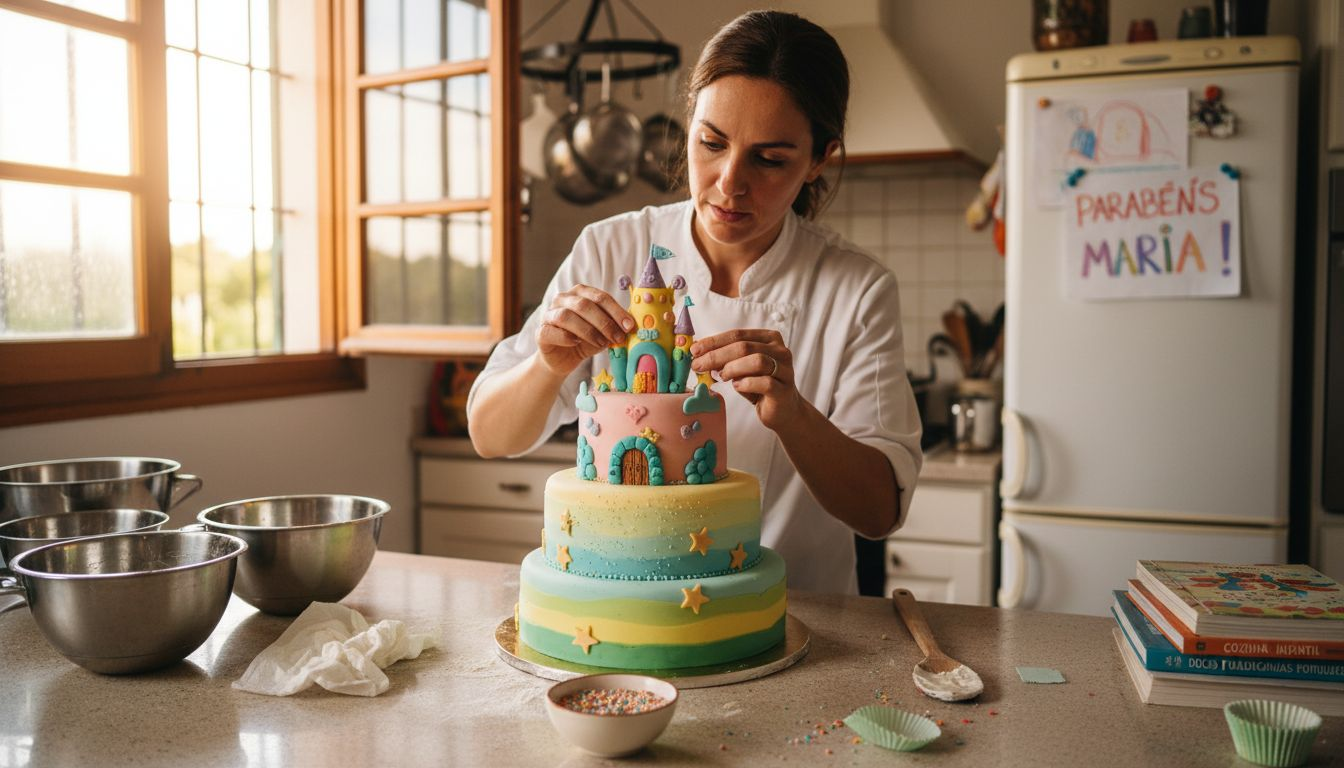
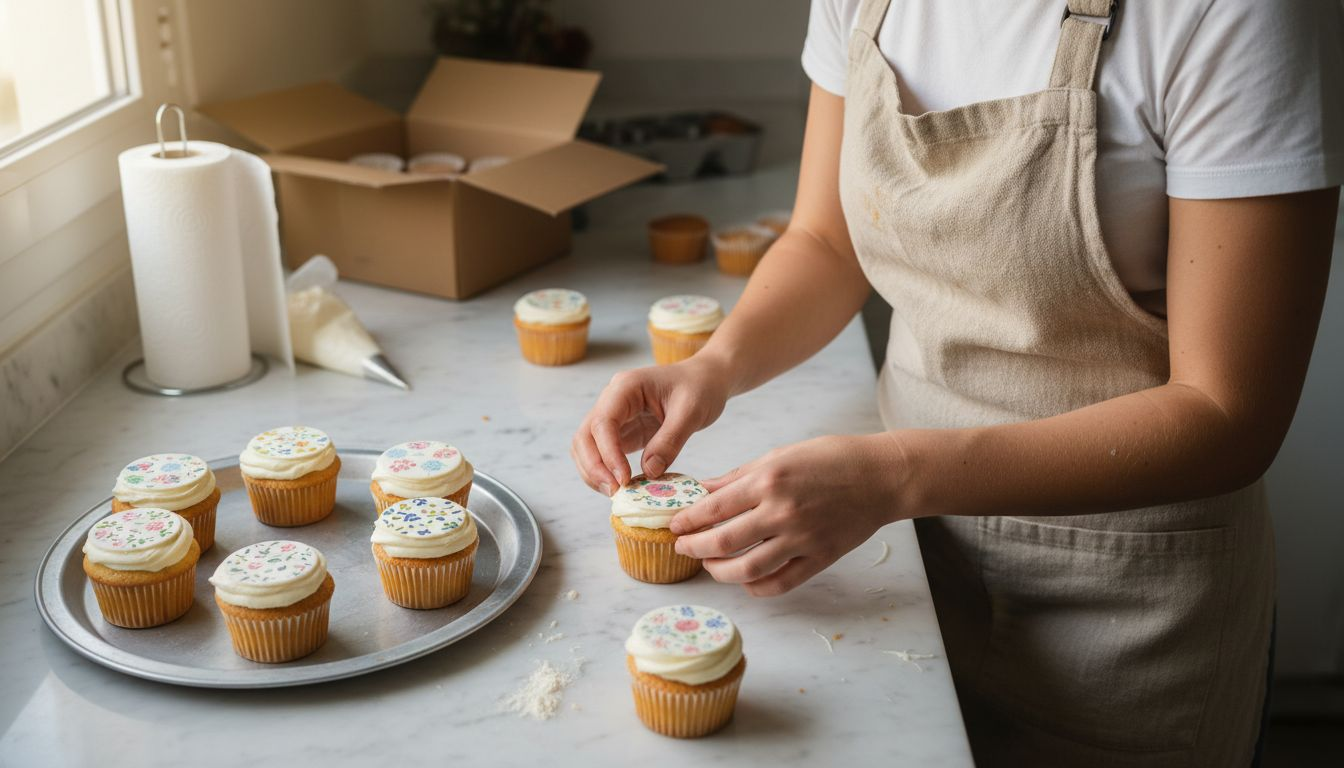
Every children's celebration deserves a special touch that children and their guests will remember with a smile. For parents in Central Europe, achieving a safe and personalized cake decoration is essential, especially when it comes to products that will be in direct contact with desserts. Edible paper, made only with natural food-safe ingredients such as starch, water, and vegetable oils, emerges as the creative and reliable solution to transform any design into part of the party without hassle.
Table of Contents
- Definition and composition of edible paper
- Main types and customizable formats
- Professional design and customization process
- European food safety standards
- Comparison with other cake decorations
Key Points
| Point | Details |
|---|---|
| Edible Paper | It is a safe and flexible option for decorating desserts, made with natural ingredients and edible ink. |
| Personalization | It allows you to easily print custom images and designs, ideal for children's celebrations. |
| Variety of Types | There are different types of edible paper for multiple decorative applications, each with specific characteristics. |
| Safety Standards | Edible paper in Europe complies with strict food safety regulations, ensuring its suitability for consumption. |
Definition and composition of edible paper
Edible paper is a thin and flexible sheet designed specifically to decorate desserts, tarts, and cakes. Unlike traditional paper, this product is made entirely with safe-to-consume ingredients, allowing parents decorating to incorporate custom designs directly onto the surface of their baked creations.
Natural food-safe ingredients include starch, water, and vegetable oils that are strategically combined to form a stable sheet. These components are carefully selected to ensure food safety, which is especially important when the paper comes into direct contact with desserts intended for children.
Main components of edible paper
Edible paper is typically made with:
- Natural starches: provide flexibility and structural strength to the sheet
- Sugars: create a smooth texture and contribute to a neutral or slightly sweet flavor
- Distilled water: acts as a binding agent during the manufacturing process
- Refined vegetable oils: improve resistance and facilitate the printing of designs
The combination of these elements creates a product that integrates perfectly with fondant or royal icing without altering the flavor of the dessert.
Functional characteristics
Edible paper is designed to allow precise printing using specialized edible inks. This means that any image, photograph, name, or design you wish to include is transferred directly to the surface without compromising food safety.
The smooth and flexible texture allows you to:
- Adapt to curved surfaces of cakes and cupcakes
- Cut precisely without tearing
- Stick firmly with a very thin film of water or egg white
Edible paper combines 100% natural ingredients with advanced printing technology, allowing professional decorations without compromising food safety or the flavor of the dessert.
When you order custom edible paper, you receive a sheet made specifically according to your design specifications. The manufacturer prints your selected image onto the starch base using food-safe inks.
For children's parties, this means transforming a photograph of the birthday child, a favorite superhero, or a beloved animal directly into part of the cake. Parents in Central Europe especially appreciate how this elevates the visual appearance without requiring advanced baking skills.
The careful composition of the paper also ensures that it remains intact during transport and storage. It does not break like traditional paper or absorb moisture from the cake frosting, staying crisp and visually appealing until serving time.
Professional tip: Measure the exact height and diameter of your cake before ordering custom edible paper; this ensures that the design fits perfectly and looks professional at the celebration.
Main types and customizable formats
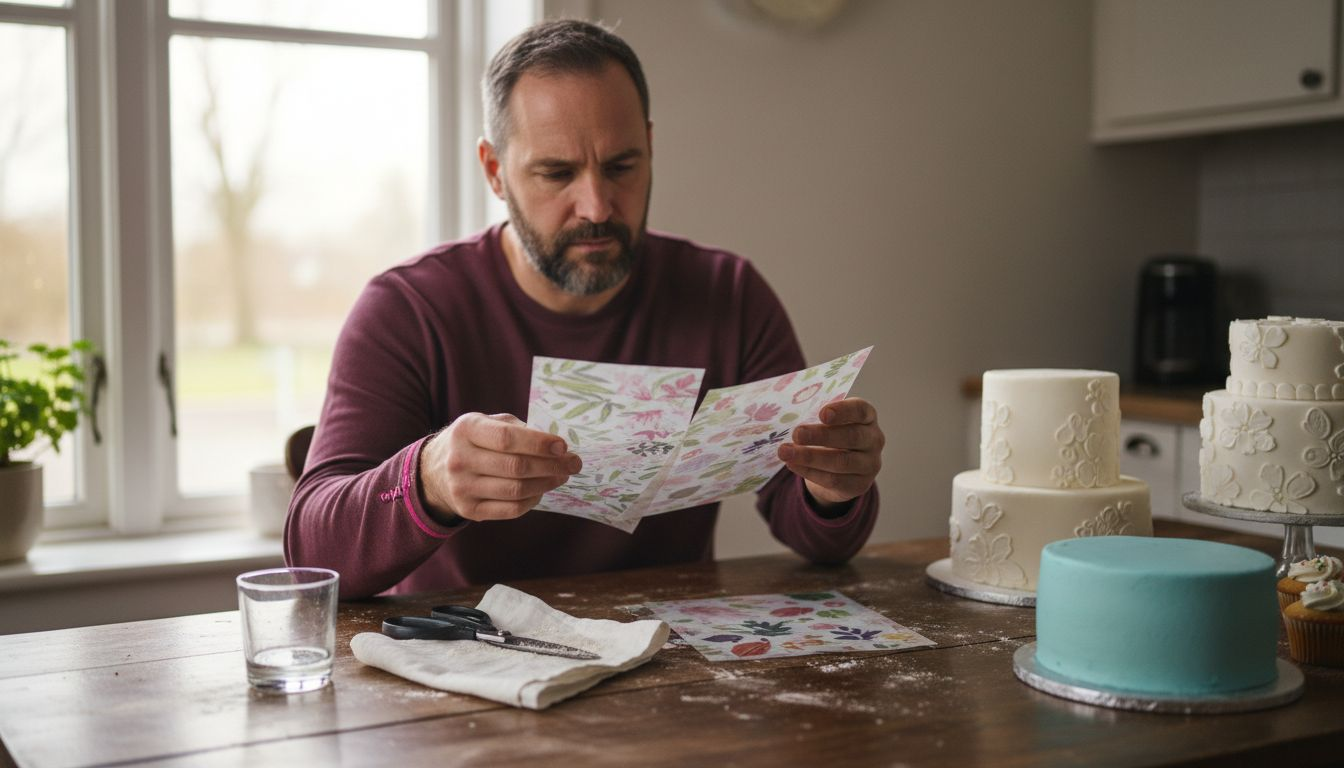
Not all edible papers are the same. There are several types designed for different decorative needs, each with unique characteristics that adapt to different cake styles and design preferences.
Variety of edible paper types
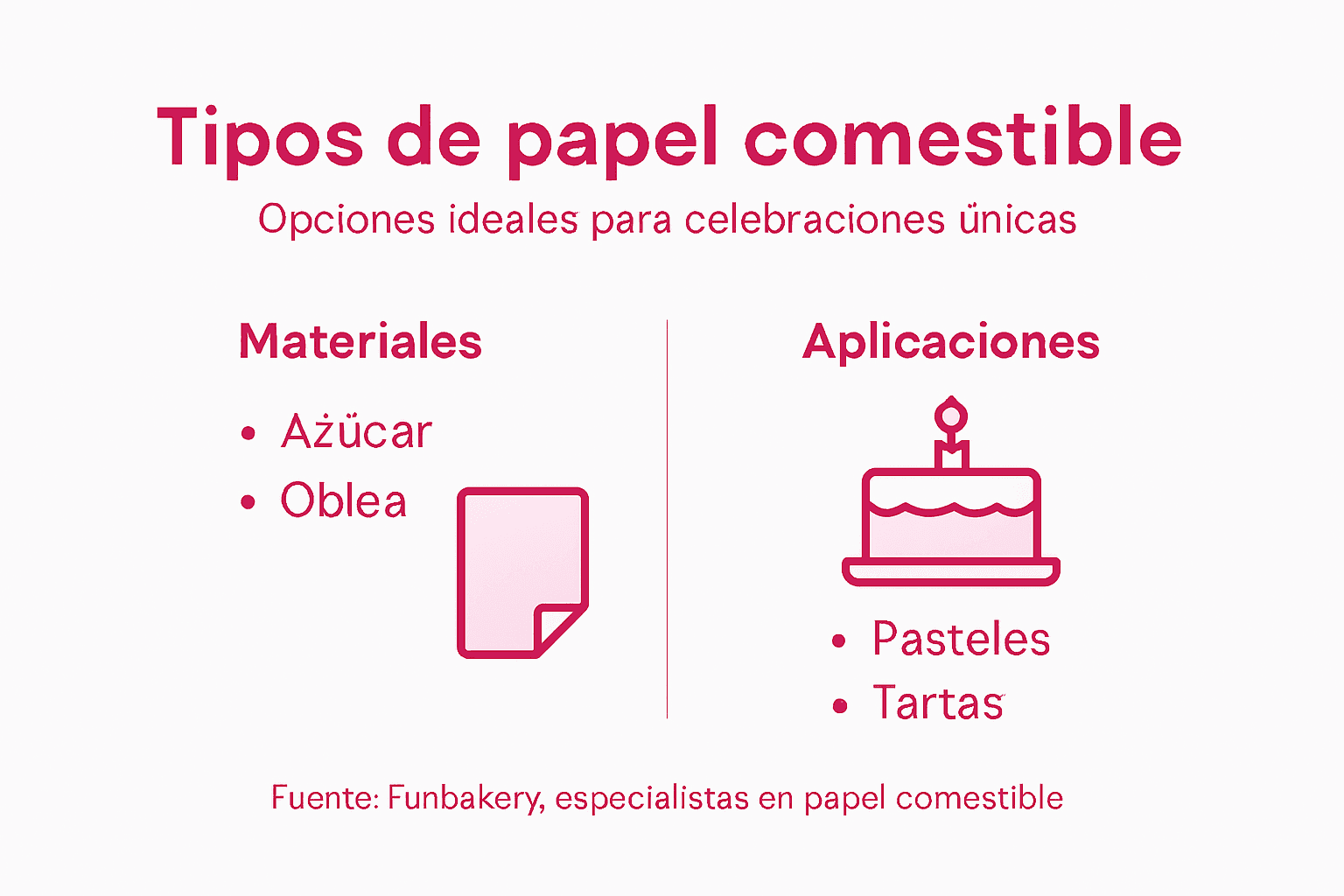
The main types of edible paper include versatile options for any children's celebration. Here are the most popular among parent decorators:
To better understand the variety of edible papers available, consult the following table with their recommended applications:
| Type of edible paper | Best use | Featured properties |
|---|---|---|
| Sugar | Photographs and children | Vivid colors and great flexibility |
| Thick wafer | Geometric shapes | More rigid and resistant to cutting |
| Plant fiber | Family portraits | High sharpness and resolution |
| Fine rice | Delicate flowers | Ultra-light for fine decoration |
| Multitransfer | Chocolate effects | Good three-dimensional adhesion |
- Sugar paper: flexible with intense and vibrant colors, ideal for colorful designs and bright photographs
- Thick wafer paper: firmer and more resistant, perfect for detailed decoration without the risk of tearing
- Plant fiber paper: flexible with high print resolution, excellent for sharp and precise images
- Fine rice paper: delicate and special, ideal for edible flowers and advanced decorative techniques
- Multitransfer paper: specialized for transferring images to chocolate or isomalt, creating unique three-dimensional effects
Customizable formats and sizes
Each type of paper comes in multiple sizes and shapes adapted to your specific needs. Standard formats include rectangles for horizontal cakes, circles for round cakes, and squares for modern creations.
Customization goes beyond graphic design. You can adjust:
- Exact dimensions according to your cake's measurements
- Custom shapes cut to your request
- Horizontal or vertical orientation of the design
- Multiple copies in a single order for uniformity
Each type of edible paper offers different textures and finishes, allowing you to choose the one that best suits the visual style and tactile feel you want for your celebration.
Selection according to the type of celebration
For children's birthdays with superheroes or animated characters, sugar paper stands out for its vibrant colors that capture children's energy. If you are planning a more sophisticated celebration with family photographs, plant fiber paper provides the resolution needed for every detail to be sharp.
Parents who want decorations with 3D elements or chocolate touches frequently select multitransfer paper, which creates striking visual effects without requiring special artistic skills.
The flexibility of sugar paper makes it versatile for adapting to cakes with irregular shapes or textured frostings. Thick wafer paper, on the other hand, works best for precise geometric designs and minimalist decorations.
When you order custom edible paper, consider not only the design you want, but also the final texture your dessert seeks. Some parents combine several types on a single cake to create more striking visual effects.
Professional tip: Test a small format of one type of paper before ordering large quantities; this allows you to evaluate how the color and print texture look with your specific cake.
Professional design and customization process
Creating custom edible paper requires precision at every step. From the moment you send your design until you receive the final product, experts work behind the scenes to ensure your vision becomes an edible reality.
Stages of the customization process
The professional customization process begins when you provide your digital file or design description. Designers evaluate your request, considering the type of event, the celebrant's age, and aesthetic preferences.
Each stage of the process includes:
- Reception and analysis: files, dimensions, and technical specifications are evaluated
- Color adjustment: professional calibration so that the tones match your original vision
- Printer preparation: setup of specialized equipment with certified edible inks
- Printing: precise application of the design on the selected edible paper
- Quality control: detailed inspection before shipping
File and specification preparation
To begin, you need to provide clear information about your design. You can send photographs, sketches, specific names, or any visual element you wish to include on your cake.
If you have a digital file (JPG, PNG, or PDF), make sure it has high resolution to ensure sharpness. If you only have an idea, professional designers can create it from scratch, incorporating names, ages, and personalized details.
Professional color calibration and print sharpness are what differentiate ordinary edible paper from one that looks like it came out of a specialized baking magazine.
Color adjustment and fidelity guarantee
Modern printing machinery allows almost any color to be reproduced with precision. Experts adjust the color profiles so that what you see on the screen exactly matches what you will receive printed.
This process is especially important for family photographs or designs with complex gradients. A person smiling in the birthday child's photo should look natural on the paper, not with desaturated or skewed tones.
The specialized printer applies food-safe edible inks, ensuring that, in addition to looking good, it is completely safe to eat the paper if you wish.
Final review and integration with the cake
Before sending you the product, each sheet is reviewed to confirm that the print is sharp, the colors are vibrant, and there are no defects. Professionals also verify that the dimensions are exact for your specific cake.
The final finish is examined to ensure it will integrate perfectly with the fondant or icing frosting, creating a cohesive and professional decoration that will make your party memorable.
Professional tip: Provide the exact measurements of your cake at the time of ordering; this ensures that the design fits perfectly without the need for additional cuts or empty spaces.
European food safety standards
When you buy edible paper in Europe, you are acquiring a product that has passed rigorous safety controls. These standards exist specifically to protect your children and ensure that every decoration is completely safe to consume.
Mandatory European regulations
Materials in contact with food such as edible paper must comply with Regulations (EC) 1935/2004 and 2023/2006. These legal frameworks guarantee that the paper does not transfer harmful substances to the dessert or modify the food in an unacceptable way.
The regulations establish strict requirements for:
- Prevention of chemical migration: preventing dangerous substances from passing from the paper to the food
- Good manufacturing practices: controlled processes from raw material to finished product
- Documentation and traceability: complete record of each manufactured batch
- Mandatory certification: only certified products can be marketed in Europe
Edible inks and safety
The inks used in edible paper are not conventional paint. They are specially formulated with pigments and binders suitable for human consumption, complying with specific food safety regulations.
Each ink must be certified and not contain toxic substances. This is crucial because your child could accidentally eat a small portion of the decorative paper without risks to their health.
European food safety legislation transforms edible paper from a luxury into a verifiable and reliable product, allowing parents to decorate with peace of mind.
Certifications that guarantee quality
When ordering certified custom edible paper, you receive documentation demonstrating regulatory compliance. This certification includes substance migration analysis and product stability tests.
Authorized manufacturers maintain detailed records of each order, ensuring complete traceability. If a problem were to arise (highly unlikely), it would be possible to identify exactly which batch was affected.
In Central Europe, where you live, these standards are applied uniformly. A custom edible paper you receive in Austria, Germany, or the Czech Republic complies exactly with the same rigorous safety standards.
Safe storage and handling
Before using your edible paper, store it in a cool, dry place, protected from moisture. The correct storage conditions preserve both print quality and food safety.
When applying it to the cake, use distilled water or egg white as an adhesive. These natural adhesives guarantee that the assembly (paper plus adhesive) remains completely safe for consumption.
Hygienic handling is simple: wash your hands before touching the paper and avoid touching it with wet fingers unnecessarily. These basic precautions, combined with regulatory compliance, create a safe and delicious experience.
Professional tip: Ask the supplier for European conformity certification before placing your order; this documents that the paper meets all applicable food safety standards.
Comparison with other cake decorations
There are many ways to decorate cakes, but each method has different advantages and limitations. Understanding how edible paper compares with other options will help you choose the best solution for your party.
Edible paper versus fondant
Fondant is the classic choice for decorative baking, but it works very differently from edible paper. Fondant is mainly used to create three-dimensional structures, completely cover cakes, or form flowers and three-dimensional figures.
Edible paper, on the other hand, excels at detailed decoration. Customization with images and text allows you to add photographs of the birthday child, complex designs, or personalized messages without creative limitations.
Advantages of edible paper over fondant:
- Less effort to apply: simply stick it on and you're done, with no need for modeling
- Endless design variety: any digital image can become a decoration
- Original texture preserved: it does not alter the taste or consistency of the dessert
- Instant professional finish: no prior practice needed
Fondant is still ideal if you want three-dimensional decorative elements or a complete covering of the cake. Many parents combine both: fondant as a base and edible paper for personalized details in the center.
Comparison with icing and real fondant
Traditional icing (buttercream or royal icing) offers flexibility but requires advanced decorating skills. Creating detailed designs with icing demands practice, specialized piping, and patience.
Edible paper completely eliminates this learning curve. A parent with no baking experience can create decorations that look like they were made by a professional.
This comparison helps you decide the best decorative option for your cake:
| Decorative method | Level of customization | Requires skill | Application time |
|---|---|---|---|
| Edible paper | Very high (photos and logos) | Low | Seconds |
| Fondant | Medium (shapes and volume) | High | Hours |
| Icing | Limited (simple colors) | High | Hours |
| Edible food coloring | Low (basic strokes) | Medium | Minutes |
Edible paper provides a fine, edible finish without altering the texture of the cake, offering precision that is impossible to achieve with traditional manual decorating techniques.
Edible paper versus edible food coloring and paints
Some parents try to paint directly on the cake with liquid food coloring or edible paints. This method is imprecise, messy, and does not produce crisp lines for complex designs.
Edible paper provides:
- Professional sharpness: every line, color, and detail is perfect
- Fast application: it only needs to be stuck to the cake
- No margin for error: the design is already perfect before applying it
- Easy to reuse: if you mess up sticking it on, you can try again
Food coloring is only better for minor touch-ups, not for the main decoration.
Preparation time and skill required
With fondant or icing, you need to plan days in advance and have specific skills. Edible paper is ordered days in advance but applied in seconds during the assembly of the cake.
For a busy parent in Central Europe organizing a surprise party, edible paper represents the ideal solution: maximum impact with minimum effort.
Professional tip: Combine personalized edible paper for the center of the cake with soft fondant as a base; this hybrid strategy creates a spectacular visual impact without requiring specialized skills.
Give your celebrations a unique and safe touch with personalized edible paper
We know that decorating a cake for a special event can be a challenge when you are looking to combine beauty, personalization, and food safety. Edible paper offers the perfect solution to transform your children's parties or any celebration into unforgettable moments with designs that reflect the personality of the guest of honor. From crisp images to vibrant colors, this option saves you trouble and guarantees professional results in just a few steps.

At Funbakery, we specialize in offering a wide variety of Cake Wafers | Wide Variety of Toppers that suit all themes and tastes. In addition, our custom design service creates custom images with photos, names, or text that you can easily incorporate into your cake to surprise everyone. Don't wait any longer to bring your ideas to life with a safe, practical, and beautiful product. Visit Funbakery and discover how to make your parties unique with European-quality edible paper.
Frequently Asked Questions
What is edible paper and how is it used at parties?
Edible paper is a thin, flexible sheet made from safe-to-eat ingredients, used to decorate desserts such as cakes and tarts, allowing you to easily incorporate personalized designs.
What are the most common types of edible paper and on what occasions can they be used?
The most common types are sugar paper, wafer paper, vegetable fiber paper, fine rice paper, and multi-transfer paper. They are used according to the desired design, making them ideal for children's birthdays and personalized events.
How do you ensure that edible paper is safe to eat?
Edible paper complies with strict food safety regulations, ensuring that it does not transfer harmful substances to the food and that all inks used are suitable for human consumption.
What advantages does edible paper have compared to fondant or icing?
Edible paper allows for the quick and easy application of complex designs without requiring advanced baking skills, in addition to preserving the original taste and texture of the dessert, unlike fondant and icing, which require more technique and preparation time.