TL;DR:
- Safe food decorations use certified ingredients free from plastic polymers, ensuring protection.
- Choosing pesticide-free cultivated flowers and applying fresh fruit late preserves the safety and freshness of the cake.
- Separating perishable decorations from the real cake using scenic elements increases safety and visual impact at parties.
Many people believe that any visually appealing decoration on a cake is safe to eat. It is a mistake that can put children at risk. The importance of edible decorations goes far beyond aesthetics: it involves food safety, meaningful personalization, and the ability to transform an ordinary event into a lasting memory. In this guide, you will learn to distinguish what is truly edible from what only looks like it, how to choose the right materials, and how to apply decorations with confidence, whether at a child's birthday party or a special celebration.
Table of Contents
- Why safety is essential in edible decorations
- Edible flowers and herbs: beauty, flavor, and safety at the table
- Personalized edible decorations: safe paper and toppers
- Scenic cakes and safe application of perishable decorations
- How to ensure safety: checklist for parents and event planners
- The balance between creativity and safety in edible decorations
- Discover personalized edible decorations for your party
- Frequently asked questions about edible decorations
Why safety is essential in edible decorations
Now that we understand the role of edible decorations, it is important to delve into the food safety that should guide every choice. This is not a technical detail reserved for professionals. It is the responsibility of anyone who organizes parties.
The most common problem lies with glitter and decorative powders. Many products sold in craft stores contain plastic polymers that are not safe for ingestion. Anvisa suspended several brands of glitter and decorative powders for containing these unauthorized materials, which can cause gastrointestinal irritation and inflammatory effects. The risk is greater in young children, whose digestive systems are still developing.
The rule is simple, but frequently ignored: decorative products may only be used in food with scientific evidence and explicit authorization from Anvisa. “Non-toxic” does not mean “edible.” A product may not be poisonous if it comes into contact with the skin, yet still be dangerous if ingested.
The benefits of food decorations are only realized when the products used are genuinely safe. Before making any purchase, check:
- Food certification visible on the packaging (not just “non-toxic”)
- Complete and legible ingredient list
- Manufacturer contact information and batch traceability
- Anvisa authorization or the European equivalent (EFSA) for use in food
- Absence of plastic polymers, unapproved synthetic mica, or unauthorized dyes
“When in doubt, do not use it. A simpler cake is always better than a cake that sends a guest to the hospital.”
Edible flowers and herbs: beauty, flavor, and safety at the table
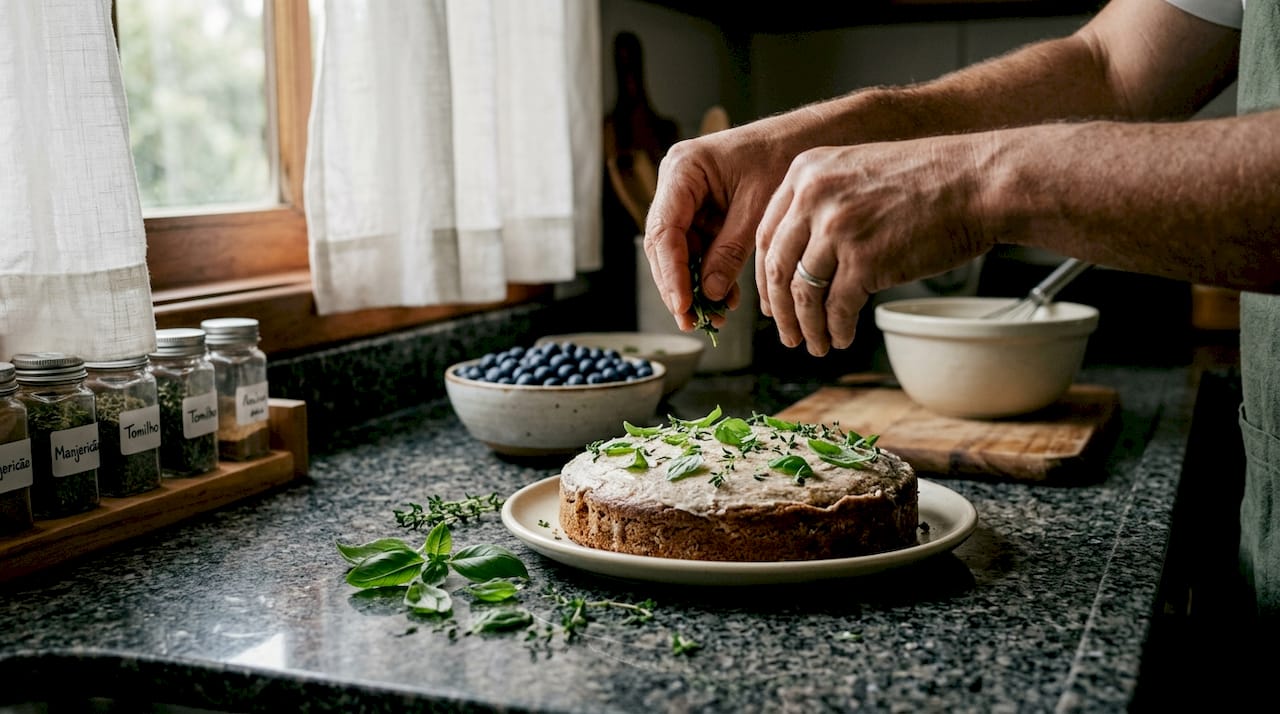
Understanding how to choose safe natural decorations, let's explore other popular options for personalizing cakes. Edible flowers are gaining ground in confectionery, and for good reason: they bring color, aroma, and even nutritional value that no artificial dye can replicate.
But there is an obvious trap that many ignore. Flowers from conventional florists are often treated with highly concentrated pesticides and preservatives, suitable for visual decoration but dangerous for consumption. Identifying the right species is not enough; their origin and cultivation method are equally important.
Safe edible flowers must be grown without pesticides and purchased from specialized growers. The most popular and recognized safe species include:
- Pansy (viola tricolor): mild flavor, striking appearance, ideal for birthday cakes
- Nasturtium: slightly spicy flavor, pairs well with cream cheese frostings
- Lavender: distinct floral aroma, excellent for wedding cakes and adult celebrations
- Violet: delicate flavor and intense color, perfect for cupcakes and elegant desserts
- Rose: edible petals, provided they are grown for that purpose and without pesticides
Professional Tip: Grow pansies or nasturtiums in pots at home without any chemicals. You will have fresh, safe, and free flowers for the next party. The process takes about six weeks from seed.
| Flower | Flavor | Recommended use | Accessibility level |
|---|---|---|---|
| Pansy | Mild, slightly vegetal | Cakes, cupcakes, salads | Easy to grow |
| Nasturtium | Spicy, peppery | Savory cakes, cream cheese | Very easy |
| Lavender | Floral, aromatic | Adult celebration cakes | Medium |
| Violet | Delicate, slightly sweet | Elegant desserts | Medium |
| Rose (edible) | Mild to floral | Luxury decorations | Requires a specialized supplier |
Edible herbs such as mint, basil, and rosemary also deserve attention. In addition to their aroma, they reduce the need for artificial additives in recipes, which is especially valuable when there are children with food sensitivities. You can find creative ideas for muffins that combine flowers and herbs in surprising ways.
Personalized edible decorations: safe paper and toppers
In addition to natural flowers, personalized paper decorations offer another creative and safe alternative for parties. Edible paper, also known as wafer paper, allows any image to be printed directly onto the surface of a cake or cupcake, with photographic quality results.
The practical advantage is enormous. Any theme, character, or family photograph can become part of the cake. And when the paper is certified for food use, the result is completely safe to consume. Edible photographic paper must follow Anvisa guidelines, excluding plastics and unauthorized plastic glitter from its composition.
A technical detail that many event planners are unaware of: paper weight matters a lot. For cake toppers, the ideal weight is between 220g and 240g, which ensures structural stability and prevents the topper from bending or warping due to the moisture of the frosting.
Before ordering personalized edible paper, check these points:
- Manufacturer origin: prefer European suppliers or those certified for the European market
- Declared composition: it must list corn starch, water, and approved food dyes
- Storage instructions: edible paper must be kept dry and in sealed packaging
- Compatibility with frosting: works best on smooth fondant or firm buttercream
- Delivery time: order at least five days in advance for personalization
Professional Tip: Never apply edible paper to frostings with a lot of moisture, such as fresh whipped cream on hot days. Moisture dissolves the paper quickly. If necessary, use a thin layer of cocoa butter as a barrier between the paper and the frosting.
| Decoration type | Food safety | Personalization | Durability after application |
|---|---|---|---|
| Edible paper (wafer paper) | High (when certified) | Total | 4 to 8 hours |
| Approved edible glitter | High | Limited | High |
| Common decorative glitter | Not safe | High | High |
| Natural florist flowers | Not safe | Medium | 2 to 4 hours |
| Pesticide-free cultivated flowers | High | Medium | 2 to 6 hours |
The edible paper guide available online is a useful resource for understanding exactly what type of material to look for. Also consult the wafer paper decoration checklist so you do not forget any step.
Scenic cakes and safe application of perishable decorations
Knowing the options and precautions, see how to apply these practices at parties safely and with style. An increasingly popular solution among experienced event planners is the scenic cake: a decorative structure made of styrofoam or dough that is not meant to be eaten, while the edible cake remains separate and safe in the kitchen.
Scenic cakes allow for extreme personalization without compromising structure or food safety. You can build a visually stunning five-tier cake without worrying about the structural stability of a real cake of those dimensions. The visual impact is complete; the edible cake, cut in the kitchen, reaches the children without risks.
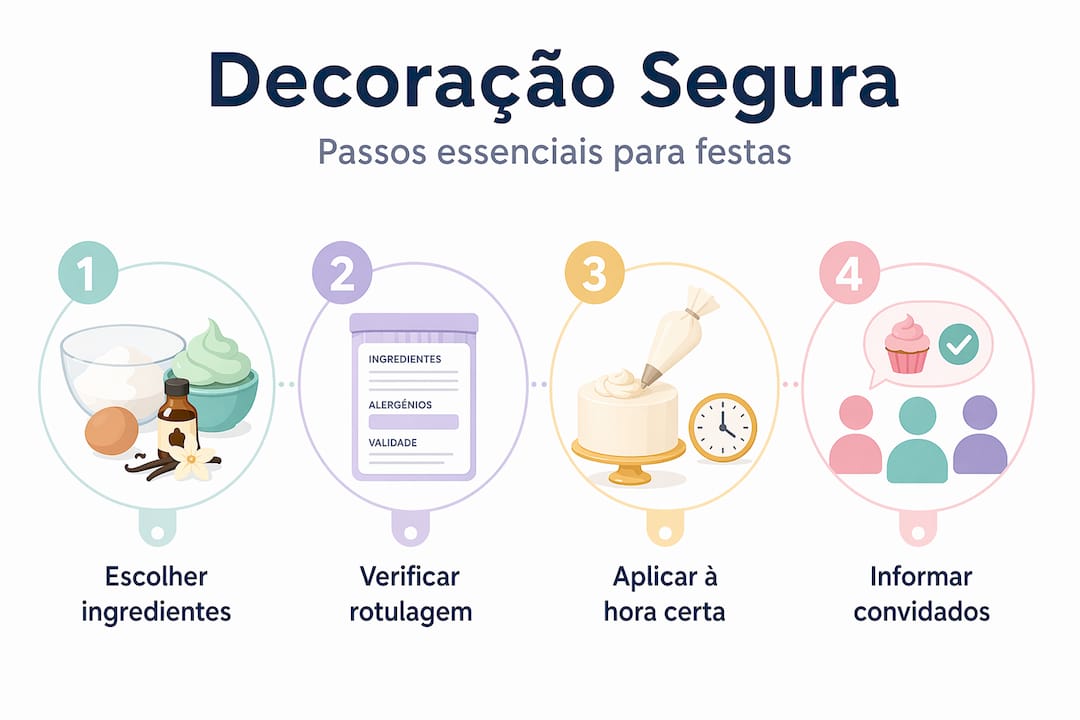
For perishable decorations such as fresh fruit and flowers, the order of operations is everything. Late application is the golden rule: it prevents excessive moisture and wilting, maintaining a fresh appearance and intact safety.
Follow this practical sequence:
- Prepare the base cake and keep it refrigerated until two hours before the party
- Organize the perishable decorations in airtight containers in the refrigerator
- Apply firm frostings (fondant, ganache) at least one hour in advance
- Add edible paper or toppers 30 to 60 minutes before serving
- Apply fresh fruit and flowers in the last 15 to 20 minutes before presenting the cake
- Keep the cake in the shade and in a cool place until the moment of cutting
Professional Tip: If you use sliced strawberries as decoration, quickly brush them with diluted luster jam. Keep the cut fresh, prevent oxidation, and give it a professional finish that lasts another two or three hours.
Regarding how to use edible photos for cakes, the principle is the same: application close to the time of serving guarantees the best visual result and maximum safety.
How to ensure safety: checklist for parents and event planners
With this checklist, parents and event planners can transform any party into a safe and memorable event. The standardization of processes and choice of suppliers that comply with Anvisa standards are the two pillars of a party without unpleasant surprises.
Before buying:
- Check if the product has food certification (not just “non-toxic”)
- Read the full ingredient list
- Confirm that the supplier issues a product technical sheet
- Research the manufacturer and confirm that it complies with Anvisa or EFSA
- Mentally separate what is decorative from what is edible
When preparing the party:
- Store perishable decorations in airtight containers until the last moment
- Keep the edible cake separate from the scenic cake, with clear labels
- Never mix utensils used in non-edible decorations with those used for the cake
- Inform adult guests which decorations are safe to consume
Professional Tip: Print a small label for the scenic cake indicating “for decoration only.” It seems like an exaggeration until a child tries to eat styrofoam.
| Action | When to do it | Responsible person |
|---|---|---|
| Check product certifications | At the time of purchase | The person organizing the party |
| Prepare and refrigerate the base cake | The day before | Confectioner or responsible person |
| Apply firm frostings | 1 hour before | Confectioner |
| Apply edible paper | 30 to 60 min before | The person assembling the cake |
| Apply fresh flowers and fruit | 15 to 20 min before | The person assembling the cake |
| Label the scenic cake | At the beginning of assembly | The person organizing |
The benefits of edible decorations are only realized with this level of planning. Also consult the complete edible paper guide to delve into each step.
The balance between creativity and safety in edible decorations
There is a real tension in modern confectionery that few speak openly about: the visual pressure of social media is pushing decorators and party planners toward increasingly bold, and not always safe, choices.
The biggest misconception we repeatedly find is the confusion between “non-toxic” and “edible.” The term “non-toxic” does not guarantee that the product is edible; specific approval for food is required. Many parents buy “non-toxic” glitter in craft stores, believing they are being responsible. They are not. They are saving money at the expense of their children's health.
The industry also has a responsibility here. Labeling is often ambiguous by design, not by accident. Products that cannot be ingested are sold in confectionery sections without any prominent warning. Those who don't know what to look for won't realize the risk.
Our position is clear: the smartest solution for parties with a high visual impact is to separate the decorative from the edible. Certified edible photo paper, combined with properly grown flowers and a prop cake for the "wow" factor, delivers exactly what you want without compromising anyone.
Parents and organizers who work with transparent suppliers, who present technical sheets and certifications without hesitation, rarely have problems. Problems arise when price or appearance is prioritized without asking the right questions. Information is the best decoration you can bring to a party.
Discover personalized edible decorations for your party
To make it easier to practically apply everything you have learned, get to know these reliable and safe professional options. At Funbakery, we specialize in personalized wafers and sugar paper for cakes, cupcakes, and cookies, with designs for every theme: superheroes, children's characters, birthdays, sports, and much more.
Each personalized edible image is produced with authorized ingredients, following current food standards. You can send photos, names, ages, and texts to create a truly unique decoration. For cupcakes and muffins, our personalized muffin topper designer allows you to create complete sets with the party theme. Visit Funbakery and discover how to transform your next event into a memorable and completely safe experience.
Frequently asked questions about edible decorations
What makes an edible decoration safe for consumption?
Safe edible decorations use ingredients authorized by Anvisa, free of plastics and pesticides, with clear food certification. Decorative products can only be used on food when there is specific authorization and scientific proof that they do not pose health risks.
Can I use regular glitter to decorate cakes?
No. Regular glitters often contain plastic polymers prohibited for ingestion. Anvisa suspended several brands of glitter and decorative powders for containing these unauthorized materials; only use glitter with express approval for food use.
Which flowers are safe to use in edible decorations?
Species such as pansies, nasturtiums, lavender, and violets are safe when grown without pesticides and purchased from specialized growers; flowers from conventional florists are not suitable for consumption.
How should I apply fresh fruit and flowers to cake decorations?
Application should be done 15 to 20 minutes before serving. Late application prevents moisture and wilting, maintaining freshness and appearance until the moment the cake is cut.
What is the advantage of using prop cakes at parties?
Prop cakes allow for extreme personalization without compromising food safety, because the edible cake is kept separate and the prop cake only serves the visual function of impact on the table.