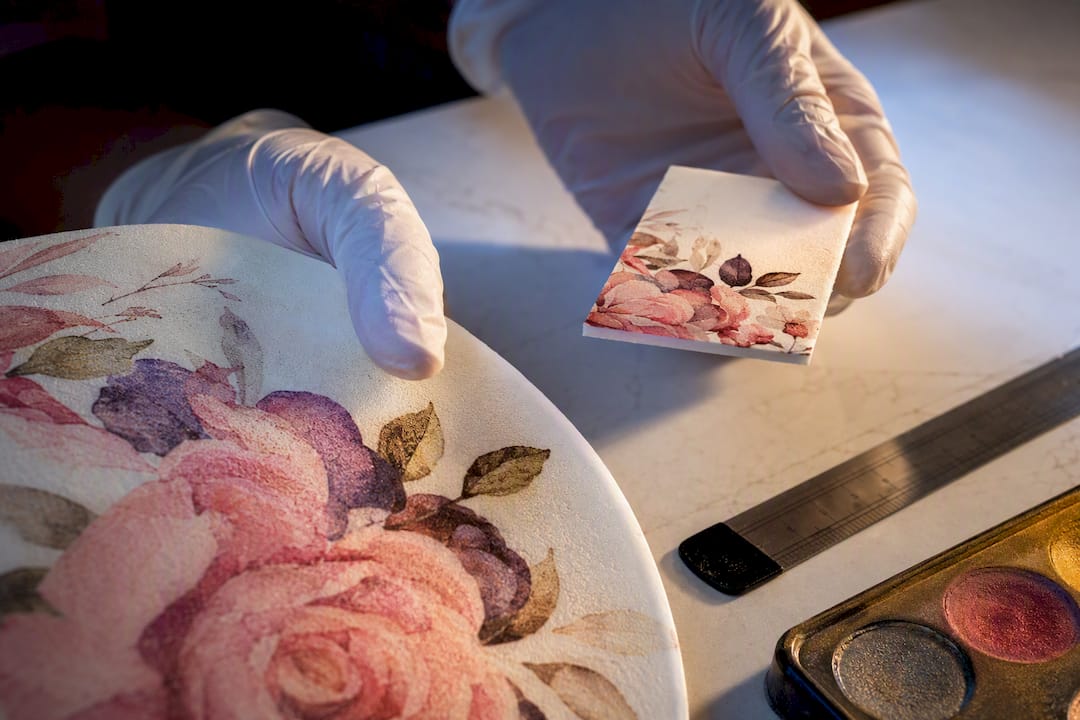
The fastest and most reliable way to add a crispy base to your desserts is to buy ready-to-use wafer bases. You avoid baking them yourself, the risk of them breaking, and uncertainty about their thickness. They work well for both birthday cakes and cupcakes, and brands offer the option of personalizing them with photos or names. Keep reading to find out what to look for before buying and how to place them without letting them get soggy.
In summary:
- Thicker, less porous wafer bases resist moisture better and stay crispy longer on moist desserts.
- It is recommended to place a dry intermediate layer, such as chocolate or icing, when using liquid fillings or fresh fruit to prolong their crunchy texture.
- Storing the wafers in a dry place and in an airtight container keeps them crispy for months, but moisture or improper storage quickly makes them soft.
- Buying personalized bases with a design or photo requires ordering in advance, especially during peak seasons, to avoid delivery delays.
- Choosing a reliable supplier involves checking the ingredients, weight, storage conditions, and other customers' reviews to prevent breakage and ensure quality.
Table of contents
- What is a wafer base and what makes it crispy
- How to choose the right wafer base for your dessert
- What to put on the wafer without losing its texture
- How to place the base without letting it get soggy
- How to store the wafer base and keep it crispy
- Funbakery's experience with personalized bases and wafers
- Price comparison and value for money
- Delivery times when buying wafer bases online
- How to choose a reliable supplier of wafer bases
- What I learned testing dozens of wafer bases
- Personalize your wafer with Funbakery without the hassle
- Sources
What is a wafer base and what makes it crispy
A wafer base is a thin, baked, rigid sheet designed to support a dessert without adding its own flavor. It should not be confused with thicker, more elastic wafer pastry or communion wafers, which have a different purpose and thickness. Traditional wafers are made with flour, water, and sometimes milk or egg, and baked between two hot griddles until dry and brittle.
Thickness and porosity determine how it reacts to moisture. A thicker base can support more weight and takes longer to soften; a thinner, more porous one absorbs liquid quickly, which is critical if you are going to top it with whipped cream or fruit. Some industrial manufacturers add modified starches and specific fats to the batter to delay moisture absorption from creamy fillings, as described in a patent on wafer composition. This difference in formulation explains why two packages that look the same can behave differently on a moist cake.
How to choose the right wafer base for your dessert
Not all bases are suitable for everything. Before buying, it is worth checking these points:
- Size and shape: standard diameters are usually suitable for round cakes, but rectangular formats and small discs for cupcakes are also available.
- Thickness: thin bases look best on flat decorations; thick ones resist moist fillings or multiple layers of weight better.
- Ingredients and allergens: check if it contains gluten, egg, or dairy, especially if you are serving it at a children's party with allergic children.
- Presentation: the number of units per package and the net weight directly affect the price per unit, so compare them before deciding.
- Compatibility with edible printing: some bases are treated to accept edible ink or sugar paper without the image running.
Professional tip: if your dessert contains fresh fruit or whipped cream, always choose the thickest base available and place a dry intermediate layer, such as cooled melted chocolate. You will gain several hours of crispness before the moisture takes effect.
What to put on the wafer without losing its texture
The wafer base works in several contexts: as a cake base, as an intermediate disc between cake layers, as an individual support for cupcakes, or as a canvas for decorated cookies. What you decide to put on top determines how long it stays crispy.
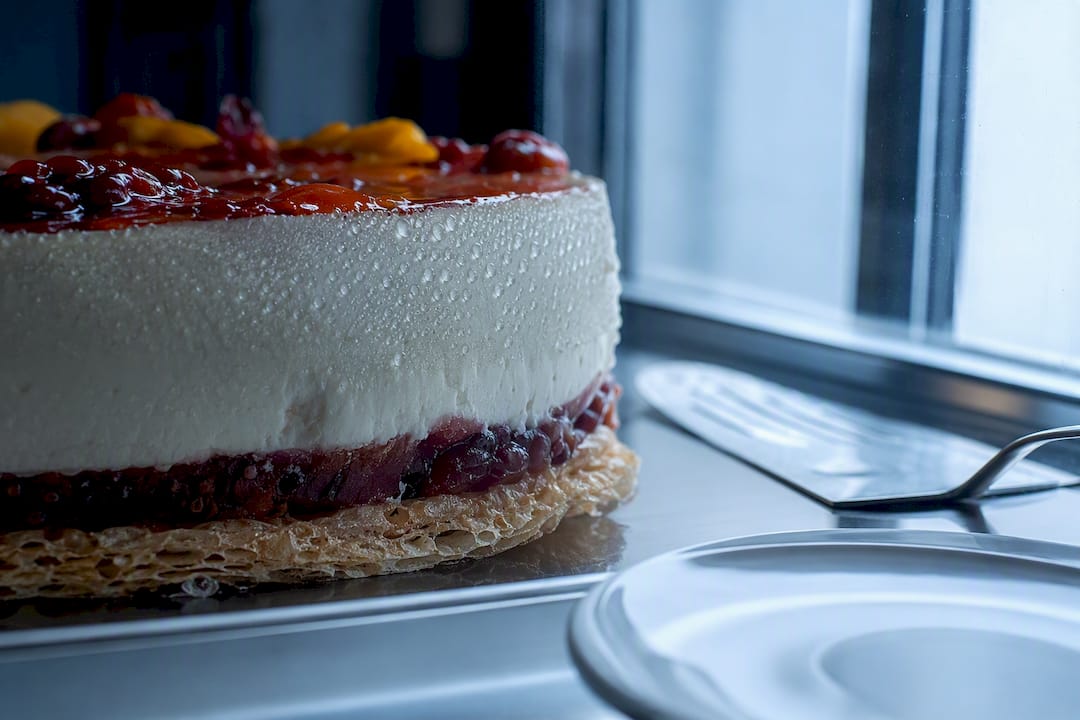
- Fillings that moisten quickly: pastry creams, liquid cream, and high-water-content fruits soften the wafer in minutes if they come into direct contact.
- How to mitigate this: a thin layer of tempered chocolate or very reduced jam acts as a barrier between the wafer and the moist filling.
- Safe combinations: firm ganache, buttercream, and dry fondant layers barely transfer moisture and leave the wafer intact for hours.
- Assembly trick: place the wafer just before serving if the filling is very liquid, instead of leaving it assembled since the night before.
These combinations also serve as a reference if you prepare wafer fritters or other sweets that combine the crispy base with traditional sweet fillings.
How to place the base without letting it get soggy
Poorly assembled wafer is the most common cause of it breaking or bending halfway through a party. The process is not complicated, but it requires order.
- Dry the surface of the cake or tart thoroughly before placing the wafer; any remaining moisture will transfer in seconds.
- Apply a thin intermediate layer (chocolate, dry icing, or a very thin layer of buttercream) that acts as a sealant.
- Place the wafer with clean, dry hands, pressing lightly from the center toward the edges.
- If you need to secure it more, use a few drops of melted chocolate on the support points instead of wet icing.
- Assemble the whole thing as close as possible to serving time, especially in high ambient temperatures.
Professional tip: traditional techniques of mold temperature, between 160 and 200 °C with a thin layer of fat, still explain why a well-baked wafer resists handling better, as reported in a study on the tradition of wafers and wafer rolls. Although you buy the base already made, understanding that process helps you handle it with more care.
A common mistake is storing the assembled cake in the refrigerator for hours: condensation when taking it out softens the wafer almost immediately. It is better to assemble and serve it within a short window of time.
How to store the wafer base and keep it crispy
Store the bases in a dry place, at a cool room temperature, and inside an airtight container; ambient moisture is their main enemy. Unopened, a good-quality base usually stays crispy for several months inside its original packaging. Once the package is opened, it is advisable to consume the rest within a few weeks and always keep it well closed, with a moisture absorber if possible.
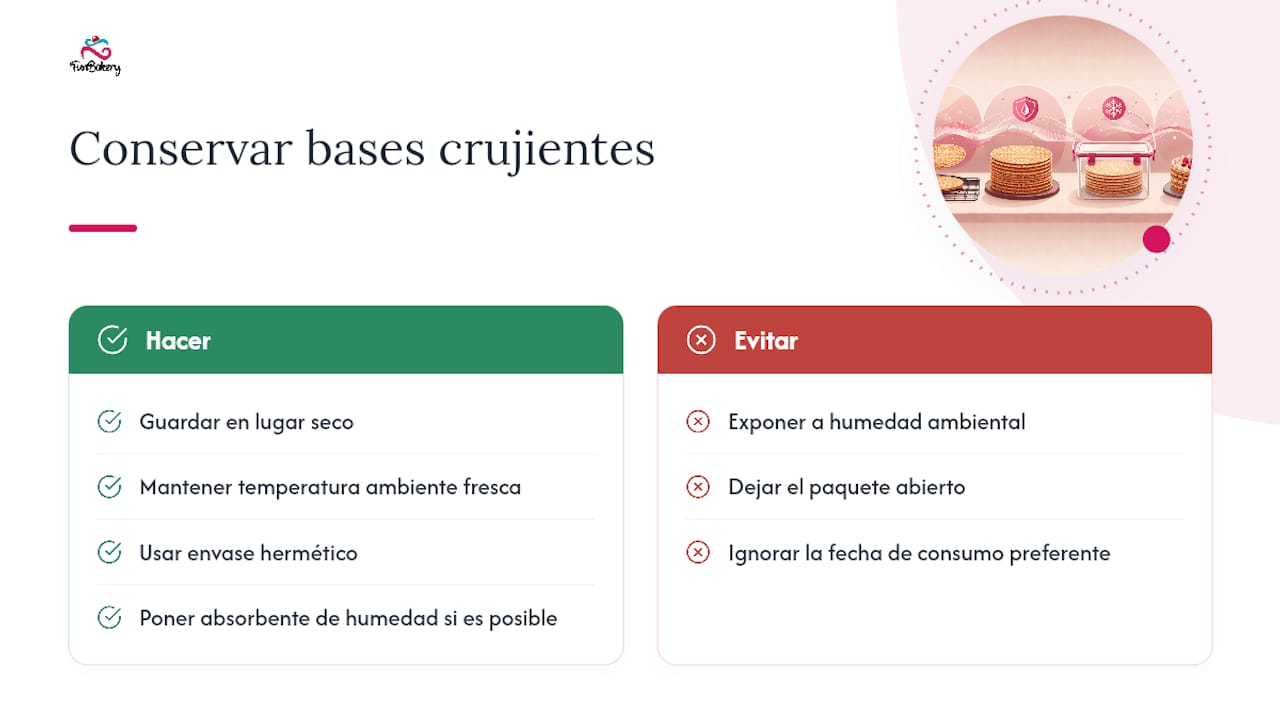
If a wafer gets slightly damp before using it, a very brief pass in the oven at a low temperature, with the door watched, can restore some of its rigidity, although it does not always recover one hundred percent of its original texture. Always check the best-before date on the package: it is not a strict expiration date, but it indicates the point from which the texture starts to lose quality noticeably.
Funbakery's experience with personalized bases and wafers
There are sellers who offer ready-to-use wafer bases and personalized design services with photos, names, and ages, designed for birthday cakes and celebrations. The available formats usually cover round, rectangular, and small discs for cupcakes, adapting to most home projects.
The team, with David at the head of practical tests, validates each design before shipping and recommends resistant packaging to avoid breakage on the way home. That combination of personalization and care in shipping is what allows us to recommend, within the catalog itself, both the ready-made designs from the catalog and the custom design service for those looking for something unique.
Price comparison and value for money
The price of a wafer base varies mainly due to three factors: thickness, package size, and whether it includes personalization. Generic bases without design, sold in packs of several units, are usually the most economical option per unit, ideal for those decorating several muffins or cupcakes at once.
Bases with printed catalog designs cost a little more because they include the work of edible printing on sugar paper or wafer, and that additional margin is justified if you are looking for a professional finish without ordering an exclusive design. The completely personalized design service, with a custom photo and text, has the highest price of the three levels because it involves individual design work, not just mass printing.
The real value for money is not measured only by the cost per unit, but by how long the base holds assembled on the dessert. A cheap base that softens in half an hour forces you to repeat the purchase or improvise last-minute solutions, while a slightly more expensive base but with a better flour formulation holds up during the entire celebration. It is also worth checking the net weight of the package: two products with a similar price can have very different quantities of units, which completely changes the real cost per wafer.
Delivery times when buying wafer bases online
Buying wafer bases online adds a variable that does not exist in the physical store: production and shipping time. Catalog bases, without personalization, are usually dispatched in a few days because they do not require individual design work, only packaging and standard shipping.
Orders with personalized design need an additional margin, since the designer has to receive the photo or text, assemble the composition, and confirm the result with the customer before printing. Therefore, if the dessert is for a specific date, such as a birthday, it is advisable to place the order well in advance and not leave it until the last moment, especially during high-demand dates such as Christmas or the summer months, when the volume of personalized orders increases.
Another factor to watch is the type of shipping chosen and the packaging. A wafer is a delicate and brittle product, so reinforced packaging reduces the risk of it arriving broken, although it slightly lengthens the order preparation time compared to a basic shipment without additional protection.
How to choose a reliable supplier of wafer bases
Not all suppliers offer the same product quality or the same care in shipping, so it is worth looking at concrete signs before buying. The product sheet should clearly indicate the net weight, the number of units per package, and the exact ingredients, not just a generic description of “crispy and ready to use”.
A serious supplier also details the recommended storage conditions and offers some practical guarantee about the condition of the product upon arrival, something especially relevant given how fragile this type of sheet is. The reviews of other buyers, when available, usually reveal better than the product sheet itself whether the wafers arrive intact or broken, and whether the personalization service meets the promised deadlines.
It is also advisable to check if the supplier allows you to speak directly with the design team before confirming a personalized order. That prior communication avoids last-minute surprises, such as a misspelled name or a low-resolution photo that is not clearly seen once printed on the wafer. A supplier who answers these doubts clearly before the purchase is usually also the one who resolves any problem best after shipping.
What I learned testing dozens of wafer bases
After assembling hundreds of cakes with different bases, my three priorities are always the same: thickness suitable for the filling, airtight container from day one, and a dry intermediate layer before placing any cream. The worst cake I saw ruined was due to whipped cream placed directly on a thin wafer, without a barrier: it bent in twenty minutes. If your project needs something more than a catalog design, ordering personalization with a photo or name is usually worth the wait.
— David
Personalize your wafer with Funbakery without the hassle
There are alternatives to making your own wafer at home: you choose the format, upload the photo or text you want, and receive a base ready to assemble, without depending on your oven and your batter coming out perfect on the first try.

The process is simple: you select the format (round, rectangular, or cupcake disc), upload the image or name you want to include, and the design team prepares the layout before printing it. Catalog orders are dispatched in a few days; custom ones need a little more time because they undergo review before production. If you are looking for something eye-catching for a themed party, the personalized wafer with photo and name is a good starting point, as is the custom design studio if you prefer to start from scratch with your own idea. Choose the format you need and order your design well in advance of the event.
Sources
For anyone who wants to better understand the origin and technique of wafers, the Wikipedia entry on the wafer explains traditional ingredients and historical context. The report by El País on the dough wafer crisis details why flour quality affects the product's resistance. The treatise by the Institute of Identities covers the artisanal technique of temperature and greasing the mold that remains relevant today.