TL;DR:
- Creative dessert customization combines technique, aesthetics, and multisensory experiences for unique celebrations. 2026 trends include mini portions, flavor fusions, technology such as 3D printing and artificial intelligence, and complete sensory experiences. Tools such as printed wafers, premium creams, and last-minute assembly make professional results accessible to everyone.
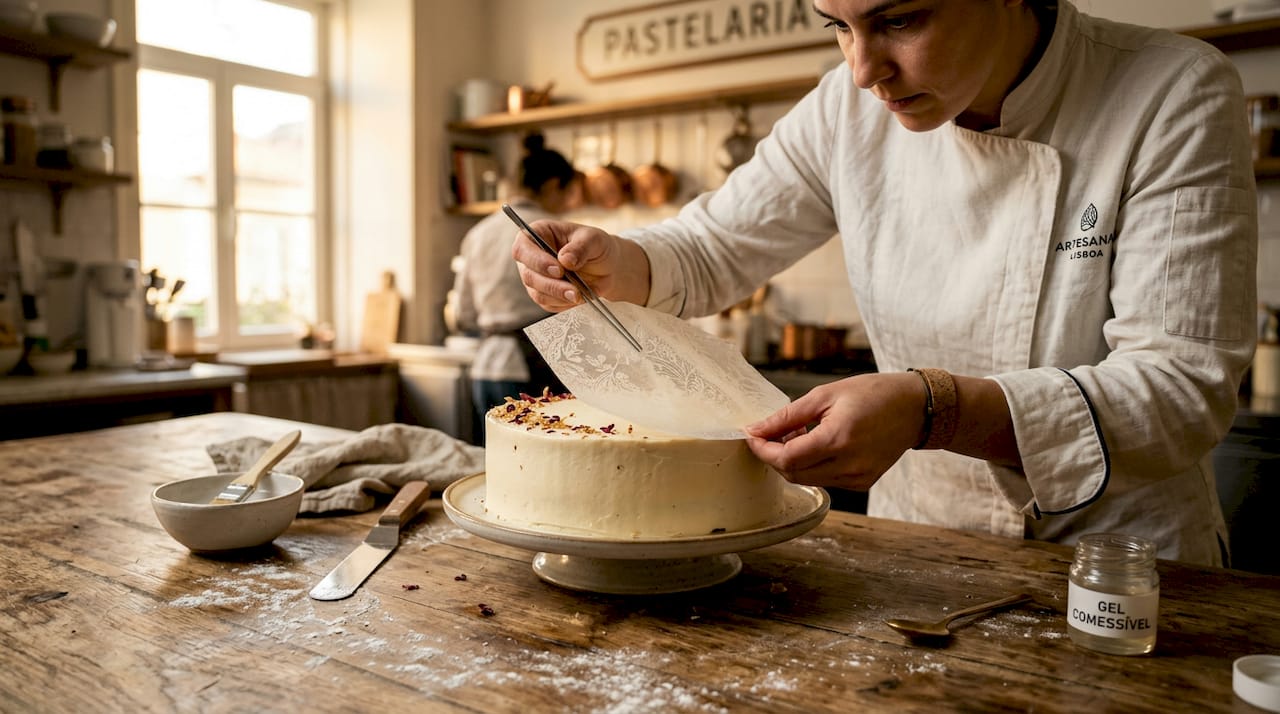
Creative dessert customization is the process of designing and adapting sweets by combining technical innovation, aesthetics, and multisensory experiences for special celebrations. What was once limited to writing a name in icing now encompasses 3D printing, artificial intelligence, photorealistic edible wafers, and modular formats that adapt to any event. Personalization in 2026 transcends decoration to integrate with health, wellness, and a complete sensory experience. If you are looking for ideas to decorate desserts for birthdays, weddings, or corporate events, this article provides the tools and trends that are truly making a difference in 2026.
What are the main trends in personalized desserts for 2026?
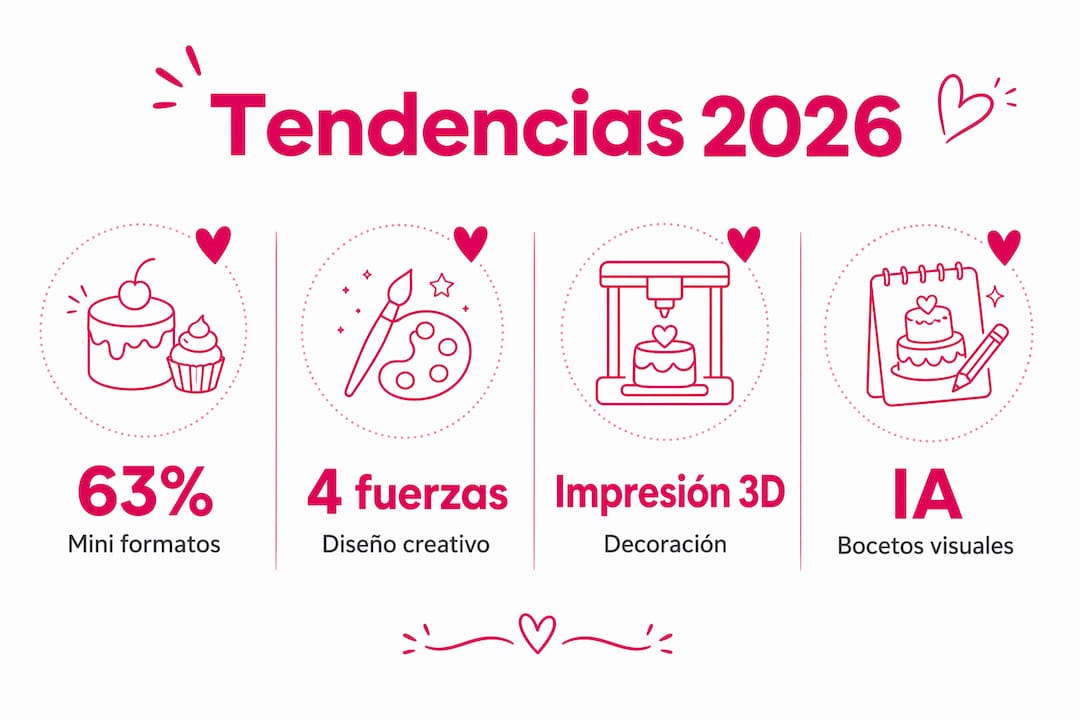
Creative dessert design in 2026 is defined by four clear forces: small formats, flavor fusion, applied technology, and multisensory experience. Understanding these trends is not optional if you want your desserts to stand out at a celebration.
Mini formats with a big impact
63% of consumers prefer smaller portions that combine indulgence with wellness, according to Puratos' 2026 Taste Tomorrow report. This means that mini cakes, individual chocolates, and themed cupcakes are not just an aesthetic trend, but a direct response to what the modern consumer demands. Mini formats are ideal for dessert tables, personalized gifts, and retail because they allow for greater variety without wasting product.
Fusion of flavors and textures
Sour, tropical, and fermented flavors dominate the most original offerings of 2026. The combination of crunchy textures with creamy fillings creates a contrast that the palate remembers much more than a dessert with a uniform flavor. Creative pastry combines flavors, textures, presentation, and cultural identity to offer complete sensory experiences, making each dessert a statement of intent.
Key trends for 2026 in summary:
- Individual mini portions with personalized themed decoration
- Sour and tropical flavors combined with contrasting textures
- Use of artificial intelligence to generate original designs and recipes
- Multisensory experiences that integrate aroma, texture, and visual presentation
- Functional ingredients such as plant-based proteins and adaptogens in celebration desserts
Professional tip: If you are organizing a dessert table for an event, mix three or four different mini formats with the same color palette. The visual impact is immediate, and each guest can personalize their experience by choosing flavors.
How does technology drive creative dessert design?
Technology has gone from being a luxury for professional pastry chefs to an accessible tool for anyone with curiosity and a desire to experiment. Three concrete advances are redefining how desserts are personalized today.
3D printing for toppers and molds
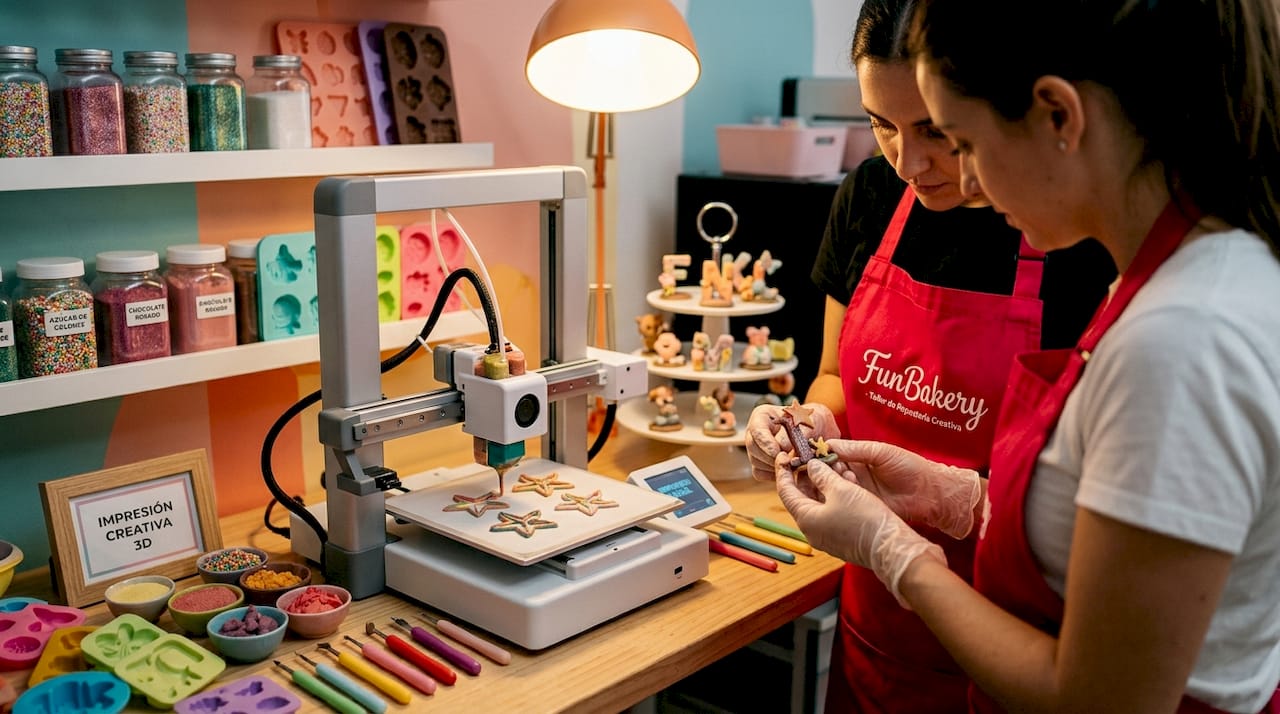
3D printing for toppers allows the creation of personalized decorations with stable geometries and clean finishes that would be impossible to achieve by hand. Technical parameters matter: PLA material, layer height between 0.16 and 0.2 mm, 10 to 15% infill, and minimum support ensure that the piece works on fondant without deforming. A common mistake is printing visually appealing pieces without adequate functional support, which causes the topper to deform when placed on the cake. Platforms like Cults3D offer downloadable models of spaceships, letters, character figures, and geometric shapes ready to print.
Ready-to-use premium creams and fillings
Puratos launched the Signature Creations line in 2026, with premium creams and fillings that allow for quick customization without sacrificing quality or consistency. This is especially useful when working in batches for events with dozens of portions. The advantage is not just time savings, but the ability to combine these bases with themed decorations without the flavor varying between units.
Artificial intelligence in design
AI tools such as Midjourney or Adobe Firefly allow you to generate visual sketches of desserts before producing them, reducing the margin of error in complex designs. You can describe your dessert concept, generate a reference image, and use it as a guide for the actual decoration. This application does not replace technique, but it notably accelerates the creative process.
Professional tip: Before printing a 3D topper, test the model at a reduced scale. This way you detect support or proportion problems without wasting material on a piece that will not work.
What practical techniques exist for personalizing desserts at celebrations?
Personalizing desserts for a celebration does not require a professional pastry shop. It requires knowing the right resources and combining them thoughtfully. Here is an organized method to achieve it.
Step-by-step to personalize with impact:
- Define the visual concept. Choose a color palette and a theme before buying ingredients or materials. A superhero birthday, a minimalist wedding, and a tropical party have completely different visual languages.
- Select the right base. Use quality prepared bases such as cakes, brownies, or cheesecakes that hold decoration well without losing texture. Modular production with prepared bases and creams reduces time and maintains consistency between units.
- Incorporate printed edible wafers. Wafers with photorealistic images are the most versatile resource for personalizing desserts. They accommodate photographs, names, ages, and themed designs without the need for advanced decorating skills.
- Add themed toppers. Combine edible and non-edible toppers depending on the desired effect. Always remember to distinguish them clearly, especially if children are present, just as safety guidelines recommend for decorating mini cakes.
- Assemble at the last minute. Crunchy elements and delicate decorations lose their impact if placed too far in advance. Stability in mini desserts depends on assembling the components just before serving.
Resource comparison for personalizing desserts:
| Resource | Main advantage | Best for |
|---|---|---|
| Printed edible wafers | Photorealism without technical skill | Birthdays, themed events |
| 3D printed toppers | Unique and reusable geometries | Weddings, corporate events |
| Ready-to-use premium creams | Consistency in batch production | Dessert tables, catering |
| Decoration with AI as a guide | Fast and accurate sketches | Pre-production design |
Professional tip: For events with more than 20 portions, prepare the bases two days in advance and reserve the personalized decoration for the 24 hours prior to the event. This way you control time without compromising presentation.
You can find more detailed ideas in this guide to decorating desserts with current techniques and trends.
How to balance technique and creativity when personalizing desserts?
Creativity without technique produces desserts that look good in photos but disappoint the palate. Technique without creativity produces desserts that are correct but forgettable. The balance between the two is what defines a truly memorable dessert.
“The professional technique that ensures texture, flavor, and stability is just as crucial as creativity to achieve a successful and memorable personalization.” — Postre Pierrot, Sosa
Postre Pierrot, created for 24 plates with pear sorbet stabilized with Profiber Stab 5, illustrates this principle with precision. It is not just a pretty dessert. It is a technical construction where each ingredient fulfills a specific function: the stabilizer maintains the texture of the sorbet, the selection of the pear provides freshness, and the final assembly communicates lightness. Personalization here goes much further than appearance.
The most common mistakes when personalizing desserts are three. The first is prioritizing aesthetics over structure, which results in desserts that collapse or lose their shape before reaching the table. The second is ignoring flavor compatibility when adding decorations, such as using very sweet wafers on already sweetened creams without adjusting the balance. The third is assembling too far in advance, which destroys crunchy textures and ruins the visual impact.
To maintain texture in personalized mini formats, select components with clear contrasts: something crunchy, something creamy, something sour. This tripartite structure works in almost any flavor combination and guarantees that every bite is interesting. Funbakery's tips for personalizing cakes develop this approach with concrete examples for different occasions.
Professional tip: Before decorating, test your dessert without any adornment. If the flavor and texture are not convincing on their own, no decoration will save it. Visual personalization enhances a good dessert, it does not replace it.
Key points
The vision of creative dessert personalization requires combining solid technique, current technological resources, and aesthetic judgment to create sweets that impact both the eye and the palate.
| Point | Details |
|---|---|
| Mini formats as a dominant trend | 63% of consumers prefer small portions that combine quality and indulgence. |
| Technology accessible to everyone | 3D printing and edible wafers allow for professional personalization without a specialized pastry shop. |
| Modular assembly for events | Using prepared bases with personalized decorations reduces time and maintains consistency in batches. |
| Technique before aesthetics | A dessert must work in flavor and texture before adding any decorative element. |
| Last-minute assembly | Crunchy and delicate elements must be placed just before serving to preserve their impact. |
What I have learned after years of observing this industry
I have been following the evolution of dessert design for some time, and there is something that is clear to me: most people underestimate how much access to professional tools has changed. Before, an edible wafer with a personalized photo required industrial equipment and a high minimum order. Today, anyone can order a wafer with their child's photo, the birthday person's name, and the exact colors of their favorite character, and receive it at home in days.
What seems most interesting to me is not the technology itself, but what it reveals about people. We want desserts to tell a story. We want our child's birthday cake to reflect exactly who they are at this moment, not a generic design from a store. That emotional connection is the true engine of creative personalization.
That being said, there is a frequent trap that I see repeated. Many people obsess over the visual aspect and neglect the flavor. A spectacular dessert that tastes like cardboard is a failure, regardless of how beautiful the wafer is. Technique and creativity do not compete. They need each other.
My most honest advice: start by mastering a solid base, whether it is a fluffy cake, a creamy cheesecake, or a dense brownie. When that base is impeccable, any personalized decoration turns it into something memorable. Without that base, the decoration only distracts.
The future of dessert personalization lies in combining the artisanal with the technological without losing the warmth of something made with intention. AI tools, photorealistic wafers, and modular systems are allies, not substitutes for creative judgment.
— David
Personalize your desserts with Funbakery wafers
If you want to take creative personalization to your next celebration without technical complications, Funbakery has the most direct solution on the market.

Funbakery specializes in personalized edible wafers for cakes, pastries, cupcakes, and muffins. You can incorporate photographs, names, ages, and custom text into superhero, children's character, sports, hobby, and adult themes. Funbakery's custom design service adapts any image with a professional finish, ready to place directly on your dessert. Visit Funbakery and find the perfect design for your next special event.
FAQ
What is creative dessert personalization?
Creative dessert personalization is the process of designing sweets by combining technique, aesthetics, and sensory experiences adapted to a specific celebration or person. It includes resources such as edible wafers, themed toppers, 3D printing, and premium creams.
What are the trends in personalized desserts for 2026?
The main trends are individual mini formats, the fusion of sour and tropical flavors, the use of artificial intelligence for design, and the multisensory experience. Puratos' Taste Tomorrow report confirms that 63% of consumers prefer small portions with greater impact.
How to personalize desserts without advanced baking skills?
Use printed edible wafers with your design, quality prepared bases, and themed toppers. This modular approach allows for professional-looking results without the need for advanced decorating techniques.
Are edible wafers safe for children?
Yes, edible wafers made with food-safe ingredients are safe. Always clearly distinguish between edible and non-edible decorations, especially in the presence of young children.
What advantage does 3D printing have in dessert decoration?
3D printing allows you to create toppers with unique geometries and clean finishes that would be impossible to achieve by hand. To ensure stability, use PLA material with a layer height between 0.16 and 0.2 mm and an infill of 10 to 15%.