TL;DR:
- Printable wafer paper is an ultra-thin edible sheet that decorates desserts without altering their flavor or structure. It offers customization with photographs, names, and designs, making it an affordable and versatile option for any celebration. Proper application requires adequate surface preparation and careful handling to achieve a professional and long-lasting result.
Printable wafer paper is an ultra-thin edible sheet made from starch, water, and oil, allowing cakes, cupcakes, and muffins to be decorated with photographs, names, and custom designs without altering the dessert's flavor. The advantages of using printable wafer paper go far beyond aesthetics: it combines complete customization, a light texture, and an affordable cost that other decorative materials cannot match. Funbakery, a specialist in custom edible wafer paper, works with this material precisely because it transforms any dessert into a unique keepsake. If you are looking for creative ideas for your next celebration, this article gives you everything you need to know.
1. Neutral flavor that does not compete with your dessert
The most underestimated advantage of printable wafer paper is that it does not alter the flavor of the dessert. Its starch-and-water-based composition produces a virtually neutral flavor, meaning that the diner can enjoy the cake, cream, or fondant without interference. This sets it apart from other decorations such as colored fondant or sugar flowers, which add extra sweetness and can be cloying. For cakes with delicate flavor profiles, such as lemon or red fruit, this neutrality is a decisive advantage.
2. Thin texture that adds no weight or volume
Wafer paper is very thin and light, making it ideal for decorations that should not alter the structure of the dessert. An edible wafer sheet on a cupcake is barely noticeable when bitten, unlike thick layers of fondant that many diners remove before eating. This lightness also makes transport easier: a cake decorated with wafer paper maintains its appearance intact during transit without the decoration shifting or warping. For bakers who deliver orders to customers' homes, this detail makes the difference between a professional and an amateur product.
3. Complete customization with photos, names, and themes
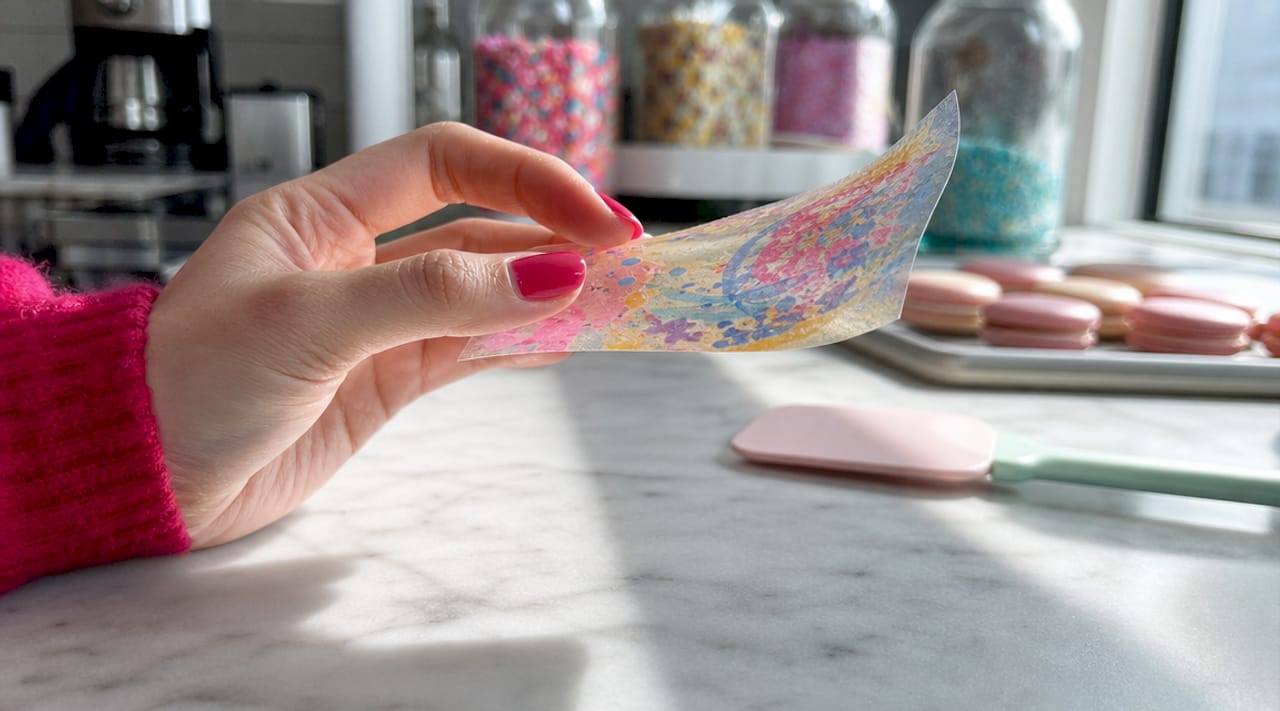
Wafer paper allows you to print photos and designs with a color fidelity that other decorative methods cannot achieve. You can reproduce a child's face on their birthday, their favorite team's crest, or a wedding photograph with almost photographic quality. This level of customization turns the dessert into an emotional element of the event, not just a food item. Funbakery offers a custom design service where its designers incorporate names, ages, and personalized text to achieve a unique finish.
Professional tip: Always send the image in high resolution (at least 300 dpi) to get a sharp print with vibrant colors on the wafer paper.
4. Affordable solution without sacrificing visual quality
Printable wafer paper is accessible and affordable compared to other visually striking decorations such as hand-modeled fondant figures or elaborate sugar flowers. The cost per unit is low, and the visual result is equal to or better than techniques that require hours of manual work. For those organizing parties on a tight budget, this value for money is one of the most concrete benefits of printable wafer paper. A batch of custom wafer paper for 12 cupcakes can cost less than a single handcrafted decorative figure.
5. Versatility for all types of desserts and surfaces
Wafer paper is not limited to round cakes. It works on fondant, buttercream, chocolate, and gelatin, making it compatible with practically any dessert. You can use it on cupcakes, cookies, donuts, brownies, and even chocolate bars. This versatility makes it the most flexible tool for creative bakers. The benefits of printable wafer paper multiply when you combine it with different surfaces and formats, because the same design can be adapted to the entire dessert table of an event with visual consistency.
6. Types of wafer paper: how to choose the best for your project
Not all wafer paper is the same, and choosing correctly makes the difference in the final result. Here is a comparison of the most common types:
| Type | Texture | Print quality | Recommended use |
|---|---|---|---|
| Rice wafer paper | Thin and flexible | Good | Cakes, cupcakes, delicate decorations |
| Corn wafer paper | Thicker and crispier | Good | Bases, sweet snacks, durable applications |
| Sugar paper | Very thin and smooth | Excellent | Detailed designs, photographs |
| Revoprint sheet | Flexible and durable | Very high | Professional designs, special events |
Corn wafer paper is more durable and has a slight sweet flavor, making it recommended when durability is a priority. Revoprint edible sheets, on the other hand, combine flexibility and print quality without a plastic backing, making them compatible with most edible printers on the market.
Professional tip: If your cake has a curved or irregular surface, choose rice wafer paper or Revoprint sheet for their greater flexibility. Corn wafer paper can crack when bent.
7. Proper application: steps for a perfect result
Applying a wafer sheet without it breaking or warping requires technique. Follow these steps to achieve a professional finish:
- Prepare the surface. The preparation of the surface is the most critical step. The buttercream or fondant must be firm but slightly moist. A surface that is too dry will not adhere the wafer paper; one that is too moist will dissolve it.
- Apply the edible adhesive. Use a thin layer of frosting, neutral gelatin, or water with a silicone brush. Do not soak the surface: a uniform film is enough.
- Place the wafer paper carefully. Start from the center toward the edges to avoid air bubbles. A silicone roller helps press it evenly without damaging the print.
- Smooth the edges. If the wafer paper overhangs, trim it with clean scissors or a pastry cutter. Do this with smooth, continuous movements.
- Refrigerate the dessert. After application, refrigerating the dessert sets the decoration. The cold hardens the frosting and stabilizes the wafer paper so that it remains flat and attractive.
8. Printable wafer paper at birthdays and special events
The emotional impact of a custom wafer sheet at a children's birthday party is difficult to replicate with any other decoration. Seeing the face of your favorite character on the cake, or the birthday child's name written in the font of their favorite series, creates an immediate reaction of surprise and joy. Wafer paper allows you to create lasting memories at events because the dessert stops being just food and becomes part of the experience. Here are some creative uses that work especially well:
- Children's birthday cakes with superhero, K-pop, or animal characters.
- Wedding cupcakes with the photo of the couple or the couple's monogram.
- Custom cookies as favors for baptisms or communions.
- Themed dessert tables where all the pieces share the same printed design.
- Adult cakes with group photos, team logos, or music album covers.
The advantage over generic decorations is clear: custom wafer paper makes each dessert unique. No one else will have exactly that cake at any other event in the world.
9. Printable wafer paper in crafts and creative decoration
The use of wafer paper in printing is not limited to professional baking. Many craft enthusiasts use it to create original decorations at home without the need for specialized equipment. An edible ink printer and wafer paper sheets are enough to produce results that look like they came from a professional bakery. Funbakery also serves this type of user with ready-to-use designs that do not require any design software. Printed wafer paper crafts have gained popularity because they democratize dessert decoration: anyone with the desire to personalize can do it.
Key points
Printable wafer paper is the most versatile, affordable, and customizable option for decorating desserts at special events, without altering the flavor or structure of the dessert.
| Point | Details |
|---|---|
| Guaranteed neutral flavor | Wafer paper does not alter the flavor profile of the dessert thanks to its starch-and-water composition. |
| Unlimited customization | It allows you to print photos, names, and themed designs with almost photographic quality. |
| Choose the correct type | Rice wafer paper for curved surfaces, corn for durability, Revoprint for maximum print quality. |
| The surface is everything | A firm buttercream with balanced moisture is the foundation for perfect adhesion without breaking. |
| Refrigeration as the final step | Cooling the dessert after applying the wafer paper sets the decoration and guarantees a stable finish. |
What no one tells you about printable wafer paper
I have spent years observing how people approach wafer paper with misconceptions in both directions. Some believe they are a cheap trick that is obvious from a mile away. Others think they are so delicate that only professionals can use them. Neither is true.
What is true is that 90% of mistakes happen before touching the wafer paper. The poorly prepared surface, the poorly applied adhesive, the wafer paper taken out of the package too early. When someone tells me their wafer paper wrinkled or dissolved, the problem was almost always either buttercream that was too moist or having left the wafer paper exposed to the air for several minutes before placing it.
What surprises me most is the emotional impact it creates at events. I have seen adults get emotional seeing a cake with a photo from their childhood. I have seen children who did not want to cut the cake because “it was too pretty.” That moment is worth more than any elaborate decoration. And it is achieved with a material that costs pennies per unit.
My advice for beginners: practice first on a flat surface with fresh buttercream. Do not try your first wafer paper on a three-tier wedding cake. Learn the feel, the pressure, the speed. After that, no dessert will be too difficult for you.
— David
Personalize your desserts with Funbakery
If you want to apply everything you have learned, Funbakery has what you need. Its catalog includes hundreds of ready-to-use designs, from superheroes and children's characters to themes for adults and special celebrations. They also offer a custom design service where you can send your photo, name, or text and receive a custom-made wafer sheet with a professional finish.

The purchasing process is completely online, with fast shipping so that your decoration arrives in time for the event. Whether you are preparing a children's birthday party, a wedding, or a themed party, at Funbakery you will find quality printable wafer paper for any occasion. Also explore their wafer paper for cakes and discover how to transform your next dessert into something memorable.
FAQ
What is wafer paper for cakes?
Wafer paper for cakes is an ultra-thin edible sheet made from starch, water, and oil, designed to decorate cakes, cupcakes, and other desserts with custom prints. Its neutral flavor and light texture make it compatible with any type of dessert.
Why use wafer paper at birthdays?
Wafer paper allows you to personalize the dessert with the honoree's name, age, and favorite characters, turning the cake into a unique emotional element of the event. Its cost is low and the visual impact is immediate.
How long does wafer paper last when applied to a cake?
A wafer sheet correctly applied to buttercream or fondant and refrigerated remains stable for 24 to 48 hours without losing its shape or color. Avoid excessive moisture and direct heat to prolong its good condition.
Can I apply a wafer sheet to any surface?
Wafer paper adheres well to fondant, buttercream, chocolate, and gelatin. It does not work on very dry surfaces or on creams with a high water content, as the wafer paper may dissolve or fail to adhere correctly.
What is the difference between rice wafer paper and sugar paper?
Rice wafer paper is more flexible and durable, ideal for curved surfaces. Sugar paper offers higher print quality and more vibrant colors, but it is more delicate to handle. The choice depends on the type of decoration and the surface of the dessert.