


Did you know that there are several types of personalized edible images, each with unique characteristics that can completely transform your cake decoration? Many people believe that all edible images are the same, but the reality is different. From gluten-free rice paper to sugar sheets with vibrant prints, each option has specific advantages for birthdays, communions, and weddings. This article will guide you through the available types, their practical applications, and how to choose the best option for your celebrations, avoiding common mistakes that can ruin the final result of your decorated desserts.
Table of Contents
- Main Types of Personalized Edible Images
- Advantages and Precautions When Using Personalized Edible Images
- Practical Comparison: When to Use Each Type for Your Parties
- Avoid Confusion: Edible Images Are Not the Same as Colombian Wafers
- Discover Personalized Edible Images for Your Party at FunBakery
- Frequently Asked Questions About Personalized Edible Images
Key Points
| Point | Details |
|---|---|
| Three main types | Rigid rice paper, flexible sugar sheets, and thick edible images for irregular shapes |
| Printing differences | Sugar sheets offer more vivid colors, while rice paper has a more matte finish |
| Production time | Personalization takes between 24 and 72 hours depending on the complexity of the design |
| Proper storage | Storing in a cool, dry place extends its shelf life up to one year |
| Avoid common problems | Freezing for 15 seconds helps peel sugar sheets without breaking them |
Main Types of Personalized Edible Images
Personalized edible images for cakes are divided into distinct categories according to their composition and application. Understanding these differences will allow you to choose the ideal format for each celebration.
Rice paper, also known as wafer paper, consists of rigid sheets made from rice starch and water. Its firm texture makes it ideal for creating three-dimensional elements such as butterflies or flowers that hold their shape. Rice paper is gluten-free and has a completely neutral flavor, making it the preferred option for events with guests who have celiac disease. The porous surface absorbs colors differently, resulting in softer, more natural tones.
Sugar sheets, known as frosting sheets, offer a completely different experience. These flexible sheets are made from sugar, cornstarch, and water, creating a texture that adheres easily to moist surfaces. The prints are sharper, and the colors appear vibrant, making them perfect for photographic designs or animated characters. However, their sensitivity to moisture requires special care during storage and application.
Thick edible images, approximately 0.6 mm thick, represent a specialized category. These sturdy sheets adapt perfectly to cupcakes, muffins, and irregular surfaces where thinner versions might break. Their strength allows for the creation of complex three-dimensional designs without compromising structural integrity.
Professional tip: If you are looking for an elegant and sophisticated appearance for weddings, sugar sheets are your best ally. For children's events where guests may have allergies, rice paper offers safety without sacrificing visual creativity.
Each type has specific applications:
- Rice paper for three-dimensional decorations and inclusive events
- Sugar sheets for personalized photographs and intense colors
- Thick edible images for individual cupcakes and irregular shapes
- Combinations of types for complex visual effects
The correct choice depends on the type of cake, the event theme, and the guests' dietary needs. Knowing these fundamental differences will save you time, money, and potential disappointment on the day of the celebration.
Advantages and Precautions When Using Personalized Edible Images
Mastering the proper handling of edible images makes the difference between a professional result and a decorating disaster. The most common mistakes have simple solutions when you know the right techniques.
Proper storage begins the moment you purchase the product. Edible images should be stored in their original packaging, hermetically sealed in a cool, dry place. Exposure to moisture is the main enemy, especially for sugar sheets, which can become sticky or lose color definition. An ambient temperature between 18 and 22 degrees Celsius is ideal, avoiding direct refrigeration, which could cause condensation.
One of the most frustrating problems is peeling the edible images off their protective paper. Sugar sheets tend to adhere firmly, especially in humid environments. The solution is surprisingly simple: place the edible image in the freezer for exactly 15 seconds. This brief time slightly hardens the sugar without freezing the sheet, allowing for a clean separation without breakage.
Rice paper presents a different challenge. Its natural rigidity can cause fractures if handled roughly or applied to completely dry surfaces. The correct technique involves lightly moistening the cake surface with water or syrup before placing the edible image. This moisture creates a natural adhesion without compromising the integrity of the printed image.
“The key is to understand that each type of edible image reacts differently to moisture. What works for rice paper can ruin sugar sheets, and vice versa.”
The storage life varies significantly depending on the type. Properly stored sugar sheets maintain their quality for up to one year, while rice paper has a shelf life of six to eight months. Checking the expiration date before use is essential, especially if you are planning events months in advance.
Never reuse edible images that have already been peeled off or exposed to the air. Loss of freshness affects both appearance and texture, resulting in dull or brittle decorations. This common mistake occurs when trying to save money, but the final result never justifies the minimal savings.
Colors on rice paper tend to look less vibrant due to the porosity of the material. This characteristic is not a defect, but an inherent property that creates softer, more natural finishes. If you need intense colors and realistic photographs, sugar sheets are the only viable option.
Professional tip: Perform an adhesion test 24 hours before the event. Apply a small piece of the edible image to the same type of frosting you will use on the actual cake. This test reveals potential incompatibilities and gives you time to adjust the technique or change the material.
Additional precautions include:
- Avoid direct sunlight, which can fade the printed colors
- Do not refrigerate edible images without additional airtight protection
- Apply to completely cool frostings to prevent deformation
- Keep hands completely dry during handling
Food safety in personalized edible images is another crucial aspect. Verify that suppliers use certified edible inks and materials approved for human consumption. In Europe, regulations are strict, but always confirm regulatory compliance before purchasing, especially for events with young children or people with food sensitivities.
Practical Comparison: When to Use Each Type for Your Parties
Choosing the correct type of personalized edible image for each celebration requires considering multiple factors simultaneously. This practical comparison simplifies the decision based on real situations faced by event organizers.
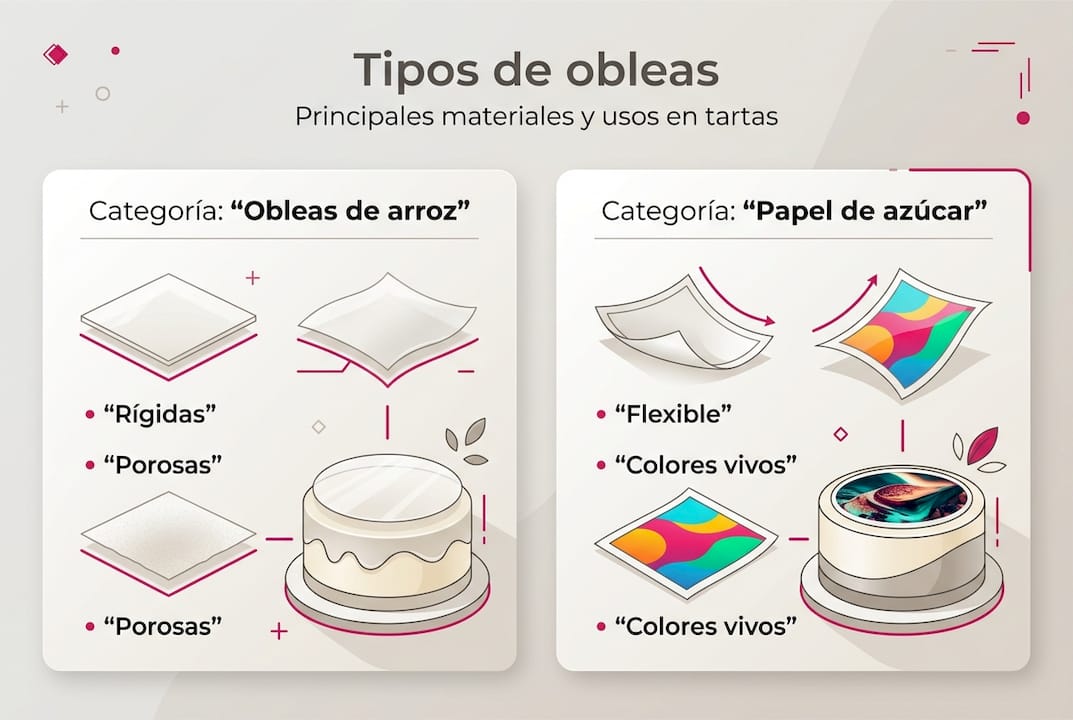
| Feature | Rice Paper | Sugar Sheets | Thick Edible Images | | — | — | — | | Rigidity | High, holds 3D shapes | Flexible, adapts to curves | Very high, supports weight | | Print Quality | Soft, matte colors | Vibrant, sharp colors | Similar to sugar sheets | | Moisture Resistance | Good, requires hydration | Low, sensitive to water | Excellent for applications | | Allergy Consideration | Gluten-free, ideal for celiacs | Contains cornstarch | Varies by manufacturer | | Ideal Application | Three-dimensional decorations | Personalized photographs | Cupcakes and irregular shapes |
For children's birthdays, where superhero or princess designs dominate, sugar sheets offer the best reproduction of bright colors. Children respond emotionally to vibrant images they instantly recognize from their favorite shows. Flexibility allows covering the entire surface of the cake without empty spaces, creating a complete canvas for decoration.
Communions and baptisms require a different approach. These traditionally more formal events benefit from rice paper, whose matte finish conveys elegance and sobriety. The ability to create three-dimensional elements such as crosses, doves, or angels adds dimension without looking overly childish. Furthermore, allergy consideration is essential at religious events where inclusivity is a central value.
Weddings present the greatest decorating challenge. The combination of both types offers unlimited possibilities: sugar sheets for photographs of the couple on the top tier, and rice paper for three-dimensional flowers on the lower tiers. This multi-layer strategy creates visual depth and sophistication that guests will remember.
Professional tip: For outdoor summer weddings, avoid sugar sheets if the cake will be exposed for more than two hours. Ambient humidity can cause the colors to bleed or the sheet to soften. Rice paper tolerates these adverse weather conditions better.
Personalization with names and ages transforms any cake into a memorable keepsake. For birthdays, including the exact age along with the name creates a focal point that guests will constantly photograph. At communions, adding the date of the sacrament and the child's full name turns the cake into part of the family documentation of the event.
Thick edible images shine in specific situations:
- Dessert tables with multiple individual cupcakes
- Cakes with textured or irregular surfaces
- Designs that require cutting complex shapes without breakage
- Events where guests will directly handle the slices
The correct technique for decorating cakes with personalized edible images varies depending on the base. Fondant offers the smoothest and most receptive surface for any type of edible image. Buttercream requires a very thin and uniform layer to prevent the image from sinking or wrinkling. Ganache works exceptionally well with sugar sheets, creating almost instant adhesion.
Testing the adhesion before the event is not optional, it is essential. Apply a piece of the edible image to the same type of frosting you will use on the final cake. Observe for 30 minutes if bubbles, wrinkles, or peeling appear. This simple test prevents last-minute disasters that can ruin hours of preparation.
The temperature of the cake at the time of applying the edible image dramatically affects the result. A surface that is too cold can cause condensation that blurs the colors. A warm surface can slightly melt the sugar, creating spots. Ambient temperature is always the safest, requiring you to take the cake out of the refrigerator at least 30 minutes before decorating.
Avoid Confusion: Edible Images Are Not the Same as Colombian Wafers
A frequent confusion arises when people search for edible images to decorate cakes and find references to Colombian wafers. These are completely different products with distinct culinary purposes, and understanding the difference avoids costly misunderstandings.
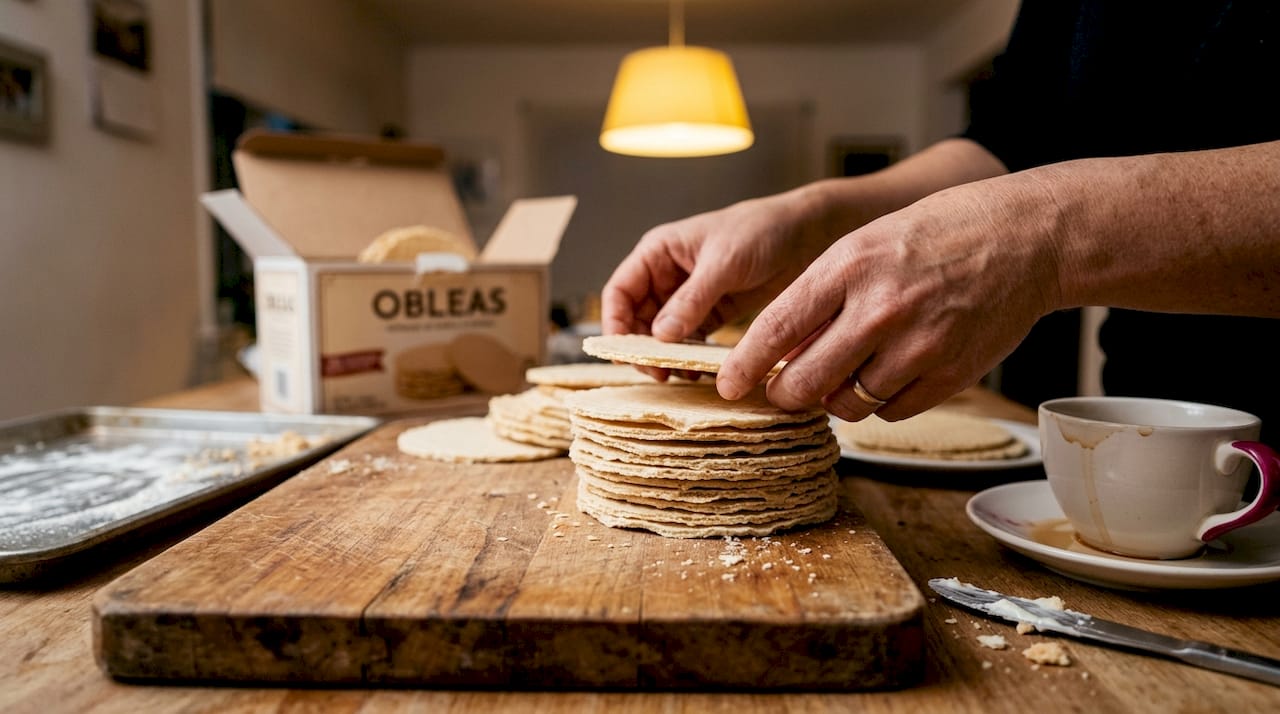
Colombian wafers are crispy traditional, round, and thick wafers, designed to be filled with dulce de leche, cheese, or jam. They are consumed as a standalone dessert or snack, never as cake decoration. Their texture is similar to wafer cookies, with a honeycomb structure that breaks easily when bitten.
In contrast, edible images for cakes are flat, thin, and flexible sheets, designed exclusively to print images and decorate baking surfaces. They have no filling, are not consumed alone, and their flavor is deliberately neutral so as not to compete with the flavor of the cake or pastry they decorate.
The terminological confusion occurs because both products share the word “oblea” in Spanish, but their cultural and culinary contexts are completely different. Colombian wafers have centuries of tradition in Latin American gastronomy, while decorative edible images are a relatively recent innovation in modern creative baking.
When requesting edible images to decorate cakes, clearly specify:
- “Edible images for printing” or “edible sugar sheets”
- “Decorative sheets for cakes” instead of just “edible images”
- The exact size and type of image you need to print
- If you specifically require rice paper or sugar sheets
Suppliers specializing in creative baking will immediately understand your need. However, general stores or non-specialized sellers may confuse your order if you are not specific with the terminology.
This distinction is especially important when searching for information on the internet. Recipes and tutorials about Colombian wafers will not help you decorate cakes, while guides about edible images will not teach you how to prepare the traditional Colombian dessert. Using precise terms in your searches saves time and frustration.
Cultural context also matters. In Latin American countries, the word “oblea” immediately evokes the traditional dessert. In Spain and other European countries, the term is more naturally associated with decorative sheets for baking. Knowing this regional difference helps you communicate effectively with international suppliers.
Discover Personalized Edible Images for Your Party at FunBakery
Now that you know the types of edible images and how to use them correctly, the next step is to find a reliable supplier that offers quality and variety. FunBakery specializes in edible images for cakes and muffins with designs that transform any celebration into a memorable event.

Our collection includes everything from superheroes and animated characters to elegant designs for weddings and communions. If you are looking for something unique, our personalized photo edible image service allows you to create completely custom designs, incorporating names, ages, and family photographs with professional quality.
For video game fans, designs such as our personalized Minecraft edible image demonstrate how current printing technology reproduces even the smallest details with surprising precision. Each edible image is produced with certified edible inks and materials that meet all European food safety regulations.
Frequently Asked Questions About Personalized Edible Images
Which type of wafer is best for guests with food allergies?
Rice wafers are the safest option because they are gluten-free and have a simple composition of rice starch and water. For events with multiple dietary restrictions, always request the complete list of ingredients from the supplier and check allergen certifications.
How far in advance should I order custom wafers?
The standard production time is 24 to 72 hours for custom designs, but it is recommended to place the order at least one week in advance. This allows time for corrections if the design does not meet your expectations and avoids last-minute rushes that can affect quality.
How do I store the wafers before using them at my event?
Keep the wafers in their original sealed packaging, in a cool, dry place away from direct sunlight. Do not refrigerate them unless specifically instructed by the manufacturer. Room temperature between 18 and 22 degrees is ideal for preserving colors and texture for up to one year.
Can I customize wafers with only photos or also with text and designs?
Modern wafers allow any combination of photographs, text, graphics, and custom designs. The best results are achieved with high-resolution images and text in clear fonts. Check the step-by-step cake decorating techniques to optimize your designs before printing.
What do I do if the wafer breaks when peeling it off the protective paper?
If you use sugar paper, freeze the sheet for exactly 15 seconds before peeling. For rice wafers, make sure your hands are completely dry and peel slowly from one corner. If it breaks, you can use the pieces as additional decorative elements instead of discarding the entire design.
Do custom wafers have a flavor or affect the taste of the cake?
Rice wafers have a completely neutral flavor, while sugar paper adds a slight sweetness similar to frosting. Neither option dominates or significantly alters the flavor of the cake, allowing the sponge and filling to be the stars of the dessert.

