


Choosing the right type of edible wafer can transform a simple cake into a personalized work of art that impresses all the guests. With so many options available on the market in 2026, from delicate wafer paper to structured gumpaste, it is natural to have doubts about which material works best for each type of decoration. This guide helps you understand the essential differences between the main types of edible wafers, their practical applications, and how to select the ideal option for children's parties, themed events, or sophisticated celebrations.
Table of Contents
- Key points about edible wafer types
- Criteria for choosing the ideal type of edible wafer
- Wafer paper: versatility and delicacy in decoration
- Gumpaste and modeling chocolate: options for detailed and durable sculptures
- Practical comparison and usage recommendations for events in 2026
- Discover the ideal personalized wafers at FunBakery
- Frequently asked questions about edible wafer types
Key points about edible wafer types
| Point | Details |
|---|---|
| Definition and application | Edible wafers are food materials used to create personalized decorations on cakes, cupcakes, and desserts |
| Three main types | Wafer paper offers delicacy, gumpaste provides structural rigidity, and modeling chocolate allows for pliable sculptures |
| Choice by event | The selection depends on the ambient temperature, target audience, and desired type of decoration |
| Technical compatibility | Each material has unique characteristics of texture, resistance, and visual finish |
Criteria for choosing the ideal type of edible wafer
Before selecting any material for decoration, you need to consider several technical and practical factors that determine the final success of your creation. The desired texture is fundamental: some decorations require structural rigidity to maintain three-dimensional shapes, while others benefit from delicate materials that blend visually with the cake. Choosing the correct medium is the foundation for a successful sugar creation, avoiding frustrations with damaged decorations.
Resistance to temperature and handling varies drastically between the available types of edible wafers. Outdoor events on hot days, for example, can compromise heat-sensitive materials, while decorations that need transport require greater durability. Compatibility with the type of event also influences the decision: children's parties generally prioritize safety and ease of consumption, while sophisticated events value refined finishes and artistic details.
Aesthetic aspects include transparency, the ability to reproduce fine details, and the quality of the final finish. Some materials accept digital prints with vibrant colors, while others stand out in three-dimensional manual modeling. Also consider the available preparation time, as certain types of wafers require prolonged drying or specific application techniques.
Professional Tip: Always test a small sample of the chosen material before the main event, especially if you are working with an edible wafer for the first time or with a different cake recipe.
To make the choice easier, analyze these essential criteria:
- Storage environment and display of the decorated cake
- Level of detail and complexity of the intended decoration
- Dietary preferences and age of the audience who will consume the cake
- Time available for preparation and application of the decorations
- Total budget for materials and eventual need for specific equipment
Exploring the 2026 wafer cake decorating guide offers additional information on application techniques for each type of material.
Wafer paper: versatility and delicacy in decoration
Wafer paper stands out as one of the most versatile and affordable options for decorating personalized cakes and desserts. Wafer paper is thin, tasteless, made with natural starch and water, ideal for edible artistic applications that require visual lightness. This material accepts digital prints with food dyes, allowing the reproduction of photographs, characters, and complex designs with vibrant colors and sharp definition.
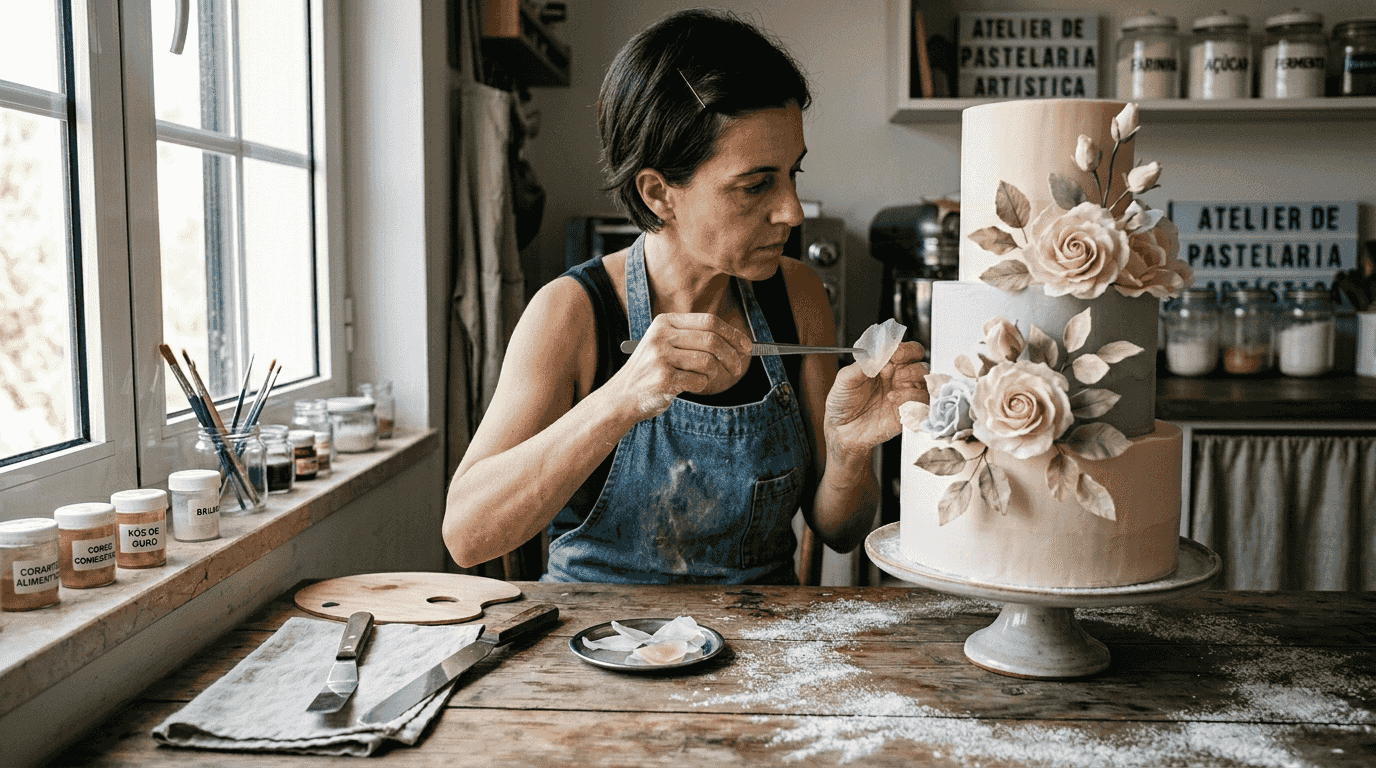
The technical characteristics of wafer paper include reduced thickness, moderate flexibility, and the ability to slightly absorb moisture from the icing or buttercream where it is applied. This property facilitates visual integration with the cake, creating a professional finish without adding excessive volume. The material can also be cut with regular scissors or specialized cutters, gently shaped while still flexible, and even painted by hand with diluted food colorings.
The practical applications of wafer paper in parties and events are extremely varied. It works perfectly to create delicate flowers with translucent petals, decorative butterflies, realistic feathers, and elements that mimic fabrics or lace. For children's parties, it allows printing favorite characters in full size or creating themed scenes that cover the entire surface of the cake. In sophisticated events, wafer paper produces elegant decorations with a watercolor effect or contemporary minimalist designs.
Professional Tip: Apply printed wafer paper over a thin layer of royal icing or still-damp buttercream to ensure perfect adhesion, avoiding air bubbles that compromise the final look.
Main advantages of wafer paper include:
- Light visual appearance that does not alter the flavor or texture of the base cake
- Ease of cutting and application without the need for specialized tools
- Accepts high-quality digital printing with photographic images
- Affordable cost compared to other edible materials
- Simple storage in a dry environment at room temperature
Discover more about practical applications in edible wafers for cakes, where you will find specific examples and proven techniques.
Gumpaste and modeling chocolate: options for detailed and durable sculptures
When the decoration requires complex three-dimensional structures or elements that maintain a defined shape for hours, gumpaste and modeling chocolate emerge as specialized alternatives. Gumpaste dries rigid, ideal for delicate flowers, but is not recommended for consumption due to its extremely hard texture after complete drying. This material is technically a sugar paste mixed with tragacanth gum or CMC, which allows for fine modeling and drying while maintaining intricate details.
Gumpaste stands out in the creation of botanically accurate flowers, realistic foliage, and decorative elements that require structural rigidity. It accepts coloring with paste or powder dyes, can be textured with specialized tools, and allows the creation of extremely thin petals that look almost translucent. However, it requires a significant drying time, a controlled humidity environment, and careful handling during application on the cake.
On the other hand, modeling chocolate is great for three-dimensional sculptures and perfect joint blending, but sensitive to heat. This material combines melted chocolate with glucose syrup or corn syrup, resulting in a pliable mass that maintains its shape without completely drying. Modeling chocolate offers a pleasant flavor, a texture that can be consumed without discomfort, and the ability to create detailed figures such as characters, animals, or decorative objects.
The main differences between these materials directly influence the choice for each specific project:
| Characteristic | Gumpaste | Modeling Chocolate |
|---|---|---|
| Final texture | Extremely rigid and hard | Firm but chewable |
| Edibility | Technically edible but unpleasant | Tasty and pleasant |
| Heat resistance | Excellent | Sensitive above 24°C |
| Working time | Dries quickly | Pliable for hours |
| Typical applications | Flowers, delicate foliage | Sculptures, 3D figures |
For children's parties, modeling chocolate generally works better because children can consume the decorations without risk. In sophisticated events where the decoration serves mainly a visual purpose, gumpaste allows the creation of impressive artistic elements. Also consider that modeling chocolate requires storage at a cool temperature and may need internal structural support for large figures.
Professional Tip: Work with gumpaste in small portions, keeping the rest covered with plastic wrap to prevent premature drying that makes the material impossible to model.
Explore advanced techniques in types of edible paper personalized decorations 2026 to master both materials.
Practical comparison and usage recommendations for events in 2026
Understanding the technical characteristics is only the first step; applying this knowledge in real situations requires a direct comparative analysis. The following table summarizes the most relevant aspects for informed decision-making:
| Criterion | Wafer Paper | Gumpaste | Modeling Chocolate |
|---|---|---|---|
| Best use | Prints, flat decorations | Flowers, structural elements | Sculptures, 3D figures |
| Main advantage | Versatility and cost | Rigidity and fine detail | Flavor and pliability |
| Critical limitation | Fragility to moisture | Non-edible texture | Heat sensitivity |
| Preparation time | Immediate after printing | 24 to 48 hours drying | 2 to 4 hours modeling |
| Ideal for | Themed parties, photos | Weddings, formal events | Children's birthdays |
For children's cakes with popular characters, printed wafer paper offers a fast and affordable result that delights children. If the event includes three-dimensional figures that children want to touch or eat, modeling chocolate provides a more satisfying experience. Sophisticated themed parties benefit from the combination of wafer paper for printed backgrounds and gumpaste for highlighted structural elements.
Follow these steps to decide with confidence:
- Identify the central theme and desired visual style for the cake decoration
- Assess the environmental conditions of the event, including expected temperature and humidity
- Determine if the decorations will be mainly visual or also consumed
- Consider the available preparation time and technical skill level
- Establish the total budget and compare the costs of necessary materials and tools
For personalized children's decorations, consult personalized children's decoration wafers with practical examples of each material. The creative guide tutorial for decorating party desserts offers step-by-step techniques for correct application.
The strategic combination of different types of edible wafers on the same cake allows you to maximize the advantages of each material. For example, use wafer paper as a printed base, add gumpaste flowers for vertical dimension, and complete with small modeling chocolate figures that children can remove and eat. This hybrid approach creates an impressive visual impact while maintaining practical functionality.
Discover the ideal personalized wafers at FunBakery
After understanding the technical differences between the types of edible wafers, the next step is to find specialized suppliers that offer consistent quality and professional personalization. FunBakery offers a wide range of personalized wafers for popular themes and exclusive designs, facilitating the creation of unique decorations without the need for specialized equipment.
If you are looking for themed decorations for children's parties, explore options such as the personalized Minecraft war edible image that reproduces favorite characters with vibrant colors and sharp definition. For events with popular game themes, the rectangular Stumble Guys sugar paper wafer allows you to add personalized photographs, names, and ages.
FunBakery's custom design service transforms any idea into an edible reality, incorporating personal photographs, specific texts, and unique graphic elements that reflect the birthday person's personality. The team of specialized designers guarantees a professional finish on all personalized cake wafers, eliminating technical worries and allowing you to focus on the celebration.
Frequently asked questions about edible wafer types
Do edible wafers have their own flavor that alters the cake?
Wafer paper has practically no flavor, blending with the icing or buttercream of the cake. Modeling chocolate offers a pleasant chocolate flavor that complements most recipes, while gumpaste has a very sweet flavor but an unpleasant texture for consumption.
How long do edible wafers last after application on the cake?
Wafer paper maintains quality for 2 to 3 days when applied over icing, provided the cake is stored in a cool and dry environment. Gumpaste decorations remain intact for weeks if protected from moisture, and modeling chocolate lasts 3 to 5 days at a controlled temperature below 22°C.
Are edible wafers safe for children with allergies?
Most edible wafers contain basic ingredients such as starch, sugar, and water, but always check the specific composition. Modeling chocolate contains chocolate that may include milk or nuts, while some wafer papers use eggs in their composition, requiring attention to known allergies.
Can I order personalized wafers with my own photographs?
Yes, specialized services such as FunBakery allow you to send digital photographs that are printed on wafer paper or edible sugar paper with certified food dyes. The process is simple, and the result reproduces colors and details with professional quality suitable for any celebration.
Which type of wafer works best for cakes that are exposed at outdoor parties?
For outdoor events, avoid modeling chocolate if the temperature exceeds 24°C, as it melts easily. Wafer paper withstands heat better but can warp with excessive humidity. Gumpaste offers greater resistance to varying environmental conditions, maintaining its shape and appearance for extended periods. Consult the edible cake toppers for specific recommendations based on your region's climate.

