


The 2026 party decoration trends converge on a clear point: less decorative excess, more intention. Refined sustainability, bold palettes with PANTONE references, sculptural floral arrangements, and sensory experiences define the year. Here are the ten trends that will most mark parties and weddings:
- Bold and contrasting palettes — intense color combinations, far from neutral pastels, inspired by the directions of the Trend Bible The Future of Celebration 2026.
- Refined sustainability — local and seasonal flowers, reusable modular furniture, and eco-friendly packaging that does not compromise on elegance.
- Sculptural floral arrangements — pieces that work as art, with suspended structures and metal frames.
- Sensory experiences — directional lighting, aroma diffusers, and zoned sound design as decoration elements.
- Editorial aesthetic — moodboards with a mix of neo-deco, boho, and magazine references that create memorable images.
- Trending themes — rainbow boho, safari chic, outer space, enchanted garden, mermaids, modern dinos, and retro confectionery.
- Edible personalization — personalized wafers and sugar paper that extend the moodboard to the dessert table.
- Immersive set designs — photobooths, floral arches, and backdrops that transform the space into a photographic experience.
- Multi-day destination weddings — events in historic European locations with extended programming, a growing trend in Spain and Central Europe.
- Handmade physical invitations and favors — return to the tangible object as a sign of personalization and emotional memory.
Main conclusions
The 2026 party decoration trends rest on three pillars that reinforce each other: bold palettes with PANTONE references, sustainability as a structural criterion, and personalization that creates lasting emotional memory.
| Point | Details |
|---|---|
| Palette with PANTONE reference | Test color samples in the actual space before finalizing orders with suppliers. |
| Local and seasonal flowers | Prioritize regional species to reduce costs and emissions, especially between May and October. |
| Sculptural focal point | Concentrate the floral budget on a single high-impact element instead of distributing it across all tables. |
| Edible personalization | Order wafers 2 weeks in advance and provide high-quality images. |
| Advance planning | Book top suppliers 3–4 months in advance, especially during peak season in Central Europe. |
Table of Contents
- What color palettes dominate parties in 2026?
- How to integrate sustainability without losing sophistication?
- Sculptural floral arrangements: when flowers become art
- Light, aroma, and sound: how to transform the senses into decoration
- How to create an editorial aesthetic that looks like a magazine?
- What themes are trending for parties and weddings in 2026?
- Edible personalization: how to use wafers and sugar paper at the party
- How to plan a party with these trends in Central Europe?
- A note on what really stays in memory
- Sources
What color palettes dominate parties in 2026?
The 2026 chromatic shift is unequivocal: neutral and monochromatic palettes are giving way to combinations that create immediate visual impact. The Trend Bible The Future of Celebration 2026 points to color directions with PANTONE references that work for both formal weddings and children's parties, making these predictions useful for any type of event.
For a formal wedding, a triad of deep burgundy, moss green, and aged gold creates sophistication without looking excessive. At a children's party, the same principle of contrast applies with more saturated colors: bright coral with cobalt blue and white, for example. The secret is to choose two dominant tones and one metallic accent, never three colors of equal weight.
PANTONE references are practical because they allow you to communicate precisely with suppliers. When ordering food prints, fabrics, or dyed flowers, a PANTONE code eliminates ambiguity and ensures consistency across all elements of the event. The wedding trends for 2026 confirm this preference for bold and contrasting palettes as one of the most consistent directions of the year.
Professional tip: Before finalizing the palette, test the color samples in the actual event space, both with natural light and the artificial lighting planned for the evening. A color that looks perfect in the daylight can turn brownish under warm lamps.
How to integrate sustainability without losing sophistication?
The Ambiente/Christmasworld 2026 in Frankfurt was explicit: sustainability stopped being an optional trend and became a structural criterion for the decoration industry. The Brave, Light, and Solid collections presented at the fair highlight durability, circularity, and materials with traceable origins.
In practice, integrating sustainability into an event in Central Europe means:
- Local and seasonal flowers: working with florists who supply regional species reduces transport emissions and ensures freshness. In spring, tulips and ranunculus; in autumn, dahlias and wild berries.
- Reusable modular furniture: tables, chairs, and structures rented from local event companies that ensure reuse between events.
- Eco-friendly invitations and packaging: recycled paper, printing with vegetable inks, or interactive digital invitations for those who prefer to reduce paper.
- Emissions offsetting: for destination weddings with flying guests, some European platforms offer carbon offsetting integrated into the RSVP process.
When negotiating with suppliers, always ask for transparency of origin and, when possible, simple certifications such as FSC for paper or Rainforest Alliance for imported flowers.
Sculptural floral arrangements: when flowers become art
A sculptural arrangement is not just a large bouquet. It is a piece with its own structure, designed to be seen from multiple angles and to create impact even before the guests sit down. The 2026 bridal trends highlight this format as one of the strongest directions of the year.
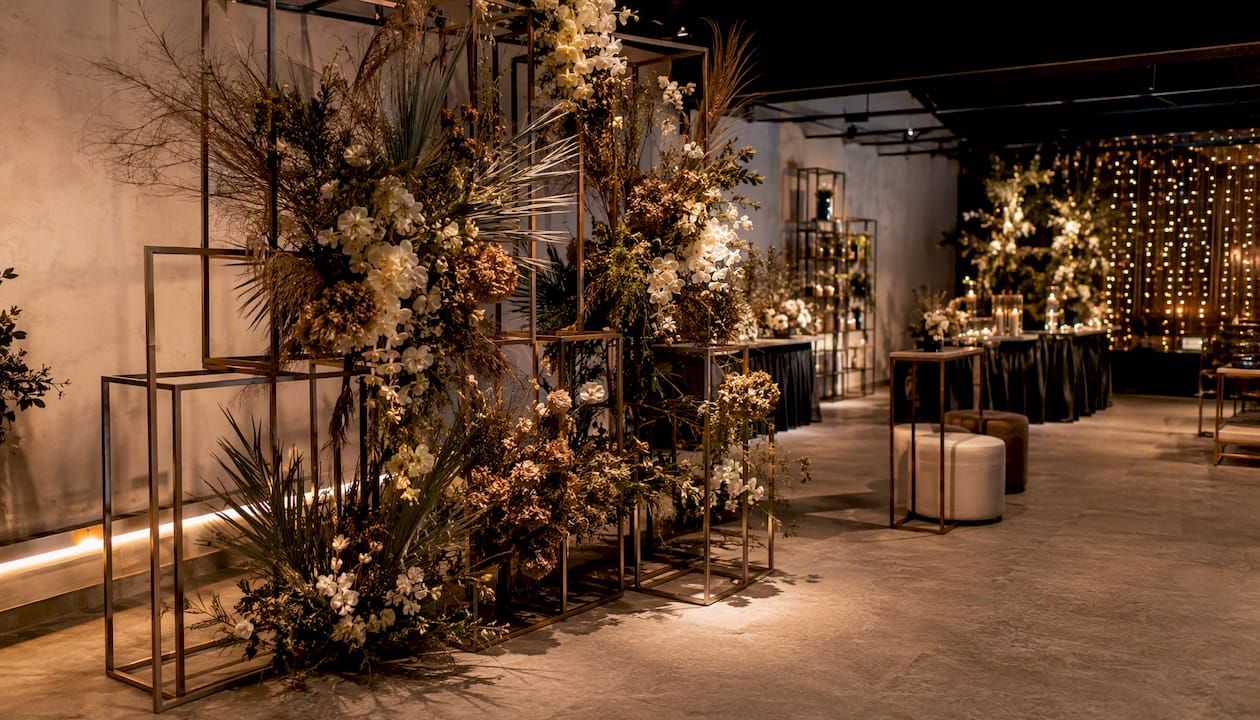
The materials that make these pieces possible include lightweight metal frames made of iron or aluminum, reusable floral foam (a sustainable alternative to traditional foam), and preserved flowers that maintain their shape for weeks. For suspended structures, the ceiling anchor point needs to be checked with the venue in advance.
When the budget does not allow for a sculptural piece per table, the solution is to concentrate the investment on a single high-impact focal point, such as the ceremony arch or the couple's table, and use simpler arrangements on the remaining tables. Mini-sculptures in wide-mouthed vases work well as an affordable version and maintain the aesthetic.
Light, aroma, and sound: how to transform the senses into decoration
The 2026 decoration is not limited to what is seen. Celebra Show 2026 identified the integration of technology and sensory experiences as one of the strongest movements in the party sector, with a direct reflection on production choices worldwide.
Practical solutions by category:
- Lighting: Gobo projectors with custom patterns (monograms, florals, constellations) from €80–150 rental per event; dimmers on all light sources to adjust the intensity for each moment of the party.
- Aroma: cold aroma diffusers placed at entrances and social areas, with neutral fragrances such as cedar or fig. Avoid intense aromas near the dining table.
- Sound: playlists by zone (cocktail, dinner, dance) with volumes calibrated for each moment; wireless microphones for speeches without technical interruption.
Integration with the set design requires attention to wiring. All electrical installation must comply with local safety standards, and cables must be camouflaged or protected to prevent accidents.
How to create an editorial aesthetic that looks like a magazine?
The editorial aesthetic in parties starts from a simple principle: every visual element must look intentional, as if it had been chosen by an art director. The Brave, Light, and Solid directions of Ambiente Trends 26+ offer a solid starting point for composing moodboards with coherence.
To compose an effective moodboard: start with the palette (two dominant tones, one accent), choose a main texture (linen, velvet, marble), define the scale of the elements (large piece vs. small details), and introduce a single point of contrast that breaks the monotony. The most common mistakes are overlapping motifs without hierarchy and using too many colors of equal weight, which creates visual noise instead of impact.
The main table, the photobooth, and the entrance of the venue are the three points where this aesthetic has the most photographic return.
What themes are trending for parties and weddings in 2026?
The most sought-after themes in 2026 combine nostalgia, nature, and fantasy. For each, there are variations that work for both ceremonies and children's parties:
- Rainbow boho: ceremony with a wildflower arch in bright tones; table with linen tablecloths and colored glasses; favors in seed packets with a personalized label. For children's parties, themed designs with vibrant palettes work very well on cakes and cupcakes.
- Safari chic: ceremony with tropical foliage and terracotta tones; table with earthenware dishes and tall candles; favors in engraved wooden boxes.
- Outer space: ceremony with black tulle and LED lights; table with mirrored plates and silver and navy blue centerpieces; favors in metal capsules.
- Enchanted garden: ceremony under a pergola with climbing plants; table with wildflowers and floating candles; favors in local honey jars.
- Mermaids / seabed: tones of aqua green, blue, and pearl; shells and coral as accessories; cakes with wave effects in sugar paste.
- Modern dinos: palette in moss green and terracotta; balloons in geometric shapes; personalized dinosaur wafers for cupcakes.
- Retro confectionery: pastel tones from the 50s; dessert tables with vintage packaging; cakes with textured buttercream decoration.
- Old money editorial: tones of cream, beige, and gold; classic furniture; white and green flowers in minimalist arrangements.
In Central Europe, the availability of materials varies with the season. Themes with tropical flowers require advance ordering; themes with local foliage are easier to execute and more economical between May and October.
Edible personalization: how to use wafers and sugar paper at the party
Edible personalization has become a natural extension of the moodboard. Instead of a generic cake, a wafer with the photo of the couple, the child's name, or the theme's motif transforms the dessert table into an element of visual cohesion. Fairs such as Casar.com confirm the return of the performance cake as a sign of personalization and emotional memory.
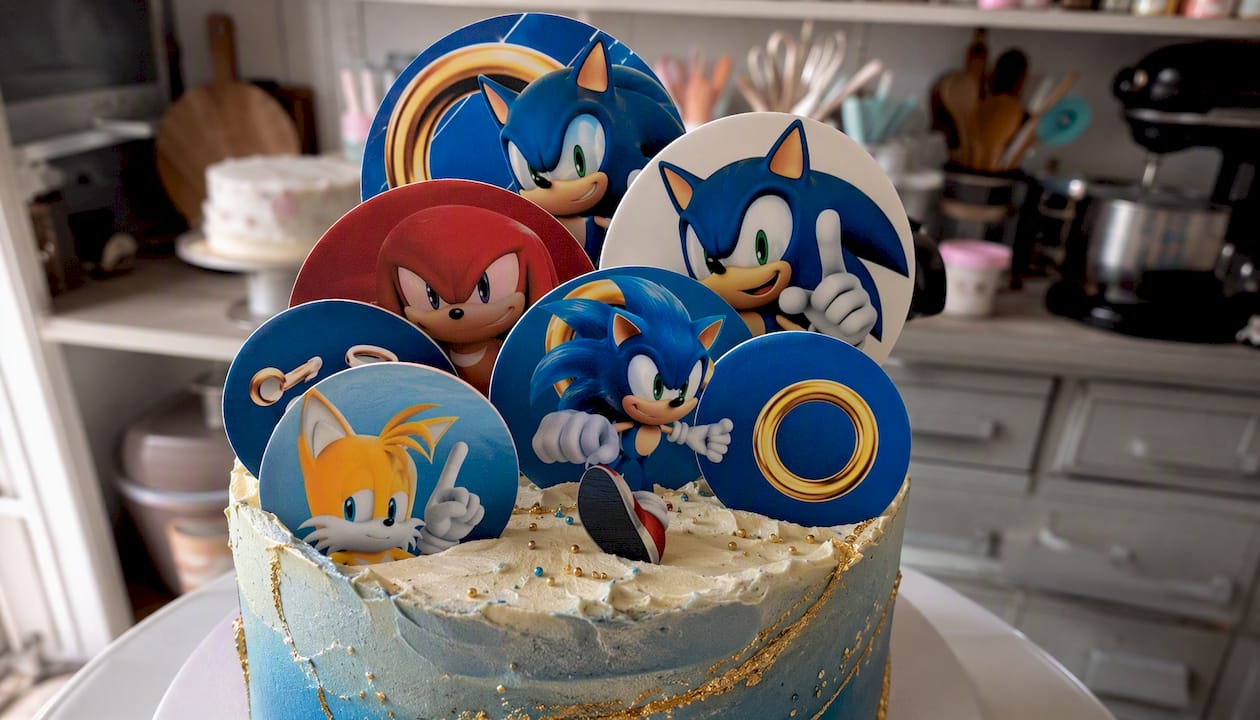
Funbakery offers personalized edible wafers and sugar paper with a design service that includes photos, names, ages, and texts. The available formats cover round cakes, rectangular cakes, and cupcakes, allowing the piece to be adapted to any type of event.
For children's parties, the most requested themes include animated characters, superheroes, and animals. For formal events, monograms, florals, and monochromatic palettes work best. Personalization at birthday parties follows the same principles of image quality and support compatibility.
How to plan a party with these trends in Central Europe?
Converting trends into concrete actions requires a realistic timeline. For a large wedding or party, planning starts 4–6 months in advance; for a birthday or intimate event, 6–10 weeks are sufficient.
| Timeline | Milestone | Action |
|---|---|---|
| 4–6 months before | Concept and moodboard | Define palette, theme, and style; research local suppliers |
| 3–4 months before | Budgets and bookings | Finalize florist, venue, lighting, and catering |
| 6 weeks before | Decoration trial | Test palette in the venue with actual lighting |
| 3–4 weeks before | Final orders | Wafers, invitations, favors, and graphic materials |
| — | Logistics | Confirm setup, transport, and contingencies |
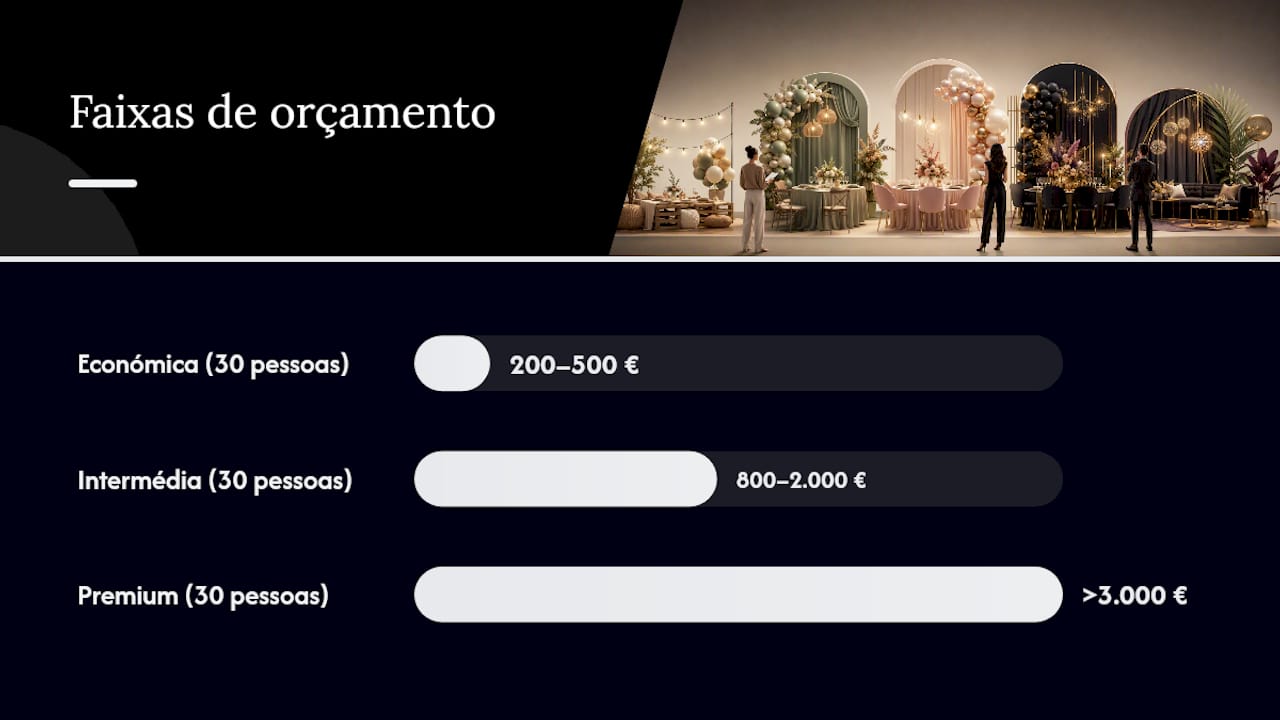
The budget ranges for implementing the main trends vary considerably. An affordable version (simple local flowers, basic lighting, personalized wafer) costs between €200–500 for an event of 30 people. An intermediate version with sculptural arrangements, Gobo, and complete personalization is between €800–2,000. A premium version with suspended structures, sound design, and high-impact florals can exceed €3,000.
Essential questions to ask suppliers: do you confirm that setup and dismantling are included? What is the cancellation policy? Are the flowers local or imported? Is there liability insurance for the event?
The search for destination weddings in Europe in 2026 has grown significantly, with Spain standing out as the preferred destination for multi-day experiences in historic locations. For those organizing events in Central Europe, this means more competition for top suppliers during peak months, making it increasingly important to book in advance.
A note on what really stays in memory
The 2026 trends are sophisticated, but what guests rarely remember is the most elaborate floral arrangement. It is the cake with the child's photo, the invitation they kept, the scent they associated with that moment.
I have worked with edible personalization for years, and the conclusion is always the same: small, personalized details have an emotional impact disproportionate to their cost. A wafer with the birthday person's name and photo costs less than a centerpiece and is photographed more times than any other element on the dessert table.
My practical recommendation: before investing in a large sculptural piece, test a personalized wafer at a smaller event. See how the guests react, how the element fits into the palette, and whether the print quality matches what you imagined. This experience will guide all subsequent decisions with much more confidence than any trend forecast.
Sources
- Why Europe is the ultimate destination for luxury weddings and events in 2026
- Trend Bible The Future of Celebration 2026
- Frankfurt 2026: Ambiente and Christmasworld Set Trends - Revista Jardins
- Wedding Trends for 2026: What's Trending
- Less Extravagance and More Personality: Party Trends in Brazil
