In summary:
- Food safety for wafers is based on hygiene, contamination control, and traceability. European regulations and the HACCP system ensure compliance, while proper training reduces risks to consumers. The strict application of these measures ensures quality, confidence, and protection throughout the entire production chain.
Food safety in the use of wafers rests on three concrete pillars: strict handling hygiene, contamination control, and complete traceability from raw material to consumer. Regulation (EC) No 852/2004 defines the legal obligations for all operators in the European food sector, and edible wafers are no exception. The HACCP system (Hazard Analysis and Critical Control Points) complements this framework by identifying and monitoring physical, chemical, and biological risks at every stage of the process.
Essential practices include:
- Storage in a dry, cool place protected from contaminants
- Cleaning and disinfection of equipment before and after contact with wafers
- Temperature control during handling to inhibit microbial growth
- Batch documentation to ensure traceability
- Food hygiene training for handlers
- Verification of allergens present in wafer ingredients
Funbakery, specializing in the creation and sale of personalized edible wafers, applies these standards to all its products, ensuring quality and safety from production to delivery.
What does Regulation (EC) No 852 require for wafers?
Regulation (EC) No 852/2004 establishes general hygiene rules for all food sector operators in the European Union, covering the receipt of raw materials, production, storage, and distribution. For those working with wafers in confectionery, the requirements are direct and allow no exceptions.
Facilities where wafers are handled must meet specific requirements. Surfaces in contact with products must be made of corrosion-resistant materials, easy to clean, and have access to sufficient hot and cold water. The regulation also requires that utensils and equipment be kept in good condition and regularly sanitized.
Responsibility for food safety rests with the operator at all stages, from the selection of raw material suppliers to delivery to the final consumer. This means that a pastry chef using externally sourced wafers must verify the conformity of the received product and ensure that storage and application comply with current standards.
The main practical obligations for operators using wafers include:
- Maintaining records of the receipt and quality control of purchased wafers
- Ensuring facilities have adequate ventilation, lighting, and temperature control
- Physically separating areas where ready-to-eat foods are handled
- Implementing documented cleaning and disinfection procedures
- Ensuring that handlers receive adequate and up-to-date training
How to apply the HACCP system to wafer handling
The HACCP system is the cornerstone of food safety in cake decorating with wafers, as it continuously identifies and controls specific risks. Its implementation is not exclusive to large industries: any confectionery, even a small one, can and should adopt it.
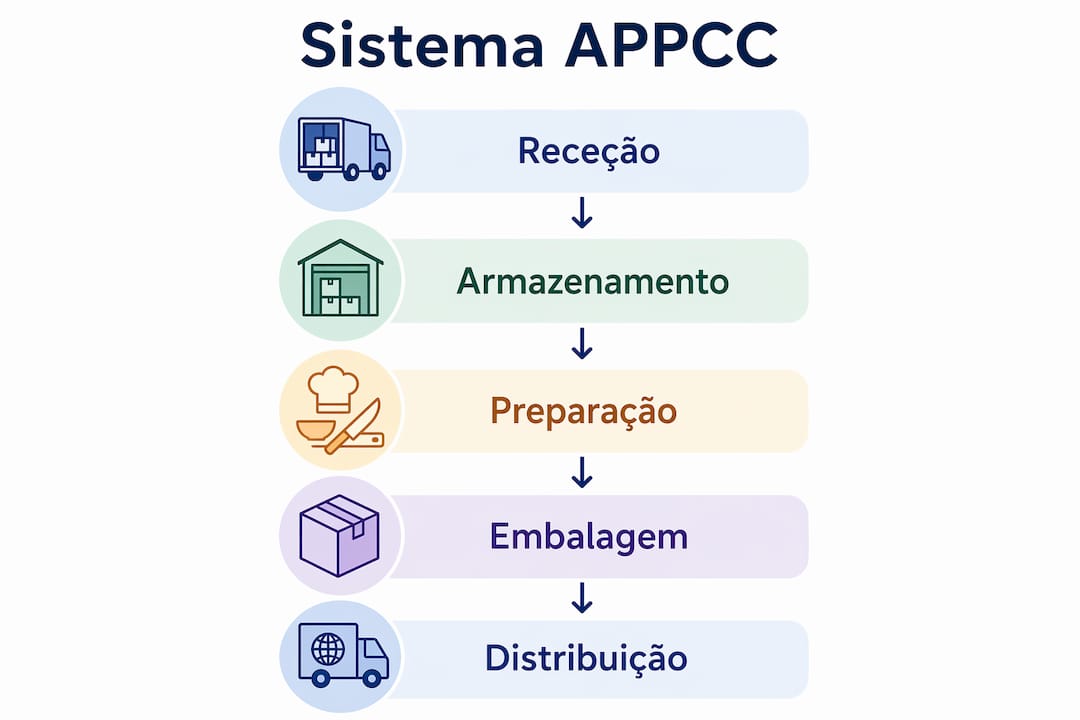
In practice, the application of HACCP to wafers begins at receipt. At this stage, the integrity of the packaging, expiration date, and transport conditions are checked. A product with damaged packaging or exposed to unsuitable temperatures represents an immediate hazard that the system must detect and block before any use.
The most relevant critical control points for wafers are storage (temperature and humidity), manual handling (hand and surface hygiene), and application to the final product (cross-contamination with other ingredients). Each point requires a defined critical limit, a monitoring method, and a documented corrective action for when that limit is exceeded.
The hazards to consider in the HACCP plan for wafers are divided into three categories:
- Physical: packaging fragments, hair, foreign particles
- Chemical: cleaning product residues, non-food paints, undeclared allergens
- Biological: molds, yeasts, and bacteria resulting from improper storage or unhygienic handling
Professional tip: For small-scale production, simplify the HACCP plan by focusing only on the three or four critical points most likely to occur. A simple and well-executed plan is always more effective than a complex plan that no one can follow in daily practice.
How to prevent contamination and choose the right equipment
Cross-contamination is the most common risk when handling wafers in a confectionery environment. It occurs when utensils or surfaces used with other ingredients come into contact with wafers without prior cleaning. Prevention begins with the physical separation of spaces and the definition of workflows that avoid this contact.

Equipment that comes into direct contact with wafers must be made of non-porous, corrosion-resistant materials that are easy to sanitize. Stainless steel and high-density polyethylene are the most common and suitable choices. Porous surfaces or those with cracks accumulate organic residues and become breeding grounds for microbial growth even after apparent cleaning.
Temperature control is crucial. Wafers absorb moisture easily, and hot, humid environments accelerate degradation and promote mold growth. Storage should take place in a dry location, at a stable temperature and away from heat sources or direct light.
Good practices for contamination control include:
- Washing and disinfecting all surfaces and utensils before handling wafers
- Using disposable gloves or thoroughly washing hands before any contact
- Never reusing opened packaging without proper protection
- Keeping wafers away from ingredients with declared allergens
Professional tip: Establish a written sanitation plan with defined frequencies for each piece of equipment. Visual inspection is not enough: use pH indicators or sanitizing test strips to confirm the effectiveness of the products used.
Traceability ensures safety from start to finish
Food traceability allows the identification of the origin of any raw material, the processes it has undergone, and the final destination of the product. For wafers, this means knowing exactly which supplier they came from, which batch they were produced in, when they were received, and in which final products they were used.
This ability to trace is not just a legal requirement: it is the tool that allows for rapid action when a problem arises. If a batch of wafers shows contamination or non-conformity, traceability determines which products are affected and allows them to be removed from the market without affecting the entire production.
For consumers, traceability translates into confidence. Knowing that the product they consume has undergone a documented control system is a concrete guarantee, not a vague promise. Funbakery maintains this commitment throughout its entire production chain, ensuring that every personalized wafer meets the safety and quality requirements demanded by the European market.
The essential elements of a traceability system for wafers are:
- Record of the supplier, batch number, and receipt date of each order
- Identification of the final products where each batch of wafers was used
- Documentation of storage conditions and usage dates
- Defined procedure for product withdrawal in case of non-conformity
- Archiving of records for a minimum period as required by applicable legislation
Main conclusions
Food safety in the use of wafers requires the simultaneous application of Regulation (EC) No 852/2004, the HACCP system, and strict traceability and hygiene practices at every stage of the process.
| Point | Details |
|---|---|
| European legal framework | Regulation (EC) No 852/2004 defines hygiene obligations for all operators who handle wafers. |
| HACCP system | Identifies and controls physical, chemical, and biological hazards at every stage of wafer handling. |
| Contamination control | Strict cleaning of surfaces and utensils and the separation of allergenic ingredients are essential measures. |
| Complete traceability | Records of batches and suppliers allow for rapid action in case of non-conformity or an incident. |
| Funbakery's role | Funbakery ensures quality and food safety in all edible wafers it produces and sells. |
Training makes the difference that regulations alone cannot make
There is a gap that regulations cannot fill on their own: the distance between knowing that a regulation exists and knowing how to apply it correctly in the daily practice of a confectionery. Handler training is the only mechanism that consistently closes this gap.
The risk of allergens deserves special attention. Wafers often contain gluten and other allergenic ingredients, and their improper management can have serious consequences for consumers with declared allergies. A well-trained operator knows how to identify these risks, communicate them to the customer, and take the necessary precautions during handling.
Automated handling, increasingly common in larger-scale production, does not eliminate the need for qualified human supervision. Automated equipment reduces manual contact, but introduces new control points that require regular verification and preventive maintenance. Those who operate these systems need to understand the principles of food safety, not just know how to press a button.
The European market requires continuous adaptation. Standards evolve, ingredients change, and consumption patterns also change. A genuine food safety culture is not a fixed set of procedures: it is the ability to update practices as knowledge and regulations advance. Funbakery incorporates this perspective into the development of its products, ensuring that its personalized edible wafers meet the current demands of the sector.