Edible toppers can be safe, but only if they comply with current European legislation and undergo the correct testing. The short answer for manufacturers and buyers is this:
- Mandatory legal compliance: Regulation (EC) No 1935/2004 requires that any material intended to come into contact with food be sufficiently inert so as not to transfer substances in quantities that could endanger human health, alter the organoleptic characteristics of the food, or compromise consumer safety.
- Minimum required documentation: batch-specific Declaration of Compliance (DoC), raw material specifications, Good Manufacturing Practice (GMP) records, and migration testing reports.
- Process controls: implementation of HACCP, microbiological control, and full traceability from raw material receipt to dispatch.
- Before applying or purchasing: consult the verification checklist in Section 7 of this guide to confirm that the product and supplier meet all requirements.
Toppers that lack a valid DoC, use unauthorized plastics or inks, or lack appropriate migration testing pose a real risk to both consumers and operators.
Key Findings
Food safety in edible toppers depends on regulatory compliance, complete documentation, and verifiable process controls throughout the supply chain.
| Point | Details |
|---|---|
| Mandatory basic regulation | Regulation (EC) No 1935/2004 requires material inertness, traceability, and a DoC for all batches. |
| Migration testing with the correct simulant | Request reports using the simulant appropriate to the actual food matrix, including Tenax® for fatty coatings. |
| Documented GMP and HACCP | Raw material specifications, batch records, staff training, and critical control points are required during audits. |
| Immediate rejection without a DoC | Absence of a Declaration of Compliance, damaged packaging, or results outside SML limits are grounds for rejection. |
| Funbakery as a compliant supplier | Funbakery supplies wafers and sugar paper with technical documentation available for professional use. |
Table of Contents
- Which EU regulations apply to edible toppers?
- Which materials are acceptable in an edible topper?
- What are the main risks and how are they tested?
- How to implement GMP and HACCP in topper production?
- How to safely store and apply edible toppers?
- What to ask the supplier before accepting edible toppers?
- How Funbakery applies these rules in practice
- Documentary compliance is worth more than it seems
- Compliant wafers and sugar paper: what Funbakery offers
- Sources
Which EU regulations apply to edible toppers?
Food safety in edible toppers is based on a set of complementary European regulations. Knowing them is not optional: any operator placing these products on the EU market is directly responsible for ensuring compliance.
Regulation (EC) No 1935/2004 — the central pillar
This regulation establishes the principle of inertness: materials intended to come into contact with food must not transfer substances in quantities that could endanger human health, cause unacceptable changes in the composition of the food, or deteriorate its organoleptic characteristics. It also requires traceability at all stages of the supply chain and the issuance of a Declaration of Compliance whenever the material is placed on the market.
Regulation (EC) No 2023/2006 — Good Manufacturing Practice
Regulation (EC) No 2023/2006 defines the mandatory GMP for all materials and articles intended to come into contact with food. In practice, it requires manufacturers to maintain a documented quality system, including raw material specifications, operating procedures, batch records, and staff training. For printed toppers, there is a specific technical requirement: inks and coatings applied to the outer side (not in contact with food) must be formulated to prevent migration to the food-contact side, and the manufacturing process must document this separation.
What the regulation says: “Materials and articles shall be manufactured in accordance with good manufacturing practice so that, under normal or foreseeable conditions of use, they do not transfer their constituents to food in quantities that may […] endanger human health.” — Reg. (EC) No 2023/2006 / Reg. (EC) No 1935/2004
Regulation (EU) No 10/2011 and updates on plastics
When toppers include plastic supports or plastic packaging in direct contact with food, Regulation (EU) No 10/2011 and its updates apply, including recent rules on recycled plastics. This regulation defines positive lists of authorized substances, specific migration limits (SML), overall migration limits (OML), and purity criteria. For recycled plastics, traceability of the raw material flow and documentation of the decontamination process are as stringent as the final testing of the finished product.
Complementary regulations
- Regulation (EC) No 178/2002: general principles of food safety, definition of operator responsibilities, and the obligation to withdraw products from the market in case of risk.
- Regulation (EC) No 852/2004: food hygiene and the implementation of the HACCP system throughout the production chain.
Operators must have the following ready at all times for audits: an up-to-date DoC, raw material specifications referencing authorized substances, GMP records, and migration testing reports.
Which materials are acceptable in an edible topper?
According to the ASAE, the distinction between certified edible materials and non-edible decorative items is one of the most common causes of non-compliance in the confectionery sector. Confusing the two is not just a technical error: it may constitute a legal violation.
Accepted edible materials

Genuine edible toppers include wafers (corn or potato starch sheets), sugar paper (sugar and starch-based sheets), icing sheets, and food colors approved under Regulation (EC) No 1333/2008 on food additives. An academic review of edible packaging confirms that these materials, when properly formulated and produced, offer clear technical advantages: they are edible, biodegradable, and eliminate the risk of accidentally ingesting non-food fragments.
Materials to avoid in direct contact
- Plastics not included in the positive lists of Reg. (EU) No 10/2011
- Acrylic and decorative resins not authorized for food contact
- Non-food printing inks (even if they appear similar to food-grade inks)
- Metal decorations, decorative glitter, and paper supports not certified for food contact
How to assess a material before accepting it
Three practical criteria: declared composition referencing the authorized substances in the applicable positive lists; migration limits demonstrated by laboratory testing; and a DoC issued by the manufacturer. Without these three elements, the material should not come into contact with food. See the complete guide on topper types for a detailed explanation of the differences between wafers, sugar paper, and other supports.
Professional tip: When a topper is to be applied to fat-rich coatings (ganache, high-butter buttercream), specifically request migration reports using the Tenax® simulant or simulant D (sunflower oil). Reports based solely on aqueous simulants do not cover this scenario and may underestimate actual migration.
What are the main risks and how are they tested?
Food safety in edible toppers involves four categories of risk that must be assessed independently.
Chemical risks
Chemical migration is the most regulated risk. Two types are distinguished: overall migration (OML, general limit of 10 mg/dm² or 60 mg/kg of food) and specific migration (SML, individual limit per substance). Contaminants such as DEHA (bis(2-ethylhexyl) adipate), benzophenones, and plasticizers are detected by GC-MS or LC-MS. A technical study by UCP/CSM Iberia on pastry bands detected DEHA in quantities considered safe in migration analyses, well below the maximum permitted limit established by Regulation No 10/2011. This type of analysis is the model to follow for any compliance assessment.
For substances with migration below 0.15 µg/kg, plastic regulations generally waive additional genotoxicity testing. Above this threshold, additional toxicological data may be required.
Microbiological, physical, and allergen risks
Microbiological risks include high initial bacterial load, mold and yeast growth during storage, and Salmonella contamination in egg- or starch-based products. Physical risks arise primarily when non-edible items are used near the product: plastic, metal, or acrylic fragments can contaminate the food. Allergens from cross-contamination (gluten, nuts, soy, milk) require active management on shared production lines.
Essential tests and compliance criteria
| Test type | Purpose | Compliance criterion |
|---|---|---|
| Overall migration (OML) | Assess total substance transfer | ≤ 10 mg/dm² or 60 mg/kg |
| Specific migration (SML) | Quantify individual substance | Limit per substance (EU Reg. 10/2011) |
| GC-MS / LC-MS (screening) | Identify and quantify migrants | Absence of unauthorized substances |
| Microbiological (TPC, coliforms, mold/yeast) | Assess process hygiene | Compliant with product specifications |
| Physical test (SEM) | Verify material structural integrity | Absence of fragments or critical defects |
When interpreting a laboratory report, always check: the analytical method used, the limit of quantification (LOQ), the food simulant tested, and the declared measurement uncertainty. A report that does not indicate the simulant used is insufficient to demonstrate compliance, especially when the product will come into contact with fatty foods. Mérieux NutriSciences warns that new regulations have changed the choice of simulants for some substances, so laboratory protocols should be reviewed periodically.
How to implement GMP and HACCP in topper production?
An effective GMP system for edible toppers does not need to be complex, but it must be complete. Regulatory authorities expect to find documentation covering the entire production cycle.
Minimum elements of the GMP system
- Written specifications for each raw material, referencing authorized substances and applicable limits
- Quality control plans with defined testing frequency and responsible parties
- Operating procedures for receipt, production, packaging, and dispatch
- Staff training records, including personal hygiene and allergen handling
- Preventive maintenance program for equipment in contact with the product
HACCP integration
The hazard analysis must identify the critical control points (CCPs) specific to toppers: drying temperature (microbiological risk), separation between the printing side and the food-contact side (chemical risk), and final packaging integrity (physical risk). For each CCP, measurable critical limits, monitoring procedures, and documented corrective actions are defined.
Documentation required for audits
Regulation (EC) No 2023/2006 requires manufacturers to maintain updated technical files, product formulas, batch records with full traceability, and a DoC per batch or product type. The DoC must identify the material, the applicable regulation, the controlled substances, and the results of relevant tests.
The documented production flow follows this sequence: receipt of raw materials with DoC and specification verification, production with critical parameter control, intermediate and final quality control, packaging with compliant labeling (including allergen information and usage instructions), and dispatch with batch record and traceability.
How to safely store and apply edible toppers?
Storage conditions and the timing of application directly impact the safety and integrity of the final product.
-
Receipt and inspection: upon receiving toppers, check packaging integrity, the presence of compliant labeling (including allergens and usage instructions), and the expiration date. Immediately reject any product with damaged packaging, signs of moisture, cracks, discoloration, or surface bubbles.
-
Storage: store toppers in a cool (temperature between 15°C and 20°C), dry (relative humidity below 50%), and protected place away from direct light. Opened packages must be sealed and consumed within the timeframe indicated by the manufacturer. Never store toppers near products with strong odors or cleaning products.
-
Stock management: apply the FIFO (first in, first out) principle and keep batches clearly identified. Regularly inspect stock to detect damaged packaging or expired products.
-
Application to the finished product: apply the topper as close as possible to the time of serving, especially on cakes with moist or fatty coatings. Prolonged contact with moisture or fat can accelerate substance migration and compromise the visual and structural integrity of the topper.
-
Hygiene during application: clean hands, sanitized surfaces, and utensils dedicated to food products. Avoid contact between the topper and non-food surfaces before application.
Professional tip: For confectioners working with advance orders, apply the topper only in the final hours before delivery. Cakes with toppers applied and refrigerated for more than 24 hours in a humid environment may show partial dissolution of the sugar paper or visible dye migration.
The labeling provided to the customer (retailer or final consumer) must include: an indication that the product is suitable for food contact, an allergen list, application and storage instructions, and an expiration date. This information is mandatory under Regulation (EC) No 1935/2004.
What to ask the supplier before accepting edible toppers?
A well-structured reception checklist is the first line of defense against non-conformities. These are the documents and criteria that any buyer or quality manager should require.
Mandatory documents to request
- Declaration of Compliance (DoC): must identify the material, the applicable regulation, the controlled substances, and confirm compliance with migration limits. Without a DoC, the product should not be accepted.
- Product technical data sheet: composition, raw materials used, storage conditions, and shelf life.
- Migration test report: indicating the simulant used, analytical method, LOQ, and results per substance. Check that the simulant corresponds to the actual food matrix where the topper will be applied.
- Recent microbiological report: TPC, coliforms, molds and yeasts, and Salmonella where applicable.
Essential questions for the supplier
- What raw materials are used, and are they all on the applicable positive lists?
- How often are migration tests performed, and which accredited laboratory is used?
- Is there a documented HACCP plan available for audit?
- What are the transport conditions, and what is the maximum delivery time after production?
Immediate rejection criteria
Reject the product if: the DoC is missing or outdated; the packaging arrives damaged or with signs of moisture; the laboratory results exceed the applicable SML or OML limits; or if the instructions for use and allergens are missing from the labeling. For additional guidance on what to check when choosing a topper, see what to consider when choosing a cake topper.
ASAE specifically warns about the risk of decorative accessories that imitate food without being authorized for consumption: visual similarity does not provide any guarantee of food safety.
How Funbakery applies these rules in practice
Funbakery produces edible wafers and personalized sugar paper based on the requirements of the European regulatory framework described in this guide. The quality control process covers the critical stages of the production chain.
Controls applied during production
- Reception of raw materials accompanied by technical data sheets and verification of compliance with the applicable positive lists
- Periodic migration tests and microbiological control per batch
- DoC available per batch for each product type
- Documented HACCP procedures with identified critical control points for temperature, hygiene, and packaging integrity
- Regular training of operators in food hygiene and allergen handling
Documents a buyer can request from Funbakery
- Declaration of Compliance per batch
- Product technical data sheet (composition, raw materials, storage conditions)
- Migration test report indicating the simulant used
- Batch record with full traceability
- Application and storage instructions
Example of practical implementation
In a context of supplying professional confectioners, the implementation of a documented control plan with systematic DoC verification per batch and periodic microbiological tests makes it possible to eliminate the main non-conformities detected in reception audits: lack of documentation, incomplete labeling, and lack of batch traceability. The result is a faster reception process and a significantly reduced legal risk for the buyer.
Documentary compliance is worth more than it seems
There is a trend in the confectionery sector to treat food safety documentation as bureaucracy, something that can be dealt with "when there is time." This view is incorrect, and European inspection data confirm it.
The real risk is not the fine for lack of a DoC. It is the product being withdrawn from the market, civil liability for a food incident, and the loss of trust from professional customers who increasingly demand full traceability before accepting suppliers. A confectioner who buys toppers without a DoC is not just assuming a regulatory risk: they are assuming responsibility for the safety of those who eat the cake.
What seems most underestimated in this sector is the difference between having documentation and having useful documentation. A generic DoC that does not identify the tested simulant, does not indicate the LOQ, and does not reference the specific batch is useless in an audit. The quality of the documentation is just as important as its existence. Anyone buying toppers for professional use should require migration reports with the correct simulant for the actual food matrix, not just a document confirming that "the product complies with the legislation" without further details.
The checklist in section 7 of this guide was created precisely to make this verification quick and systematic. Use it.
Compliant wafers and sugar paper: what Funbakery offers
Anyone working professionally with edible decorations knows that finding a supplier that delivers compliant products and complete documentation at the same time is not guaranteed. Funbakery solves this problem directly: edible wafers and personalized sugar paper, produced with approved food-grade inks and accompanied by the technical documentation necessary for professional use.
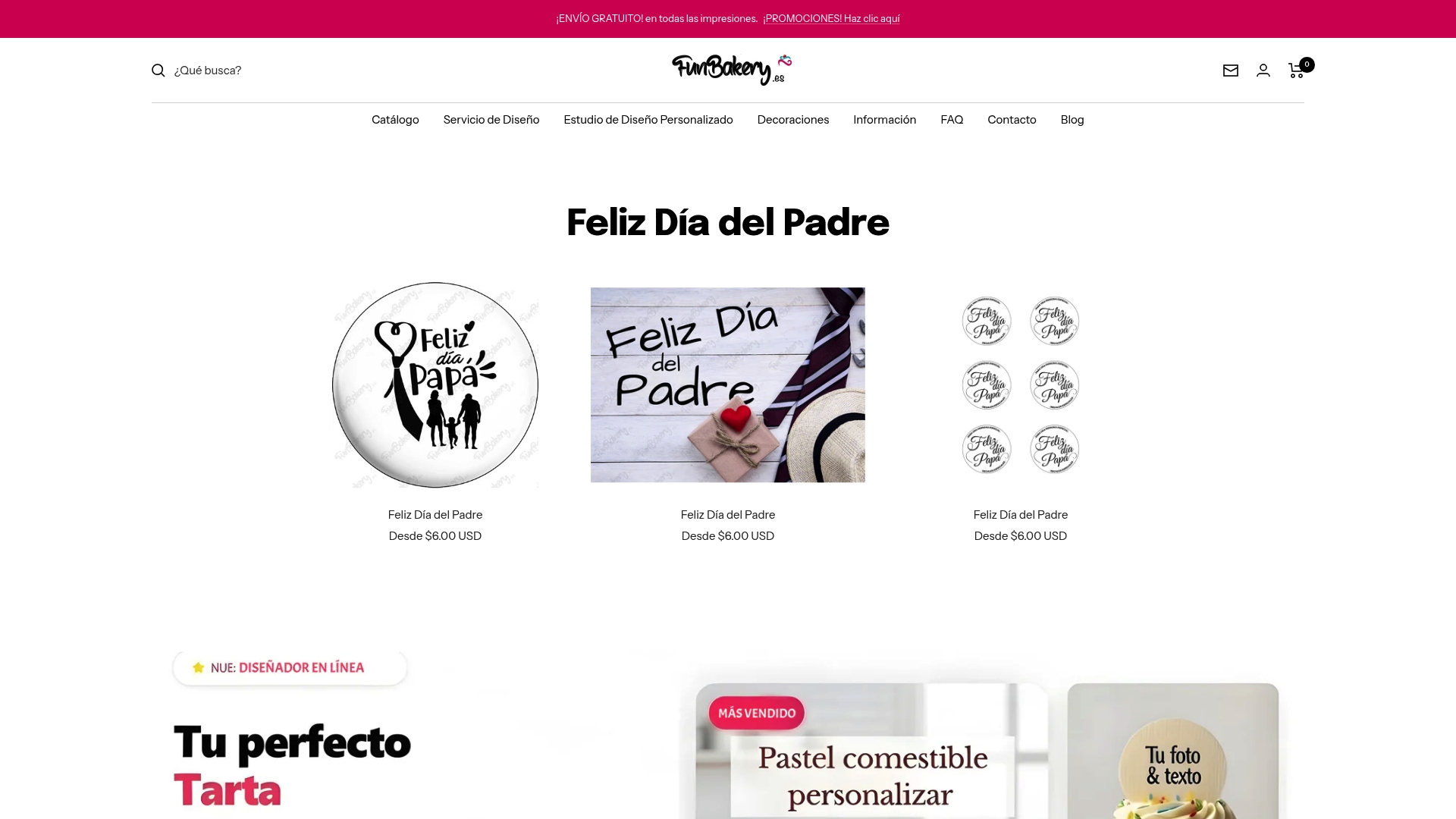
The catalog includes themed designs for all occasions and a personalization service with photo, name, and text, with professional-quality printing. For orders with specific technical requirements, it is possible to request a DoC per batch, technical data sheet, and confirmation of migration tests. Professional confectioners and buyers can explore the personalized cake wafers or order directly through the edible decorations collection. For orders with detailed technical specifications, contact the Funbakery team directly through the online store.
Sources
The sources below cover the legal requirements, test methods, and practical guidance referred to in this guide.
- Regulation (EC) No. 1935/2004
- Materials for Contact with Food – DGAV
- Materials in contact with food – ASAE
- Edible packaging: application and technological impact — review
- New regulations on the use of materials in contact with food — Mérieux NutriSciences
To check the technical terminology used in this guide (DoC, SML, Tenax®, OML), see the Funbakery cake decorating glossary.