There is no specific regulation for edible paper in 2026. This statement surprises many bakers and entrepreneurs looking to comply with current regulations. The reality is that edible paper is governed by general food additive rules and food contact materials. Knowing these general rules is essential to ensure the quality of your products, maintain customer trust, and gain seamless market access. In this guide, you will discover the applicable legal keys, practical compliance requirements, and actionable tips for your bakery.
Table of Contents
- Legal context: What is edible paper and how is it regulated?
- Key European regulations: current requirements and 2026 updates
- Obligations for suppliers and bakeries
- Special cases: children's products, sustainability, and export
- Practical application: How to ensure compliance and quality in the bakery
- Practical solutions at FunBakery to comply with regulations
- Frequently asked questions about edible paper and its regulations
Key Points
| Point | Details |
|---|---|
| No exclusive regulation | Edible paper is regulated by general food ingredient and material rules. |
| Mandatory documents | You must require a declaration of compliance, traceability, and certificates from suppliers. |
| Regulated sustainability | It is mandatory to recycle at least 75% of used edible paper in 2026. |
| Avoid restricted additives | Do not use additives being phased out, especially in children's products. |
| Ensure compliance | Consistent quality control and documentation prevent penalties and increase customer trust. |
Legal context: What is edible paper and how is it regulated?
Now that you know there is no specific regulation, it is important to understand the general framework that regulates edible paper and how it is interpreted in the sector.
Edible paper is a thin sheet made with food ingredients suitable for human consumption, used mainly to decorate cakes, cupcakes, and other baked goods. It typically consists of starch, sugar, water, and authorized additives such as colorings and stabilizers. Its function is purely decorative and edible, allowing creations to be personalized with images, text, and designs.
From a legal standpoint, edible paper is regulated as a food ingredient under general rules for additives and food contact materials. In the European Union, the key regulations are (EC) 1333/2008 on food additives and (EU) 10/2011 on plastic materials in contact with food. In the United States, the FDA regulates it under 21 CFR Part 176 as a food contact substance.
It is crucial to distinguish between edible paper and paper in contact with food. The former is consumed directly as part of the final product. The latter only touches the food during storage or transport, but it is not ingested. This difference determines which specific regulation applies in each case.
Recognized and validated main ingredients:
- Modified starch (E1404, E1442)
- Sugar and glucose syrup
- Glycerin (E422)
- Authorized colorings (E102, E110, E122, E133)
- Titanium dioxide (E171, with restrictions since 2022)
- Purified water
| Aspect | Edible paper | Contact paper |
|---|---|---|
| Consumption | Directly consumed as part of the food | Not consumed |
| EU regulation | Additives (EC 1333/2008) | Contact materials (EU 10/2011) |
| Ingredients | Only authorized additives | Approved migration substances |
| Certification | Food compliance declaration | Material compliance declaration |
To learn more about the concept of edible paper and its applications, it is useful to review specialized resources. It is also advisable to learn more about materials in contact with food to avoid regulatory confusion.
“The correct classification of edible paper as a food ingredient, not as packaging, determines the entire regulatory compliance chain and the applicable traceability requirements.”
Key European regulations: current requirements and 2026 updates
Now that the general framework is understood, it is time to break down the specific rules and relevant changes for this year.
The European Union maintains a robust food regulation system that is updated periodically. For 2026, the fundamental regulations remain (EC) 1333/2008 on additives and (EU) 10/2011 on plastics in contact with food. The update through Regulation (EU) 2026/196 introduces adjustments to the lists of permitted additives and specific migration limits.
Main changes 2025 vs. 2026:
| Aspect | 2025 | 2026 |
|---|---|---|
| Titanium dioxide (E171) | Prohibited in food | Prohibition maintained |
| Guar gum (E412) in children's products | Partial restriction | Gradual phase-out until 2027 |
| Traceability | Recommended | Mandatory (EU 2025/351) |
| Paper recycling | 70% target | 75% target |
| Declaration of conformity | Optional for some | Mandatory for all |
Additives permitted for use in edible paper include colorings such as tartrazine (E102), sunset yellow (E110), carmine (E122), and brilliant blue (E133). Authorized stabilizers are glycerin (E422), sorbitol (E420), and various modified starches. Each additive has maximum limits established according to the food category.
Steps to verify additive compliance:
- Request the complete product technical data sheet
- Verify that all additives have an authorized E number
- Check the maximum limits according to the food category
- Confirm the absence of prohibited substances such as E171
- Review the manufacturing and expiration dates
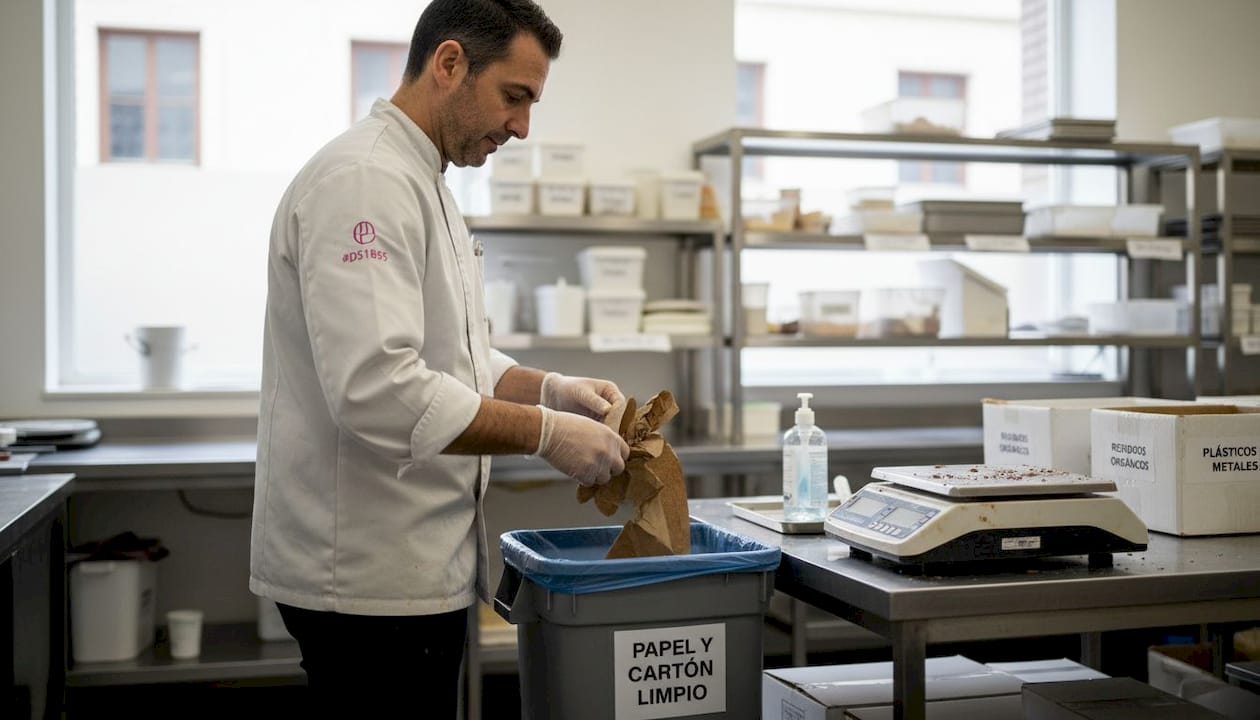
Sustainability takes center stage in 2026. The 75% paper recycling target is part of the European environmental directives. Although edible paper represents a smaller volume, suppliers must demonstrate sustainable production and packaging practices.
Professional tip: Maintain a digital archive with all your suppliers' declarations of conformity. Update it every time you receive a new batch. This documentation is your best defense against inspections and ensures complete traceability. Review the available safe paper options and consult the top edible paper to make informed decisions.
To stay updated on regulations, regularly consult official and specialized sources on food additive updates.
Obligations for suppliers and bakeries
With the regulations clear, it is vital to know how to apply those rules to daily purchases and bakery management.
The declaration of compliance (DoC) is the fundamental document certifying that edible paper complies with all applicable regulations. This certificate must include the manufacturer's identification, a complete list of ingredients and additives with E numbers, specific migration limits if applicable, conditions of use and storage, and the issue date with the validity period.
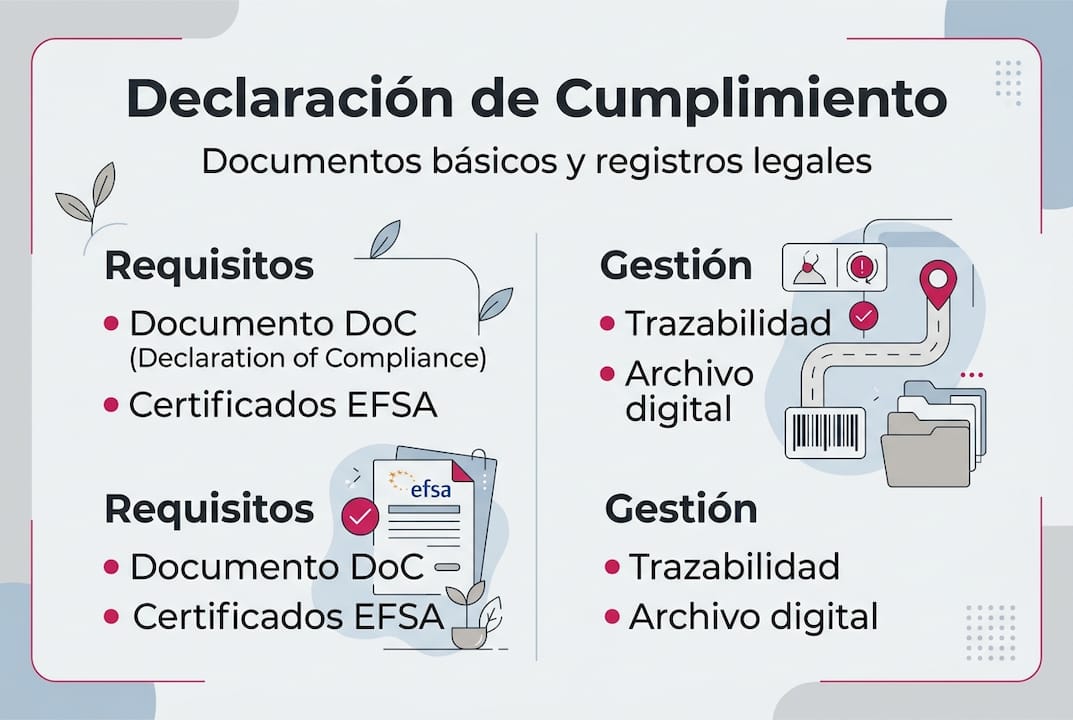
Traceability is mandatory under Regulation (EU) 2025/351 and requires you to be able to trace each batch from the supplier to the final product. This means recording the batch number, receipt date, supplier and manufacturer, quantity received, and intended use in your products.
Purity requirements and contaminant limits:
- Heavy metals: lead <0.5 mg/kg, arsenic <0.1 mg/kg
- Microbiological: absence of Salmonella, E. coli <10 CFU/g
- Pesticide residues: according to European MRL limits
- Allergens: mandatory declaration if present
- Moisture: typically <8% for stability
Key points for effective traceability:
- Implement a digital or physical recording system
- Label each received batch with a unique code
- Link paper batches with finished products
- Keep documentation for at least 5 years
- Perform quarterly internal audits
Batch control includes visual verification upon receiving the material, checking expiration dates, storage under suitable conditions (temperature, humidity), and FIFO rotation (first in, first out). Packaging and waste recycling must be documented according to local environmental regulations.
Professional tip: Always request the EFSA certificate for the European market or the FDA for export to the United States. These specific certificates greatly facilitate any inspection or audit process. Know the mistakes to avoid when using edible paper and understand the function of edible paper to optimize its use.
Special cases: children's products, sustainability, and export
In some contexts, particular requirements arise whose omission can have serious consequences. It is essential to know and manage them.
Products intended for children under 3 years of age have additional restrictions. Additives such as guar gum E412 should not be used, as it is being gradually phased out until 2027. Other colorings such as E102, E110, and E122 require specific warnings about possible effects on children's activity and attention.
Additives with restrictions in children's products:
- E412 (guar gum): gradual phase-out
- E102 (tartrazine): mandatory warning
- E110 (sunset yellow): mandatory warning
- E122 (carmine): mandatory warning
- E171 (titanium dioxide): totally prohibited
Sustainability in 2026 is not optional. The 75% paper recycling target means that suppliers and users must implement waste management systems. Look for suppliers with ISO 14001 environmental certifications or equivalents. Reduce unnecessary packaging and opt for biodegradable materials when possible.
Key differences for export to the United States:
- Regulation: FDA instead of EFSA
- Specific regulation: 21 CFR Part 176
- Facility registration: mandatory for manufacturers
- Labeling: FDA requirements differ from the EU
- Permitted additives: the GRAS list may differ
In the United States, edible papers are governed by 21 CFR Part 176 as food contact substances. The list of permitted additives (GRAS) may include or exclude substances compared to the European list. Always verify equivalence before exporting.
“Successful export requires in-depth knowledge of regulatory differences between markets. An additive authorized in Europe may not be in the United States, and vice versa. Due diligence beforehand prevents costly customs rejections.”
For children's products, review information on safe edible paper for children. Edible paper technology is constantly evolving to offer safer and more sustainable options.
Practical application: How to ensure compliance and quality in the bakery
Now that you know the specific requirements and complex scenarios, it is time to organize how to put all this into practice simply and effectively.
Recommended procedure for safe purchase and use:
- Supplier selection: Verify that they have current certifications and a good reputation in the sector
- Documentation request: Ask for a declaration of conformity, complete technical data sheet, and certificates of analysis
- Ingredient verification: Check that all additives are authorized and within limits
- Material receipt: Visually inspect, verify dates, and record the batch number
- Proper storage: Keep in a cool, dry place, protected from direct light
- Use and traceability: Record which batches you use in each production
- Documentation: Archive all information for at least 5 years
It is recommended to verify supplier certificates and batch traceability to avoid disruptive changes in your operation. Prevention is always more economical than correction.
Checklist for suppliers and material receipt:
- Does the supplier have a current health registration?
- Do they provide an updated declaration of conformity?
- Are the ingredients clearly listed with E numbers?
- Is there EFSA or FDA certification according to your market?
- Is the packaging intact and correctly labeled?
- Does the expiration date allow for proper use?
- Is the batch number legible and traceable?
- Are there microbiological analysis certificates?
- Are storage conditions included?
- Is there contact information for technical inquiries?
| Action | Frequency | Responsible | Documentation |
|---|---|---|---|
| Verify supplier certificates | Every new purchase | Purchasing | Digital archive |
| Visual inspection upon receipt | Every delivery | Warehouse | Batch records |
| Internal traceability audit | Quarterly | Quality | Audit report |
| Documentation update | Annually or upon regulatory change | Management | Regulatory archive |
| Team training | Semiannually | HR | Training certificates |
Update your processes when there are significant regulatory changes, you change your main supplier, receive observations during inspections, or detect internal non-conformities. Documentation must be accessible, organized chronologically, and backed up digitally.
Explore practical applications at events to maximize the value of your investment in quality edible paper.
Practical solutions at FunBakery to comply with regulations
To make this entire process easier, it is key to have partners that help ensure quality and regulatory compliance.
At FunBakery, we understand the concerns of bakers and entrepreneurs regarding regulatory compliance. That is why all our edible paper products strictly comply with current European regulations. Each batch comes with its declaration of conformity and certificates of authorized ingredients.

Our catalog includes options such as the personalized Stumble Guys wafer paper and multiple designs that guarantee food safety. In addition, we offer personalized cake wafer paper with a custom design service, where our designers create unique images incorporating photographs, names, and personalized text.
Working with specialized and certified suppliers offers you concrete advantages. You receive complete documentation without having to ask for it, access direct technical advice when questions arise, and have guaranteed traceability for every batch. This allows you to focus on creating exceptional products while we take care of regulatory compliance.
The certified edible paper wafer we offer is made with the highest quality ingredients, without prohibited additives, and with complete transparency in its composition. Taking responsible action in the selection of materials not only protects your business, it also demonstrates professionalism and commitment to quality to your customers.
Frequently asked questions about edible paper and its regulations
Is there any specific regulation for edible paper in 2026?
No, edible paper is regulated by general rules for additives and materials in contact with food. There is no legislation exclusively for this product.
What should I ask my supplier for to make sure I comply with the law?
Always request the declaration of compliance, certificates of authorized additives, and mandatory batch traceability. These documents are essential for any inspection.
Can I use edible paper with any additive in children's products?
No, you must avoid restricted additives such as guar gum E412, which is being phased out by 2027. Always check the specific restrictions for children under 3 years old.
What is the difference if I want to export to the United States?
In the United States, you must comply with FDA regulations under 21 CFR Part 176, which classifies edible paper as a substance in contact with food. The permitted additives may differ from the European list.
Are recycling measures mandatory for edible papers?
Yes, in 2026 the European goal is to recycle at least 75% of the paper used. This is part of the environmental directives applicable to the entire food industry.