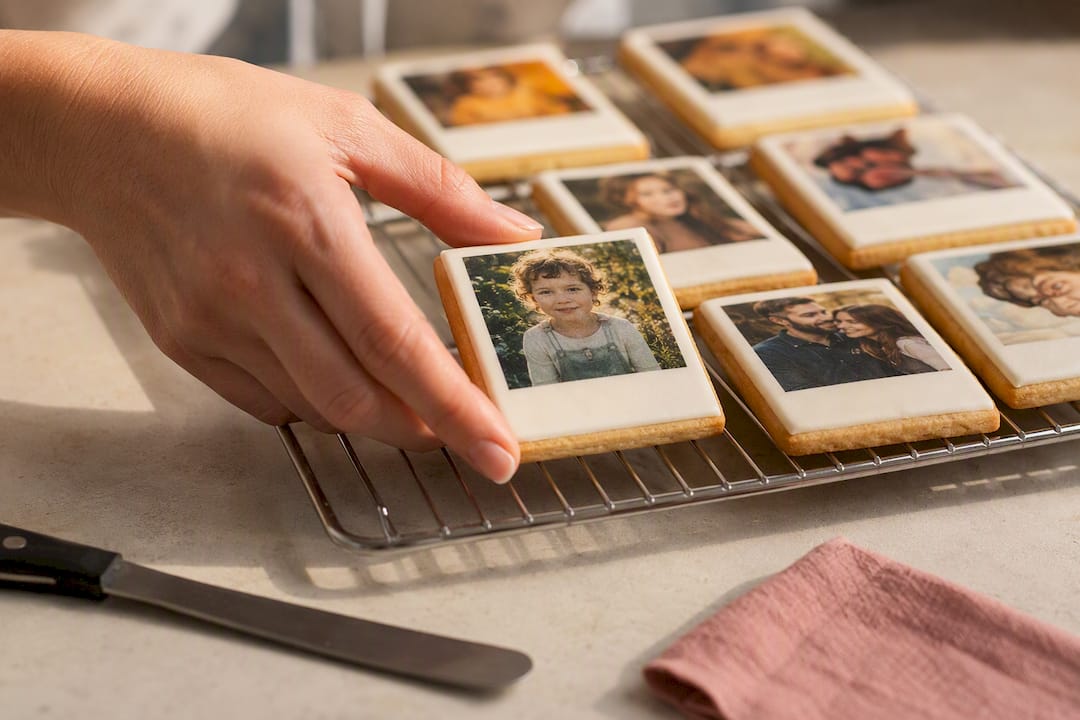
Yes, you can refrigerate a cake with an edible image, but only if you control the moisture in the frosting and protect the printed surface before putting it in the refrigerator. Fondant and firm buttercream hold up well; whipped cream, on the other hand, is the biggest risk because its moisture directly attacks the ink. In an emergency, wrap the cake in a closed cardboard box and avoid direct contact with cold air.
In summary:
- An edible image can be refrigerated if moisture and the printed surface are controlled, but whipped cream poses risks due to its natural moisture.
- The best strategy depends on the frosting: fondant and firm buttercream can withstand it in advance, while whipped cream should be applied just before serving.
- It is essential to apply a barrier of ganache or chocolate and dry the surface thoroughly before refrigerating to prevent wrinkles and color loss in the print.
- Proper packaging, such as a cardboard box and separation from moist air, prevents condensation from damaging the edible image during refrigeration.
- When taking the cake out, it is best to wait for the moisture to evaporate and dry the edges before handling or cutting it to prevent the print from running.
Table of contents
- When is it safe to refrigerate a cake with an edible image
- How to prepare the cake before refrigerating: practical steps
- How to package and place the cake in the refrigerator
- How to take the cake out of the refrigerator without smudging the edible image
- Common mistakes when refrigerating cakes with edible images
- Baker's tricks to make the edible image withstand the cold
- When I would apply the edible image before refrigerating
- Custom edible images designed to withstand the refrigerator
- Sources
When is it safe to refrigerate a cake with an edible image
The frosting underneath determines almost the entire result. Fondant rarely causes problems because its surface is dry and stable, so the edible image sticks and withstands hours of cold without hardly any changes. Buttercream and ganache are more delicate: they work well as long as they are allowed to set before applying the print, creating a base that does not release moisture upwards. Whipped cream is different: because it is naturally moist, it is best to apply the edible image just before serving instead of in advance.
Cold and moisture combined create three typical problems with the edible image: rippling at the edges, loss of intensity in the printed colors, and ink absorption into the cake. This happens because the edible image is less flexible and more sensitive to moisture than sugar paper, a material that is sometimes confused with it but behaves differently in the refrigerator.
As a practical summary, this is what decides whether it is best to apply the edible image before or after refrigerating:
- Fondant or dry frosting: it can be applied in advance without any problem.
- Firm buttercream or ganache: apply only when the surface has set.
- Whipped cream or very moist creams: it is best to apply the edible image as late as possible.
- Summer events or very humid environments: delay the application whenever possible.
How to prepare the cake before refrigerating: practical steps
Preparing the surface properly is what makes the difference between an edible image that holds up and one that wrinkles in two hours. Follow this order:
- Apply a thin layer of ganache or melted chocolate over the frosting and let it solidify completely before touching it. This barrier insulates the edible image from the moisture of the filling or the cream underneath.
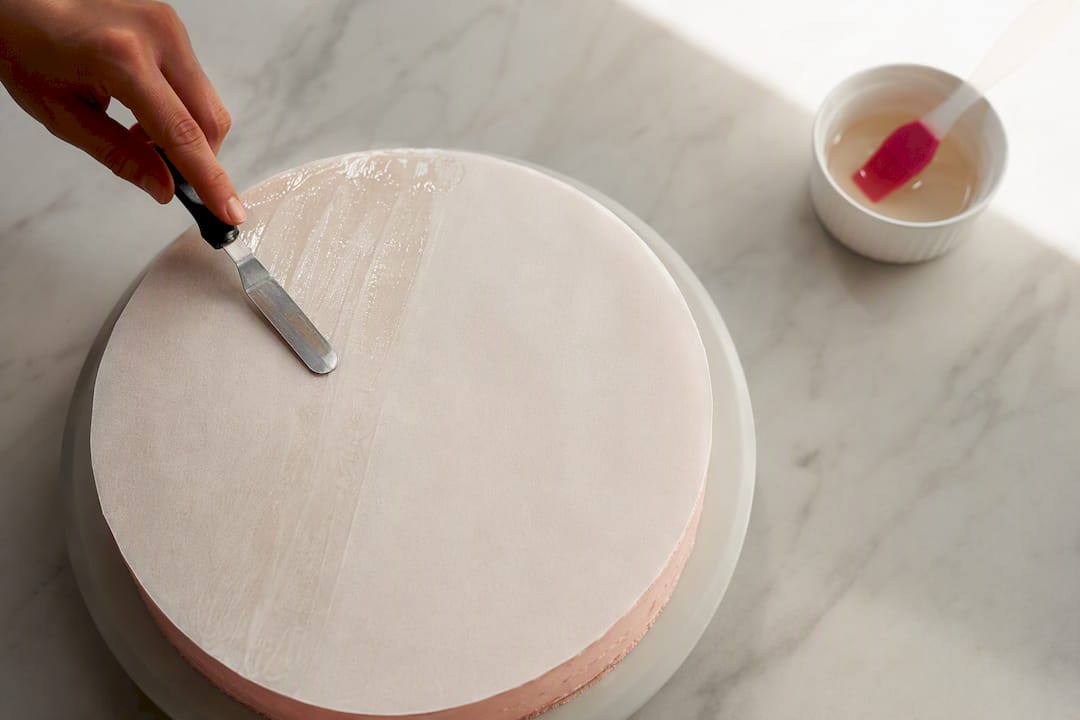
- Use edible glue in moderation. Piping gel, corn syrup, or light honey work better than water, which over-moistens the print and promotes bubbles.
- Cut the edible image to the exact size and smooth it from the center toward the edges to remove air pockets.
- Check the adhesion before putting the cake in the refrigerator. If any edge lifts, reinforce it with a tiny drop of glue and wait for it to settle.
For this entire process, you only need a small spatula, a fine brush for the glue, and a cake box to transport and store the cake without it touching anything.
Professional tip: let the edible glue air dry for a few minutes before refrigerating; if you put the cake in with the glue still wet, the cold condenses that moisture against the edible image and accelerates wrinkling.
How to package and place the cake in the refrigerator
Packaging matters as much as the prior preparation. Storing the cake without protection inside the refrigerator is one of the fastest ways to ruin a print that was perfect until that moment, because condensation deteriorates the color and texture of the edible image quite quickly.
Keep these packaging rules in mind:
- Use a closed cardboard cake box or a large airtight container; both prevent direct contact with the moist air of the refrigerator.
- Place the cake in an interior and stable area of the refrigerator, away from the door (where the temperature fluctuates more) and from foods with a lot of moisture.
- If you only have plastic wrap, do not rest it on the edible image: create distance with toothpicks or small supports so that the plastic does not touch the print.
- Putting a dry paper towel inside the box helps absorb residual moisture when the cake is refrigerated for many hours, according to home tests collected by Postreadicción.
How to take the cake out of the refrigerator without smudging the edible image
Condensation does not only appear inside the refrigerator: the moment of taking the cake out is just as delicate.
If you see drops on the surface when opening the box, do not touch or rub them:
- Let the moisture evaporate on its own for a few more minutes.
- If there is visible excess on the edges, dry it with a paper napkin without pressing on the printed area.
- Wait for the cake to be completely dry before handling or cutting it.
This acclimation margin is the step most people skip, and it is precisely what prevents the print from running just when the cake goes to the table.
Common mistakes when refrigerating cakes with edible images
Almost all disasters with edible images come from three mistakes that are repeated over and over again:
- Applying the edible image over moist whipped cream: if it is already on and has been ruined, remove it carefully and apply it again if the surface allows, or cover the damaged area with an additional decoration.
- Using too much liquid glue: let the excess air dry and smooth it with the spatula; if the edges have already darkened, cut that part off before it becomes more noticeable.
- Putting the cake in without any type of protection: transfer it to a box with absorbent paper and check that the refrigerator temperature is not too low, which worsens condensation when taking it out.
Each of these mistakes can be fixed if detected in time. The real problem arises when two accumulate at the same time, for example, excess glue plus whipped cream as frosting: there, the edible image rarely survives intact.
Baker's tricks to make the edible image withstand the cold
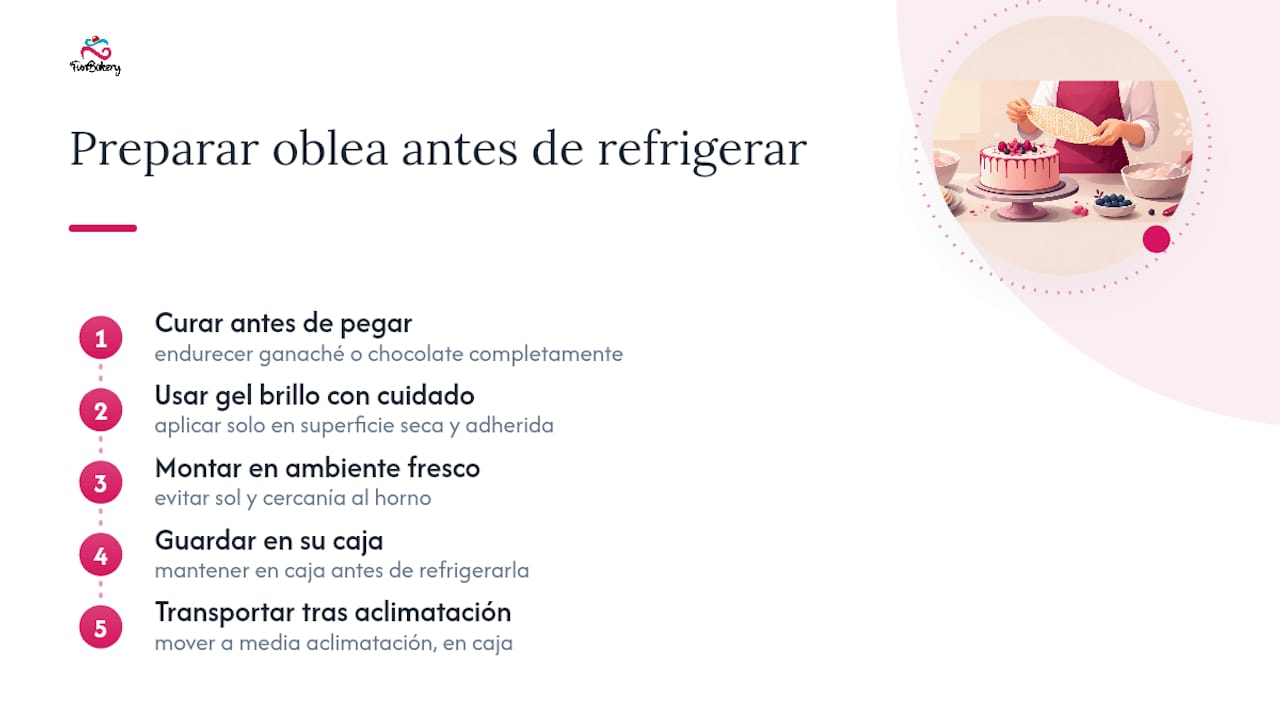
Bakers who work with edible images daily almost always repeat the same technique: curing before applying. A layer of ganache or chocolate that is allowed to harden completely before applying the edible image notably reduces rippling when the cake is going to spend several hours in the refrigerator, because that barrier prevents moisture from rising directly toward the print.
Gloss gel can give the edible image a more striking finish, but it should only be applied when the surface is completely dry and well adhered. Applying it too early has the opposite effect: it adds moisture right where it is least needed.
On hot days, assemble the cake in a cool environment, not directly under the sun or near the oven, and store it in its box for as long as possible before refrigerating it. Sudden temperature changes are almost as damaging to the edible image as condensation itself.
Professional tip: if you are going to transport the cake after refrigerating it, always do so inside the cardboard box and halfway through acclimation, never freshly taken out of the refrigerator; movement together with fresh condensation is the combination that wrinkles the print the most.
When I would apply the edible image before refrigerating
The rule I apply is simple: if the frosting is fondant, the edible image is applied in advance without any fear. If it is buttercream or ganache, I wait for the surface to be completely firm and add a barrier before applying. If the cake has whipped cream, I directly reserve the edible image for the last moment, even if that means assembling it in front of the guests.
There is no single answer valid for all cases: sometimes it is best to prioritize the final appearance over convenience, and other times the logistics of the event rule over aesthetics. What I never do is put a cake with a freshly applied edible image directly in the refrigerator without letting it settle first. That extra step is what separates a perfect cake from a last-minute disappointment.
— David
Custom edible images designed to withstand the refrigerator
If you prepare or order cakes frequently, choosing the right edible image from the beginning saves you half the storage problems. We work with sheets of a thickness designed to adhere firmly to fondant and buttercream, which facilitates just the prior preparation we described before: fewer wrinkles, less color loss when refrigerating.
[IMAGE:cta_image]
In the cake decoration catalog you will find designs ready to apply in minutes, and if you need something with a specific photo, name, or age, the custom design studio will prepare it for you before the event. For themed cakes with added visual support, you can also check the custom cake frames, an option that reduces direct contact between the edible image and last-minute handling. Choose your design and solve the decoration with enough margin to properly prepare the surface before refrigerating.
Sources
To expand the application and storage tricks, consult the Mykaramelli guide on how to apply sugar paper and edible images, the technical comparison by Dulcemisu between sugar paper and edible image, and the Funbakery entry on tricks to prevent the edible image from peeling off.
- Differences between sugar paper and edible image | Creative baking blog
- Applying Sugar Paper and Edible Images to Cakes: Tricks and Tips ✅
- Decorate and Enhance Your Cakes: Guide for Beginners | GASDA