TL;DR:
- Edible wafers are thin starch sheets used to decorate desserts.
- They are placed on cakes and cupcakes and customized with printed images.
- They must be stored in cool, dry environments to maintain their quality.
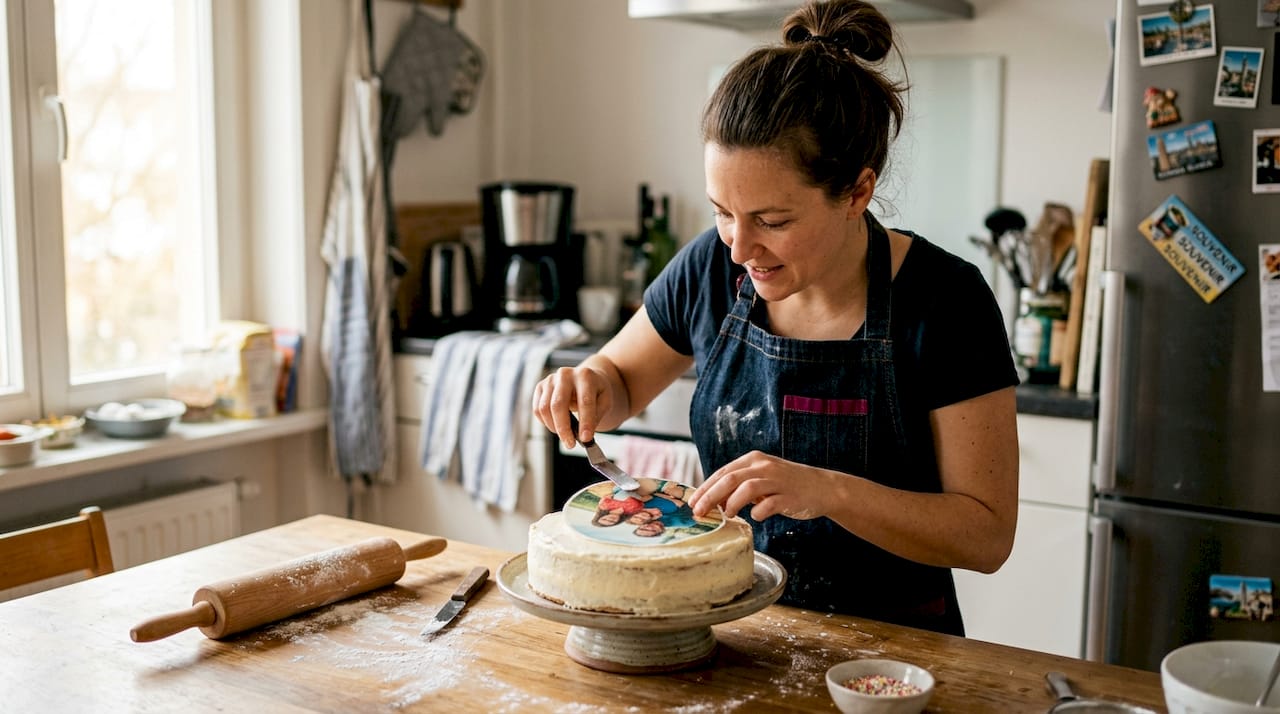
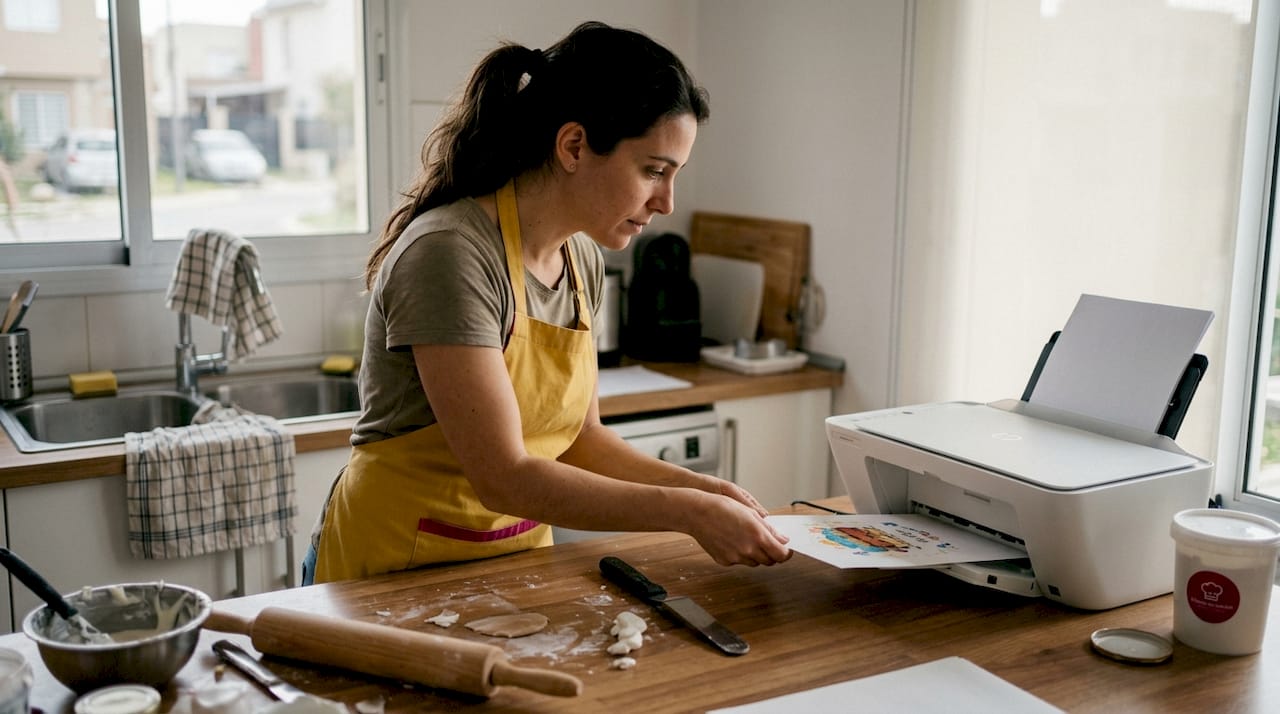
Many people go to a bakery or creative confectionery shop and ask for “a wafer,” thinking of the classic chocolate-filled cookie. However, edible wafers for decoration are something completely different: ultra-thin starch sheets that are printed with images and placed directly on cakes, cupcakes, and pastries. Their popularity has grown enormously in recent years thanks to the complete customization they allow. In this article, you will learn exactly what an edible wafer is, what it is made of, how it is used at parties and celebrations, and what mistakes you should avoid to get the most out of it.
Table of Contents
- What is an edible wafer and how does it differ from other wafers?
- Ingredients, formats, and presentation of edible wafers
- Uses and creative applications of edible wafers at events
- Advantages, common mistakes, and tips for working with edible wafers
- Our experience: what few people tell you about edible wafers
- Make your parties unique moments with personalized wafers
- Frequently asked questions about edible wafers
Key Points
| Point | Details |
|---|---|
| Clear definition | An edible wafer is a thin sheet made from starch, ideal for decorating desserts. |
| Versatile format | They come in different sizes, shapes, and customization options for any type of celebration. |
| Creative application | Wafers can be used to decorate everything from cakes to cupcakes and cookies at parties and events. |
| Practical tips | Choosing the right thickness and avoiding moisture ensures a perfect, long-lasting finish. |
What is an edible wafer and how does it differ from other wafers?
An edible wafer for baking is a very thin, flexible, and translucent sheet made primarily from potato or corn starch, water, and vegetable oil. Its texture is smooth, almost like paper, and its flavor is neutral so as not to alter the taste of the dessert. It is used as a base for printing designs with food-grade inks, making it a completely safe decoration to consume.
Confusion with the traditional wafer is understandable. According to the definition and historical uses of this product, the wafer as a cookie has centuries of history in European baking, where it was used as a crispy wafer roll to fill with cream, chocolate, or dulce de leche. That wafer is thick, rigid, and its function is culinary. The decorative wafer, on the other hand, is so thin that it can be folded without breaking, and its function is purely visual and decorative.
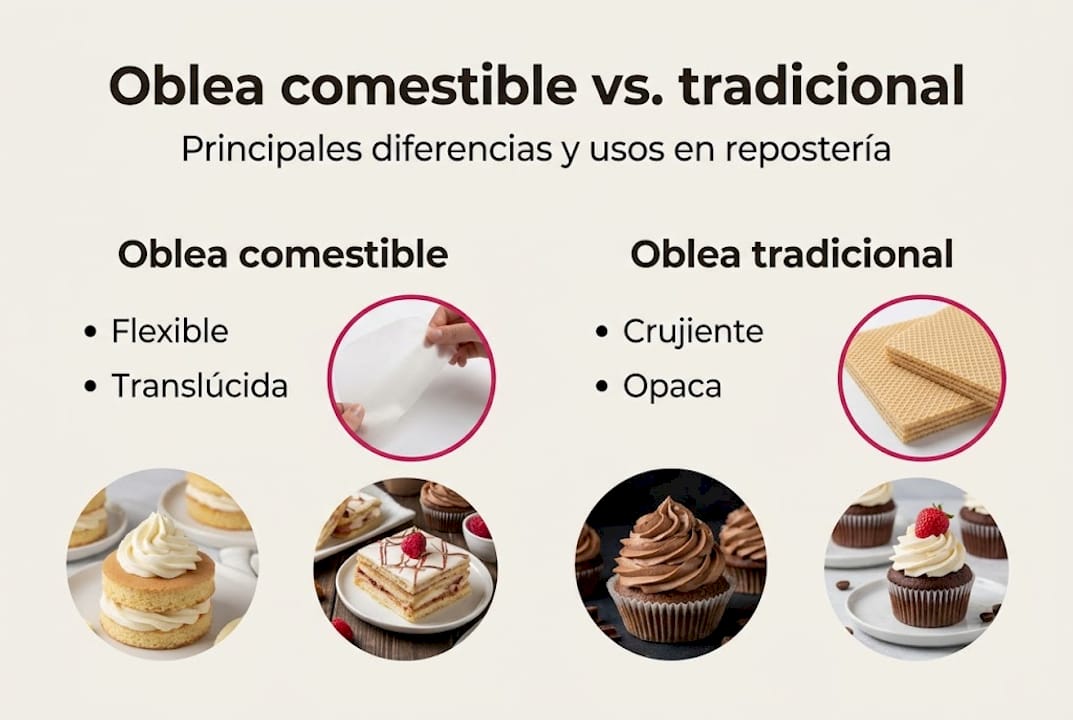
To better understand what edible paper in baking is, it is useful to see the key differences between the two products:
| Characteristic | Traditional wafer (cookie) | Edible wafer (baking) |
|---|---|---|
| Thickness | Thick and rigid | Very thin and flexible |
| Function | Food item, eaten on its own | Decorative, placed on desserts |
| Flavor | Sweet or intensely neutral | Neutral, almost tasteless |
| Printable | No | Yes, with food-grade inks |
| Texture to the touch | Crispy | Similar to paper |
There are also some common myths about edible wafers that should be debunked:
- “They are made of plastic or regular paper”: They are 100% edible and safe to consume.
- “They change the flavor of the dessert”: Their flavor is so neutral that it cannot be detected.
- “They are only suitable for large cakes”: They adapt to any format, from cupcakes to cookies.
- “They are difficult to place”: With the correct technique, they can be applied in minutes.
- “They deteriorate quickly”: When properly stored, they last for many months without losing quality.
Knowing these differences is the first step toward choosing the right product and avoiding disappointments at your next celebration.
Ingredients, formats, and presentation of edible wafers
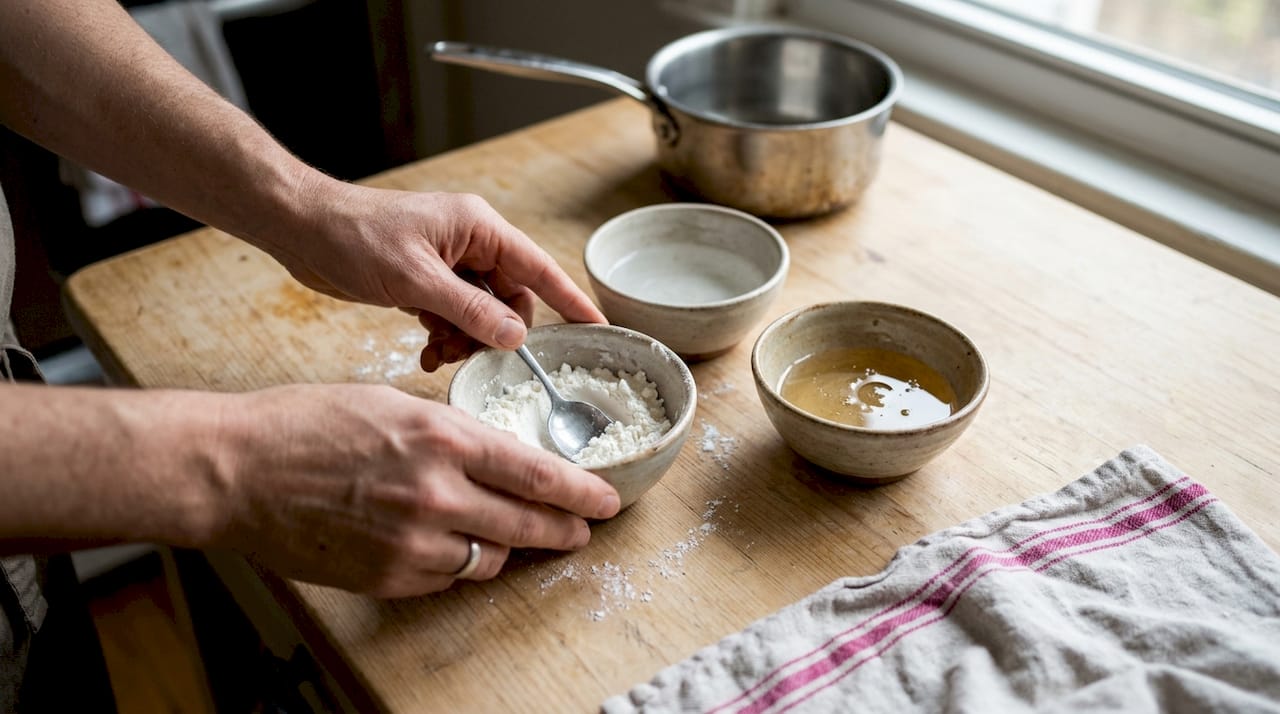
The main components of an edible wafer are simple: potato or corn starch, water, and a small amount of vegetable oil. Some manufacturers add glycerin to improve flexibility, especially in larger formats. The mixture is spread in very thin layers and dried at a low temperature to achieve that characteristic paper-like texture.
Regarding formats, edible wafers are mainly sold in the following presentations:
| Format | Description | Common use |
|---|---|---|
| A4 rectangular sheet | Standard size, printable | Large cakes, complete customization |
| 20 cm circle | Round, ready for cakes | Birthday cakes |
| Small circle | Diameter 5-7 cm | Cupcakes and muffins |
| Custom shape | Custom-cut shape | Themed decorations |
| Decorative strip | Band to wrap around cakes | Multi-tiered cakes |
To make the most of edible wafers for cakes, proper storage is essential. Always keep them in their original sealed bag, in a cool, dry place, away from heat and moisture. The biggest enemy of the wafer is moisture, which makes it sticky and impossible to handle.
If you want to learn the keys to decorating desserts with these materials, thickness is a detail that makes a difference.
Professional tip: For cakes covered with fondant or dried buttercream, use standard wafers. If the dessert has a lot of surface moisture, such as a fresh cream cake, opt for sugar paper, which is more resistant to moisture and retains colors better.
Handling also requires care. Always hold the wafer by the edges and avoid direct contact with wet hands. If the wafer has curled slightly due to temperature changes, place it under a flat surface for a few seconds and it will smooth itself out.
Uses and creative applications of edible wafers at events
Edible wafers have transformed the way celebration desserts are decorated. It is no longer necessary to be a professional pastry chef to achieve an impressive cake with your child's favorite character or with a photo of the newlyweds at a wedding.
The versatility of wafer paper for three-dimensional and flexible decorations makes it the preferred material for many creative bakers. It can be folded, rolled, cut, and molded to create flowers, butterflies, bows, and relief figures that add volume and dynamism to any dessert.
These are the most popular uses at events and celebrations:
- Children's birthday cakes: Print the child's favorite character, their name, and age in a single image.
- Themed cupcakes: Small circles with coordinated designs for the entire dessert table.
- Communion and baptisms: Religious or elegant designs with personalized names and dates.
- Weddings: Photos of the newlyweds, monograms, or floral motifs on the wedding cake.
- Adult parties: Themes based on TV series, movies, sports, or personal hobbies.
- Corporate events: Company logos and personalized messages on corporate sweets.
- Halloween and Christmas: Seasonal designs for decorated cookies and themed cakes.
“Wafer paper is ideal for 3D and flexible decorations at events, as it allows you to create structures that fondant or sugar paper cannot imitate as easily.”
Knowing the advantages of personalized wafers will help you decide when to use them. You can also explore the benefits of edible wafers for special celebrations and discover everything about personalized wafer printing for parties.
Professional tip: Combine the printed wafer with physical elements such as sugar flowers, edible pearls, or edible glitter. The contrast between the flat image and the three-dimensional elements creates a much more striking and professional visual effect.
Advantages, common mistakes, and tips for working with edible wafers
Edible wafers offer a number of clear advantages over other decorating techniques:
- Economical: Their cost is lower than that of modeled fondant decorations or handmade sugar flowers.
- Quick to apply: They require no drying time or advanced artistic skills.
- 100% customizable: Any image, photo, or design can be printed in high quality.
- Suitable for various diets: Many are vegan and gluten-free, although you should always check the label.
- Lightweight: They add no weight or volume to the dessert, making them ideal for delicate cakes.
However, there are also common mistakes that ruin the final result. Knowing them in advance will save you a lot of trouble.
The most common mistake is applying the wafer to a damp surface or one with too much cream. Moisture dissolves the wafer in minutes, leaving the image blurry or broken. Another common mistake is taking the wafer out of its packaging too early: contact with the air dries it out or makes it sticky, depending on the ambient humidity.
Another mistake is folding or rolling the wafer without slightly dampening it first. To create curved shapes or flowers, apply a little water with a fine brush to the area you want to mold and work quickly before it dries.
The benefits of edible wafers are maximized by following these recommendations, and the keys to decorating with wafers will guide you step by step.
Professional tip: To secure the wafer on fondant, apply a very thin layer of butter or vegetable shortening with a brush. On buttercream, place it directly when the cream is slightly firm but not dry. Never use water on fondant because it dissolves it and stains the wafer.
Our experience: what few people tell you about edible wafers
After working with thousands of personalized wafer orders, we have learned something that almost no guide mentions: the biggest problem is not the technique, but the context. A perfectly printed wafer can be ruined in minutes if the environment where the cake is assembled is very humid, if the celebration venue is very hot, or if the cake spends hours outdoors.
Another detail that is often overlooked is color accuracy. Food inks have a more limited color range than conventional inks. Intense reds and deep blacks may look slightly different from the screen. That is why we always recommend checking the color proof before confirming a large order.
And as for when to choose wafer over sugar paper: wafer is better for decorations with volume and 3D shapes, while sugar paper offers more vivid colors and is more resistant to surface moisture. Our guide to decorating cakes with wafers in 2026 covers all these nuances with real examples.
The key is to thoroughly understand the environment where the decoration will be used before choosing the material.
Make your parties unique moments with personalized wafers
Now that you know exactly what an edible wafer is and how to make the most of it, the next step is to turn that idea into a real decoration. At Funbakery, we create personalized wafers with any image, photo, name, or theme you can imagine, with print quality that makes a difference in the final result.

From designs of popular characters such as personalized Minecraft wafers to completely custom creations for weddings or corporate events, our catalog of personalized cake decorations has the perfect option for every celebration. Our designers take care of everything so that you only have to enjoy the moment.
Frequently asked questions about edible wafers
Can edible wafers be used on any type of cake?
Yes, but they work best on cakes covered with dry surfaces, as excessive moisture can affect the texture and cause the image to deteriorate quickly.
How long do edible wafers stay in good condition?
Normally between 6 and 12 months in a cool, dry place, avoiding direct exposure to light and moisture, according to the usual storage recommendations for this type of product.
Are there edible wafers suitable for vegan and gluten-free diets?
Yes, many wafers are made with vegan and gluten-free ingredients, but you should always check the manufacturer's label to make sure they suit your diet.
How do I personalize an edible wafer for a celebration?
You can order it with images, names, and specific themes from creative confectionery stores such as Funbakery, where designers take care of creating the custom image according to your instructions.