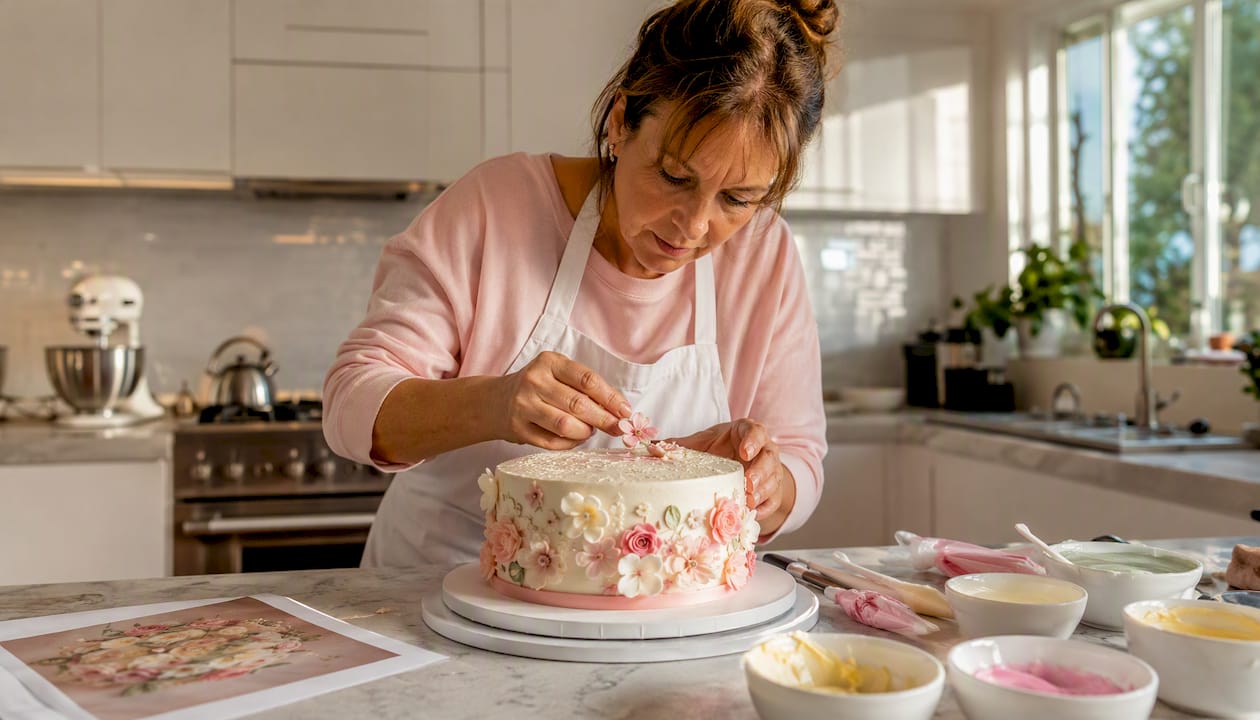
A premium design on wafers and icing sheets is defined by three specific criteria: the material chosen based on the shape of the cake, faithful 300 DPI printing with calibrated edible inks, and production control, which includes a color proof and protective packaging. If any of these three fails, the final result will show it, even if the original design is beautiful.
The factors that justify paying more or requesting high-quality specifications are:
- Suitable material: icing sheets for curved surfaces and detailed photographs; wafers for flat surfaces and simple decorations.
- Print quality: a minimum resolution of 300 DPI, certified edible inks, and a calibrated color profile to avoid dull colors or the so-called "water effect."
- Production control: a color proof before printing, packaging in a sealed zip bag, and protected shipping so that the piece arrives intact.
Personalization at family events depends heavily on the emotional value of the cake: a misspelled name or a color that does not match the child's favorite character ruins the effect. Funbakery works with custom design precisely to avoid these surprises.
Table of Contents
- What is the difference between icing sheets and wafers?
- How can you tell the difference between an amateur and a professional print?
- What files and settings should you request for a truly premium result?
- How do you apply the print so that it looks perfect on the cake?
- What factors increase or decrease the price of a premium design?
- What questions should you ask the supplier before confirming the order?
- Key Points
- What really matters when ordering a custom design
- Funbakery: custom design with guaranteed results
What is the difference between icing sheets and wafers?
They are two different materials with opposite properties, and choosing the wrong one is the most common mistake in family orders.
| Criterion | Icing sheets | Wafers |
|---|---|---|
| Best for | Curved surfaces, detailed photos | Flat surfaces, simple decorations |
| Flexibility | High: bends without breaking | Low: can break on curves |
| Color fidelity | Vivid and saturated colors | Duller colors |
| Flavor | Light hint of vanilla | Neutral |
| Moisture resistance | Medium-high | Low |
| Approximate price | Higher | Economical |
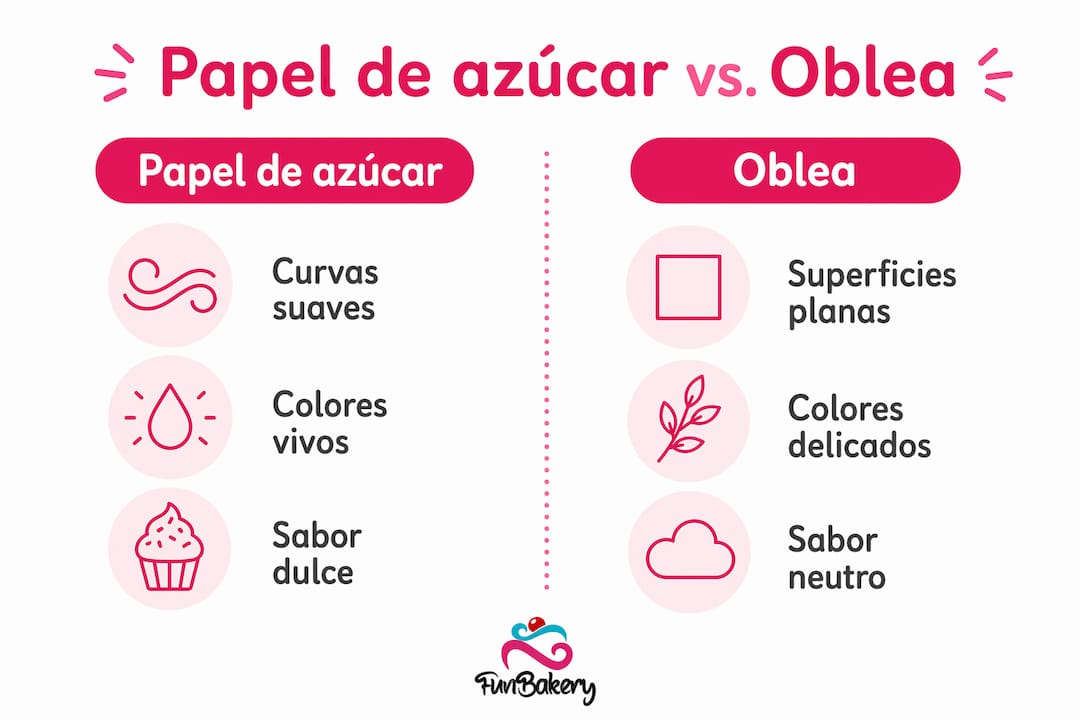
Icing sheets offer more vivid colors and adapt to any curved surface without the risk of breaking, making them the natural choice for cylindrical, spherical, or any irregularly shaped cakes. Wafers, on the other hand, have a rigidity that makes them easier to handle on completely flat surfaces and are more economical for decorations without much photographic detail.
As for flavor, icing sheets provide a mild sweetness with a hint of vanilla, while wafers are neutral. Both can be gluten-free depending on the manufacturer, which should be confirmed if there are guests with intolerances.
Professional tip: For a birthday cake with a character photo and buttercream frosting, always choose icing sheets. Reserve wafers for flat cakes with geometric decorations or when the budget is the deciding factor.
To delve deeper into the differences in use, the guide on decorating desserts with wafers from Funbakery details when each material gives the best result.
How can you tell the difference between an amateur and a professional print?
Resolution is the starting point. An image sent at less than 300 DPI produces blurry edges, illegible text, and colors that look different on the screen and on the cake. PNG, TIFF, or PDF formats preserve that resolution; JPG compresses the image and creates visible artifacts in large-format prints.
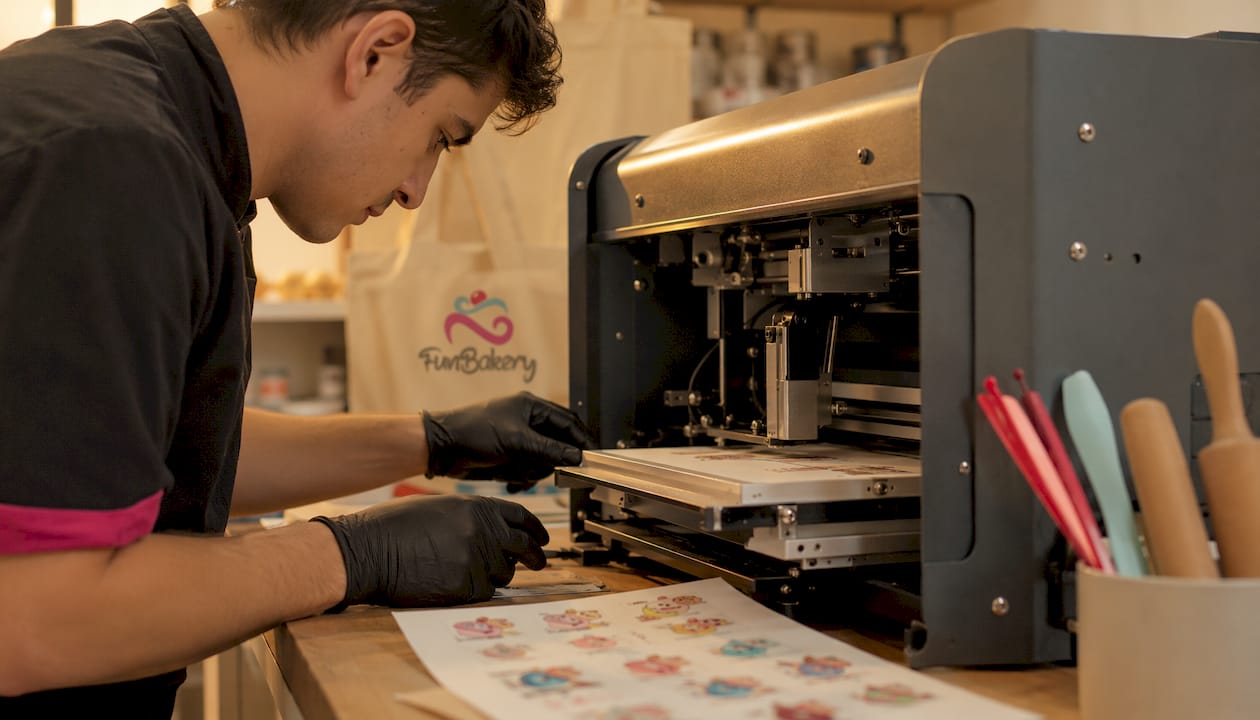
The "water effect" is the most recognizable defect in low-quality wafers: the surface absorbs the ink unevenly and creates spots or areas with uneven color. This problem is common in materials without prior calibration and ruins the sharpness of any design, no matter how detailed the original is. Quality icing sheets avoid this defect thanks to their more uniform surface and the printer calibration.
A premium supplier checks the color before producing the full order. That means sending a digital proof and, if the order justifies it, a physical sample before printing the final run.
Professional tip: When placing the order, always indicate the minimum contrast you need: a light background with dark text or vice versa. A name in white on a light yellow background can disappear in the final print if no one checks it beforehand.
What files and settings should you request for a truly premium result?
Before sending the design to the supplier, it is advisable to review a short list of technical specifications that make the difference between a correct and a flawless finish.
| Specification | Recommended value |
|---|---|
| Resolution | 300 DPI minimum |
| File format | PNG, TIFF, or PDF |
| Color space | sRGB (unless indicated by the supplier) |
| Bleed | 3–5 mm around the design |
| Safe zone for text | Minimum 5 mm from the edge |
| Logos | Vectorized if possible (SVG or PDF) |
Avoid JPG for top-tier prints: every time a JPG is saved, the compression degrades the image, and that deterioration is amplified when printing in large format.
The checklist for preparing the file:
- Crop the image, removing unnecessary white edges.
- Adjust the contrast and focus before exporting.
- Vectorize logos or text with special fonts.
- Add 3–5 mm of bleed to avoid cut edges.
- Confirm with the supplier the color space their printer uses.
When ordering custom design at Funbakery, the most useful thing is to send the photo in the highest resolution available, the exact text with names and ages, the color indications of the character or theme, and the intended use (large cake, cupcakes, muffin toppers). With that data, the design team can create the image without the need to go back and forth with corrections.
Professional tip: If the original photo is from a mobile phone and is less than 2 MB, ask the supplier to assess whether the resolution is sufficient before confirming the order. An artificially enlarged image does not recover the lost detail.
How do you apply the print so that it looks perfect on the cake?
The application technique varies depending on the frosting, and skipping a step can ruin a print that arrived in perfect condition.
- Fondant: apply a small amount of edible glue over the already smoothed fondant. Place the print from the center toward the edges to avoid bubbles. Press gently with clean fingers.
- Buttercream or ganache: you do not need additional glue; the cream itself fixes the print if it is slightly damp. Smooth the surface well before placing the piece.
- Whipped cream (heavy cream): place the print just before serving. Whipped cream is the wettest frosting and can deform or dissolve the paper if applied too far in advance.
- Removing the protective film: icing sheets come attached to a transparent plastic that must be removed before placing it. Forgetting it is the most common mistake and makes the print not adhere.
- Lifting edges: if the edges of the wafer tend to peel off, apply edible shine gel with a small spatula. In addition to fixing the edges, it gives a shiny finish that improves the presentation.
Professional tip: Keep the print in its original zip bag, in a dry place without direct light, until the time to use it. Avoid the refrigerator: moisture hardens the paper and increases the risk of it breaking when handling it.
What factors increase or decrease the price of a premium design?
The price of a custom edible print depends on four main variables:
- Total personalization: a design created from scratch with a photo, name, and age costs more than a catalog design with added text.
- Size: large formats for multi-tiered cakes require more material and production time.
- Color proof: requesting a physical sample before the final production adds cost and time, but eliminates surprises.
- Urgent delivery: standard timeframes for a custom order are usually 2–4 business days from design approval; urgent delivery can reduce it but with a surcharge.
Multiple orders (for example, cupcake wafers plus icing sheets for the large cake) usually have a lower cost per unit than individual orders, because the design time is amortized over more pieces.
Example of planning for a family birthday:
| Phase | Estimated time |
|---|---|
| Sending photo and data | Day 1 |
| Digital design proof | Day 2 |
| Approval and production | Day 3 |
| Shipping and delivery | Days 4–5 |
Ordering at least one week in advance avoids rush surcharges and gives room to correct the design if the proof is not convincing.
What questions should you ask the supplier before confirming the order?
A short checklist to avoid surprises:
- Is the material icing sheets or wafers? Can I choose?
- What minimum resolution do you accept for images?
- Do you send a digital proof before printing?
- Are the inks edible and certified? Is the product gluten-free?
- How do you package the order for shipping?
- What is the timeframe from design approval to delivery?
The signs that distinguish a supplier with real quality control are: a digital proof included in the process, packaging in a sealed zip bag with rigid protection, edible ink certification, and the possibility of requesting a physical sample for large orders.
To choose between icing sheets and wafers depending on the type of cake, the guide on types of icing sheets from Funbakery offers a detailed comparison by surface and frosting.
Key Points
A premium design on wafers and icing sheets requires the correct material, 300 DPI printing with certified inks, and careful application depending on the frosting to guarantee a flawless finish on the cake.
| Point | Details |
|---|---|
| Material according to shape | Icing sheets for curves and photos; wafers for flat surfaces and simple decorations. |
| Minimum resolution | 300 DPI in PNG, TIFF, or PDF; JPG degrades quality in large prints. |
| Application and moisture | On whipped cream cakes, place the print just before serving to avoid deformation. |
| Storage until use | Keep in a sealed zip bag, without refrigeration or direct light, to maintain flexibility. |
| Funbakery | Offers custom design with photo, name, and age, with a digital proof and protected shipping. |
What really matters when ordering a custom design
Most articles about edible prints focus on the application technique, but the real problem usually happens before: at the time of ordering. An image sent in low resolution, without indicating the necessary contrast or confirming the material, produces a mediocre result even if the supplier works well.
The emotional value of a well-personalized cake at a family birthday is difficult to quantify, but anyone who has seen the face of a child recognizing their favorite character on the cake knows that it is worth taking five minutes to prepare the file correctly. The difference between a design that impresses and one that disappoints is not in the price: it is in the details specified when placing the order.
My practical recommendation: treat the digital proof as a mandatory step, not optional. It is the only time you can correct colors, text position, or image cropping before it is printed. Skipping it to save a day is the shortcut that generates the most regrets.
Funbakery: custom design with guaranteed results
When the cake is the center of the celebration, the edible print design cannot be a gamble. Funbakery creates custom wafers and icing sheets with photo, name, age, and any theme, with a digital proof included in every order and protective packaging so that the piece arrives in perfect condition.

The catalog includes catalog designs for quick orders and a completely custom design service for those who want something unique.
For cupcakes and muffin toppers, the muffin topper designer allows you to personalize each piece with the event data. Enter the store, choose the format you need, and upload the photo: the design team takes care of the rest.