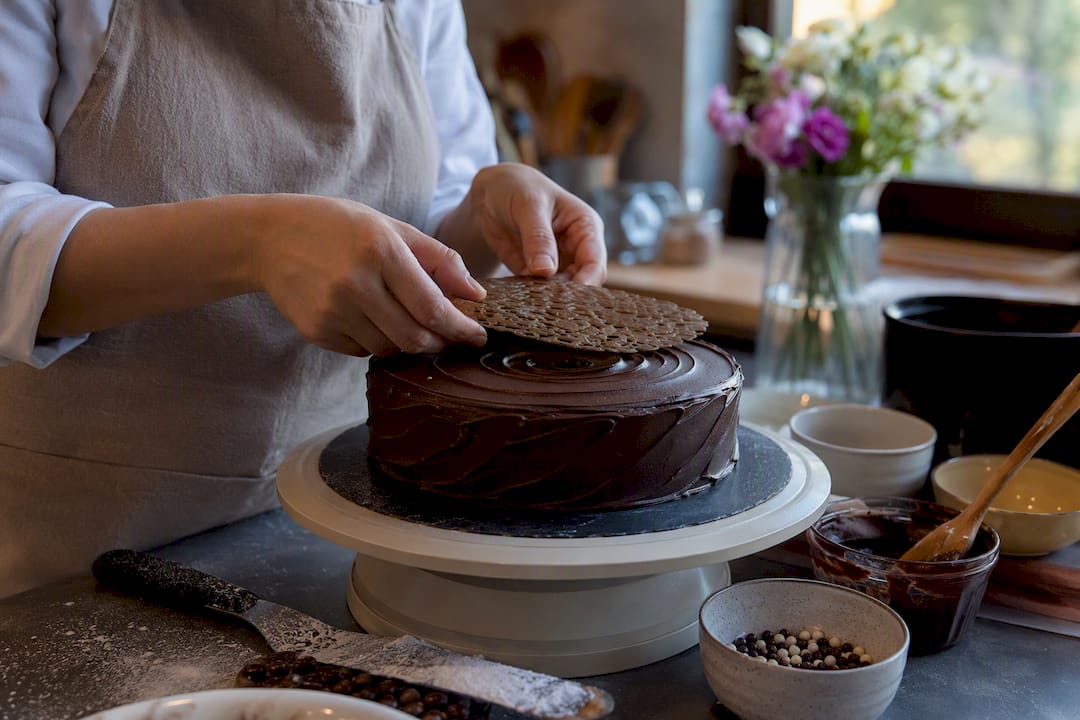
Adding a name to the wafer turns a generic cake into a one-of-a-kind item: instantly recognizable, more photogenic, and able to communicate at a glance what celebration it is for. It is the fastest and most affordable way to personalize a dessert without redesigning the entire cake.
The main reasons can be summarized as follows:
- Emotional personalization: the name turns the cake into a gift for a specific person, rather than a catalog product.
- Quick identification: at dessert tables with several cakes or cupcakes, the name prevents confusion about who each piece belongs to.
- Reinforces the event theme: it complements the visual theme (superheroes, princesses, sports) and gives it a narrative purpose.
- Better results in photos: a well-laid-out name provides a clear focal point, something that cameras and mobile phones benefit from.
- A keepsake for guests: it remains a memorable detail in photos of the event long after the cake has been finished.
The demand for this type of personalization is not a passing fad. The personalization trend in baking is growing because consumers expect products tailored to their identity, not just beautiful ones. And from a technical standpoint, edible paper has been part of the standard materials in creative baking for years, alongside fondant and buttercream.
Key Points
A well-designed and well-placed name on the wafer turns a catalog cake into a personal, legible, and memorable item for the event.
| Point | Details |
|---|---|
| Emotional personalization | The name connects the cake to the guest of honor and enhances the memory of the event. |
| Material choice | Sugar paper offers more flexibility and vivid colors; the wafer is more neutral in flavor. |
| Legible design | Use thick sans-serif fonts for children and pay attention to the contrast between text and background. |
| Careful application | Smooth the surface and place the wafer from one edge to avoid air bubbles. |
| Custom order | Funbakery offers custom design with a name, photo, and age, with a visual proof before printing. |
Table of Contents
- Detailed advantages of incorporating names on wafers
- When and why it is best to include a name
- How to design the wafer with a name: size, typography, and composition
- Materials: wafer versus sugar paper and rice paper
- How to apply a wafer with a name and common mistakes to avoid
- Practical considerations: flavor, allergens, and storage
- Examples and popular combinations by age and theme
- How we request and prepare the file for your custom wafer
- Our brief perspective
- How we can help you personalize your next cake
- Sources
Detailed advantages of incorporating names on wafers
Beyond the immediate aesthetic effect, incorporating a name on the wafer solves very specific problems that arise before, during, and after the event.
The emotional connection is the most obvious. A name well written on the cake tells the guest of honor: "this is for you, not just anyone." At children's birthdays, that detail is usually the first thing children point out when they see the cake, even before noticing the colors or the chosen character.
Identity and clarity matter more than it seems in practice. When there are several cakes, cupcakes, or a full dessert table, the name prevents the host from having to explain who is who. This is especially useful at communions, baptisms, or birthdays with more than one guest of honor on the same day.
On social media, a cake with a legible name is shared more and understood better without the need for a caption. That is one of the practical reasons why many families order designs with a photo and name combined, instead of just a generic decorative motif.
Regarding cost, adding text to a wafer that is already going to be printed does not significantly increase the price of the final product: the price jump is in the custom design, not in the number of characters.
- Name only: faster to read, ideal for small cakes or tables with many pieces.
- Name plus photo: greater visual impact, but requires more space and a generously sized wafer to avoid saturating the composition.
Professional tip: if you are unsure between name only or name with photo, think about the distance from which the cake will be viewed. On a busy dessert table, large, simple text works better than a small photo that is difficult to identify from afar.
When and why it is best to include a name
Not all cakes need a name, but in several celebration formats, it becomes almost essential.
- Children's birthdays: the name along with the age is the most requested combo, and helps personalize very common character designs among families.
- Communions and baptisms: the name often replaces long religious messages, maintaining a clean design.
- Weddings: useful at dessert tables or on the couple's cake when looking for a personal touch, although it is best to keep it discreet.
- Corporate events: dedications with the company name or the guest of honor work well for work anniversaries or retirements.
On minimalist cakes, tasting cakes, or where the design already has a lot of visual weight, adding text can be counterproductive. For young children, it is best to prioritize size and color over style; for teenagers and adults, a more elaborate font usually fits better without sacrificing legibility.
How to design the wafer with a name: size, typography, and composition
The design determines whether the name is easily read or gets lost among the rest of the decoration. As a practical reference, on a 20-centimeter round wafer, the name should occupy between one-third and half of the available width to be clearly readable from a couple of meters away.
For children's cakes, thick sans-serif fonts guarantee legibility even in low-light photos. At adult events, an elegant script or handwritten font adds warmth, but it is best to avoid strokes that are too thin: they get lost when printed on edible paper and look blurry.
The composition is based on three simple rules:
- Look for good contrast between the color of the name and the background of the wafer.
- Leave generous margins so that the text does not touch the edge or get cut off when trimming the piece.
- Add icons or a small photo next to the name only if the space allows without saturating it.
Professional tip: always request the design file at the highest possible resolution before printing. A low-quality image is much more noticeable on a wafer than on a screen, because the text loses sharpness at the edges.
Materials: wafer versus sugar paper and rice paper
The choice of material changes the final result more than many expect when ordering a custom cake.
| Material | Texture and flexibility | Print quality | Flavor |
|---|---|---|---|
| Wafer (rice paper) | More rigid, breaks easily if bent | Good, slightly more muted colors | Practically neutral |
| Sugar paper | More flexible, adapts better to curves | More vivid and defined colors | Light touch of vanilla |
For cakes with 3D shapes or very irregular surfaces, sugar paper usually adapts better thanks to its flexibility. The wafer works well on flat surfaces and is easier to handle for those who are starting to decorate cakes at home.
Both materials require care with moisture: store them in a dry place, flat and away from the refrigerator until the moment of use, because condensation can blur the edible ink.
How to apply a wafer with a name and common mistakes to avoid
The surface of the cake must be smooth before placing the wafer. A well-smoothed buttercream or a firm layer of ganache provides the ideal base for the name to lay flat and without wrinkles.
The safest technique consists of supporting one edge of the wafer on the cream and moving toward the center, pressing gently to expel trapped air. Doing it the other way around, starting from the center, usually leaves visible bubbles under the text.
The most frequent mistakes are easy to avoid if known beforehand:
- Dampening the wafer too much before sticking it, which makes it sticky and difficult to handle.
- Placing it too soon on fresh cream, where it can start to dissolve before serving.
- Forcing the fold of a thin wafer, which cracks easily at the edges of the name.
Professional tip: if you transport the cake already assembled, consider applying the wafer right before the event instead of at the time of baking or decorating. This reduces the risk of the name getting damaged during the trip.
Practical considerations: flavor, allergens, and storage
Edible paper is made mainly with starch, sugar, and water, but it is always advisable to check the supplier's sheet if there are allergies at the table, as some inks or bases may contain traces of gluten or soy.
The flavor is barely noticeable in the neutral wafer, and the light touch of vanilla from the sugar paper rarely interferes with the flavor of the sponge cake or the cream.
To preserve a printed wafer before assembling it, store it flat, in its original packaging, away from moisture and direct heat. During transport, always keep it horizontal and, if possible, place it on the cake right before serving.
Examples and popular combinations by age and theme
Some templates work almost always, without the need to reinvent the design from scratch:
- Simple children's birthday: large name on the top, age below in a smaller size.
- Themed cake with a banner: the name integrated into a ribbon or banner that follows the style of the chosen character, such as in Stumble Guys or Frozen designs.
- Weddings with discreet initials: small initials in a corner of the cake, without competing with the main design.
On round cakes, the name usually looks better centered in the upper third; on rectangular ones, it works well spread along one side.
How we request and prepare the file for your custom wafer
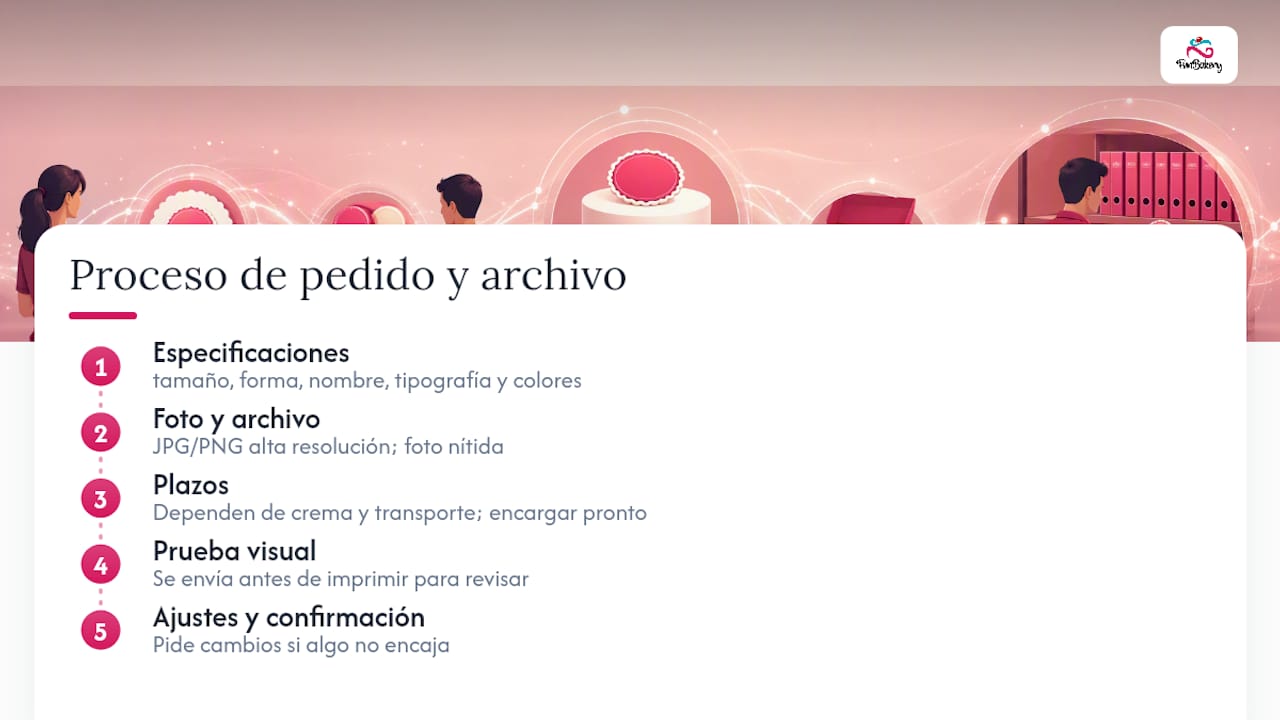
When ordering a wafer with a name, it is best to have clear from the beginning: exact size of the cake, shape (round or rectangular), the name written exactly as it should be printed, preferred font, colors, and, if applicable, a high-resolution photo.
The usual image formats are JPG or PNG in high resolution; the clearer the starting photo is, the better it will look printed on the wafer. Delivery times depend on the type of cream in the cake and the planned transport, so it is best to order in advance when the event has a fixed date.
Before printing, a visual proof of the design is sent so you can review the name, colors, and composition and request adjustments if something does not fit. That step avoids surprises on the day of the celebration, something that Funbakery explains in more detail on its blog.
Our brief perspective
At Funbakery, we see the name not as an ornament, but as the part of the design that connects fastest with the person receiving the cake. A pretty motif without a name is still generic; with a name, it becomes theirs.
That does not mean that the name fits in all cases. On tasting cakes or very minimalist designs, we prefer to suggest sugar paper without text and let the name live on a topper or on the table decoration, so as not to break the aesthetic.
How we can help you personalize your next cake
At Funbakery, we work each wafer as a unique piece: we do not start from a fixed template, but from your photo, the exact name, and the colors you want to see on the cake.

[IMAGE:cta_image]
Instead of buying a generic decoration and adding the name by hand with a pastry bag, our custom design service gives you a printed, sharp, and ready-to-place finish, without depending on your steady hand or your decorating experience. You can choose from the themed catalog or order a design from scratch with a photo, name, and age, as in our custom Stumble Guys wafers with photo and name. If you are also looking for ideas to complete the rest of the dessert table, at Urban Burger & Bar you will find menu proposals that pair well with informal celebrations.
Send us the name, the age, and a photo if you need one, and review the design proof before confirming the order.
Sources
- Creative baking - Wikipedia
- Dessert no longer has to be the same for everyone: how the personalization trend is growing - TechRadar
- Edible printing on sugar paper - ★Miles de Fiestas★