TL;DR:
- Customizing children's cakes and desserts adapts them to the child's theme, name, age, and preferences.
- This process creates unique pieces that strengthen the emotional connection, making the party more memorable and personalized.
Customizing children's cakes and desserts means adapting the cakes and desserts to the child's theme, name, age, and preferences, creating a unique piece for the party. It goes far beyond generic store-bought decoration. A custom cake incorporates favorite characters, preferred colors, and even messages written especially for the guest of honor. In this guide, we explain the most commonly used techniques, the emotional value of this choice, and how to order with confidence, even without experience in baking.
What is customizing children's cakes?
Customizing children's cakes means adapting the cake and desserts to the child's preferences, including the theme, name, age, and phrases for a unique decoration. It is not just about changing the color of the frosting. It is about transforming the cake into an object with direct meaning for the birthday child.
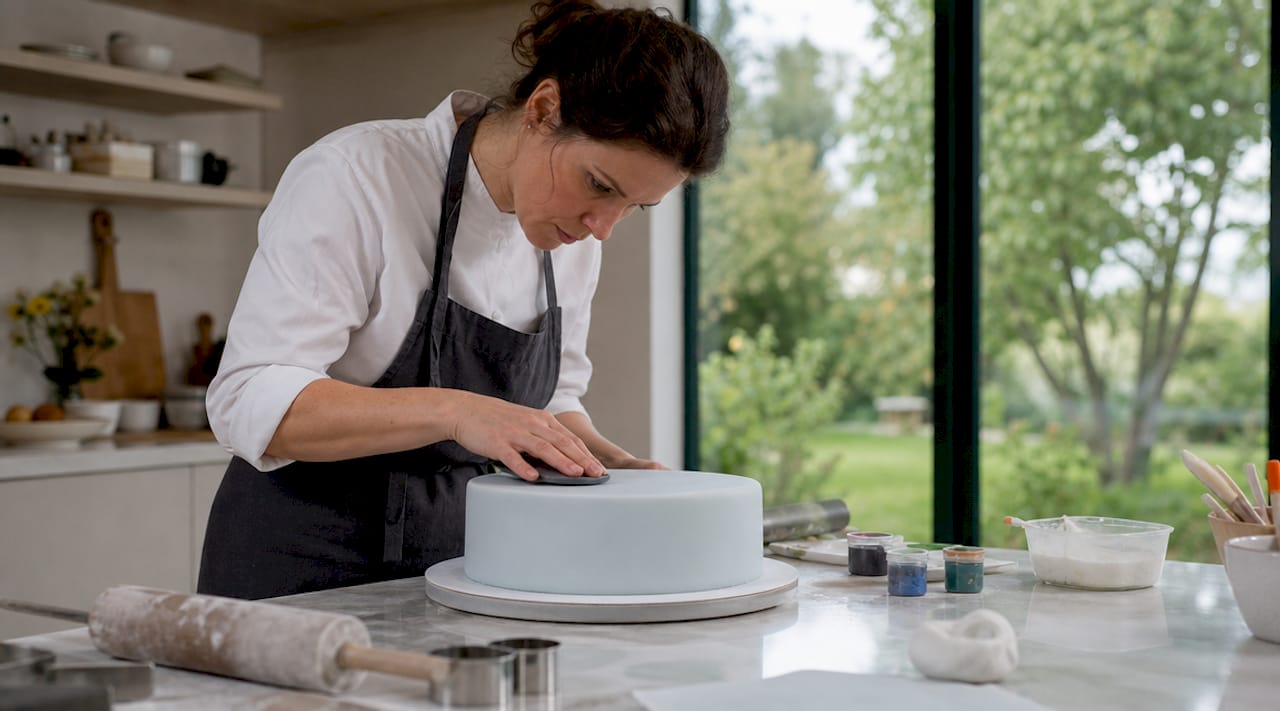
In practice, customization covers four dimensions: the structural base (cake and filling), the frosting, the visual decoration (toppers, edible paper, stencils), and the textual elements (name, age, message). Each can be adjusted independently. A chocolate cake with strawberry filling can simultaneously have a Minecraft decoration with the name "Tomás" and the age "7 years" printed on sugar paper.
The technical term used in professional baking is custom cake or personalized themed cake. In Portugal, parents often use expressions such as "custom-made cake" or "themed cake". Both describe the same concept: a product created specifically for that child, for that party.
What are the most common techniques for customizing cakes?
Custom cake decorating techniques are divided into three main groups: edible printing, three-dimensional decoration, and applied external elements.
Edible printing and edible paper
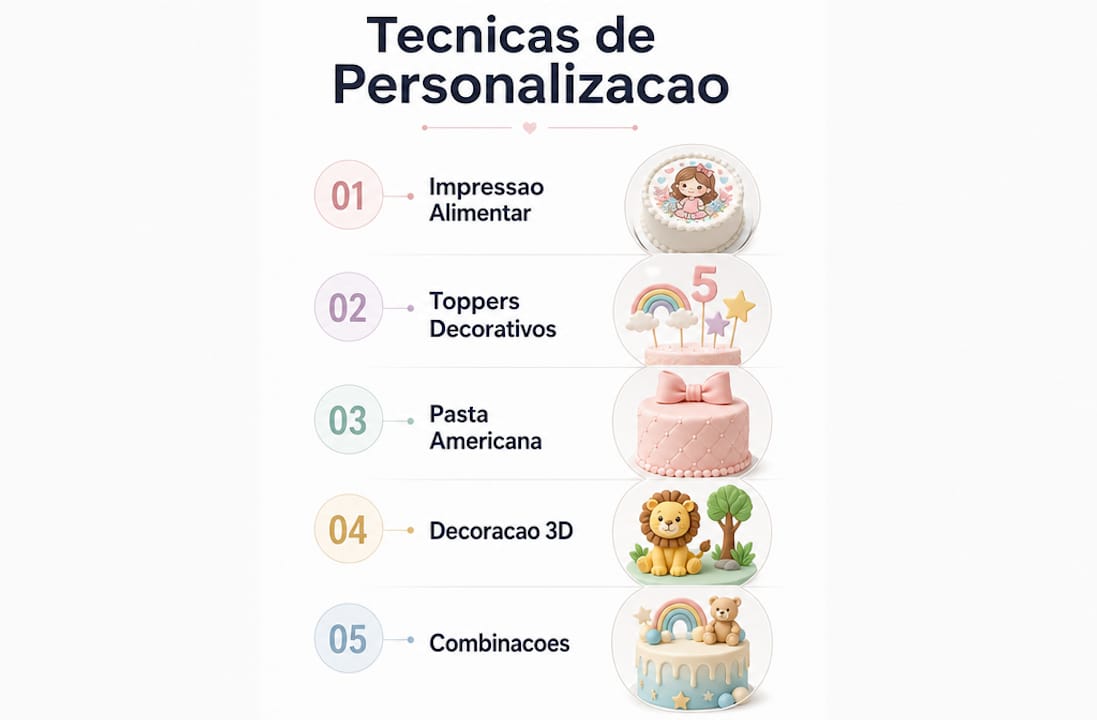
Sugar paper and edible wafers are the most accessible and versatile technique. A digital image (photo of the child, character, party logo) is printed with edible ink on a thin sheet of sugar or starch. The result is a decoration with photographic quality applied directly to the cake. Adjusting the edible paper to the type of frosting is crucial: on moist frostings like whipped cream, the sheet adheres directly; on dry frostings like fondant, edible glue is needed to prevent wrinkling.
Toppers and external decoration
Personalized cake toppers on paper with sticks are practical, have specific dimensions (in Portugal, the 13 cm format is common), and work well on drip cakes and naked cakes. There are also laser-cut acrylic toppers with the name and age, which offer a more durable and elegant finish.
Modeling and fondant
Fondant allows you to cover the cake with a smooth surface and create three-dimensional figures: characters, animals, themed objects. It is the most demanding technique in terms of time and skill, but produces impressive visual results. Edible stencils are a faster alternative for creating patterns and motifs on the frosting.
- Sugar paper: ideal for photos and detailed images
- Paper or acrylic toppers: quick to apply, wide variety of themes
- Fondant and 3D modeling: maximum visual impact, higher cost
- Edible stencils: decorative patterns with little effort
- Colorful drip and themed sprinkles: complements that reinforce the theme without technical complexity
Professional Tip: Combine two techniques: use fondant as a smooth base and add edible paper with the child's photo in the center. The result looks professional, and the process is much faster than modeling figures by hand.
What is the emotional value of customization at children's parties?
Customization transforms the cake from a decorative element into a symbol of the party. Including names, ages, and favorite symbols makes the cake an element of emotional memory, with lasting meaning for the child and the family. This is not a marketing claim. It is an observation based on psychopedagogy applied to children's celebrations.
When a child sees their favorite character on the cake, with their name written, the party stops being a generic event and becomes their party. This distinction matters. Children between the ages of 3 and 8 are in a phase of identity formation, and celebrations that reflect their tastes reinforce self-esteem and a sense of belonging.
"Customization at children's parties works as a 'translation' of the theme to the food, establishing deep emotional connections between the child, the family, and the celebration." — Psicopedagogia.com.br
For parents, the impact is also real. A cake with their child's name, decorated with their favorite characters, is photographed, shared, and remembered for years. Incorporating favorite colors, names, and character elements such as Baby Mickey or Frozen reinforces the theme consistently throughout the party. Customization adds value to the investment and transforms the dessert into a focal point of the celebration.
How to plan and order a custom cake?
The process of ordering a custom cake for children's parties follows a clear logic when divided into steps. Suppliers structure customization in phases to reduce uncertainty and make the process easier for parents, which makes ordering much simpler than it seems.
- Define the format and size. Calculate the number of guests and choose the weight and number of tiers. A 1.5 kg cake serves approximately 15 people. For larger parties, consider complementing with personalized cupcakes.
- Choose the structural base. Decide on the cake (vanilla, chocolate, carrot), the filling (dulce de leche, strawberry, cream), and the frosting (whipped cream, buttercream, fondant). These choices affect the flavor and compatibility with decorating techniques.
- Define the visual identity. Choose the theme, characters, colors, and graphic elements. Prepare reference images to share with the baker.
- Add the personalized elements. Name, age, message, specific toppers, and edible paper with a photo or themed artwork.
- Confirm the pickup date and time. Schedule it for the day of the party itself, preferably 2 to 3 hours in advance. Confirm the transport conditions with the supplier.
- Review the order in writing. Ask for written confirmation of all details before paying the deposit. This avoids surprises on the day.
Professional Tip: When ordering, always send a reference image of the theme and a second image with the decoration style you prefer. Two visual examples eliminate 90% of interpretation doubts and ensure that the final result matches what you imagined.
The difference between a generic decoration and a personalized one is not just visual. It is in the experience the child has when seeing the cake for the first time. That moment of recognition, "it is my character, it is my name", has no equivalent in a store-bought cake.
Bento cake, drip cake, or themed cake: which one to choose?
Each style of custom cake has specific advantages in terms of decoration, flavor, logistics, and cost. The table below compares the three most popular formats for children's parties in Portugal.
| Style | Strengths | Challenges | Best for |
|---|---|---|---|
| Bento cake | Compact, personalized messages, easy to transport | Serves few people (2 to 4) | Intimate parties, individual gift |
| Drip cake | Striking visual, personalized toppers, versatile | Moist frosting limits some edible papers | Medium parties with a strong visual theme |
| Naked cake | Rustic look, visible filling, elegant | Less space for side decoration | Parties with a minimalist aesthetic |
| Themed cake with fondant | Maximum visual customization, 3D figures | Higher cost, fondant flavor does not always please | Large parties with a very specific theme |
The bento cake is a cake formatted to look like a bento box, with personalized messages and drawings that make it easier to individualize the celebration. It is the ideal choice when you want to give something unique to a child without organizing a large party. The drip cake, with its "dripping" frosting effect, is the most photographed format on social media and pairs well with paper or acrylic toppers. The themed cake with fondant continues to be the classic choice for those who want three-dimensional figures and maximum visual impact, but it requires a higher budget and an experienced baker.
How to balance flavor and design in a custom cake?
The most common mistake in baking for children's parties is sacrificing flavor for aesthetics. A visually perfect cake that no one wants to eat is a failure. Separating customization into a structural base and visual identity makes it easier to balance flavor and decoration, and it is the approach used by the best bakers.
The logic is simple: first, you decide what will be eaten (cake, filling, frosting), then what will be seen (topper, edible paper, themed colors). The two layers do not need to compromise one another.
Some practical principles to ensure this balance:
- Prefer buttercream or whipped cream over fondant as the main frosting. Fondant has a texture that many children do not appreciate. Use it only for details and decorative figures.
- Apply edible paper over buttercream or ganache, not over dry fondant, for better adhesion and visual result.
- Maintain the stability of the cake during transport by using internal support sticks in cakes with more than two tiers.
- Choose gel food colorings, not liquid, for colored frostings. Liquid colorings alter the consistency of the buttercream.
- Store the cake in the refrigerator until 2 hours before the party. Remove it with enough time for the frosting to reach room temperature before being cut.
The customization of cupcakes for parties follows the same logic. A cupcake with vanilla buttercream and an edible paper topper with the party theme is more appreciated than a cupcake covered in colored fondant that no one eats. The visual serves the party; the flavor serves the guests.
Key Points
Customizing children's cakes is most effective when it combines a tasty base with a visual identity consistent with the theme and the child being honored.
| Point | Details |
|---|---|
| Clear definition | Customization adapts the cake, filling, frosting, and decoration to the theme and the child's preferences. |
| Main techniques | Edible paper, paper or acrylic toppers, and fondant are the most used options in Portugal. |
| Emotional value | A cake with the name and favorite characters creates lasting emotional memories for the child. |
| Ordering process | Follow six steps: format, base, visual, personalized elements, date, and written confirmation. |
| Balance of flavor and design | Separate flavor decisions from visual decisions to ensure the cake pleases everyone. |
My perspective on customization at children's parties
Over the years, following the evolution of baking in Portugal, what surprises me most is the speed with which parents went from "a chocolate cake is enough" to "I want the cake to look exactly like my child's favorite character". This change is not superficial. It reflects a growing understanding that the birthday party is one of the few moments when the child is genuinely the center of everything.
However, what I frequently see is parents becoming paralyzed by the number of options. Bento cake or large cake? Fondant or buttercream? Edible paper or acrylic topper? My recommendation is always to start with what the child will eat, not what will look good in the photo. A delicious cake with a simple and personalized decoration always beats a visually complex cake that remains intact on the plate.
Portugal now has bakers and material suppliers with quality comparable to what is found in London or Barcelona. The advantages of cake customization are within reach of any budget, from a simple edible paper with the child's photo to a themed cake with fondant figures. The secret is knowing what you want before ordering, and communicating this clearly to the baker.
If you have to choose only one thing to customize, choose the name and age. It is the minimum that transforms a generic cake into a cake that belongs to that child, on that day.
— David
Create the perfect cake with Funbakery
Funbakery specializes in creating personalized edible wafers and sugar paper for cakes, cupcakes, and cookies. The catalog includes superhero designs, children's characters, animals, and celebration themes, with a full customization option: photo of the child, name, age, and message.
For parties with specific themes, Funbakery's custom design service creates any image to order. From edible paper for Minecraft to wafers with photo, name, and age for Stumble Guys, the quality is professional and the order is simple. Explore the custom design studio and find the right decoration for your child's party.
FAQ
What does customizing a children's cake include?
Customization includes the choice of cake, filling, frosting, visual decoration (edible paper, toppers, fondant), and textual elements such as name, age, and message. Each component can be adjusted independently to reflect the theme and the child's preferences.
What is the difference between sugar paper and edible wafer?
Both are supports for edible printing, but they differ in texture and thickness. Sugar paper is thinner and dissolves easily; the wafer is slightly thicker and more resistant. The choice depends on the type of frosting and the intended visual effect.
How far in advance should I order a custom cake?
It is recommended to order at least two to three weeks in advance for cakes with complex decorations. For simple designs with edible paper, some suppliers accept orders with one week's notice.
Does edible paper change the taste of the cake?
Edible paper has a neutral taste and does not change the taste of the cake. The food-grade ink used for printing is also tasteless. The visual result is professional without any impact on the palate.
Can I personalize cupcakes with the same theme as the cake?
Yes. The personalization of cupcakes for parties follows the same techniques as the main cake: edible paper cut into circles, themed toppers, or colored buttercream. Combining personalized cupcakes with the center cake is one of the most practical ways to serve more guests without increasing the cost per piece.