TL;DR:
- Personalization at birthday parties creates a memorable visual identity that is emotionally meaningful. It is essential to plan ahead and define a harmonious color palette, using the correct proportions of decorative items and party favors. 2026 trends emphasize visual storytelling, edible photos, and sustainability, reflecting the birthday child's personality.
Personalization at birthday parties goes far beyond printing a name on a small box. When done well, it creates a cohesive visual identity that guests can feel even before they eat the cake, and creates lasting memories that remain long after the party is over. In this guide, you will find everything you need to plan a party with creative and emotionally meaningful personalization: quantity calculations, realistic deadlines, 2026 trends, and the complete creative process.
Table of Contents
- Key Points
- Planning Personalization: Quantities, Deadlines, and Colors
- Personalized Items: Classics and Original Ideas
- The Professional Creative Process: From Briefing to Production
- Personalization Trends for Parties in 2026
- My Perspective on Personalization and the Mistakes I See Most
- How Funbakery Transforms Your Party with Edible Decorations
- FAQ
Key Points
| Point | Details |
|---|---|
| Calculate Accurately | Use a ratio of 3 decorative items per child and 1 party favor per guest to avoid wasting your budget. |
| Limited Color Palette | Defining 3 to 4 colors ensures visual harmony and consistency across all personalized elements. |
| Minimum Lead Time | Start the process at least 30 days in advance to avoid delays in production and approvals. |
| A Detailed Briefing Is Everything | Include the theme, photos, colors, and traits of the birthday child's personality for a unique result. |
| Edible Decorations Are Trending | Personalized wafer paper and sugar paper are increasingly popular in 2026 for cakes and cupcakes. |
Planning Personalization: Quantities, Deadlines, and Colors
Many parents approach the supplier with a list of items without knowing exactly how many they need. The result is almost always the same: they buy too many and spend unnecessarily, or they run out of items on the day of the party. The good news is that there is a practical, proven rule.
The recommended ratio is 3 items per child for decoration and 1 party favor per total guest for the final gift. This means that decorative elements, such as tubes, tins, and boxes displayed on the table, focus on the children attending. Individual party favors are for all guests, including adults.
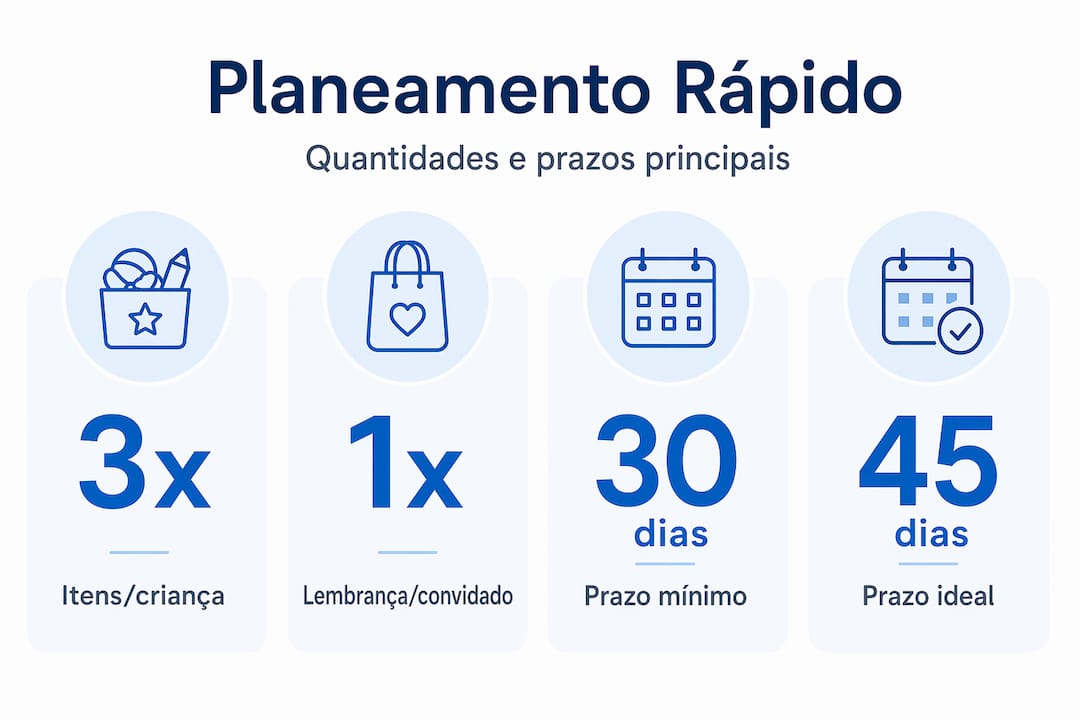
Another classic mistake is calculating based only on the total number of guests without distinguishing between decoration and party favors. A party with 40 guests, 15 of whom are children, will need approximately 45 decorative items and 40 party favors. They serve different purposes and require different calculations.
Color Palette and Visual Harmony
To maintain consistency across all elements, define a palette of 3 to 4 shades from the beginning of the planning process. When there are more colors than that, the party starts to look visually cluttered, even with individually beautiful items. A well-defined palette transforms simple elements into a recognizable visual identity.
Deadlines and Personalization Levels
| Level | Features | Recommended Lead Time |
|---|---|---|
| Essential | Basic digital art, standard materials | 15 to 20 business days |
| Luxury | Detailed art, superior quality materials | 20 to 25 business days |
| Super Luxury | Textures, embossing, exclusive premium materials | 25 to 30 business days |
The recommended minimum lead time is 30 days in advance, although in urgent situations some suppliers can produce within 10 to 15 business days. Rush orders rarely allow for art revisions and can compromise the final result.
Professional Tip: Ordering 45 days in advance allows for at least two rounds of art revisions without pressure, and many suppliers offer more competitive prices outside of peak periods.
Personalized Items: Classics and Original Ideas
Personalized party decorations offer a much wider range than most parents imagine. Classic items continue to be the most requested, but the parties that truly impress are those that combine the favorites with something unexpected.
The most commonly used personalized decoration items include:
- Boxes and tubes with the birthday child's photo, name, and theme, used both on the table and as party favors
- Personalized tins for sweets or seeds, widely used at nature or botanical-themed parties
- Sticker labels for bottles, popcorn bags, and individual packaging
- Photo panels with a chronological arrangement of photos of the birthday child from birth
- Cake toppers made of special paper or acrylic with the name, age, and theme elements
- Digital and printed invitations with a cohesive design that prepares the guest for what they will find at the party
What distinguishes an unforgettable party from the rest is the adaptation of the elements to the birthday child's real personality. A child obsessed with astronomy deserves more than generic stars: they deserve the name of their favorite planet on the brigadeiro wrapper, and a decorative periodic table on the dessert table.
Personalized party favors have a specific emotional role. They are the item the guest takes home and that, every time they see it, reminds them of the moment. A well-chosen personalized item reinforces the emotional connection with the birthday child and conveys the host's care. A generic item does exactly the opposite.
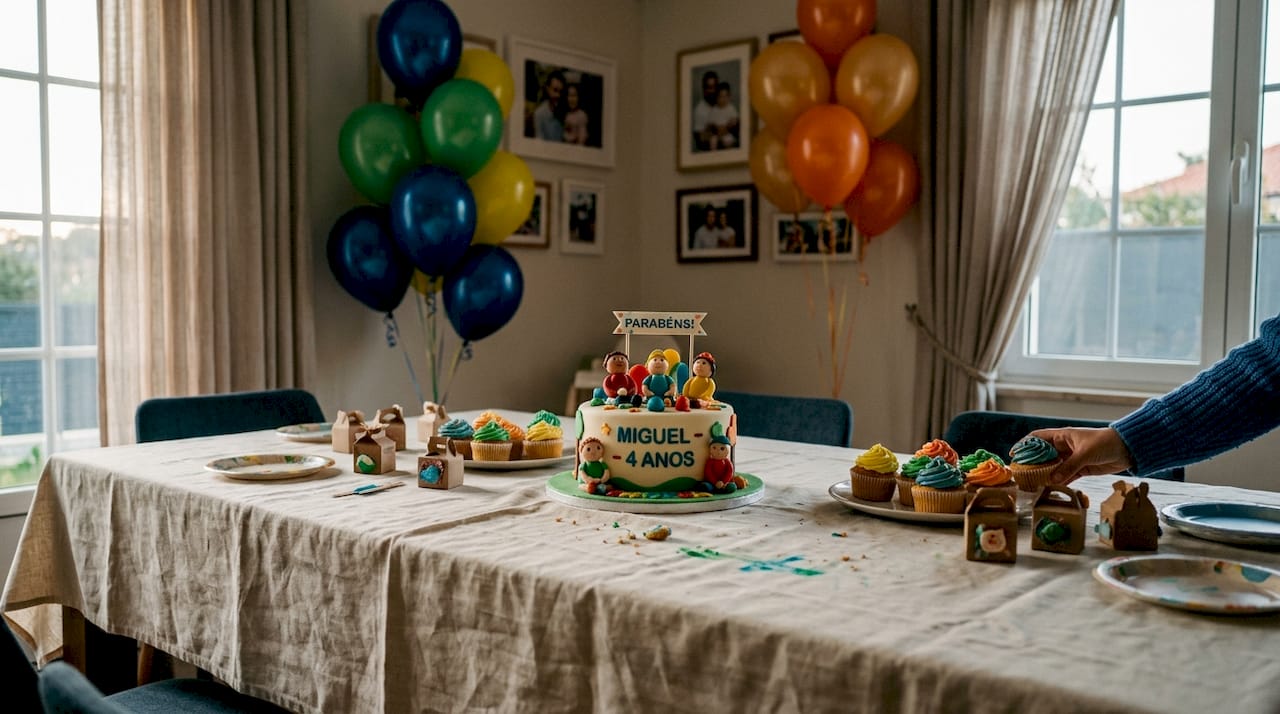
Professional Tip: For parties with a more limited budget, focus personalization on the most visible items: the cake, the main backdrop, and the party favors. These three elements ensure maximum visual impact with minimum investment.
When thinking of original ideas for birthdays, handmade items have been making a strong comeback. Soaps molded in the shape of favorite characters, hand-illustrated bookmarks, or mini vases painted in the theme's colors are examples of items that surprise without requiring large budgets. The investment per unit can vary greatly depending on the type and quantity, with progressive discounts for orders over 100 units.
The Professional Creative Process: From Briefing to Production
Knowing how to personalize birthdays professionally starts long before any design. It starts with a conversation. The briefing is the document that guides the entire creative process, and when it is vague, the result rarely satisfies.
The complete process usually follows these stages:
- Initial briefing: Define the theme, color palette, photos of the birthday child, visual references, and elements of the child's personality. The briefing should include not only the theme, but also specific characteristics such as hobbies, favorite color, and favorite characters.
- Digital art creation: The designer develops an initial proposal based on the briefing. At this stage, sketches are shared for validation before moving on to details.
- Revision rounds: A serious process includes at least two rounds of adjustments. Changes in color, text, or composition are normal and expected at this stage.
- Final approval: Production only proceeds after the client's written approval. This protects both parties and avoids unpleasant surprises.
- Production and quality control: In-house studio production ensures greater quality control and faster delivery, especially for luxury personalization. When production is outsourced, deadlines tend to be less predictable.
- Delivery and final touches: Super Luxury personalization may include special embossing techniques and premium materials that increase the cost but ensure a finish that no one would mistake for something mass-produced.
The difference between in-house and outsourced production is not just quality. It is also communication. When you work directly with the producer, revisions are faster, adjustments are possible even in advanced stages, and the final result aligns much more closely with what was agreed upon in the briefing.
Professional Tip: Always request a physical or digital proof with the actual dimensions before approving full production. What looks perfect on the screen may have unexpected proportions when printed.
Personalization Trends for Parties in 2026
The most memorable parties of 2026 have something in common: they tell a story. They are not just generic themes with popular characters. They are parties that reflect who the birthday child really is, and the guests feel it as soon as they enter the space.
The main trends in personalized party decorations include:
- Cohesive visual storytelling: Every element, from the invitation to the cake, follows a narrative line. A child passionate about dinosaurs doesn't just have green balloons: they have a "fossil museum" on the dessert table and an exploration map on the invitation.
- Edible photos and personalized sugar paper: Cakes and cupcakes decorated with the birthday child's actual photograph are an increasing trend. The edible image allows for a level of personalization that is impossible to achieve with traditional decoration.
- The guest experience at the center: Relevant personalization avoids the feeling of something generic or mass-produced. Elements such as name cards, personalized bags with each guest's name, or exclusive themed games transform those attending into active participants.
- Sustainability and creative reuse: Personalized items made from reusable materials or with dual purposes, such as a box that turns into a pencil holder, have gained popularity among parents concerned about environmental impact.
- Unique party themes based on micro-interests: Instead of generic superhero themes, the most original parties explore the child's micro-interests. A child who loves origami deserves an origami party, not a general "arts and crafts" party. Explore more about how personalized cakes have been following this trend.
My Perspective on Personalization and the Mistakes I See Most
Over years of working with parties and decoration, I learned one thing that contradicts what most guides say: the problem with poorly personalized parties is rarely a lack of budget. It is a lack of briefing.
I have seen parties with generous budgets that looked generic because no one sat down to ask what the child really loves. And I have seen modest parties that remained in the memory of all the guests because someone took the time to include an unexpected detail that only made sense for that particular child.
The most common mistake I find is confusing quantity with personalization. Having 15 different items with the same name printed on them is not personalization. It is repetition. Real personalization creates a visual identity and an emotional connection with the guests, and this is achieved with thoughtful choices, not volume.
The second most frequent mistake is leaving the process until the last minute. I have seen parents trying to order personalized items 5 days in advance and, invariably, the result is less than they expected. Time pressure eliminates revisions, and revisions are exactly where the magic happens.
My most practical advice: before choosing any supplier, write down on a piece of paper what makes your child unique. Their three favorite characters, the color they cannot do without, the hobby that dominates the dinner conversations. That piece of paper is the true starting point of personalization that delights.
— David
How Funbakery Transforms Your Party with Edible Decorations
When talking about personalization at birthday parties, cakes and cupcakes are the most photographed and shared elements. This is where Funbakery comes in with a solution that combines professional quality with total personalization.
Funbakery specializes in personalized edible wafer paper and sugar paper that transform any cake or cupcake into a unique piece. You can incorporate the birthday child's photograph, name, age, and the visual elements of the party theme, with a finish that rivals any professional decoration. For themed parties, explore the personalized Stumble Guys wafer paper or the Roblox edible decoration, ideal for children's birthdays. Start planning in advance and ensure an edible element that everyone will want to photograph before eating. Also see the cupcake design service to complete the dessert table with total visual consistency.
FAQ
What is personalization at birthday parties?
Personalization at birthday parties is the process of adapting decorations, party favors, and visual elements to the birthday child's identity. It goes beyond putting a name on an object: it creates a cohesive visual identity that reflects the child's personality and tastes.
How many personalized items do I need to order?
Use the ratio of 3 items per child for decoration and 1 party favor per total guest. These two calculations serve different purposes and should not be confused.
How far in advance should I order?
The recommended lead time is at least 30 days before the party. In urgent situations, some suppliers can produce within 10 to 15 business days, but with less room for revisions.
What is a personalization brief and why is it important?
The brief is the document that describes the theme, colors, photos, and elements of the birthday child's personality. A detailed brief is what separates a generic result from a truly unique party.
What are the party theme trends in 2026?
Trends point towards cohesive visual narratives based on the child's micro-interests, the use of edible photos on cakes and cupcakes, and greater concern about sustainability in the materials used.