Many Portuguese parents mistakenly believe that any paper used on cakes is safe to eat. The reality is different: edible paper follows strict standards according to Regulation (EC) No 1935/2004 to protect children's health. This comprehensive guide explains the composition, safety, and customization of edible paper, ensuring beautiful and completely safe decorations for children's parties.
Table of Contents
- Key Takeaways
- What is edible paper? Definition and how it works
- Composition and properties of edible paper
- Legislation and food safety applied to edible paper in Portugal
- Customization and printing of edible paper for children's parties
- Difference between edible paper and regular paper for decoration
- Best practices for using and storing edible paper
- Benefits of customizing edible paper for children's parties
- Discover our personalized edible wafers for children's parties
- Frequently asked questions about edible paper for children's parties
Key Takeaways
| Point | Details |
|---|---|
| Edible paper is regulated | Follows Portuguese and European legislation to ensure complete safety for consumption |
| Pure food ingredients | Composed exclusively of starch, cellulose, and non-toxic sugars |
| Controlled customization | Approved food-grade inks respect strict legal limits |
| Proper storage extends shelf life | Storing in a dry place preserves quality for up to 6 months |
| Different from decorative paper | Regular paper contains toxic substances never intended for consumption |
What is edible paper? Definition and how it works
Edible paper is a food-contact material regulated to control the transfer of substances, specifically manufactured to be consumed completely safely. This product has revolutionized children's party decorations in Portugal, allowing the creation of personalized cakes without health risks.
The main applications include:
- Decorating birthday cakes with children's favorite characters
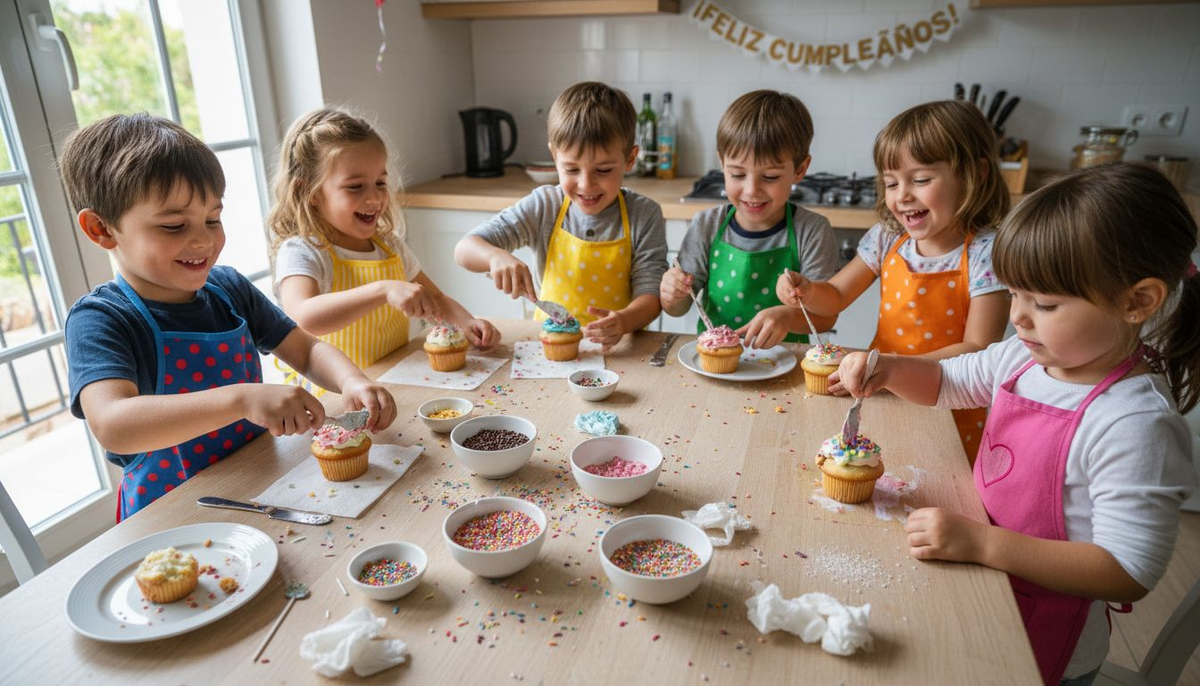
- Personalizing cupcakes and muffins for themed parties
- Creating edible toppers with unique photos and messages
- Applying it to desserts for special events and celebrations
The difference between edible and regular paper is fundamental for safety. Normal decorative paper contains toxic inks, chemical bleaches, and industrial additives never approved for human consumption. Using this type of paper on cakes can cause serious poisoning in children.
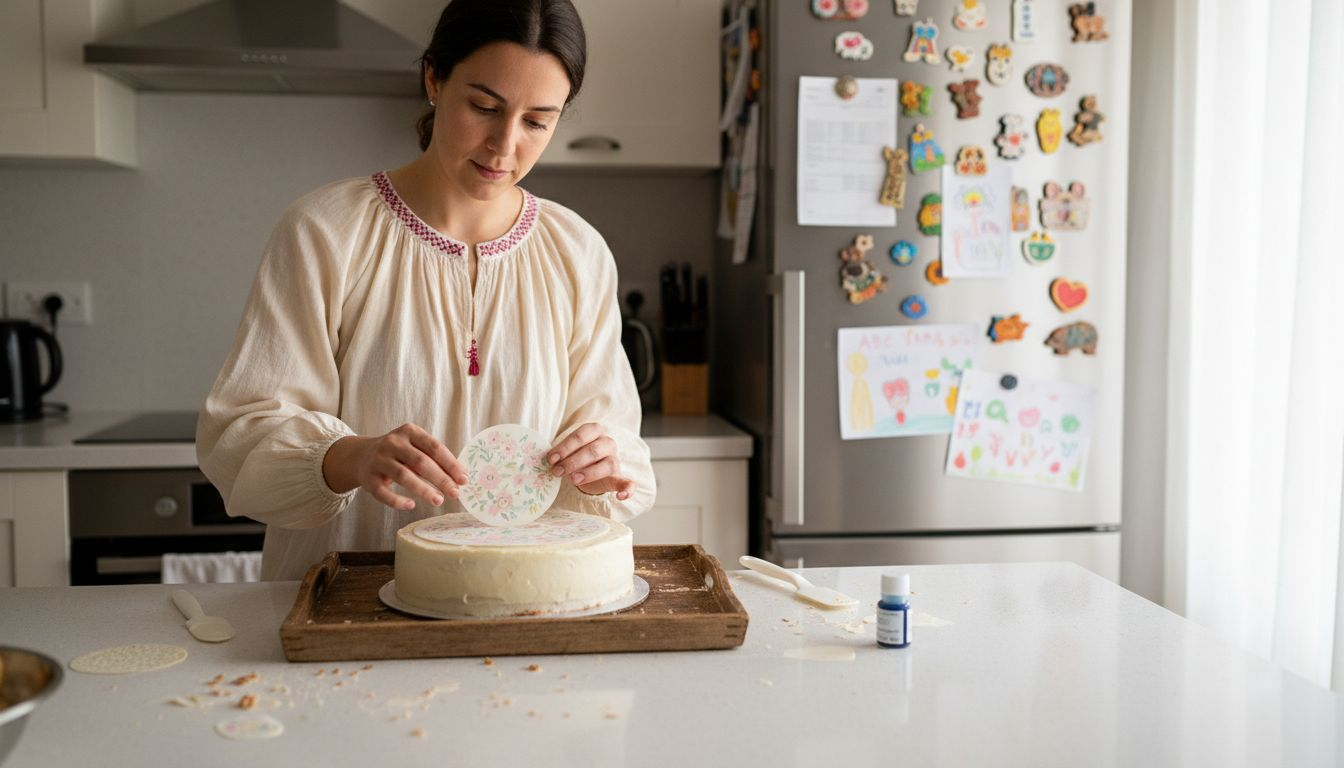
Edible paper works simultaneously as an aesthetic component and a food safety barrier. Its structure allows the printing of detailed images while maintaining full compatibility with cake ingredients. Applied directly over frosting or cream, it partially dissolves in moisture without altering the flavor or compromising the health of the young guests.
Professional Tip: Always check the edible paper packaging before purchasing. Certified products clearly display compliance with European regulations and include a complete list of ingredients.
Composition and properties of edible paper
The base ingredients of edible paper are starch, cellulose, sugars, and gelatin, all approved for food consumption. This simple composition guarantees the complete absence of harmful contaminants or dangerous chemical substances.
Typical ingredients include:
- Potato or corn starch as an edible structural base
- Food cellulose derived from pure plant sources
- Refined sugars to provide flexibility and the right texture
- Gelatin or gum arabic as a natural binding agent
- Purified water to process and shape the material
The absence of toxins is strictly controlled throughout the entire manufacturing process. Certified manufacturers follow strict hygiene and traceability protocols to prevent cross-contamination with non-food substances.
However, parents should be aware of possible allergens. Some edible papers contain gelatin of animal origin, which is problematic for children with dietary restrictions. Others may contain traces of gluten from wheat starch. The composition and ingredients of edible paper vary between manufacturers, making it essential to check the complete labeling.

Clear labeling is not just good commercial practice. It is a legal requirement that protects families with allergic children. Products without an ingredients list or with incomplete information should be avoided, as they indicate non-compliance with food safety standards.
Professional Tip: For parties with allergic children, always request the complete technical data sheet of the edible paper from the supplier. Responsible manufacturers readily provide this information.
Legislation and food safety applied to edible paper in Portugal
The Portuguese and European legal framework creates a robust safety network for edible paper. Regulation (EC) No 1935/2004 determines that materials in contact with food must not transfer harmful substances to protect consumers.
The regulatory framework operates at three main levels:
- The basic European regulation establishes general principles of non-migration of toxins and requires complete traceability from raw materials to the final product
- Decree-Law No. 175/2007 transposes European legislation to Portugal and defines severe penalties for manufacturers who violate safety standards
- Regulation (EC) No 2023/2006 specifies good manufacturing practices including quality control, facility hygiene, and worker training
- National authorities such as DGAV and ASAE monitor compliance through regular inspections and laboratory analyses
This regulation ensures that every sheet of edible paper legally sold in Portugal has undergone strict controls. Manufacturers must maintain detailed records of suppliers, production processes, and safety tests.
The safe customization of edible paper is also covered by these standards. Inks and dyes used in printing must meet the same requirements as the base paper ingredients.
Penalties for non-compliance are substantial. Companies that sell illegal edible paper face high fines, product seizure, and possible closure. This active inspection protects Portuguese families from dangerous products on the market.
Customization and printing of edible paper for children's parties
Customizing edible paper has transformed Portuguese children's parties into truly unique experiences. Parents can create decorations with photos of the children, colorful names, favorite characters, and special messages to celebrate important moments.
Popular customization options include:
- Images of superheroes and princesses adapted to the party theme
- Family photos printed in high-quality edible format
- Names and ages in fun fonts and vibrant colors
- Cartoon scenes creating narratives on the cake
- Sports team logos for passionate young fans
However, inks used in printing must be approved and not come into direct contact with food to prevent the migration of substances. Dedicated printers use special cartridges with certified food dyes, completely different from conventional inks.
The application technique also matters for maximum safety. The printed paper should never touch the cake batter directly. Correct application involves first placing a layer of frosting or fondant, then positioning the edible paper on top of this protective barrier.
Professional services for customizing edible paper know these technical and legal limitations. Certified companies ensure that all customization respects food standards, balancing creativity with child safety.
The benefits of customization go beyond aesthetics. They create an emotional connection when children see their names and favorite characters transformed into edible decorations on their own cake.
Professional Tip: Request digital proofs before the final print. This allows you to correct spelling errors in names or adjust colors to match the rest of the party decorations perfectly.
Difference between edible paper and regular paper for decoration
Confusing edible paper with regular decorative paper poses a serious health risk to children. The differences are fundamental and should be clearly understood by all parents organizing parties.
| Feature | Edible Paper | Regular Decorative Paper |
|---|---|---|
| Ingredients | Starch, sugars, food-grade gelatin | Industrial cellulose, chemical bleaches |
| Inks | Certified food dyes | Toxic inks with heavy metals |
| Regulation | Regulation (EC) No 1935/2004 | Non-food industrial standards |
| Safety | Completely safe for consumption | Should never be ingested |
| Application | Directly on cakes and desserts | Only removable external decoration |
| Certification | Mandatory food approval seal | No certification for consumption |
Regular decorative paper contains substances explicitly prohibited from coming into contact with food. Conventional inks include organic solvents, pigments with lead or cadmium, and chemical fixatives that cause poisoning when ingested.
The danger is increased because visually the two types look similar. Shiny paper sold in stationery stores may have an attractive finish but a composition completely unsuitable for cakes. Young children cannot distinguish between edible and non-edible decorations, making it the parents' responsibility to ensure complete safety.
Identifying truly edible paper requires checking certifications on the packaging. Legal products display compliance with European regulations, a complete list of ingredients, and clear food use instructions. The absence of this information indicates a product not certified for consumption.
Buying from suppliers specializing in food products eliminates virtually all risk. Confectionery stores and companies dedicated to edible paper only sell products with the appropriate certification.
Best practices for using and storing edible paper
Storing edible paper correctly preserves its quality, safety, and appearance until the day of the party. Following simple practices ensures perfect results when applied to the cake.
Essential storage recommendations:
- Store in a cool, dry place at a temperature between 15-20°C to prevent premature degradation of the ingredients
- Keep away from direct sunlight, which can fade colored prints and alter the material's properties
- Protect from excessive moisture using the sealed original packaging or a suitable airtight container
- Avoid prolonged exposure to air, which causes edible paper to harden and break
- Check the typical 6-month shelf life and use before expiration for maximum safety
- Do not refrigerate the paper before use, as condensation can ruin the print
Correct application also influences the final result. Removing edible paper from the packaging only moments before placing it on the cake minimizes exposure to ambient moisture. Frosting surfaces should be slightly moist for perfect adhesion but not soaked.
Edible paper applied in advance can absorb moisture from the filling and become translucent. For afternoon parties, applying the decoration on the morning of the same day ensures an impeccable appearance when guests arrive.
Room temperature during the party also matters. Cakes decorated with edible paper should remain in cool places, never under direct sun or near heat sources that accelerate deterioration.
Professional Tip: If you need to transport the decorated cake, place it in a rigid and stable box. Sudden movements can cause tears in the delicate edible paper before the party begins.
Benefits of customizing edible paper for children's parties
Investing in personalized edible paper offers emotional and practical advantages that transform children's parties into memorable experiences. The Portuguese market has grown significantly in recent years, reflecting the demand for increasingly personalized celebrations.
Main advantages include:
- Creating unique decorations perfectly aligned with the theme chosen by the child and family
- Increasing emotional satisfaction when children see favorite characters or their own photos on the cake
- Facilitating identification at large parties with individual names on cupcakes for each guest
- Creating special photographic memories that families keep for years after the event
- Demonstrating care and attention to detail that impress other parents and guests
- Simplifying homemade decoration by allowing professional results without advanced confectionery skills
The emotional impact is particularly strong at important milestones. A first birthday with a photo of the baby, a superhero party with the child's name integrated into the design, or a themed princess celebration with a personalized image creates deep emotional connections.
Portuguese parents increasingly value these unique experiences. Standardized parties with generic decorations are being replaced by celebrations that reflect the personality and specific interests of each child.
The ease of customization has also democratized access to sophisticated decorations. Previously, highly personalized cakes required hiring expensive professional pastry chefs. Edible paper allows parents to create comparable results at home for much lower costs.
The Portuguese market in 2026 offers a growing variety of specialized suppliers, making it easier to find perfect designs or create completely original customizations. This competition benefits consumers with better prices and superior quality.
Discover our personalized edible wafers for children's parties
Transform your child's next party into a truly special celebration with personalized edible wafers from FunBakery. We offer certified quality that guarantees complete safety and unlimited creativity for any imaginable theme.
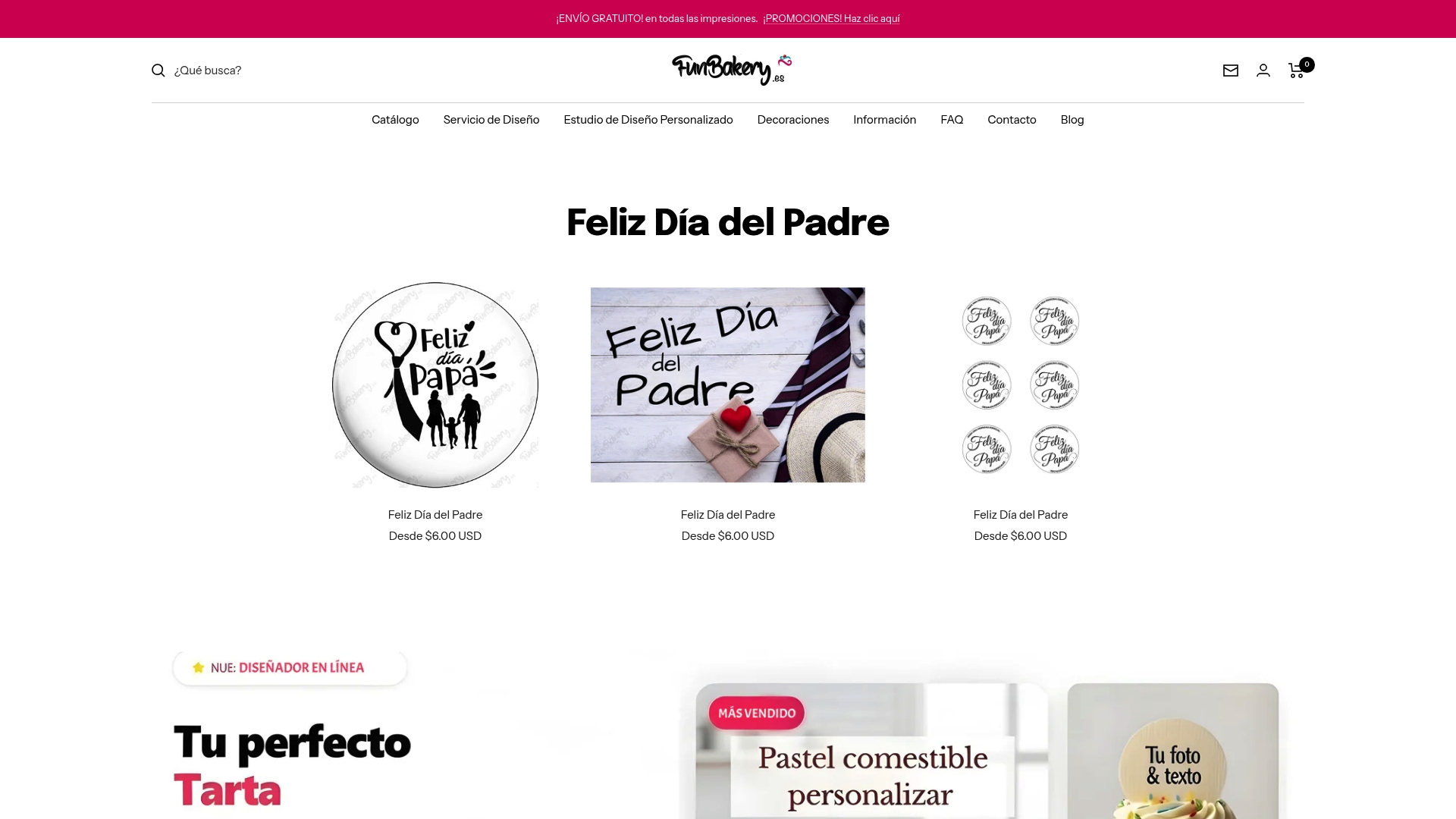
Our extensive catalog includes superheroes, animals, children's characters, and ready-to-use themed designs. Need something unique? Our team of designers creates completely personalized images incorporating photographs, names, and special messages.
Every wafer sheet strictly complies with European food safety regulations. Learn more about edible paper and discover its multiple uses in baking to create cakes that delight children and reassure parents.
Frequently Asked Questions About Edible Paper for Children's Parties
How can I be absolutely sure that the paper is truly edible and not decorative?
Check the packaging for explicit certification of compliance with Regulation (EC) No 1935/2004 and a complete list of food ingredients. Truly edible paper is sold exclusively in specialized confectionery stores, never in conventional stationery stores. The absence of nutritional information or warnings not to consume indicates a dangerous decorative product.
Can edible paper contain allergens that are problematic for sensitive children?
Yes, some papers contain animal-derived gelatin or traces of gluten from wheat starch. Responsible manufacturers clearly label all potential allergens in accordance with Portuguese legislation. For parties with children who have allergies, always request a detailed technical data sheet from the supplier before purchasing.
How long can I store edible paper before the party without losing quality?
The typical commercial shelf life is 6 months when stored correctly in a cool, dry place protected from direct light. However, print quality and flexibility begin to degrade after 3–4 months in less than ideal conditions. Buying edible paper 2–4 weeks before the party ensures maximum freshness and the best visual results.
Are there specific legal restrictions on the inks used to personalize edible paper?
Yes, only food colorants certified under European regulations can be used to print on edible paper. Conventional home printer inks contain toxic substances that are strictly prohibited. Professional services use dedicated equipment with special food-grade ink cartridges that never come into direct contact with food.
What are the main precautions to ensure complete safety at children's parties with edible paper?
Buy exclusively from certified suppliers that clearly display regulatory compliance. Check the ingredient list for allergens relevant to the children attending. Store properly until applying it to the cake. Apply the paper over a layer of frosting, never directly onto the cake batter. Keep the decorated cake at a cool room temperature during the party.
Does edible paper change the flavor or texture of the birthday cake?
No, quality edible paper partially dissolves in the moisture of the frosting without noticeably altering the flavor. The texture is so thin that children and adults eat it normally without noticing a difference. Some describe the paper layer as having a very subtle sweet taste, but most consider it completely neutral and imperceptible.