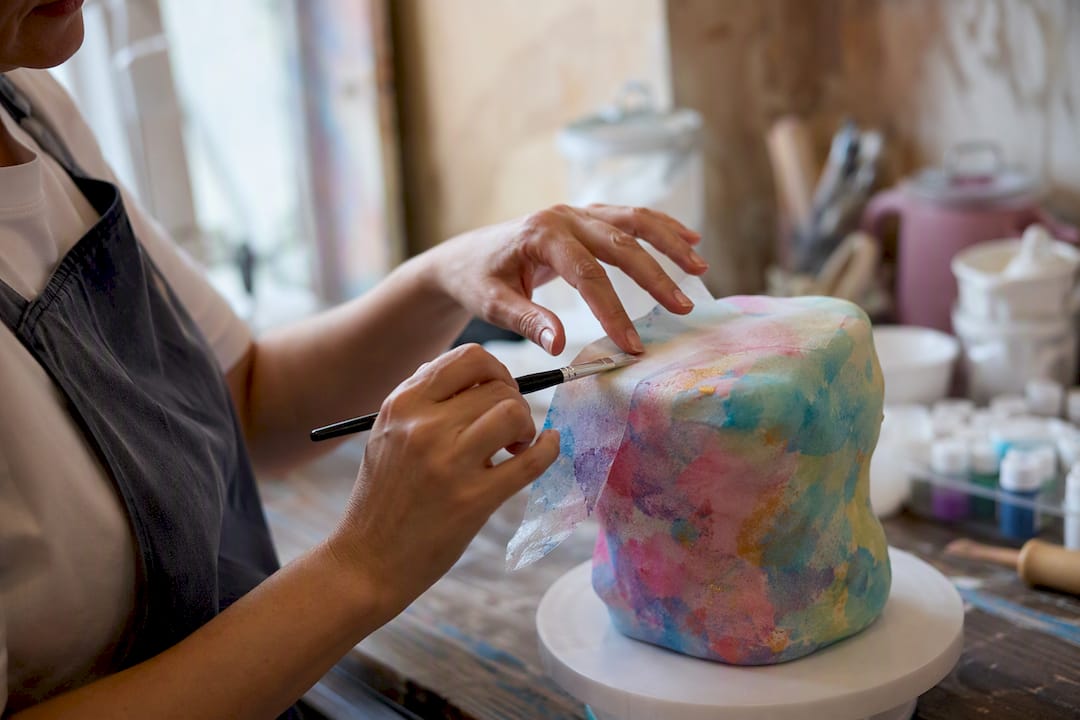
Yes: most edible wafers are suitable for vegetarians, and many are also suitable for vegans. They are made from potato or rice starch, water, and vegetable oil, so generally there is no problem. What invalidates that suitability are specific extras: gelatin in some glossy finishes, lactose in certain coatings, or dyes such as carmine (E120), which are animal-derived. Before buying:
- Read the full list of ingredients, not just the product name.
- Look for the "vegan" or "vegetarian" seal if the manufacturer offers it.
- If you have doubts, ask directly: a reputable supplier like Funbakery details its composition without beating around the bush.
Key points
Wafers made with starch, water, and vegetable oil are vegetarian by default, but only detailed labeling confirms that they do not contain gelatin, lactose, or carmine.
| Point | Details |
|---|---|
| Safe base composition | Potato or rice starch, water, and vegetable oil do not compromise a vegetarian or vegan diet. |
| Ingredients of concern | Gelatin, caseinates, lactose, and carmine (E120) are the ones that most often invalidate vegan suitability. |
| Traces are not ingredients | "May contain traces of..." refers to the manufacturing process, not the product recipe. |
| Material according to use | Starch wafer is suitable for rigid toppers; sugar paper gives better color in photographic prints. |
| Custom and controlled option | Funbakery allows you to order wafers and sugar paper with a custom design and transparent composition. |
Table of contents
- What wafers are and what types exist
- How to check that a wafer is suitable for vegetarians or vegans
- Wafer or sugar paper: what material is best for each decoration
- Vegetarian recipes and uses with wafers
- What to look for before buying suitable wafers
- Cross-contamination in wafer manufacturing: what it really means
- Homemade alternatives to make wafers suitable for vegetarians
- Additives and preservatives in wafers: what they imply for a vegetarian diet
- What most wafer guides do not tell you
- Sources
What wafers are and what types exist
An edible wafer is, basically, starch (potato or rice), water, and a little vegetable oil, pressed and dried to form a thin sheet. This simple composition explains why they are usually suitable for vegetarians and often for vegans, as they do not need gelatin or animal fats to set.
Within this family, there are variants with their own personality. Potato starch wafer is rigid, almost neutral in flavor, and handles well, something that makes it ideal for toppers that must stand upright without bending. Rice wafer is more flexible and is used in both baking and savory cooking. Sugar paper (or edible paper), on the other hand, is closer to a thin paper of sugar and oil, designed to print photographs with much more vivid colors. The choice is not just aesthetic: it changes how the product behaves once on the cake.
How to check that a wafer is suitable for vegetarians or vegans
Labeling is your first tool, but you have to know how to read it. These are the ingredients that disqualify a wafer from a vegetarian or vegan diet:
- Gelatin: appears in some glossy finishes or in wafers with a gummy texture.
- Caseinates or whey: disqualify vegan suitability, although not always vegetarian suitability.
- Carmine or cochineal (E120): red dye of animal origin, common in intense shades.
- Certain emulsifiers (such as E471 without specified origin): can derive from animal or vegetable fat depending on the manufacturer.
The "vegan", "vegetarian", or "lactose-free" seals help filter quickly, but they have a limit: they do not always cover cross-contamination during manufacturing. A phrase like "may contain traces of milk" does not mean that the product contains lactose, but that it was manufactured on a shared line with products that do. For strict vegans, that can be reason enough to discard the batch or ask directly.
Professional tip: if you are going to decorate a cake for an event with vegan guests, ask the seller for the ingredient sheet in writing before paying, do not rely only on the product description. This checklist for eating vegan outside the home summarizes the logic well: asking always beats assuming.
Wafer or sugar paper: what material is best for each decoration
The real difference between both materials is not so much in dietary suitability (both can be vegan if properly labeled) as in how they behave on the cake. Sugar paper gives more vivid colors and flexibility to adapt to curved surfaces, while the wafer is more rigid, neutral in flavor, and somewhat more sensitive to moisture.
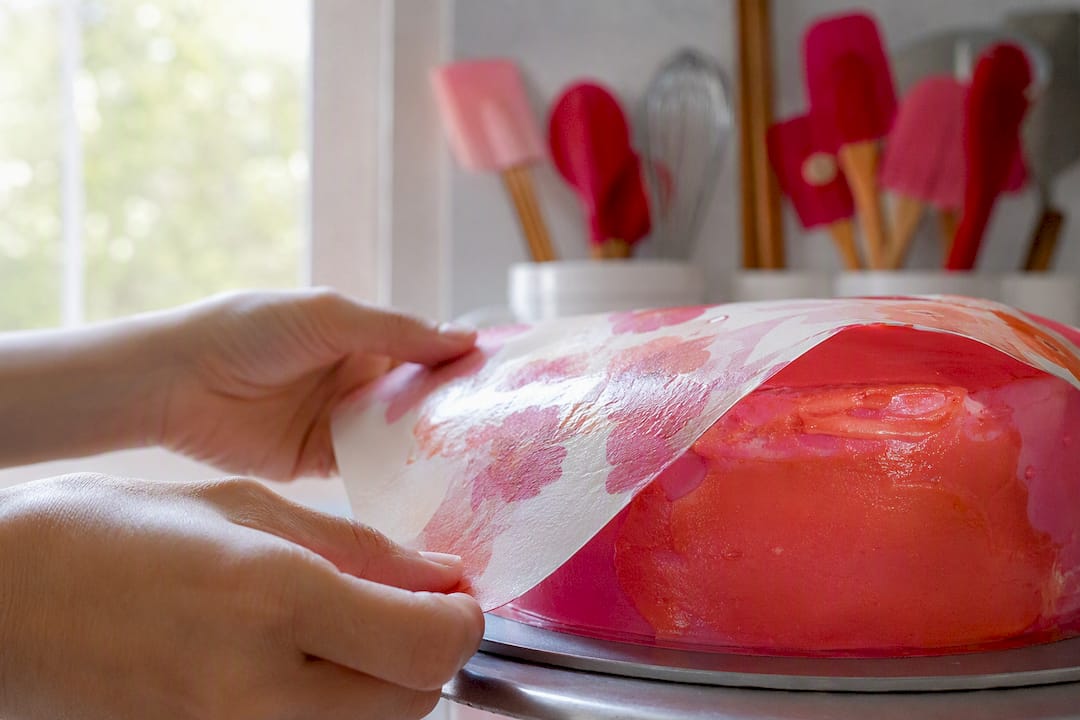
Compared to frostings like fondant or buttercream, both materials hold up reasonably well if placed carefully. On unstabilized whipped cream, the risk of them softening and losing definition increases greatly in both cases. For rigid toppers that must stand on their own, potato starch wins. For photographic prints with detail and color, sugar paper is the most reliable option, as explained in this comparison between both materials. If you are unsure between one or the other for a specific project, it is advisable to also review the differences between wafer and fondant before deciding.
Vegetarian recipes and uses with wafers
Wafers are not just cake decorations. Rice wafer, for example, works very well as a wrapper for vegan savory preparations, something that many families do not associate with this product.
A simple recipe that reproduces that idea is vegetable rolls with rice wafer:
- Soak a sheet of rice wafer in warm water for about 10 seconds, until it becomes flexible.
- Place thin strips of carrot, cucumber, avocado, and mint leaves in the center.
- Roll up firmly, folding the ends inward first.
- Let it rest for 2 minutes with the fold facing down so that it seals without the need for glue.
- Serve with a soy sauce and sesame sauce.
The whole process takes a short time and makes several generous rolls. This base of vegetarian rolls with rice wafers serves as a template to vary fillings according to what you have in the refrigerator.
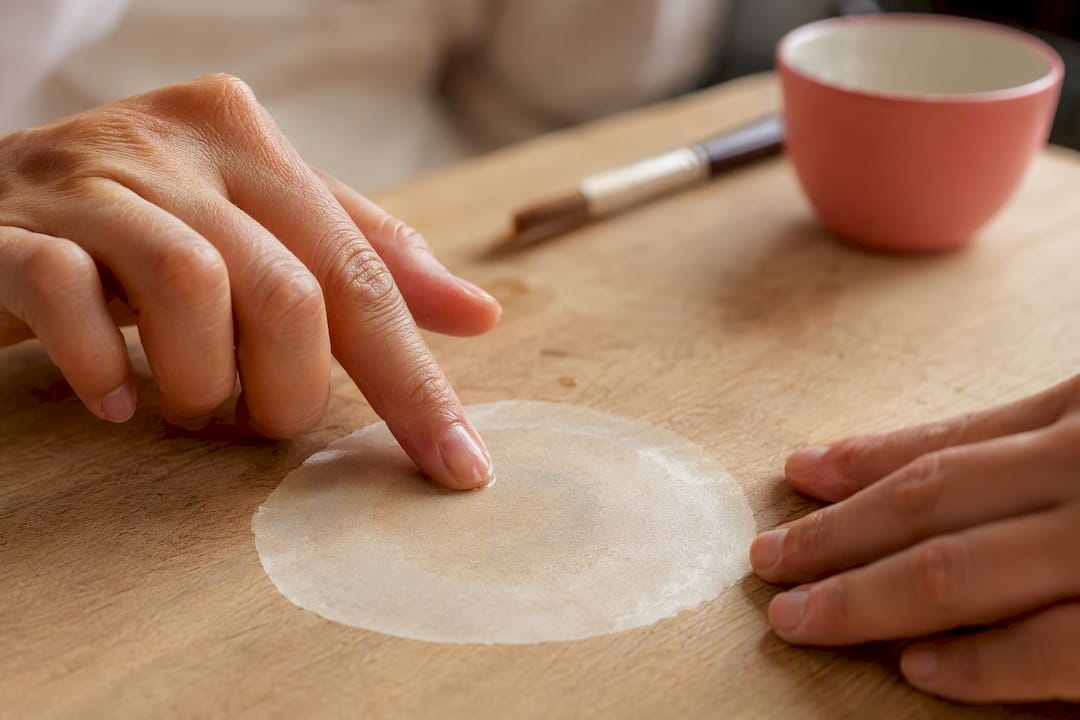
In baking, wafers are used as rigid toppers, cupcake discs, or bases for decorated cookies. To stick them without resorting to products of animal origin, a little water or a light sugar and water syrup works just as well as a commercial edible glue.
Professional tip: moisten only the edge of the wafer with your finger, never the entire surface: if you soak the center, it will wrinkle and lose definition before you place it.
How to preserve the texture of the wafer
Store wafers in their original packaging, in a dry place, away from ambient moisture and extreme temperatures; the refrigerator is usually not necessary and freezing can damage the texture if not expressly indicated by the manufacturer.
When applying them, moisture management is the most critical factor, especially on unstabilized cream. The best practice is to place the wafer just before serving or interpose an insulating layer, such as ganache or a thin layer of fondant, between the wafer and the moist filling. The most common mistakes are leaving it on cream for hours or storing it in the freezer without reason. This guide on how to decorate with wafers and sugar paper details the complete step-by-step.
What to look for before buying suitable wafers
Buying well starts by checking four things before paying:
- Complete ingredients, not just the product's commercial label.
- Certification seals (vegan, vegetarian, gluten-free) when the manufacturer offers them.
- Format and expiration, because a wafer poorly stored in the seller's warehouse arrives deteriorated.
- Shipping conditions, especially if you live in areas with high temperatures in summer.
A supplier that publishes its complete composition and explains how it controls cross-contamination gives more guarantees than one that only shows photos of the finished product. If you are looking for something neutral to print at home, there are edible wafers designed to customize cakes without complications. If you prefer to order the complete design with photo, name, and age, Funbakery offers that option directly, so you do not have to manage the printing yourself.
Editor's perspective: practical experience with wafers and edible paper
Funbakery works daily with custom wafers and sugar paper, and that constant practice teaches something that technical sheets do not always convey: the theory about moisture and storage is confirmed in every order that arrives poorly packaged or is placed too soon on a moist cake. The recommendations for handling this item, insulating layer, late placement, dry packaging, are born from that repeated friction between what the label says and what happens in the real kitchen.
Cross-contamination in wafer manufacturing: what it really means
Cross-contamination is the least visible and most important problem when looking for a suitable wafer. It occurs when the same production line manufactures, at different times, vegan wafers and wafers with gelatin or lactose, without a complete cleaning between batches. The result is that a wafer with technically vegan ingredients can contain minimal traces of an animal product.
For a flexible vegetarian, this is rarely a real problem. For a strict vegan or someone with a food allergy, it can be, and that is where the "may contain traces of..." labeling makes sense: it is not a filler legal phrase, it is information about the manufacturing process, not about the product recipe.
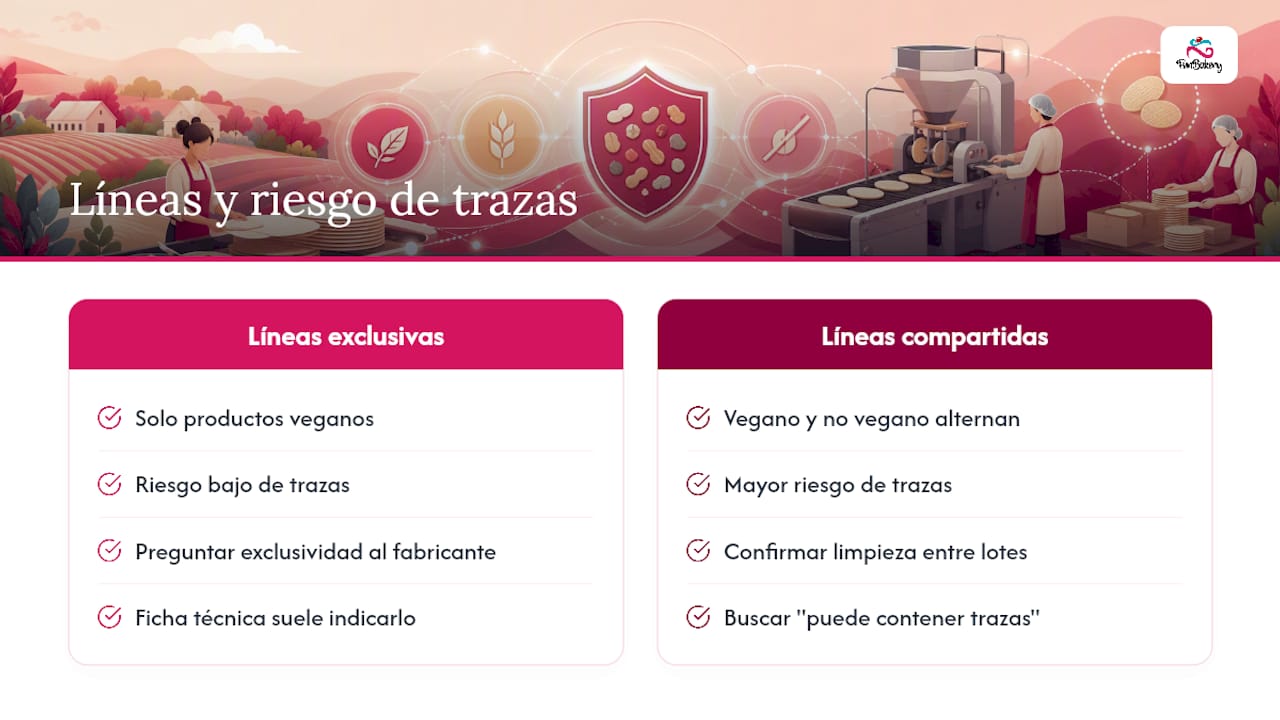
How is this verified in practice? The most reliable way is to ask the manufacturer directly if their production lines are exclusive to vegan products or if they share machinery with lines that use gelatin or dairy derivatives. Many neutral wafer manufacturers, such as those that offer sugar-free lines and declared suitable for vegans, halal, and kosher, publish this information in their technical sheet precisely because they know it is the point where the most doubts arise.
If you are buying for an event with guests with severe allergies, do not settle for the "vegan" seal on the package. Ask for explicit confirmation about cleaning between batches or look for a supplier that manufactures in dedicated lines. The difference between "suitable in recipe" and "suitable without traces" can be exactly what you need for your specific case.
Homemade alternatives to make wafers suitable for vegetarians
If you do not find a commercial wafer that convinces you, making it at home is easier than it seems, although the result will never be as thin as the industrial one. The most accessible base combines potato or corn starch, water, and a pinch of neutral vegetable oil, beaten until obtaining a liquid mixture without lumps.
That mixture is spread in a very thin layer over a non-stick surface or over parchment paper, and it dries at a low temperature in the oven (about 60-70 degrees) for several hours, until the sheet peels off by itself without breaking. The final thickness decides if the result serves as a rigid topper or as a flexible wrapper: the thinner the layer, the more similar it will be to a commercial rice wafer.
The advantage of this homemade version is total transparency about the ingredients: you know exactly what goes into the mixture, without depending on a third-party technical sheet. The disadvantage is obvious. You will not get the color sharpness or the resistance of a professional edible print, and the drying process requires patience and several attempts until getting the correct thickness.
For domestic use, simple decorations, or tests before a big event, this homemade alternative works well. For designs with photographs, names, or dates that need to look sharp on the cake, professional printing is still the most consistent option, especially when the margin of error in a celebration is zero.
Additives and preservatives in wafers: what they imply for a vegetarian diet
Many commercial wafers include additives that do not appear in the basic homemade recipe: stabilizers, antioxidant preservatives, and, in the case of printed sugar paper, edible inks with different dyes. Most of these additives are of vegetable or synthetic origin, and do not compromise the vegetarian or vegan suitability of the product.
The real friction point is in a small group of additives that can have animal origin according to the supplier: certain emulsifiers (such as some variants of E471), some glazing agents, and, as mentioned before, the carmine dye (E120). None of these are mandatory in wafer manufacturing, so their presence depends exclusively on the formula used by each manufacturer.
Here a nuance is worth mentioning that is frequently overlooked: that an additive having an E code does not automatically make it suspicious. Most E codes in edible wafers correspond to preservatives and stabilizers of vegetable or mineral origin, perfectly compatible with any vegetarian diet. The problem is not the list of codes, but not knowing which of those codes have variants of animal origin.
The most practical way to resolve this doubt without memorizing a long list of additives is, again, to refer to the manufacturer's technical sheet or ask directly. A supplier that details the origin of each additive, instead of merely writing "suitable for vegans" without any context, gives more guarantees that they have reviewed the complete formula, not just the main ingredients.
What most wafer guides do not tell you
The usual conversation about wafers suitable for vegetarians focuses almost entirely on the list of main ingredients: starch, water, oil. That is necessary, but incomplete. The real filter is in the secondary additives and in the manufacturing traceability, two aspects that rarely appear in the quick guides circulating on social media.
I think the most underestimated piece of advice is to ask about cross-contamination before checking the packaging for a "vegan" label. The label confirms the recipe; it doesn't confirm the process. For someone who just wants to decorate a child's birthday cake without overthinking it, the label is enough. For someone organizing an event with strict vegans or guests with allergies, that distinction determines whether the dessert is truly safe or just seems to be.
I also think generic supermarket wafers are overrated, while ordering a custom design from a supplier who controls their composition from start to finish is underestimated. It's not just a matter of aesthetics: when the manufacturer knows and discloses every ingredient, you no longer have to guess. Prioritizing that transparency over price or delivery speed is what separates a cake that impresses from one that is also safe for everyone who eats it.
— David
Order your custom, suitable wafer at Funbakery
Funbakery offers something that almost no generic supplier provides: complete control over the design and full transparency about the ingredients, without having to choose between a neutral catalog wafer and an anonymous print from a quick-print shop.
[IMAGE:cta_image]
You can order your photo, name, and age directly through the custom design studio, where the design team turns that image into a wafer or sugar paper ready to place on your cake. If you prefer something faster, the catalog includes pre-designed decorations and toppers for birthdays, sports, or children's characters, with the same care in composition and packaging. The shipment arrives protected so that the wafer is not damaged by moisture or impacts during transport. Visit the store, choose the format you need (round, rectangular, or framed), and upload your photo: the custom design is usually ready in just a few days.
Sources
- Wafers for Cakes: The Ultimate Guide | GASDA
- Differences between sugar paper and wafer | Creative baking blog
- Vegetable rolls with rice wafers: vegan and gluten-free recipe