TL;DR:
- Edible wafers are thin sheets of potato starch, water, and vegetable oil, used to decorate cakes and sweets without altering the flavor. They are highly versatile, as they can be customized, cut, and applied in various shapes and sizes, making them ideal for parties and special events. The choice between wafer paper, sugar paper, and Revoprint depends on the desired effect and the complexity of the print or the intended three-dimensional structure.
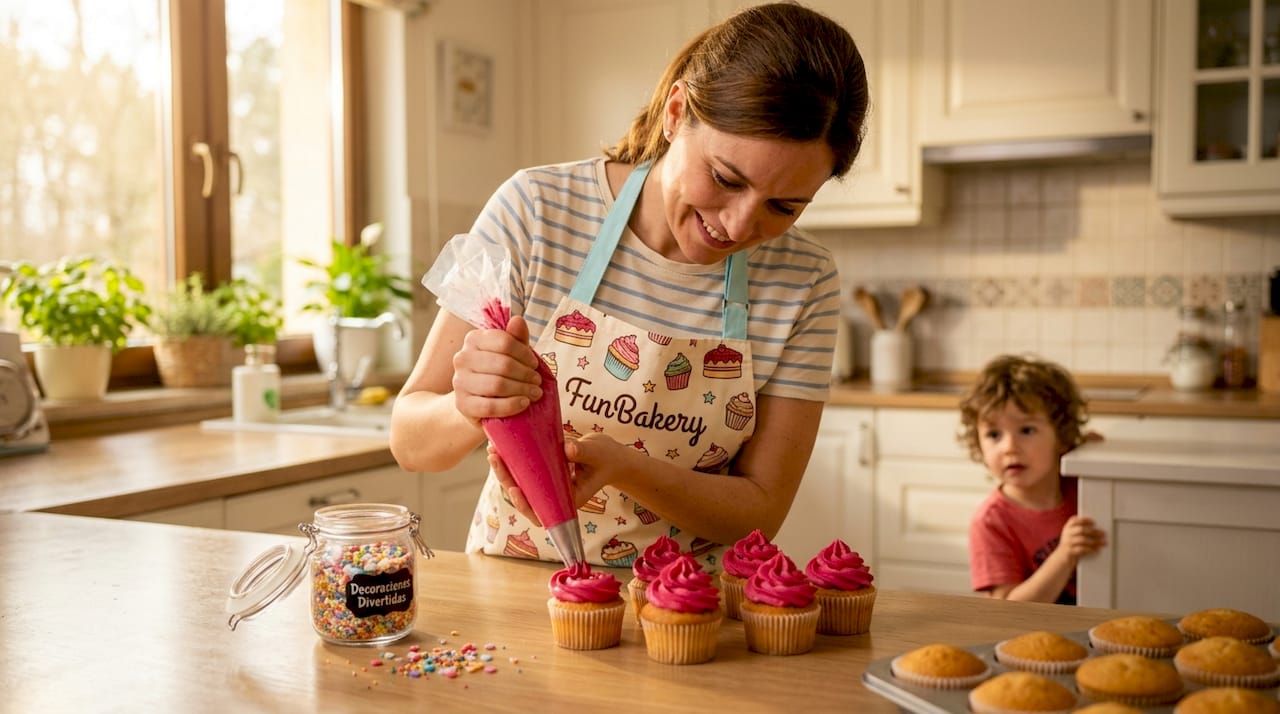
When someone mentions edible wafers, most people imagine a simple, plain translucent sheet. The reality is very different. Knowing what edible wafers are opens up a world of creative possibilities for anyone who wants to transform cakes, cupcakes, and sweets into true edible works of art. They are ultra-thin, flavor-neutral sheets that accept custom printing, elaborate cutouts, and impressive three-dimensional effects. For parents organizing birthdays or professionals preparing dessert tables for weddings, understanding this material completely changes the final result of the decoration.
Table of Contents
- What edible wafers are and how they are made
- Common applications and shapes of edible wafers at parties
- Differences between wafer paper, sugar paper, and other edible sheets
- How to apply and store edible wafers for best results
- Common mistakes when working with edible wafers and how to avoid them
- Why edible wafers are the ideal decoration for personalized parties
- Discover personalized edible wafers at FunBakery for your parties
- Frequently asked questions about edible wafers
Key Conclusions
| Point | Details |
|---|---|
| Clear definition | Edible wafers are thin, flexible sheets made primarily of starch for decorating cakes and sweets. |
| Types and uses | Wafer paper is best for artistic cutouts; sugar paper for detailed printing. |
| Practical applications | Used in cuttable shapes and flower kits to create 3D decorations at parties. |
| Essential care | They should be stored in cool, dry places to preserve texture and adhesion. |
| Party customization | They allow printing personalized images and text, making parties more unique and special. |
What edible wafers are and how they are made
Edible wafers are, in essence, thin sheets made of potato starch, water, and a small amount of vegetable oil. They contain no artificial dyes or flavors, making them flavor-neutral. The result is an almost transparent, extremely thin film, about 0.3 mm thick, that does not alter the flavor of the sweets it is applied to.
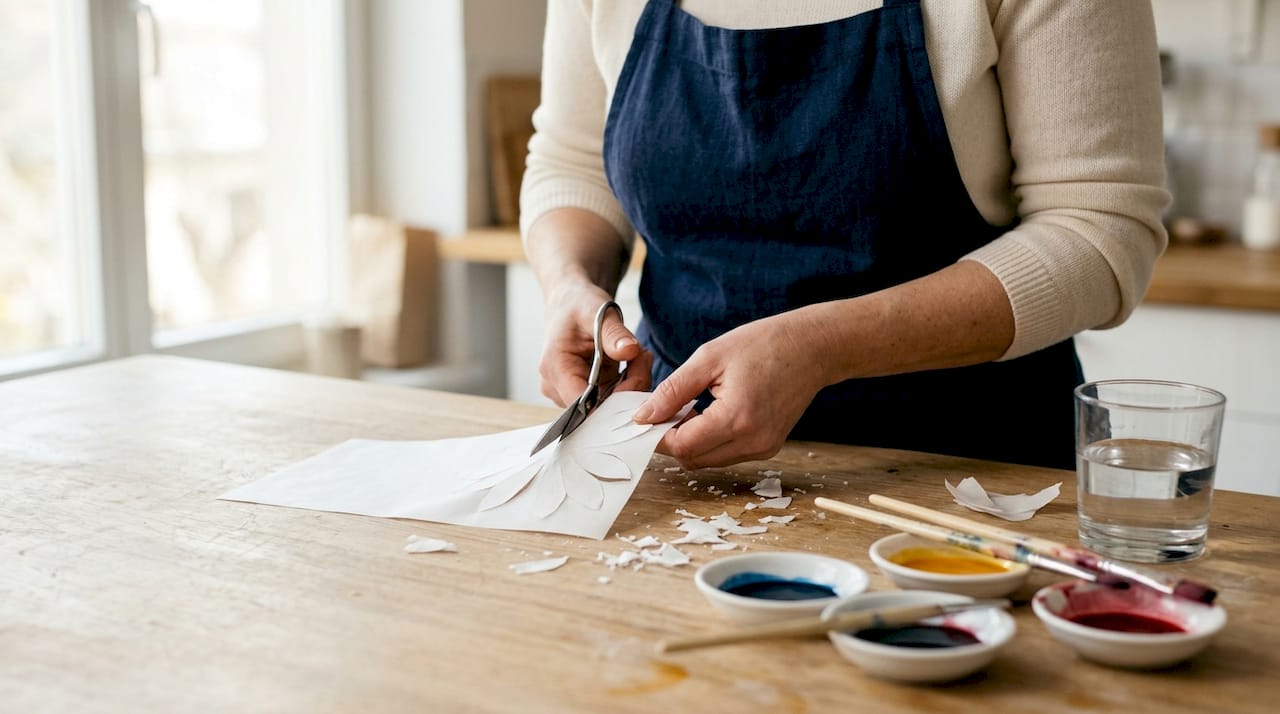
The most common size on the market is A4 format, which makes printing with edible ink printers easier. They can be cut by hand with scissors, with a confectionery scalpel, or with automatic cutting machines, making them extraordinarily versatile. You can find detailed information about edible wafers to understand how to get the most out of this material.
It is important to distinguish edible wafers from other edible decoration materials. The main differences are:
- Composition: Made of potato starch, water, and oil, without gelatin or sugar in the base.
- Texture: Very light, almost like tissue paper, and slightly fragile when dry.
- Appearance: Translucent when unprinted, which creates unique visual effects when placed on light-colored frostings.
- Flavor: Practically neutral, with a slight starch flavor that disappears completely in the overall cake.
- Main use: Decoration of cakes, cupcakes, cookies, and desserts in general.
The fact that they are flavor-neutral and approved for food consumption makes them one of the safest and most practical options for edible decorations at children's and adult parties.
Understanding what they are, let's explore how these personalized wafers are precisely applied at parties.
Common applications and shapes of edible wafers at parties
The versatility of edible wafers becomes evident when you observe the variety of shapes they come in on the market. For parties, the most popular shapes are circles (ideal for cupcake toppers), petals, and flowers, which allow for the creation of impressive botanical decorations without the need for advanced confectionery skills.
Wafer flower kits for parties are one of the most accessible ways to decorate cakes with a sophisticated visual result. Each petal is cut separately and assembled in layers on the cake, creating realistic flowers that delight at weddings, baptisms, and themed birthdays. The three-dimensional effect achieved with these overlays is difficult to replicate with other materials.
The most frequent applications at parties include:
- Personalized cake toppers: With the birthday person's name, age, and photo, printed on sugar paper or wafer.
- 3D floral decorations: Petals and leaves assembled in layers to create botanical arrangements on naked cakes and drip cakes.
- Butterfly and wing effects: Cut and curved while fresh to create volume.
- Side borders: Printed wafer strips that wrap around the cake with continuous patterns.
- Cupcake toppers: Circles with characters or illustrations for themed celebrations.
You can explore a tutorial for decorating sweets with wafers and understand how these applications work in practice.
Professional Tip: Always store cut wafers in a cool, dry place, inside a sealed bag, until the moment of application. Ambient humidity can curl the edges and make assembly much more difficult.
Knowing the shapes and applications, it is important to understand the difference between types of edible sheets to choose the best option for each decoration.
Differences between wafer paper, sugar paper, and other edible sheets
Not all edible sheets are the same, and confusing the materials is one of the most common mistakes among beginners. The wrong choice can compromise both the visual result and the ease of work.
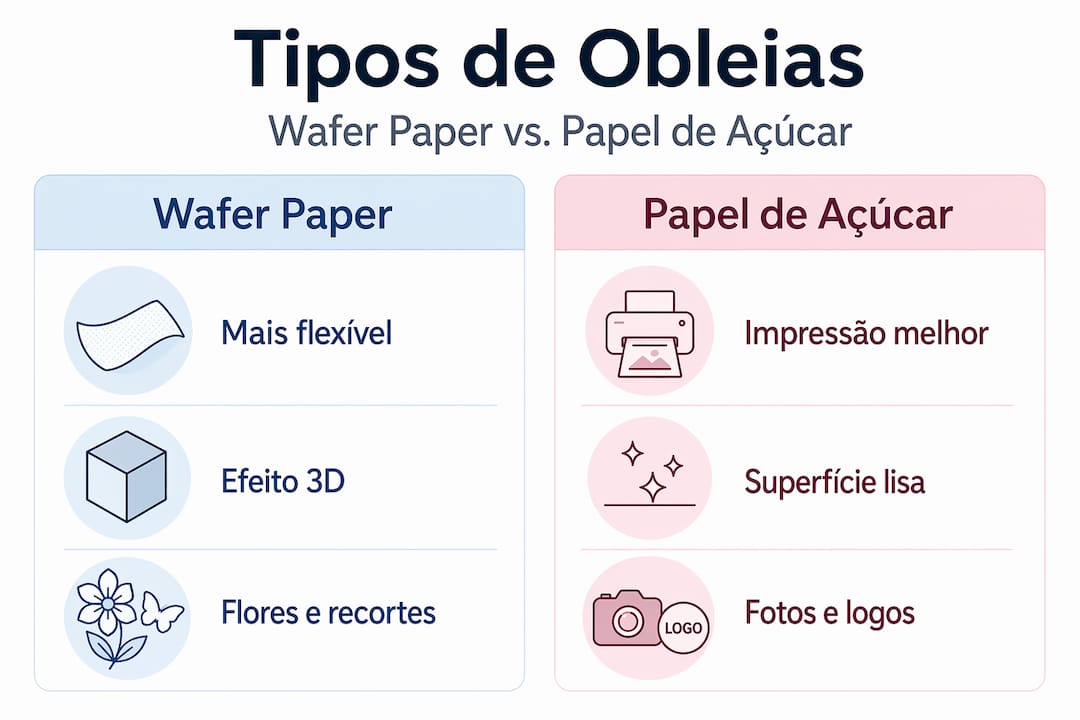
Wafer paper is light and flexible, which makes it perfect for artistic cutouts and three-dimensional pieces like flowers, wings, and structured elements. Sugar paper, on the other hand, has a more opaque and smooth surface, specially prepared to receive photographic prints with high color and detail definition. See the guide to using sugar paper to understand when it is the best choice.
| Feature | Wafer paper | Sugar paper | Revoprint sheet |
|---|---|---|---|
| Composition | Starch, water, oil | Starch with sugar and coating | Combined formulation |
| Flexibility | High | Medium | High |
| Print quality | Good for flat colors | Excellent for photos | Excellent for photos and 3D |
| Ideal for | Flowers, 3D cutouts | Printed toppers, photographs | Mixed decorations |
| Moisture resistance | Low | Moderate | Moderate to high |
| Transparency | Yes | No (opaque) | No (opaque) |
The Revoprint sheet combines the best of both worlds: the flexibility of wafer paper with the print quality of sugar paper. It is a growing choice among professional confectioners who want to print details while working with three-dimensional shapes.
Professional Tip: If the design includes a photo of the birthday person or a character with many color details, always opt for sugar paper. If you want raised flowers or butterflies, wafer paper is the right way.
With these clear differences, let's see how to apply this information in practice to decorate your cakes and sweets for parties.
How to apply and store edible wafers for best results
The application of edible wafers is simple, but there is a sequence that guarantees much better results. Dry handling and proper storage are determining factors for the success of the decoration. See the essential steps:
- Prepare the cake surface. The frosting should be firm and slightly moist. Buttercream, ganache, or sugar paste are excellent bases. Avoid surfaces with excess water.
- Remove the wafer from the packaging with clean and dry hands. Any moisture on the fingers can immediately deform the material.
- Apply the wafer with gentle movements from the center to the edges. This eliminates air bubbles and ensures uniform adhesion.
- For 3D effects with petals, fold each petal slightly while it is still fresh and fix it with a little buttercream or edible gel at the point of contact.
- Store the decorated cake in a cool place, away from heat and moisture sources, until the party. If possible, decorate on the day or the day before.
Professional Tip: For three-dimensional floral decorations, build the flowers on parchment paper first and transfer them to the cake already assembled. It saves time and reduces the risk of damaging the cake while you work.
See the tips for decorating cupcakes with wafers to adapt these steps to smaller formats, such as the ever-popular themed cupcake tables.
Before finishing, let's see some special considerations that can make all the difference when using edible wafers in your decoration.
Common mistakes when working with edible wafers and how to avoid them
Most problems with edible wafers do not come from the material itself, but from small wrong decisions before or during application. Identifying these mistakes in advance saves frustration and waste.
The most frequent mistakes are:
- Storing wafers in a humid place. Humidity softens and deforms the material before it reaches the cake. A kitchen cabinet near the stove is the worst possible place.
- Trying to print very fine details on wafer paper. The limitations of wafer paper for detailed prints are real. Fine gradients and complex photographs look much better on sugar paper.
- Not planning the design before printing. Printing without confirming dimensions and positioning results in material waste.
- Handling the wafers with wet hands or on wet surfaces. The material partially dissolves with moisture and loses its structure.
- Choosing the wrong type of sheet for the desired effect. Using sugar paper when you want a 3D effect, or wafer paper when you want a perfect photograph, always results in disappointment.
“The best wafer is the one that was chosen with intention. Understanding the desired final effect before ordering is the most important decision in the entire decoration process.”
Use a checklist for decorating with wafers before starting any project. Having everything planned in advance is what separates a perfect decoration from a stressful one.
With this knowledge, you are ready to experiment with wafers at your parties. Next, an editorial overview of trends and exclusive recommendations.
Why edible wafers are the ideal decoration for personalized parties
There is a growing trend of treating wafers as a secondary material, a cheap alternative to handmade sugar flowers. This view is completely wrong, and the sooner it is abandoned, the better results you will obtain.
Edible wafers are, in reality, a material with unique characteristics that no other substitute can fully replicate. Their lightness allows for the creation of airy and delicate structures that fondant or sugar could never achieve without an internal frame. A floral arrangement made of wafer paper on a wedding cake has an elegance that heavier objects simply cannot convey.
Complete personalization is another advantage that should not be underestimated. At a children's birthday party, having the child's own face printed on the cake topper creates an emotional moment that no generic decoration can replace. For event organizers, this level of personalized detail is exactly what differentiates an ordinary service from a memorable one. The benefits of wafers in confectionery go far beyond aesthetics.
Accessibility is equally relevant. Compared to sugar flowers worked by hand for hours, wafers allow for visually comparable decorations in less time and at a lower cost. For parents who want an impressive cake without hiring a professional confectioner, they represent a realistic and rewarding entry into the world of sweet decoration.
The choice of the right type of sheet for each design is the only variable that requires some initial study. But once understood, it opens possibilities that completely transform the result of any celebration.
Discover personalized edible wafers at FunBakery for your parties
At FunBakery, we create personalized wafers and sugar paper for all types of celebrations: children's birthdays, weddings, baptisms, and themed events. The catalog includes popular characters such as the Minecraft warriors and personalized Stumble Guys designs with photo, name, and age, ready to transform any cake into a center of attention.
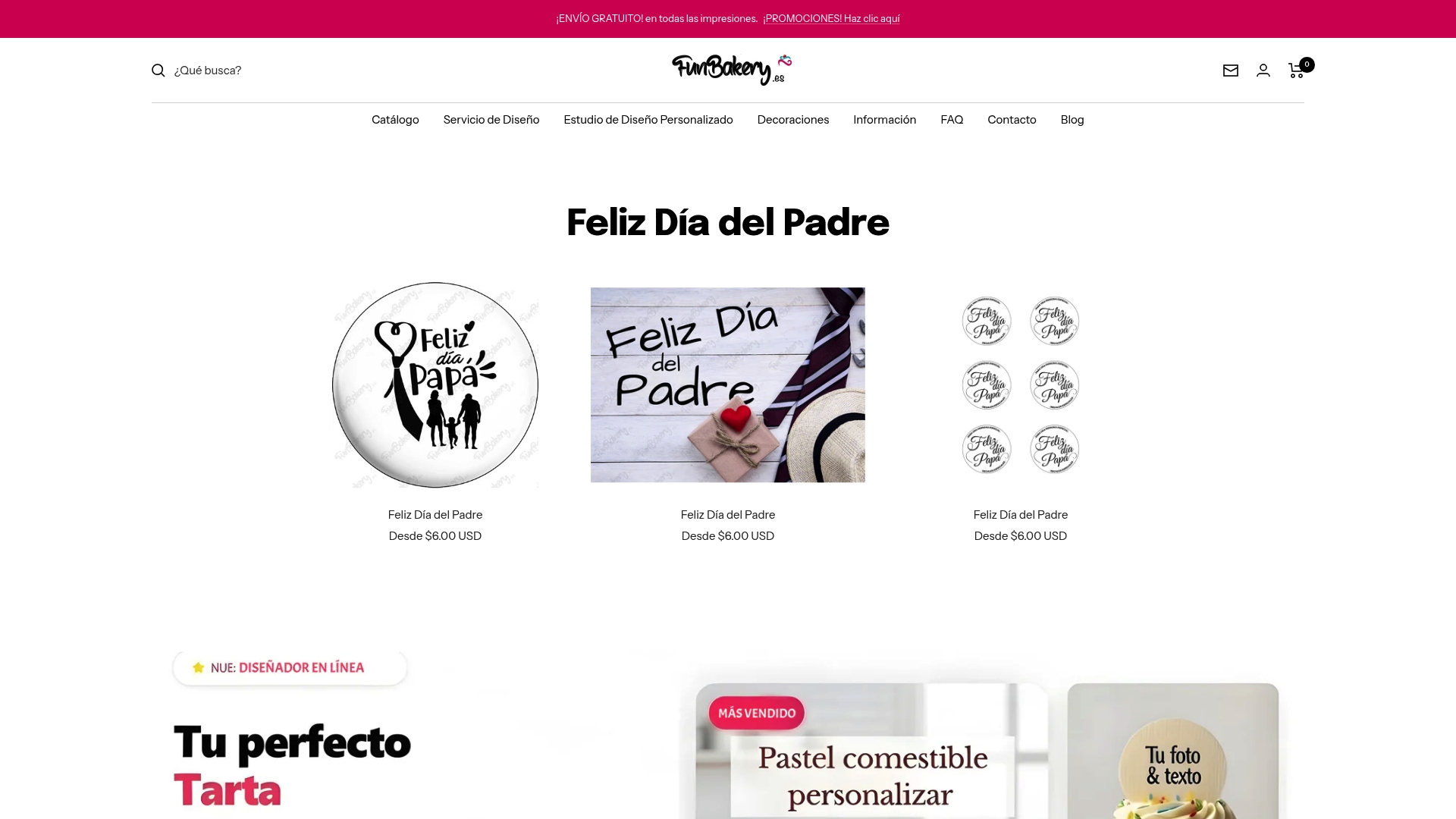
For those who have a very specific vision, our custom design studio creates any image to order: family photos, illustrations, logos, personalized text, and much more. All materials are certified for food consumption and produced with food-grade inks. The ordering process is simple, with support available to help choose the format, sheet type, and dimensions suitable for each cake or sweet.
Frequently asked questions about edible wafers
What exactly are edible wafers?
They are thin edible sheets made mainly of potato starch, water, and vegetable oil, used to decorate cakes and sweets, and can be personalized with printing or cut into various shapes.
Can I print photos on edible wafers for parties?
Yes, although for photographs and images with many details, sugar paper is superior to traditional wafer paper, ensuring more vivid colors and sharp edges.
How to store wafers so they do not lose their quality?
Store them in a cool, dry place, inside the original packaging or in a sealed bag, away from heat and moisture sources that alter the texture and make adhesion difficult.
What is the main difference between wafer paper and sugar paper?
Wafer paper is more flexible and ideal for cutouts and 3D effects such as flowers, while sugar paper offers a higher-quality matte surface for photographic prints with detailed colors.
Can I use edible wafers to decorate cupcakes?
Yes, wafer circles or sugar paper are perfect for cupcake toppers, and can combine custom prints with small embossed decorations for consistent visual results across the entire dessert table.