In summary:
- Edible rice paper is a thin sheet made of starch, water, and vegetable oils, used for decorating cakes. It is durable, lightweight, and suitable for edible printing, making it an alternative to sugar paper. It should be stored in a dry, protected place, away from moisture and extreme temperatures.
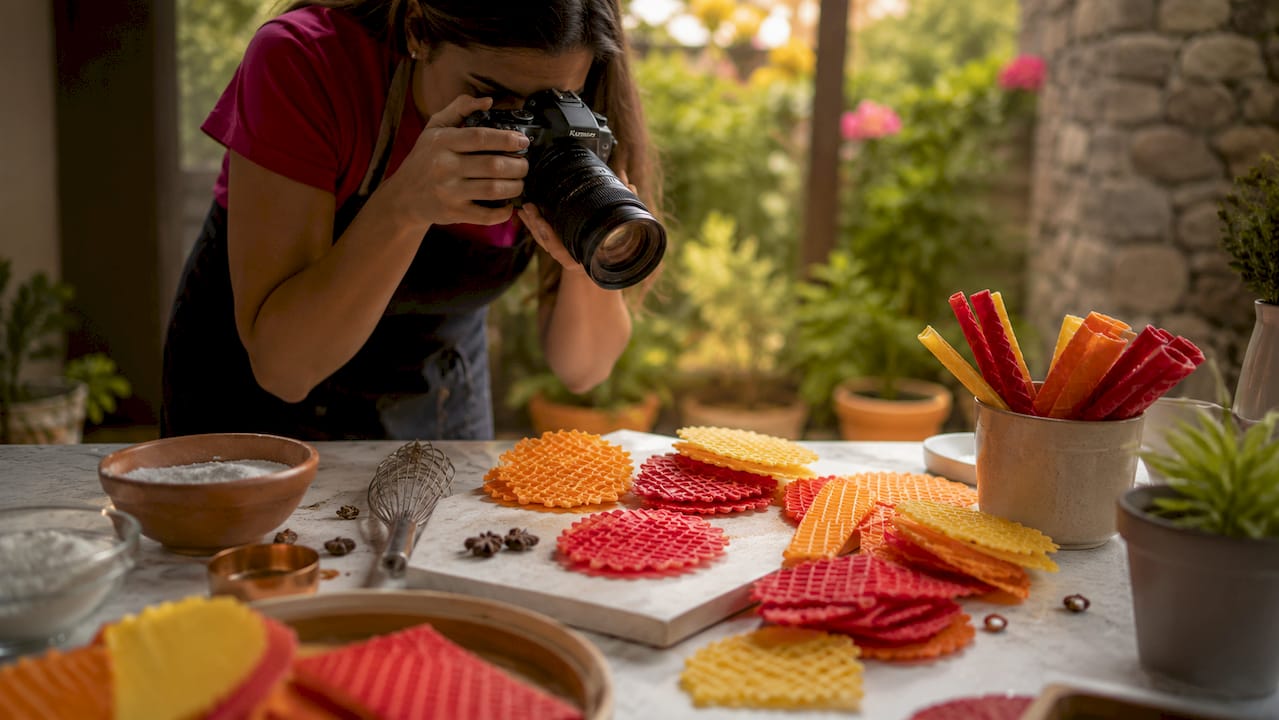
Edible rice paper is a thin edible sheet made primarily of starch and water, used to decorate cakes, cupcakes, and other desserts. Technically known as wafer paper in the confectionery industry, this material stands out for its neutral flavor, smooth surface suitable for edible printing, and lightness that does not alter the texture of desserts. Those who decorate cakes professionally or at home find it a versatile alternative to fondant and sugar paper, with clean and customizable visual results.
What is edible rice paper: composition and properties
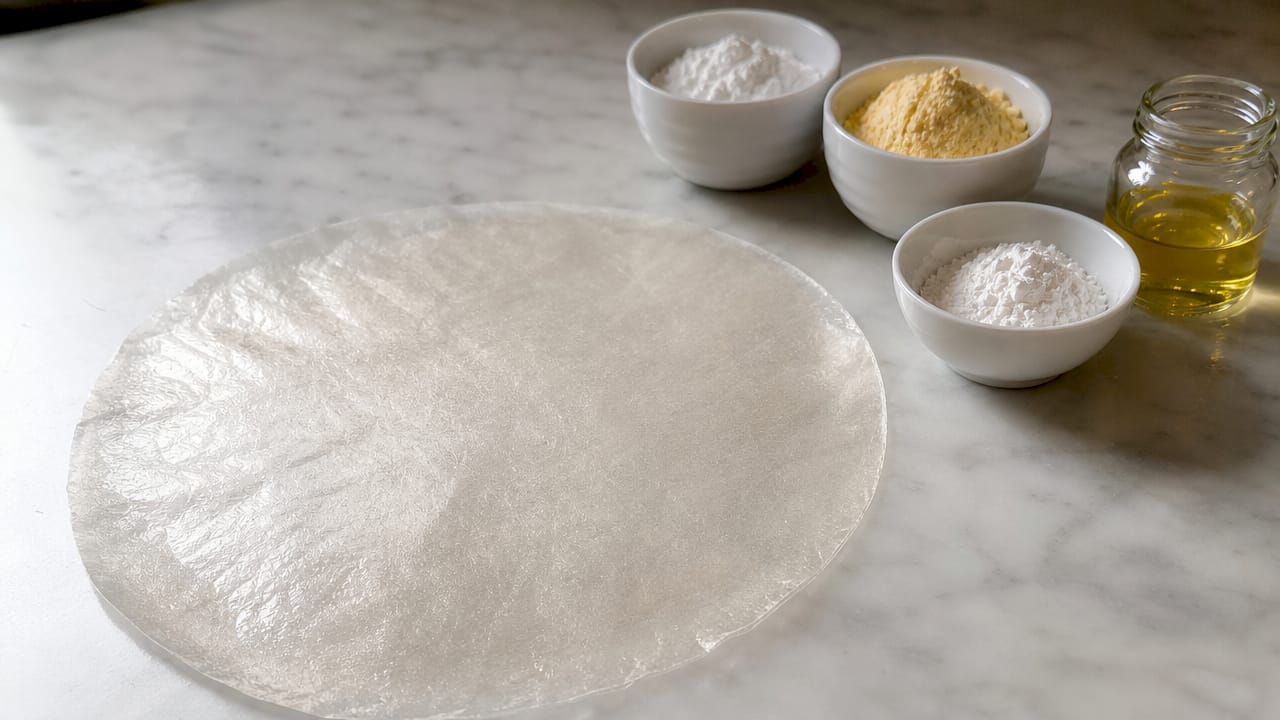
Edible rice paper is composed of potato, corn, or rice starch, water, and sometimes vegetable oils. The combination of these ingredients produces a thin, translucent, and slightly textured sheet. The flavor is practically neutral, meaning it does not interfere with the flavor profile of the dessert.
The properties that make this material so useful in confectionery are clear:
- Neutral flavor: it does not alter the taste of the cake or the filling.
- Surface suitable for printing: it accepts edible inks with high color fidelity.
- Vegan: it does not contain ingredients of animal origin in the standard formulation.
- Stable: it maintains its shape in controlled humidity conditions.
- Lightweight: it does not add weight or volume to the decoration.
The shelf life reaches 24 months when the product is stored correctly. To do this, store it in a dry place, away from heat sources and moisture. The sealed original packaging is the best protection until the moment of use.
| Property | Detail |
|---|---|
| Main composition | Potato, corn, or rice starch, water, and vegetable oils |
| Flavor | Neutral, without interfering with the palate |
| Dietary suitability | Vegan in the standard formulation |
| Shelf life | Up to 24 months in dry and sealed storage |
| Main use | Edible printing and decoration of cakes and desserts |
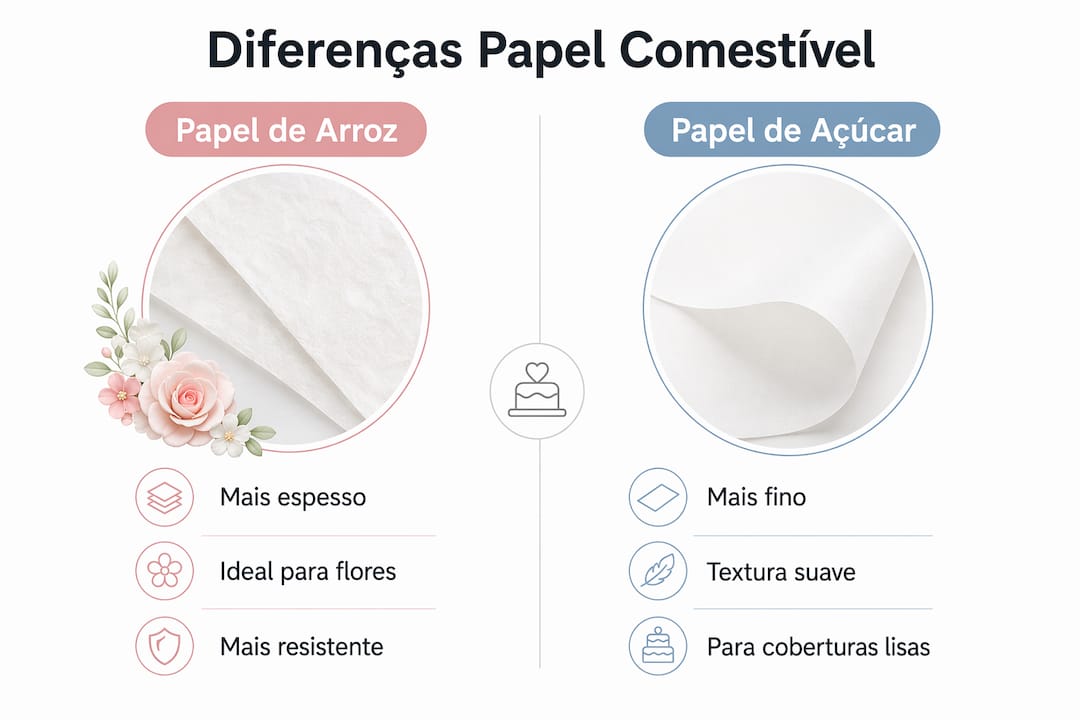
The difference between rice paper and sugar paper is mainly in texture and thickness. Sugar paper is thinner and dissolves more quickly when in contact with moist surfaces. Rice paper, also called wafer paper, is thicker and more resistant, making it preferable for handmade flowers and three-dimensional decorations.
How to apply rice paper on cakes and desserts
The correct application of rice paper depends on the type of surface of the cake. On dry surfaces, such as fondant or marzipan, it is necessary to use edible glue or a specific adhesive to ensure adhesion. On moist surfaces, such as whipped cream, ganache, or buttercream, the paper adheres directly through contact with the moisture of the frosting.
The process on dry surfaces follows these steps:
- Cut the rice paper with scissors or a cutter, leaving a minimum margin of 0.5 cm from the edge of the cake.
- Apply a thin and even layer of edible glue to the surface of the fondant, not on the paper.
- Place the paper carefully, starting from the center and smoothing it to the sides to avoid air bubbles.
- Press gently with clean fingers or with a silicone spatula.
- Let it air dry for at least 10 minutes before adding other decorative elements.
On moist surfaces, the process is more direct: place the paper on the frosting and press lightly. The moisture of the frosting does the adhesion work. The risk here is excess moisture, which can soften the paper and deform the print.
Professional tip: Use alcohol-based glue or precise dots of Royal Icing to fix the rice paper instead of water-based glues. The alcohol glue dries faster and does not soften the paper during application.
Rice paper should not be refrigerated after being applied to the cake. The condensation that forms when removing the cake from the refrigerator damages the texture of the paper and alters the colors of the edible print. If the cake needs refrigeration, apply the paper only after removing it from the cold and after the surface reaches room temperature.
For cakes that go into the oven, the rice paper can be placed in the preparation, but only in the final third of the baking time. Placing it too early dries it out or burns it, compromising the visual result.
Creative techniques with rice paper in confectionery
Rice paper goes far beyond flat printing on cakes. The technique most appreciated by creative confectioners is rice paper floristry, which consists of creating handmade flowers and leaves using cut and hand-shaped sheets. The result is light, stable flowers with a texture that mimics tissue paper.
Creative possibilities include:
- Handmade flowers: roses, poppies, anemones, and leaves, cut and shaped with modeling tools or simply with fingers.
- Butterflies and wings: cut out and attached to edible sticks for three-dimensional decorations.
- Textures and layers: overlapping sheets to create depth effects on wedding or birthday cakes.
- Manual coloring: painting with food colorings diluted in food-grade alcohol to create gradients and artistic effects.
Rice paper floristry produces flowers with lightness comparable to tissue paper, but with the advantage of being completely edible. This technique has become a creative differentiator in artistic confectionery, especially in wedding cakes and special events.
To color rice paper, use gel colorings diluted in food-grade alcohol, never in water. Water softens the paper immediately and destroys the structure. Alcohol evaporates quickly and leaves the color fixed without deforming the sheet.
Professional tip: Store the finished rice paper flowers in a closed box with silica gel until the moment of decorating the cake. Silica absorbs the moisture from the environment and keeps the flowers stable for days.
Rice paper also accepts direct printing with edible ink printers, which opens the way for personalized decorations with photographs, illustrations, and text. This combination of printing and manual technique is what distinguishes confectioners who master the material from those who use it only in a basic way.
Food safety: what you need to know
Edible rice paper is considered safe for consumption when produced in accordance with European regulations. The European Food Safety Authority (EFSA) revalidated in February 2026 that the use of sucralose (E 955) is safe in rice paper for fine baking. This approval distinguishes rice paper from other baking products subject to intense thermal processing, where uncertainties about sucralose at prolonged high temperatures still persist.
"The EFSA approval for the use of sucralose in rice paper reinforces the safety of this additive in this specific application, distinguishing it from other baking contexts with prolonged thermal exposure."
The colorings used in edible inks deserve special attention when the cake is intended for children. Colorings such as E-102, E-110, and E-122 can affect children's activity and attention. This information is included in manufacturers' warnings and should be considered when choosing edible inks for children's cakes. Opt for inks with natural colorings when the audience is predominantly children.
For safe storage, keep the rice paper in the sealed original packaging, in a dry place and at room temperature. Avoid direct exposure to sunlight, which degrades the colorings and alters the color of the prints. After opening the packaging, use the paper within a reasonable timeframe and store the rest in an airtight bag with silica gel.
Main conclusions
Edible rice paper is the most versatile decoration tool in modern confectionery, provided that its sensitivity to moisture and temperatures is respected.
| Point | Details |
|---|---|
| Composition and safety | Made of starch, water, and vegetable oils; approved by the EFSA for use in confectionery. |
| Application on dry surfaces | Use alcohol glue or Royal Icing; never water-based glues. |
| Refrigeration to avoid | Condensation damages the paper; always apply after the cake reaches room temperature. |
| Creative techniques | Rice paper floristry produces light and stable flowers for artistic decorations. |
| Colorings and children | Avoid colorings E-102, E-110, and E-122 in cakes intended for children. |
What I learned about using rice paper in practice
I have been working with rice paper for years, and the most common mistake I see is treating this material as if it were sugar paper. It is not. Rice paper has a structural resistance that sugar paper does not have, but it pays for that resistance with a sensitivity to moisture that surprises those who are not used to it.
The first time I tried rice paper flowers, I used water-based glue to fix the petals. The result was a disaster: the petals softened, lost their shape, and the color ran. Since then, I exclusively use food-grade alcohol or Royal Icing in very precise dots. The difference is immediate and the result is professional.
What surprises me most about this material is the creative potential that most people do not explore. Edible printing is just the beginning. When you start combining printing with handmade flowers and manual coloring, rice paper transforms into a canvas. Cakes that previously took hours of work in fondant are ready in half the time with superior visual results.
For beginners, the most practical advice is this: practice with dry paper before applying it to the cake. Cut, fold, shape, and experiment with the material's response without pressure. Rice paper forgives very little when it is already on the cake, but it is very generous during the practice phase.
— David
Personalized rice paper for your next cake
Mastering the technique is half the work. The other half is having access to rice paper with professional printing quality and designs that truly impress.
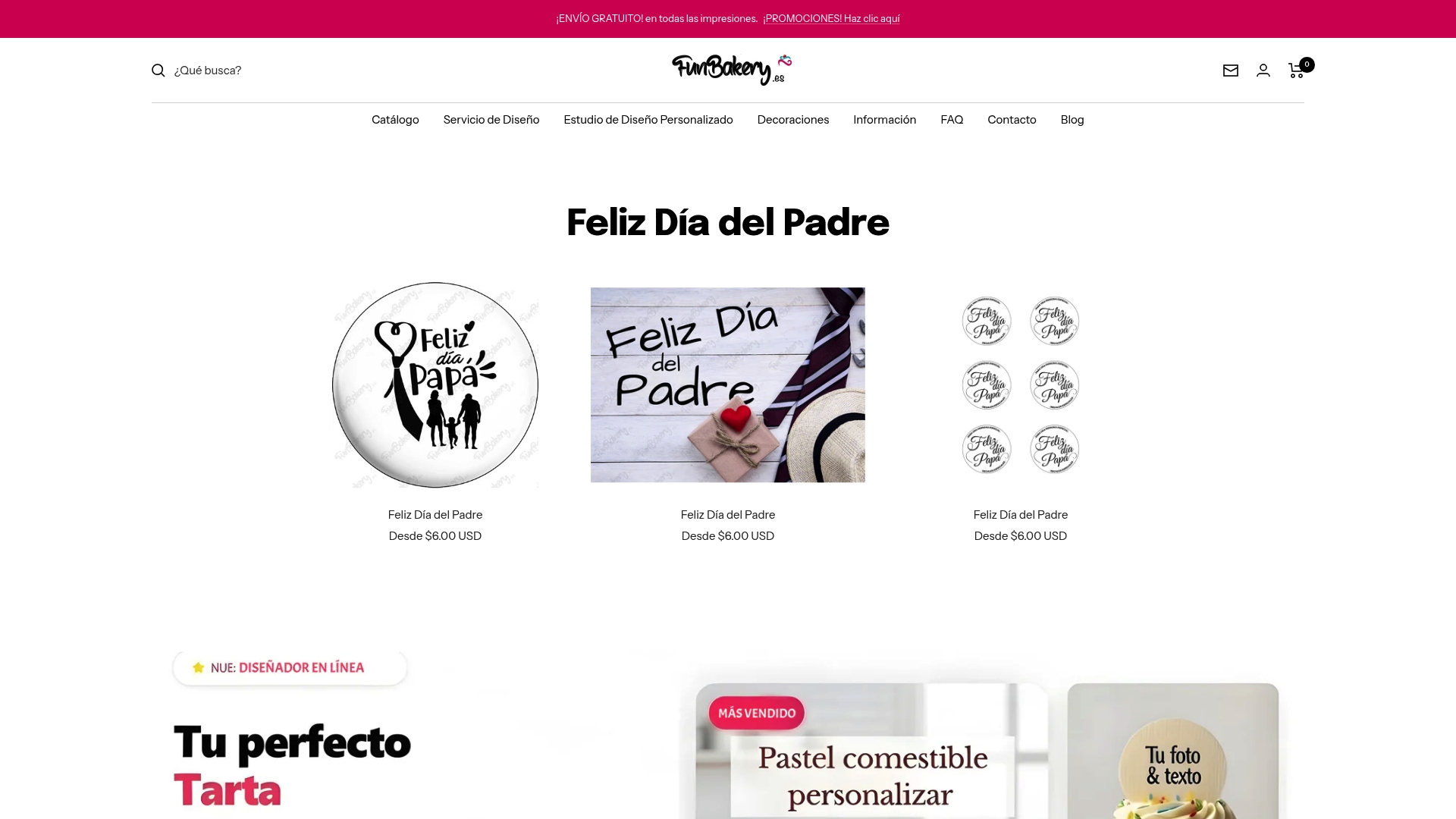
Funbakery produces personalized edible wafers with photographs, names, ages, and custom illustrations, for birthday cakes and special events. The catalog includes children's characters, superheroes, sports themes, and designs for adults. For those who want something completely unique, Funbakery's custom design service creates any image from a photograph or idea, with a professional-quality finish delivered directly to your home.
Frequently asked questions
What exactly is edible rice paper?
Edible rice paper is a thin edible sheet made of starch, water, and vegetable oils, used to decorate cakes and desserts with edible prints or handmade flowers.
What is the difference between rice paper and sugar paper?
Rice paper is thicker and more resistant, ideal for flowers and three-dimensional decorations. Sugar paper is thinner and dissolves more quickly when in contact with moist surfaces.
Can I refrigerate a cake decorated with rice paper?
No. The condensation that forms when removing the cake from the cold damages the paper and alters the colors of the print. Apply the rice paper only after the cake reaches room temperature.
Is rice paper safe for children?
The material itself is safe, but some colorings used in edible inks, such as E-102, E-110, and E-122, can affect children's attention. Opt for inks with natural colorings in children's cakes.
How do you store unused rice paper?
Store it in the sealed original packaging, in a dry place and at room temperature, away from direct sunlight. After opening, use an airtight bag with silica gel to maintain quality for up to 24 months.