In summary:
- Cake decorating involves applying frostings, textures, and visual elements to create attractive pieces for celebrations. It is essential to use specific tools, appropriate techniques, and to personalize the design according to the party theme. Trends for 2026 highlight minimalist, natural styles and the appreciation of personalized and sustainable elements.
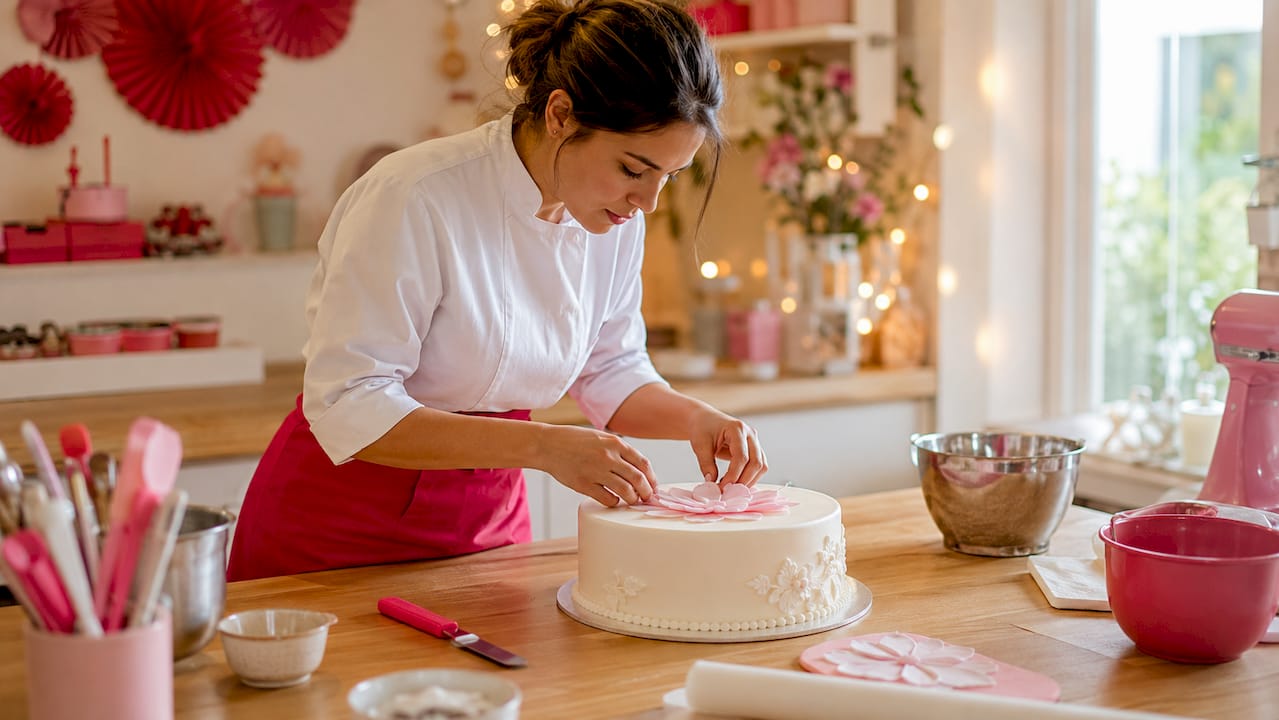
Cake decorating is the technique of applying frostings, textures, and visual elements to a cake to create an aesthetically attractive result suitable for a celebration. With the right tools and a good step-by-step guide, anyone can turn a simple cake into a party centerpiece. This cake decorating guide covers everything you need: essential utensils, techniques for beginners, 2026 trends, and personalization strategies for birthdays, weddings, and other celebrations.
What are the essential tools for decorating cakes?
The quality of the decoration depends directly on the utensils you use. Without the right tools, even the best recipe will produce mediocre results.
The utensils that cannot be missing from your countertop:
- Offset spatula: applies and smooths frostings precisely without the hand touching the cake.
- Piping bags: allow you to control the flow of the cream with precision.
- 1M tip: creates rosettes and swirls in a single movement.
- 4B tip: ideal for open stars and decorative borders.
- Cake leveler: ensures even layers, the foundation of any clean decoration.
- Bench scraper: produces smooth and textured finishes on the sides.
- Turntable: makes it easier to apply frosting evenly all around the cake.
For frostings, the three most used materials are buttercream (whipped butter with powdered sugar), stabilized whipped cream, and fondant. Buttercream is the most versatile for beginners because it is easy to color, apply, and correct. Fondant allows for smooth and professional finishes, but requires more practice to roll out without tearing.
| Utensil | Main use | Recommended level |
|---|---|---|
| Offset spatula | Smoothing and applying frostings | Beginner |
| 1M tip | Rosettes and swirls | Beginner |
| 4B tip | Stars and borders | Beginner |
| Bench scraper | Smooth finish on the sides | Intermediate |
| Food stencils | Precise and detailed patterns | Intermediate |
Professional tip: Organize the tips by number before starting. Interrupting the decoration to look for utensils causes the cream to lose temperature and consistency.
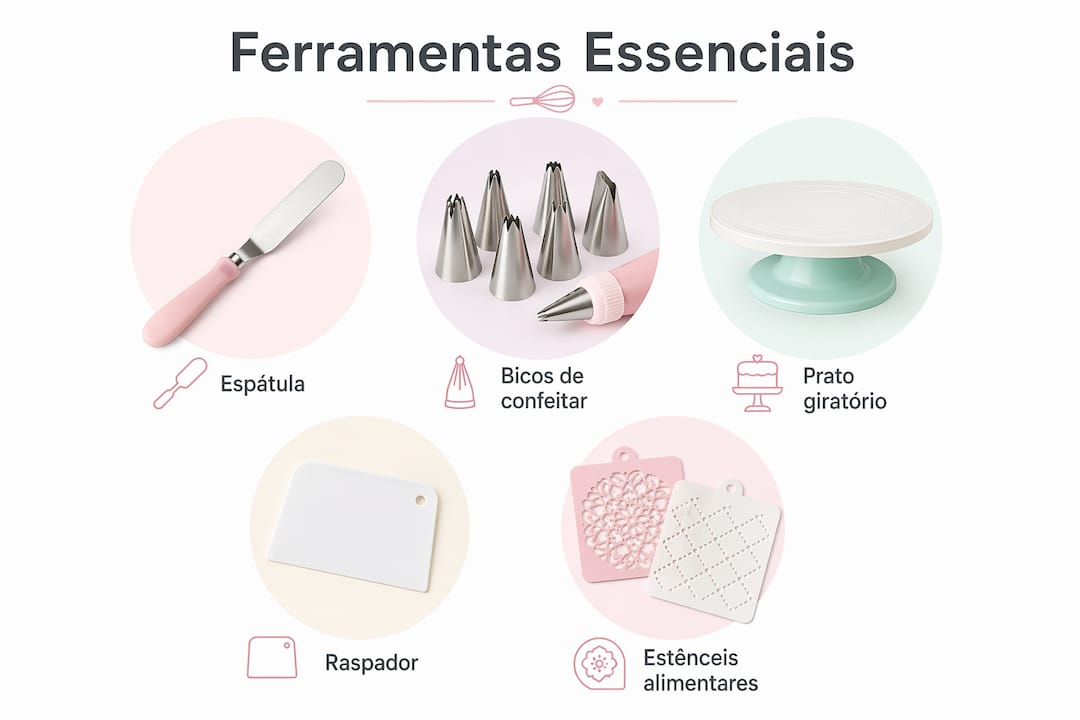
Flexible food stencils are a professional alternative that ensures precision and saves time compared to manual work with tips. For those who are learning, they are a tool that greatly accelerates results.
How to decorate a cake step by step?
Decoration begins before picking up the piping bag. Preparing the base is what separates a pretty cake from a professional cake.
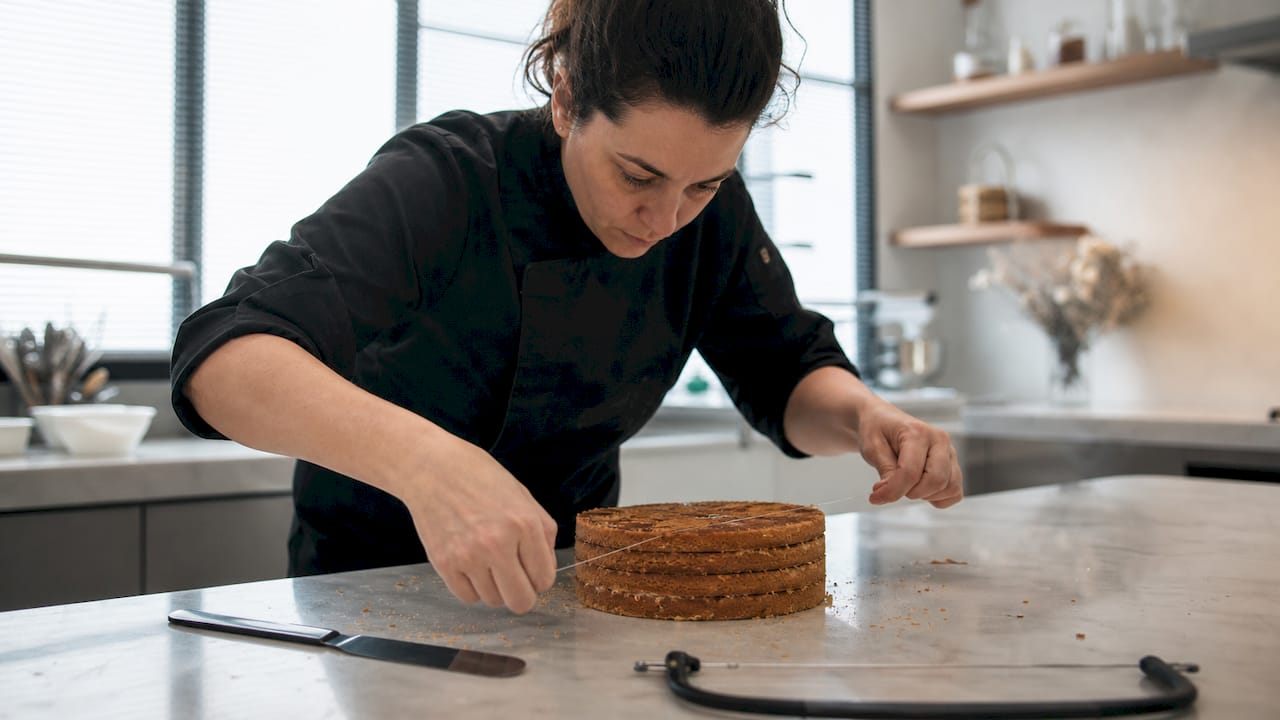
1. Level the layers Use a cake leveler or dental floss to cut the top of each layer. Uneven layers create a crooked cake that no frosting can hide.
2. Apply the crumb coat The crumb coat (or sealing layer) is a thin layer of buttercream that traps all the crumbs. Apply with the offset spatula, cover the entire cake, and refrigerate for 20–30 minutes. This step ensures that the final layer is clean and free of visible crumbs. A well-executed naked cake depends precisely on this technique to maintain structure and finish.
3. Apply the final frosting After the crumb coat has set, apply a generous layer of buttercream. Use the bench scraper while rotating the turntable to get smooth sides. For a textured finish, pass the spatula in horizontal or wavy movements.
4. Work with piping tips The pressure and cream consistency are the two factors that determine whether the design holds its shape. For rosettes with the 1M tip, position the bag at 90° and 2 cm from the surface. For elongated shells, tilt the bag at 45°. These angles are not suggestions: they are the difference between a defined rosette and a blob of cream.
5. Avoid the most common mistakes The heat from your hands melts the frosting during work. Washing the tip every 10 minutes prevents the cream from losing definition. Another frequent mistake is applying too much pressure to the bag, which produces irregular and flat shapes.
Professional tip: Before decorating the real cake, practice the movements with the piping bag on a sheet of parchment paper. Five minutes of practice saves a lot of wasted frosting.
What are the cake decorating trends for 2026?
The 2026 trends point toward clean designs, the use of natural elements, sustainability, and vibrant colors. Over-decoration has lost ground to simple elegance.
The most sought-after styles this year:
- Naked cake: visible layers with minimal frosting on the sides. It conveys naturalness and is very photogenic for social media.
- Chromatic minimalism: one or two shades with a soft texture, without excessive elements.
- Fresh and dried flowers: roses, lavender, and eucalyptus as natural and sustainable decoration.
- Painting with food coloring: an artisanal technique where food coloring is applied with a brush directly onto the fondant or buttercream.
- Marbling: a marble effect created with two or more shades of cream mixed with a spatula.
| Style | Main characteristic | Difficulty |
|---|---|---|
| Naked cake | Exposed sides, minimal frosting | Easy |
| Chromatic minimalism | Reduced palette, soft texture | Easy |
| Natural flowers | Fresh or dried elements | Easy |
| Painting with food coloring | Artistic motifs with a brush | Intermediate |
| Marbling | Marble effect with two shades | Intermediate |
For the naked cake, the fruits used as decoration must be completely dry after washing. Residual moisture stains the buttercream and compromises the final appearance of the cake.
Professional tip: For the marbling effect, use two shades from the same color family. Contrasting shades tend to produce a visually confusing result instead of an elegant one.
Personalized toppers continue to be a standout element. Using toppers with a personalized design increases the perceived value of the decorated cake by up to 30%. This means that a simple cake with a well-chosen topper has more visual impact than an elaborate cake without personalization.
How to personalize cakes for different parties and occasions?
Personalization is what transforms a pretty cake into a memorable cake. The secret is to align each decorative element with the theme and the audience of the party.
Choosing the color palette Define two to three main shades before starting. For children's birthdays, saturated and contrasting colors work well. For weddings, pastel or neutral shades convey elegance. Avoid mixing more than three colors in the frosting to avoid creating visual confusion.
Personalized edible images Edible wafers and sugar paper allow you to reproduce photographs, characters, and logos directly on the cake. They are the fastest way to create a themed cake with professional quality. To learn how to integrate photographs effectively, the cake photography guide from Funbakery explains the process in detail.
Toppers and maximum height Toppers should have a maximum height of 8 cm to ensure stability during transport. Taller toppers tend to tip over at outdoor events or during long trips.
Harmonizing textures and elements On a cake with a smooth finish, add a single texture element, such as flowers or a topper. On a cake with textured buttercream, avoid overloading it with too many adornments. The contrast between smooth and textured is more effective than accumulating elements of the same type.
Practical examples by occasion:
- Children's birthday: cake with an edible image of the favorite character, colored buttercream, and themed candles.
- Wedding: naked cake with fresh flowers, two shades of buttercream, and a topper with the couple's names.
- Adult party: minimalist cake with a marbling effect, a vibrant color, and a discreet topper with the age.
- School celebration: simple cake with personalized sugar paper featuring a class photo and the event name.
The personalization of cakes for parties is not just aesthetic. It creates an emotional connection between the cake and the guests that no generic decoration can replicate.
Main conclusions
A well-executed cake decoration combines appropriate tools, solid basic technique, and personalization aligned with the theme of the celebration.
| Point | Details |
|---|---|
| Essential tools | Offset spatula, 1M and 4B tips, turntable, and scraper are the foundation of any decoration. |
| Mandatory crumb coat | Sealing the crumbs with a thin layer of buttercream before the final frosting ensures a clean finish. |
| Tip angles | Use 90° for rosettes and 45° for shells; a distance of 2 cm from the surface determines the quality of the stroke. |
| 2026 trends | Naked cake, natural flowers, and chromatic minimalism dominate current preferences. |
| Personalized toppers | They increase the perceived value by up to 30% and should have a maximum height of 8 cm for safe transport. |
What I learned after decorating hundreds of cakes
The biggest trap for beginners is trying to replicate complex cakes before mastering the basics. I saw this repeatedly: someone buys all the available tips, chooses an elaborate design, and gets frustrated when the result does not match the image they had in mind. The truth is that a cake with three well-made rosettes has more impact than a cake with ten poorly executed techniques.
What really accelerates learning is deliberate practice. Don't decorate many cakes, but decorate with attention. Every time I apply buttercream, I observe the pressure I use, the speed of the movement, and the temperature of the cream. These are the details that make the difference between an amateur result and a professional result.
Another point that few people mention: decoration begins with the choice of the cake. A cake that did not rise evenly or that became overly moist will compromise any decoration, no matter how good the technique is. The base must be solid before thinking about aesthetics.
Finally, personalization is where decoration gains soul. A technically perfect but generic cake does not move anyone. A simple cake with a personalized element, whether a photograph, a name, or a theme, stays in the guests' memories long after the party is over. Invest in technique first, then in personalization. The order matters.
— David
Transform your cake with edible wafers from Funbakery
Mastering techniques is the first step. The second is having the right elements to personalize the final result.
Funbakery offers a wide range of personalized edible wafers and sugar paper for cakes, cookies, and muffins, with designs for all occasions. For children's parties, the Minecraft and Roblox themes are the most requested. For youth parties, themed K-POP images are a sure choice. All products allow personalization with a photo, name, and age, with professional-quality printing. Explore the catalog and find the decoration that transforms your next cake into a unique piece.
Frequently asked questions
What is the crumb coat and what is it for?
The crumb coat is a thin layer of buttercream applied before the final frosting. It seals the cake crumbs and ensures that the outer layer is clean and free of visible imperfections.
What is the best piping tip for beginners?
The 1M tip is the most recommended for beginners. It creates rosettes and swirls in a single circular movement, producing visually attractive results with little practice.
How often should I clean the tip during decoration?
Washing the tip every 10 minutes prevents the heat from your hands from melting the frosting and compromising the details of the decoration.
What is the recommended maximum height for cake toppers?
Toppers should have a maximum height of 8 cm to ensure stability during transport and display, especially at outdoor events.
Do edible wafers change the flavor of the cake?
Edible wafers have a neutral flavor and do not change the taste of the cake. They integrate easily into buttercream or whipped cream frosting without modifying the eating experience.