In summary:
- Combining themes on cakes means limiting the decorative elements to two or three to maintain elegance and avoid visual overload.
- It is essential to plan the color palette, textures, and flavors in line with the event's aesthetic to achieve coherence and harmony in the design.
The combination of themes on cakes is defined as the harmonious integration of two or more decorative concepts in the same design, with visual coherence and without overload. Mastering this technique makes the difference between a cake that impresses and one that overwhelms. Planning the decoration from the beginning ensures harmony and reduces technical problems, because it forces you to make decisions before touching the piping bag. The 2026 trends reinforce this approach: artisanal quality and minimalist design are gaining ground over excessive decoration. Following this guide allows you to create personalized cakes that fit the event's aesthetic and remain etched in the guests' memories.
Basic principles for the cake theme combination guide
The most effective rule for combining themes is limiting the decorative elements to a maximum of 2 or 3 main elements. More elements do not add elegance, they detract from clarity. A cake with drip cake, fresh fruit, and sugar pearls communicates abundance without chaos. A cake with drip cake, fruit, pearls, fondant figures, chocolate letters, and dried flowers communicates confusion.
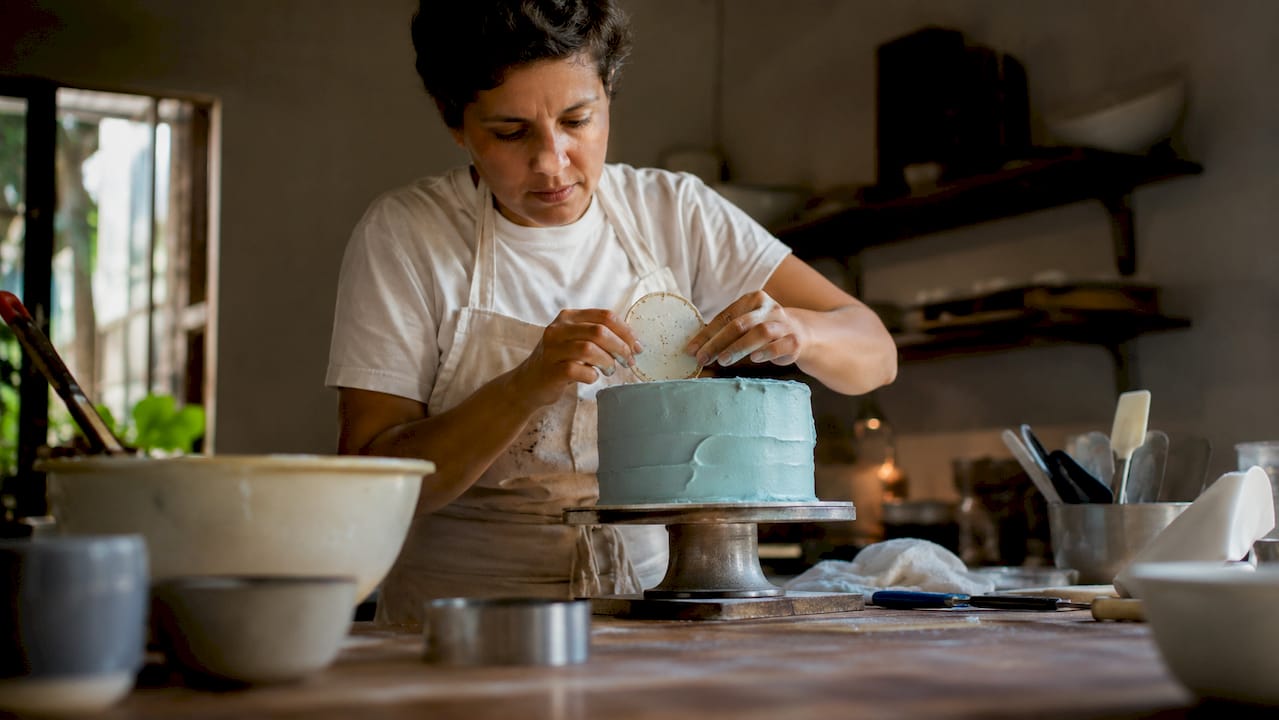
The second principle is to treat the edge and the top as a whole, not as two independent areas. An edge decorated with textured buttercream should dialogue with the central topper, not compete with it. When both areas share a color palette or material, the design is perceived as a single piece.
The third principle is to plan according to the type of celebration. A cake for a children's birthday allows for saturated colors and recognizable characters. A wedding cake calls for restraint and elegance. The cake design should extend the overall event aesthetic, including the venue, the season, and the overall concept of the celebration.
- Drip cake + fresh fruit: a combination that unites liquid texture with organic volume. It works with warm palettes (peach, raspberry, mango) or neutral ones (blackberry, blueberry, fig).
- Textured edge + sugar pearls: elegant and restrained. Ideal for weddings and anniversaries where sobriety is the protagonist.
- Smooth fondant + 3D topper: the clean base gives all the spotlight to the central figure. Perfect for children's cakes with a unique character.
- Buttercream with palette knife effect + wafer paper flowers: combines pictorial technique with a botanical element. Very popular in spring and summer celebrations.
Professional tip: Choose the main theme first and then look for a secondary element that supports it, never the other way around. If you start by choosing two themes of equal weight, the design loses visual hierarchy.
How to combine colors, textures, and flavors in a themed cake?
Colors are the first element the eye processes. Selecting colors that respect the celebration's palette avoids visual clashes and gives coherence to the whole. The practical rule is to work with a palette of three tones: a dominant color, a secondary one, and an accent one. For example, navy blue, off-white, and gold for an elegant adult celebration.
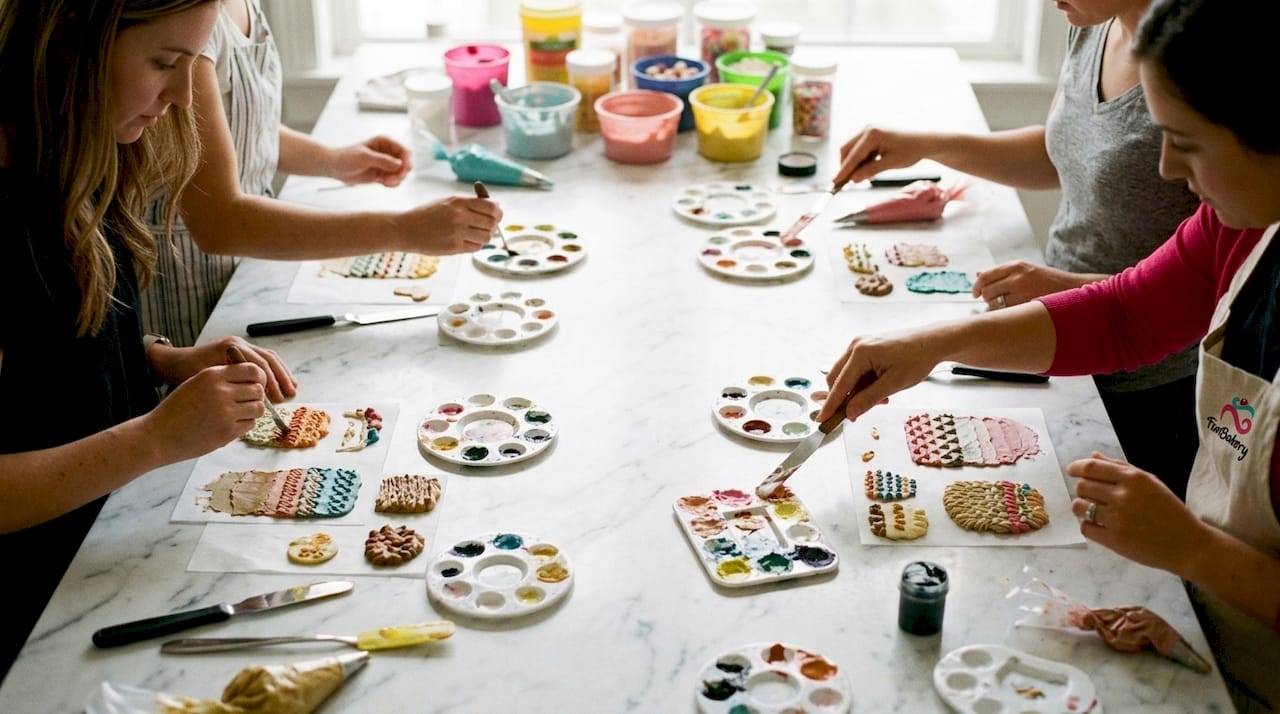
Textures add depth without the need for more colors. Buttercream allows for smooth, spatula-textured, or rustic-effect finishes. Fondant gives perfectly flat surfaces, ideal for printing edible wafer paper. Chocolate or caramel drip introduces a fluid element that contrasts with solid surfaces. Mixing more than two different textures on the same cake requires a lot of precision so as not to lose unity.
The combination of flavors is also part of the thematic design, although many neglect it. A tropical-themed cake gains coherence if the sponge is coconut and the filling is mango. A superhero cake for children works better with straightforward flavors like chocolate or vanilla, which everyone likes. The 2026 gastronomic trends point to seasonal ingredients and recognizable flavors over risky combinations.
- Monochromatic palette: different shades of the same color. It provides sophistication and is difficult to ruin.
- Complementary palette: opposite colors on the color wheel (blue and orange, green and red). It creates visual impact, but requires balance in proportions.
- Analogous palette: adjacent colors (pink, peach, coral). It conveys warmth and natural harmony.
Professional tip: Before decorating, print or draw a miniature of the design with the real colors. What seems balanced in your head can turn out unbalanced on paper, and much more so on the cake.
Techniques and tools for decorating cakes with multiple themes
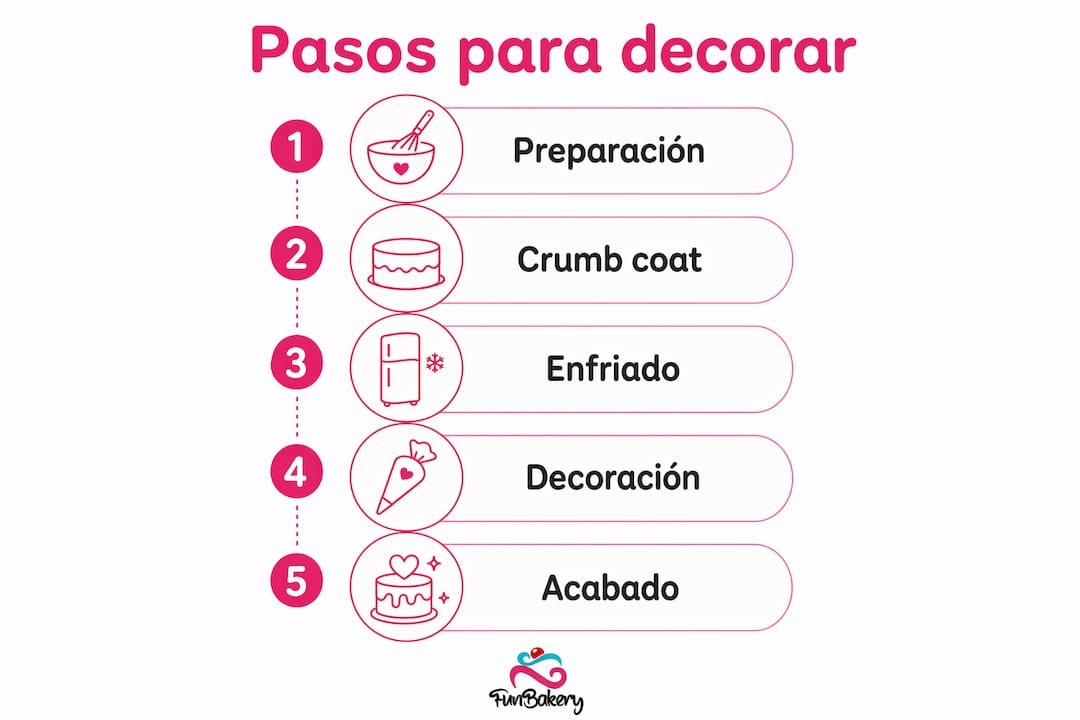
The technical foundation of any combined decoration is the crumb coat. Applying a crumb coat and cooling it well before decorating prevents crumbs from contaminating the outer layer and decorative elements from sliding. Without this base, no decoration technique performs to its full potential.
Fake tiers, known in the industry as dummies, are a standard tool in 2026. Dummies allow you to achieve height and presence without the need to bake all the tiers. This reduces costs and simplifies logistics, especially at large events where the cake serves a visual function as much as a gastronomic one.
| Technique | Main tool | Difficulty level | Ideal for |
|---|---|---|---|
| Drip cake | Melted chocolate, spoon, or squeeze bottle | Medium | Birthdays, informal celebrations |
| Textured buttercream | Angled spatula, pastry comb | Medium | Weddings, anniversaries |
| Smooth fondant | Rolling pin, fondant smoother | High | Cakes with wafer paper or 3D figures |
| Sugar pearls | Tweezers, edible glue | Low | Elegant and minimalist finishes |
| 3D fondant or gum paste figures | Molds, modeling tools | High | Themed children's cakes |
Edible wafer paper and sugar paper are the techniques that have grown the most in recent years. They allow you to transfer any image, photograph, or graphic design directly to the surface of the cake with complete precision. They are especially useful when the theme includes characters with fine details that would be impossible to reproduce by hand. Funbakery offers personalized designs with photo and name to integrate any theme into cakes and cupcakes.
Professional tip: If you use fondant and wafer paper on the same cake, apply the wafer paper just before serving. The moisture from the fondant can alter the colors of the print if left for too long.
Common mistakes when combining themes on cakes and how to avoid them
The most frequent mistake is decorative overload. Overloading the cake with too many elements produces a visually chaotic result that no photo filter can save. The solution is not to add more, but to edit with judgment until you are left only with what adds value.
The second mistake is ignoring the overall aesthetic of the event. The cake does not exist in isolation: it shares space with the room decoration, the tableware, the flowers, and the rest of the dessert table. Integrating the cake into an overall concept with cookies, macarons, or cupcakes that repeat the same palette and theme balances the whole and reduces the pressure on the main cake.
Technical mistakes in the base are the most costly because they are discovered late. A cake without a proper crumb coat or without the necessary cooling time loses stability when heavy decorations are added. These are the most common technical failures and how to avoid them:
- Skipping the crumb coat: always apply a thin first layer of buttercream and refrigerate for at least 30 minutes before the final layer.
- Decorating while warm: the cake must be completely cold before any decoration. Residual heat melts the buttercream and displaces the elements.
- Using too many colors without hierarchy: define a dominant color and limit the others to supporting roles.
- Ignoring the weight of the decorations: heavy 3D figures need internal support (wooden skewers or food-safe plastic rods) so they do not sink.
- Mixing incompatible styles: a rustic design with ultra-modern elements creates dissonance. Choose a base style and maintain coherence.
«The big mistake is trying to make the cake do all the creative work. The cake should interact with the other elements of the celebration, not replace them.»
The 2026 trends in dessert decoration confirm that artisanal quality and harmony with the event concept outweigh the impact of the quantity of decorative elements.
Key points
Combining themes on cakes requires limiting the decorative elements, planning from the event concept, and applying a proper technical base to guarantee professional results.
| Point | Details |
|---|---|
| Limit decorative elements | Use a maximum of 2–3 main elements to avoid visual overload. |
| Plan from the event | Adapt the palette, style, and theme to the overall aesthetic of the celebration. |
| Apply crumb coat | Cool the cake well before decorating to securely set all elements. |
| Use dummies thoughtfully | Fake tiers provide height and presence without increasing costs or complexity. |
| Integrate the cake into the table | Coordinate with cupcakes, cookies, or macarons to balance the overall visual. |
What I have learned after years of designing themed cakes
When someone asks me for a cake with three different themes, my first reaction is not to say yes. My first reaction is to ask which one is the most important. That uncomfortable question is the most useful thing I can do. The designers I admire most start by understanding the client's overall vision before proposing anything. Without that vision, any combination is a shot in the dark.
The most common trap I see is confusing variety with creativity. Adding more elements does not demonstrate more talent. On the contrary: editing with judgment, keeping only the essentials, and executing them with technical precision is what distinguishes professional work from amateur work. A cake with two well-chosen and perfectly executed elements will always outperform a cake with eight mediocre elements.
I have also learned that the client does not always know what they want until they see it. That is why I recommend showing visual references from the beginning and asking about the space where the cake will be served. A spectacular cake in an intimate room can seem excessive. A discreet cake in a large wedding hall can get lost. Context changes everything.
My most honest advice: plan ahead, limit the elements, and let the technique speak for itself. Elegance is not added, it is edited.
— David
Wafer paper and personalized design for themed cakes at Funbakery
When you have a clear concept for your cake, the next step is to find the decoration that executes it with precision. Funbakery specializes in personalized edible wafer paper for cakes, cupcakes, and muffins, with designs that include photographs, names, ages, and any theme you need.

Funbakery's catalog covers everything from superheroes and children's characters to themes for adults, hobbies, and special celebrations. The personalized design service allows you to create any custom image with a professional finish, ready to place directly on the cake. It is the fastest and cleanest way to integrate a complex theme without the need to model fondant or master advanced painting techniques.
Frequently asked questions
How many themes can be combined on a cake?
It is recommended to combine a maximum of two themes, with one clearly dominant and the other as support. More than two themes of equal weight produce visual overload and detract from the design's coherence.
What is the crumb coat and why is it necessary?
The crumb coat is a thin layer of buttercream that covers the entire cake before the final decoration. It sets the crumbs, stabilizes the surface, and prevents decorative elements from sliding or losing their shape.
How do I choose the color palette for a themed cake?
Work with three tones: one dominant, one secondary, and one accent. The palette should match the overall colors of the event so that the cake integrates into the decorative whole.
What are fake tiers or dummies used for in cakes?
Dummies are non-edible tiers that give height and presence to the cake without the need to bake more sponge. They are standard at weddings and large events where visual impact is as important as flavor.
Do edible wafer papers work with any type of frosting?
Edible wafer papers adhere best to smooth fondant or firm buttercream. On very moist or greasy frostings, the colors can transfer or the edges can curl, so it is advisable to apply them shortly before serving the cake.