In summary:
- Food printing allows edible images to be transferred to cakes and cookies with high precision.
- This technology uses certified inks made from natural ingredients, applied to materials such as rice paper or sugar sheet.
- Success in decorating depends on properly preparing the cake surface, maintaining the printer, and using safe materials.
Food printing is the technology that allows edible images to be transferred to cakes, cupcakes, and cookies with precision and without altering their flavor. The process uses inks made from certified food coloring and materials such as rice paper or sugar sheet. The fundamentals of food printing combine specialized equipment, safe materials, and proper surface preparation. Mastering these three elements is what separates an ordinary decoration from a professionally finished result, whether at a birthday party at home or in a bakery with daily production.
How the fundamentals of food printing work in baking
A food printer works very similarly to a conventional paper printer. The difference lies in the cartridges: instead of industrial ink, they use certified edible ink with food colorings approved for human consumption. The printing material also changes, moving from regular paper to rice paper, sugar sheet, or fondant.
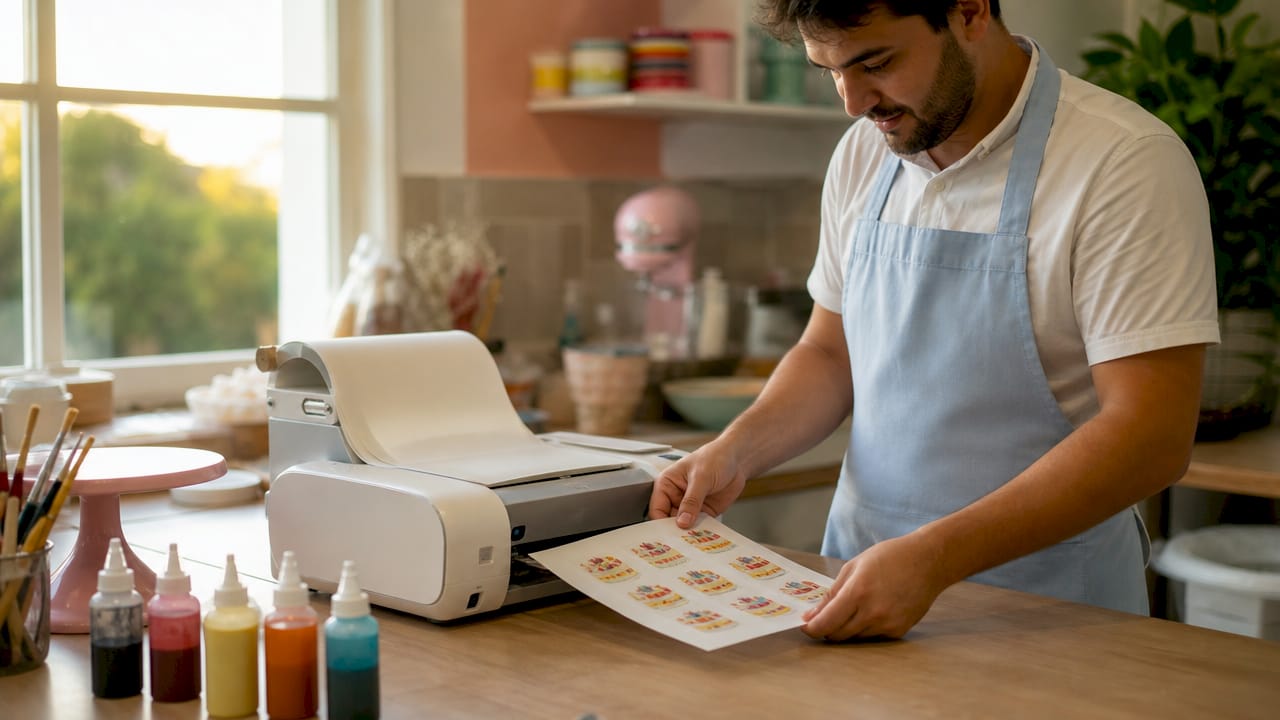
The process is divided into two main methods: direct printing and indirect printing. In direct printing, the image is applied directly to the surface of the cake without any intermediary, which requires a flat surface with controlled moisture. In indirect printing, the image is printed on a separate edible material, such as rice paper, which is then applied to the cake. This second method is the most commonly used in home baking and small-scale production.
The steps of the printing process
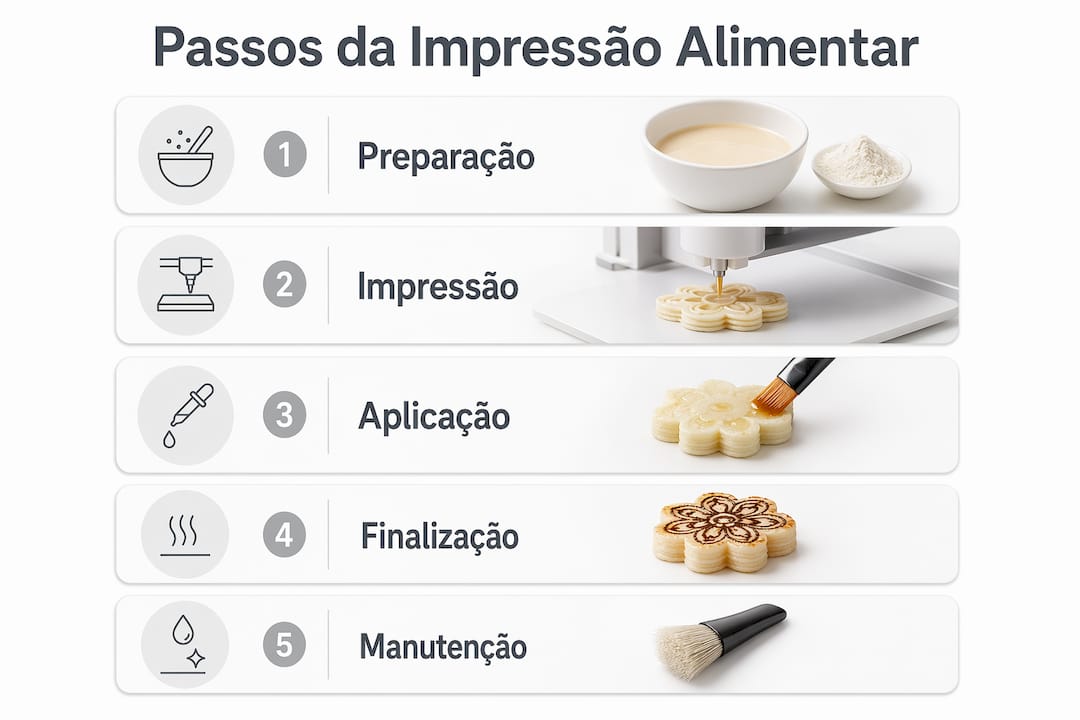
- Image preparation: The digital file is edited in an image program, such as Adobe Photoshop or Canva, adjusting the resolution, colors, and dimensions to fit the size of the cake.
- Printer setup: The edible ink cartridges are installed, and the type of material is selected in the print settings.
- Printing on the material: The rice paper or sugar sheet is placed in the tray, and the print is executed.
- Application to the cake: The printed material is placed on the surface of the cake, which must be slightly moist so that it adheres without bubbles or creases.
- Finishing: After application, the material gradually blends with the frosting, becoming a visual part of the cake.
The ink viscosity and surface moisture are the two technical factors that most affect the final quality. A surface that is too moist blurs the image; a surface that is too dry prevents proper adhesion and compromises color clarity.
Professional tip: Before applying the rice paper, apply a thin layer of royal icing or buttercream to the surface of the cake. This layer creates the ideal moisture for perfect adhesion without blurring the print.
What materials and edible inks ensure food safety?
Food-grade edible ink is formulated without heavy metals or harmful chemicals. Certified natural inks maintain image clarity and precision without compromising the food's flavor. The plant-based base and natural colorings are the ingredients that define an ink safe for consumption.
The main materials used in food printing are:
- Rice paper: Made from rice starch, it is the most common material. It is flavor-neutral, compatible with most modified printers, and dissolves easily on moist frostings.
- Sugar sheet: Thinner and more flexible than rice paper, it adapts better to curved surfaces. It produces more vivid colors and is ideal for cakes with fondant frosting.
- Fondant: It can be used as a direct material in printers with an adjustable tray, allowing for thicker, embossed applications.
- Chocolate: Some specialized printers print directly on tempered chocolate, creating decorations with a glossy finish.
Printer maintenance is just as important as ink quality. Non-edible ink residue in the print heads poses a real risk of contamination. Cleaning the print heads after each use and exclusively using certified food cartridges are mandatory practices, not optional.
Professional tip: Never use cartridges that have contained conventional ink in a food printer. Cross-contamination is invisible but dangerous. Always reserve a printer exclusively for food use.
What are the practical applications of food printing at parties?
Food printing transforms party decorations by allowing detailed customization on cakes, cupcakes, and cookies with photos, logos, and illustrations. The visual result is immediate, and the process does not alter the food's flavor or texture. This combination of aesthetic impact and flavor neutrality is the main benefit for bakers and those who organize celebrations.
The most common applications include:
- Themed children's parties: Printing cartoon characters, superheroes, or games directly on the main cake or individual cupcakes.
- Personalized birthdays: Photos of the birthday person with their name and age printed on rice paper and applied to the cake.
- Corporate events: Company or brand logos printed on cookies or cupcakes as gifts at events and launches.
- Weddings and special celebrations: Monograms, floral illustrations, or photos of the couple applied to multi-tiered cakes.
The food printing technology also allows for the production of large volumes with visual consistency, which is crucial for bakers who work with event orders. A baker who previously needed hours to paint decorations by hand can now replicate the same design on dozens of pieces in minutes. This agility represents a real competitive advantage for baking businesses that want to differentiate their offerings in the market.
What technological innovations are shaping the future of food 3D printing?
Food 3D printing goes far beyond cake decorating. Over 30 months, Embrapa developed plant-based inks using 140 genetic resources that can replicate the nutritional composition of animal proteins. The result was products such as vegan salmon, plant-based caviar, and lab-printed squid rings with nutritional profiles equivalent to the originals.
This research paves the way for applications that combine aesthetics and nutrition in a controlled manner. Food printing can precisely adjust texture and nutrients, becoming a tool for specific functional diets, such as those for patients with dysphagia or athletes with precise caloric needs. This represents a paradigm shift: printing is no longer just visual but also nutritional.
| Application area | Technology used | Main benefit |
|---|---|---|
| Baking and parties | Printer with edible ink and rice paper | Fast visual customization without altering flavor |
| Functional nutrition | 3D printing with enriched plant-based inks | Precise nutritional control per serving |
| Vegan products | Inks with plant-based proteins and lipids | Replication of animal-based foods |
| Home use | Adapted compact printers | Accessible small-scale customization |
| Industrial scale | Automated food printing systems | High-volume production with complete consistency |
“Food printing technology combines aesthetic customization with nutritional enrichment, paving the way for healthier and more sustainable foods.” — Embrapa, 2026
Trends point toward increasingly accessible home printers that will allow anyone to customize cakes at home with the same quality as a professional bakery. Sustainability is also part of the equation: inks made from local biodiversity reduce dependence on imported ingredients and add value to regional natural resources.
Main conclusions
Food printing requires certified materials, properly prepared surfaces, and rigorous printer maintenance to ensure high-quality and safe results.
| Point | Details |
|---|---|
| Essential materials | Rice paper and sugar sheet are the most versatile materials for printing on cakes. |
| Ink quality | Always use certified edible inks without heavy metals or industrial colorings. |
| Surface preparation | The moisture of the frosting determines the clarity of the print; it should be neither too moist nor too dry. |
| Printer maintenance | Clean the print heads after each use and reserve the printer exclusively for food. |
| Practical applications | From children's parties to corporate events, food printing personalizes any celebration quickly. |
What I learned after years of working with food printing
The biggest pitfall for beginners is underestimating surface preparation. Everyone focuses on the printer and the ink, but the final result depends 50% on the condition of the cake frosting. I have seen experienced bakers get blurry prints simply because the buttercream was too fresh and moist.
The second most common mistake is using a printer shared with conventional cartridges. Cross-contamination has no smell or color, but it exists. A printer dedicated exclusively to food use is not a luxury; it is a minimum safety requirement.
For those just starting out, my advice is simple: start with rice paper on fondant. It is the most forgiving combination, produces vivid colors, and adheres well even with some variation in moisture. Only after mastering this foundation does it make sense to try sugar sheet or direct printing.
The potential of this technique for small bakeries is enormous. A baker who masters the fundamentals of food printing can offer a product that no industrial pastry shop can replicate: true personalization, with the right photo and name, on the right cake, for the right person. That emotional value is what customers pay for and what makes them return.
— David
Custom edible sheets for your next celebration
Funbakery produces custom edible sheets and sugar paper with photos, names, and ages for cakes, cupcakes, and cookies. Each order is prepared with certified edible inks and printed on professional-quality materials.
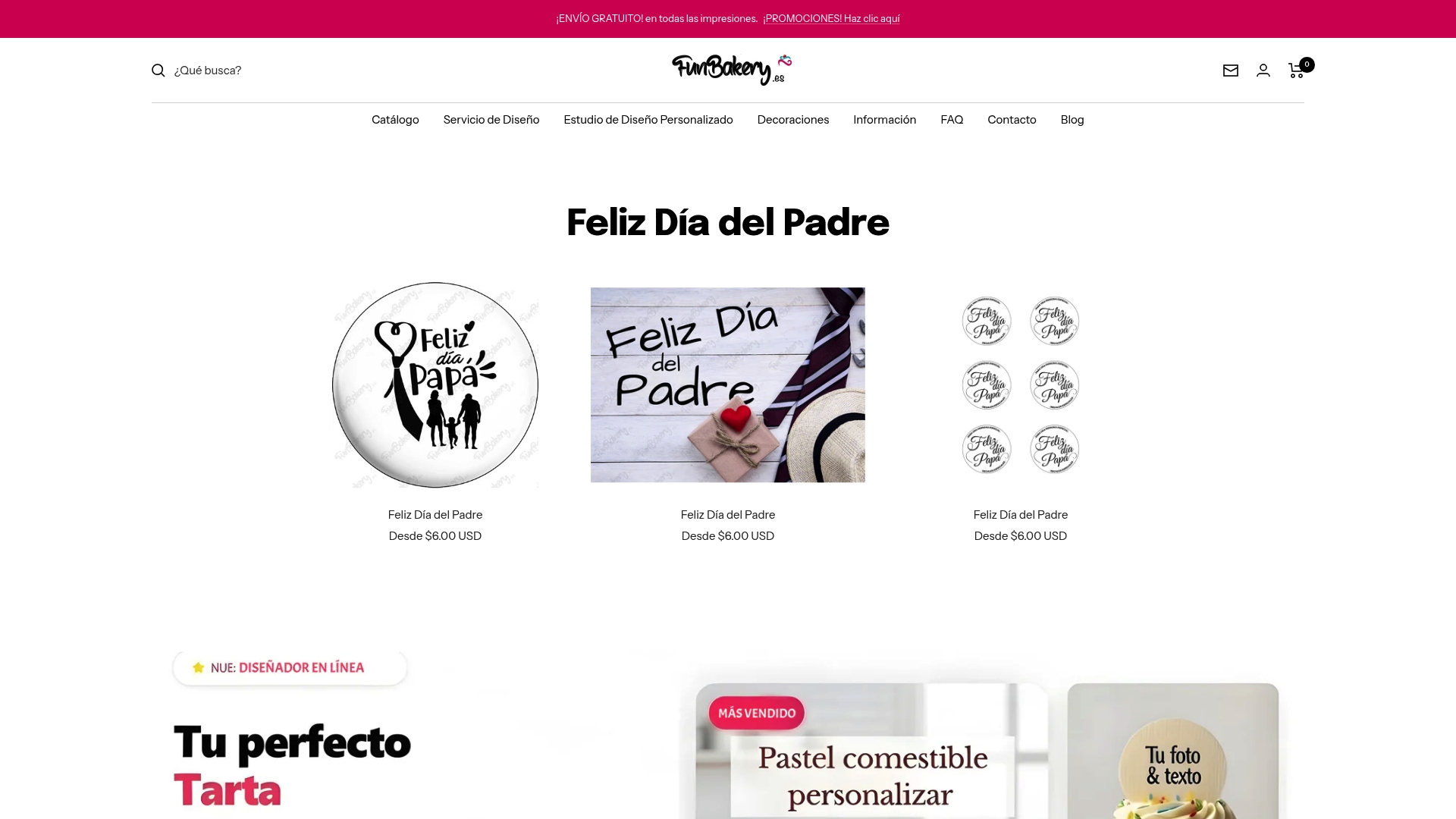
The catalog includes ready-made themed designs, from superheroes to children's characters, and a custom design service where Funbakery designers create any image to order. The order is placed online, with fast delivery so you have everything ready in time for the party. Visit Funbakery and choose the right format for your cake.
Frequently asked questions
What is food printing and how does it work?
Food printing uses modified printers with edible ink cartridges to transfer images to materials such as rice paper or sugar sheet. The printed material is then applied to the cake or cupcake.
Does edible ink alter the flavor of the cake?
No. Certified edible inks are formulated to maintain flavor neutrality and do not interfere with the food's texture or aroma.
What is the best material for printing on cakes?
Rice paper is the most versatile and easiest material to use, compatible with most food printers and with buttercream or fondant frostings.
Can I use any printer to print on food?
No. The printer must be modified exclusively for food use, with certified edible ink cartridges. Using a conventional printer poses a risk of chemical contamination.
How long does a printed image on a cake last?
The image remains stable for 2–3 days under normal storage conditions. Direct exposure to moisture or heat can cause the colors to fade more quickly.