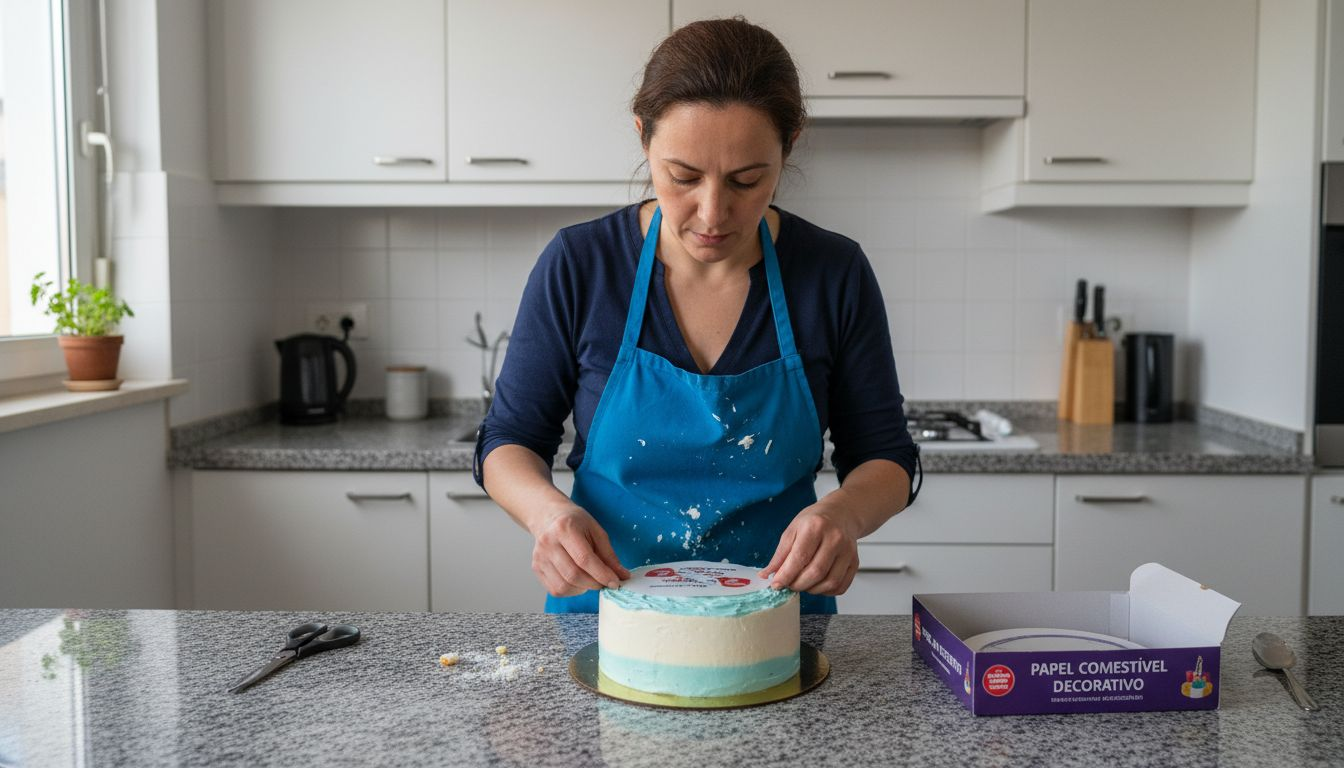
Edible photos have revolutionized the way cakes and desserts are decorated for special celebrations. Many parents and event organizers do not know exactly how these custom prints work to transform ordinary cakes into visual masterpieces. This comprehensive guide will explain the technology behind edible printing, the materials involved, application techniques, and practical tips for achieving professional results at weddings, birthdays, and any memorable event.
Table of Contents
- What is the concept of edible photos?
- Factors affecting the quality of edible photos
- How to apply edible photos to cakes and desserts for celebrations
- Comparison of edible printing materials and techniques
- Personalize your cakes with edible photos at FunBakery
- Frequently Asked Questions
Key Points
| Point | Details |
|---|---|
| Definition and use | Edible photos are images printed with food-safe ink on sugar paper or fondant to personalize cakes and cupcakes. |
| Printing technology | Quality depends on the type of printer, ink quality, and food surface. |
| Correct application | A smooth fondant base, precise cutting, careful placement, and adequate drying time are required. |
| Common problems | These include printer jams, bleeding colors, blurry images, and adhesion issues due to moisture. |
| Customization options | Multiple materials and techniques are available depending on the type of event, desired design, and available budget. |
What is the concept of edible photos?
An edible photo is an image printed with edible ink on sugar paper or fondant specially designed for baking. This technological innovation allows any digital photograph to be transferred to the surface of cakes, cupcakes, cookies, and other baked desserts.
Printing is carried out using printers adapted with edible inks approved for human consumption. These printers work similarly to conventional ones but use cartridges with certified food colorings.
Edible paper is an ultra-thin sheet made from potato starch or rice flour. This transparent or white base adheres easily to glazed or fondant-covered surfaces. Its texture allows the printed image to blend perfectly with the dessert without altering the flavor.
Main applications of edible photos:
- Birthday cakes with photographs of the guest of honor
- Wedding cakes with portraits of the couple
- Corporate cupcakes with company logos
- Personalized cookies for baby showers
- Theme desserts with movie or superhero characters
This technology democratizes professional cake decorating. You no longer need to be an expert baker to create striking and memorable designs for your celebrations.
Factors affecting the quality of edible photos
The printer's resolution directly determines the sharpness and detail of your final image. Low-resolution printers produce pixelated results that ruin photographs with faces or small text. A minimum resolution of 300 DPI guarantees professional images with defined edges.
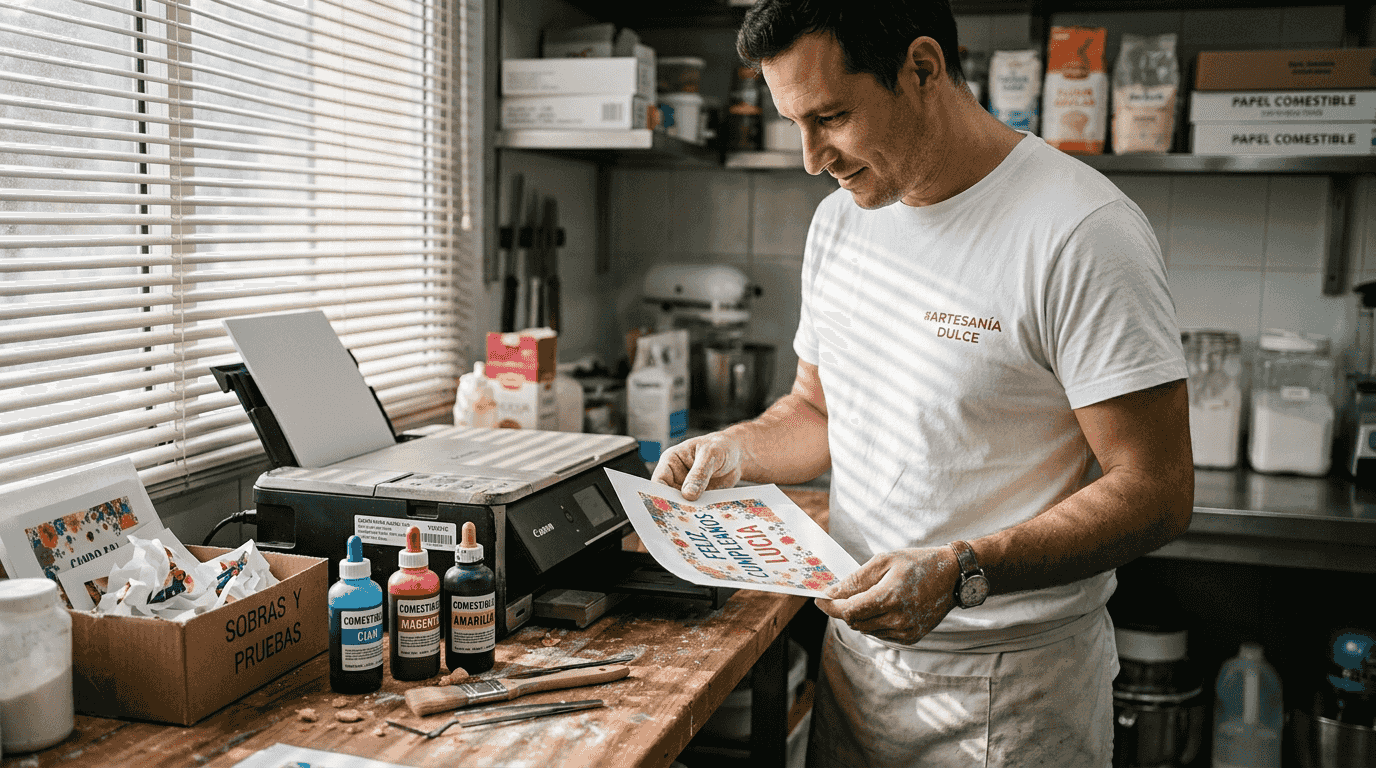
Superior-quality edible inks maintain vibrant colors without fading or bleeding. Inexpensive inks tend to produce dull tones and may bleed when they come into contact with moisture. Certified cartridges contain glycerin and propylene glycol that stabilize the food colorings.
The surface of the dessert greatly influences the adhesion of the edible photo. Smooth fondant provides the best base because its uniform texture prevents air bubbles. American frosting may work if it is perfectly smoothed and firm. Rough or creamy surfaces cause wrinkles and distortion in the image.
Common problems and their causes:
- Printer jams due to dry cartridges or clogged nozzles
- Bleeding colors due to excess moisture in the air
- Blurry images caused by poor-quality edible paper
- Detachment of the photo due to poor adhesion to the frosting
- Premature fading due to exposure to direct sunlight
Professional tip: clean the print heads weekly with a cleaning solution specifically designed for edible inks. Perform a test print each time before printing your final design.
Preventive maintenance and the use of certified materials drastically reduce failures. Store ink cartridges vertically in a cool, dry place. Never allow the print heads to dry out completely between uses.
How to apply edible photos to cakes and desserts for celebrations
Prepare your cake with a completely smooth base of fondant or firm frosting. The surface must be free of imperfections, crumbs, or grease. A professional fondant smoother creates the ideal texture for receiving the edible photo.
Cut the printed image following the exact outline of the design with clean, sharp scissors. Leave a small margin of paper if you plan to cover the edges with decorative elements. Handle the edible paper with completely dry hands to prevent it from dissolving.
Carefully remove the protective backing from the edible paper just before applying it. Place the edible photo from one end to the other in a continuous motion. This method prevents the formation of air bubbles trapped under the surface.
Detailed steps for perfect application:
- Position the photo on the cake without pressing initially
- Smooth it from the center toward the edges with a soft smoother
- Press gently in circular motions to seal it
- Remove air bubbles with a sterilized needle if they appear
- Allow the photo to dry completely for 15 to 20 minutes
Professional tip: apply an extremely thin layer of glucose syrup or edible gel to the area where the photo will go. This technique acts as a natural adhesive and significantly improves adhesion in humid climates.
Add decorative details around the edible photo to visually integrate it with the overall design. Piping borders, fondant flowers, or edible pearls frame the image professionally. These additional elements transform a simple photo into a true edible work of art.
Avoid refrigerating the cake immediately after applying the photo. The condensation that forms when removing the dessert from the refrigerator can cause the colors to bleed. Keep the cake at room temperature until serving whenever possible.
Comparison of edible printing materials and techniques
There are mainly two types of edible paper for printing: sugar paper (also called frosting sheets) and wafer paper. Each material has unique characteristics that make it more suitable for different applications in baking.
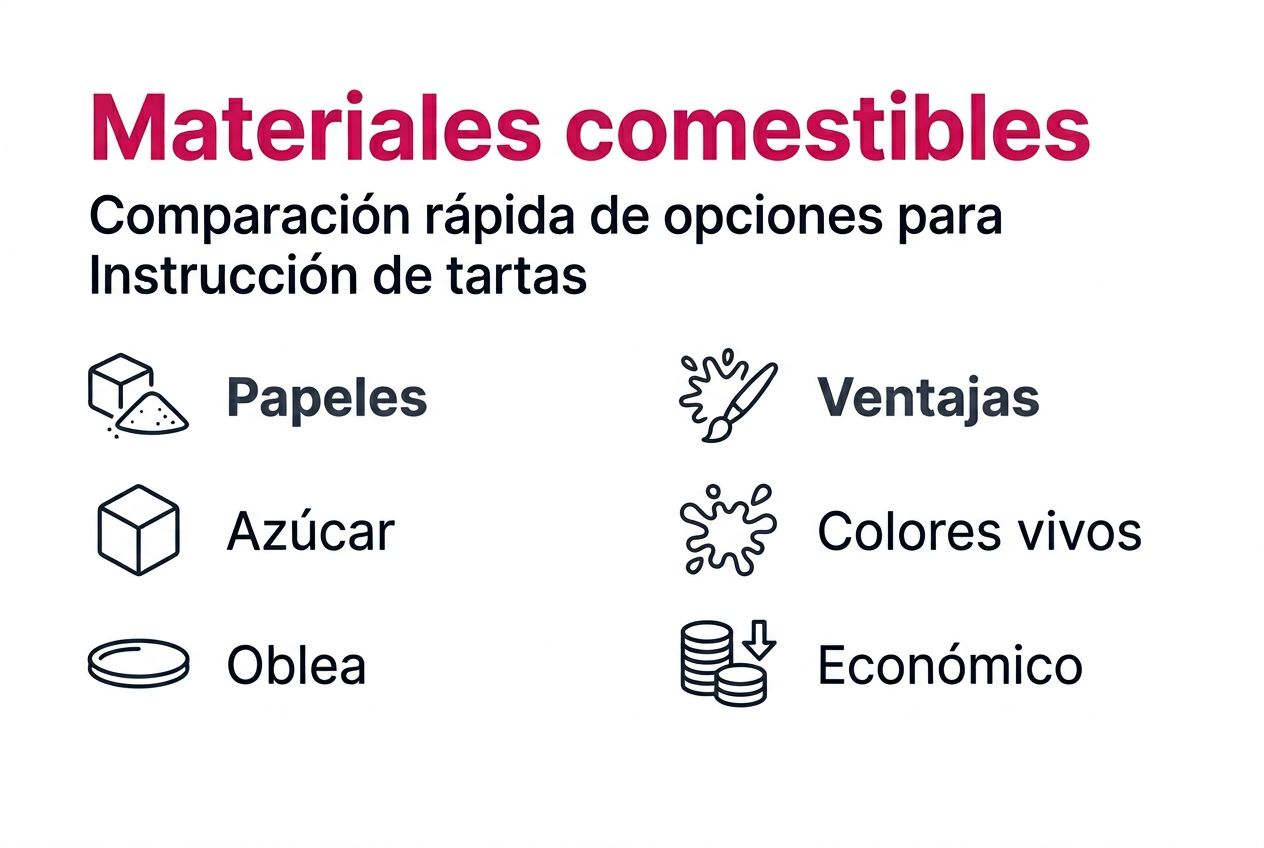
Sugar paper offers brighter and more vibrant colors because the print quality reaches photographic levels. Its texture is slightly sticky and adheres instantly to moist surfaces. It is the preferred option for realistic photographs and designs with many details.
Wafer paper is more affordable and has a texture similar to rice paper. It absorbs ink differently, producing softer, pastel colors. Its main advantage is that it can be applied to chocolate and non-sticky surfaces without the need for additional adhesives.
| Material | Advantages | Disadvantages | Best use |
|---|---|---|---|
| Sugar paper | Bright colors, high definition, adheres easily | More expensive, sensitive to moisture, thicker texture | Realistic photographs, wedding cakes, detailed designs |
| Wafer paper | Affordable, lightweight texture, less sensitive to moisture | Duller colors, lower definition, may crack | Simple decorations, cupcakes, cookies, children's desserts |
| Printed fondant | Superior durability, professional texture, stable colors | Requires a specialized printer, more complex process | Corporate events, multi-tiered cakes, warm climates |
| Royal icing with stencil | Total artistic control, no creative limits, unique texture | Does not allow photographs, requires manual skill | Abstract designs, geometric patterns, vintage decoration |
The choice of material depends on your budget, the required level of detail, and the environmental conditions of the event. In humid climates or outdoor events, printed fondant offers greater resistance. For children's celebrations on a tight budget, wafer paper provides satisfactory results.
Home printers adapted with edible cartridges are sufficient for occasional use. Baking professionals invest in Canon or Epson printers modified specifically for food inks. These commercial machines guarantee color consistency and reduce printing failures.
Personalize your cakes with edible photos at FunBakery
Ready to transform your celebrations with unique and memorable designs? FunBakery offers a wide range of personalized edible wafers perfect for birthdays, weddings, baptisms, and corporate events.

Our catalog includes popular designs of superheroes, children's characters, sports themes, and special celebrations that you can personalize with names, ages, and unique messages. Each wafer is printed with certified, highest-quality inks on premium sugar paper that guarantees vibrant colors and perfect adhesion.
If you are looking for something completely original, our custom design service creates custom images incorporating your personal photographs. Our professional designers optimize each image to achieve the best possible print quality. Fast and secure shipping brings your design directly to your door, ready to apply to your cake. Discover all the possibilities at FunBakery and turn your desserts into the unforgettable stars of every celebration.
Frequently Asked Questions
How long do edible photos last?
Edible photos maintain their optimal quality for 2 to 3 months if stored without application in airtight bags with desiccant. Once applied to the cake, they should be consumed within 48 hours to prevent the moisture from the frosting from affecting the colors. Keep the decorated cake in a cool, dry place, away from direct sunlight, which can fade the image.
Are the inks used in edible printing safe?
Edible inks are made exclusively with food colorings certified by European and American health regulators. They contain safe ingredients such as glycerin, propylene glycol, and colorings approved for human consumption. They are completely free of toxic substances and do not contain the most common allergens such as gluten, dairy, or nuts.
Can I print any image for the edible photo?
You can print any digital image you own, including personal photographs and original designs. It is recommended to use images with a minimum resolution of 300 DPI to guarantee professional sharpness. Avoid using copyrighted photographs without the express permission of the copyright holder, especially licensed movie characters or registered trademarks.
How to prevent edible photos from being ruined or becoming damp?
Apply the edible photo on a completely dry and firm fondant surface, never on wet or freshly applied frosting. Avoid refrigerating the cake immediately after placing the image because condensation will dissolve the paper. Keep the storage environment between 18 and 22 degrees with relative humidity below 60% to prevent the paper from softening or the colors from bleeding.