In summary:
- The cake has a symbolic and social function that goes beyond its flavor, taking center stage at special celebrations. Historically, it originated as a religious offering in Greece and Rome and evolved with rituals such as candles in 18th-century Germany. Personalizing the cake with images and messages strengthens social bonds and creates lasting memories at any event.
The cake is the central symbol of every celebration: the element that stops time, brings everyone together, and turns an ordinary moment into a lasting memory. Its function goes far beyond flavor. The role of celebrations in cakes is the symbolic and social function they fulfill as the centerpieces of special events, from a child's birthday to a wedding. Understanding this function changes the way you plan, decorate, and experience every celebration.
What is the historical origin of the cake in celebrations?
The cake has been at the center of human rituals for centuries. Its presence at celebrations is not a modern trend: it is a direct legacy of religious and cultural traditions dating back to classical antiquity.
In ancient Greece and Rome, round cakes were offered as tribute to the gods. The round shape represented the full moon and the candles imitated its glow, creating a symbolic connection with the divine. The smoke from those candles was considered a channel for conveying wishes to the gods. Surprisingly, this image is almost identical to what we do today when we make a wish before blowing out the candles.
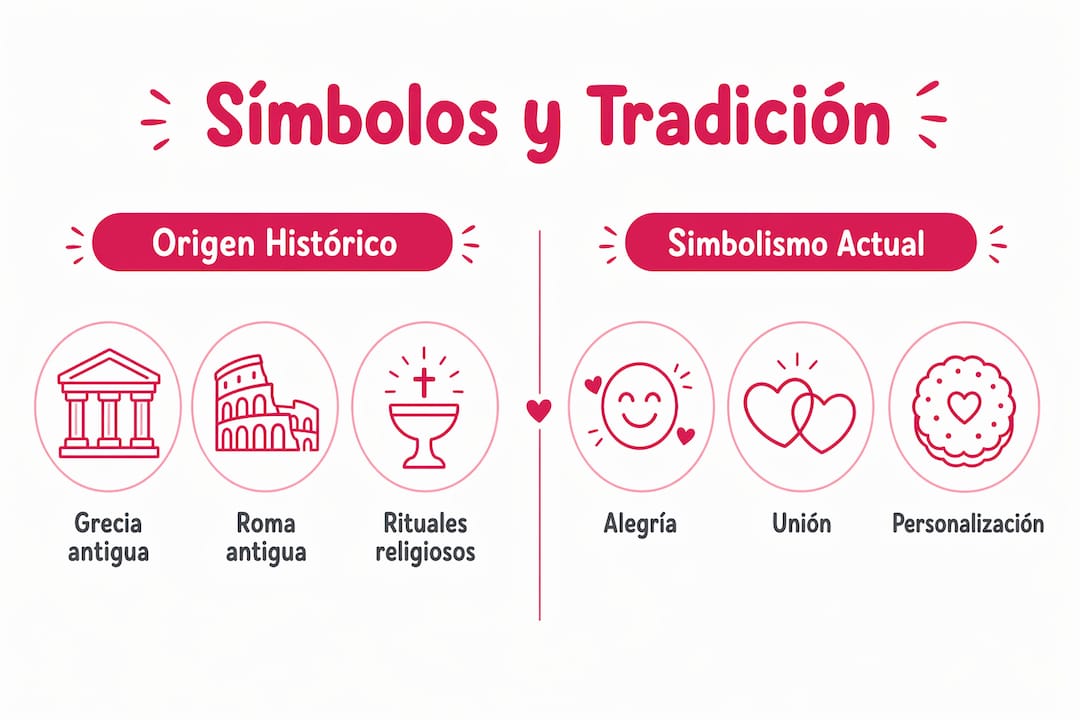
The next historical leap occurred in 18th-century Germany. Kinderfest, a children's celebration of Germanic origin, introduced the birthday candle ritual as we know it today. An extra candle called the "light of life" was placed, symbolizing the years to come. This additional candle remained lit all day and was extinguished at the end as an act of protection and continuity for the child.
These three milestones mark the evolution of the cake as a ritual object:
- Greco-Roman antiquity: round cakes as religious offerings to protective gods.
- European Middle Ages: special sweets reserved for religious holidays and high-ranking weddings.
- 18th-century Germany: Kinderfest consolidates the birthday cake with candles as a popular and family ritual.
"The cake was not born in a bakery. It was born on an altar." This phrase accurately summarizes the historical trajectory of a food that has always served to mark what is sacred, special, and unique.
What these roots demonstrate is that the cake at celebrations was never just food. From the beginning, it was an object imbued with intention, community, and meaning.
What does the cake symbolize at different types of celebrations?
The cake acts as a universal symbol of joy and unity, regardless of culture or the type of event. This symbolic function varies depending on the context, but it always fulfills the same central role: marking the most important moment of the celebration.
At birthday parties, the focus is on the individual. The cake bears the name, age, and favorite colors of the person celebrating. The act of blowing out the candles focuses all attention on that person for a few unique seconds. The cake stops conversations and unites the guests in a shared feeling of good wishes. This act of communion strengthens emotional bonds and creates memories that last for decades.
At weddings, the wedding cake has a different symbolic weight. The wedding cake is one of the most photographed elements of the event and symbolizes the union and commitment between two people. The joint cutting of the cake is a couple's ritual: their first shared act as a family. That is why couples seek a balance between elegance, flavor, and aesthetic consistency with the event's decoration.
At family gatherings and corporate events, the cake fulfills a different but equally powerful function. Here, there is no single protagonist. The cake represents the group, belonging, and collective celebration.
These differences can be summarized as follows:
- Birthdays: individual focus, maximum personalization, candle-blowing ritual.
- Weddings: couple symbolism, visual elegance, aesthetic consistency with the event.
- Family gatherings: collective celebration, shared flavor, reinforcement of the group bond.
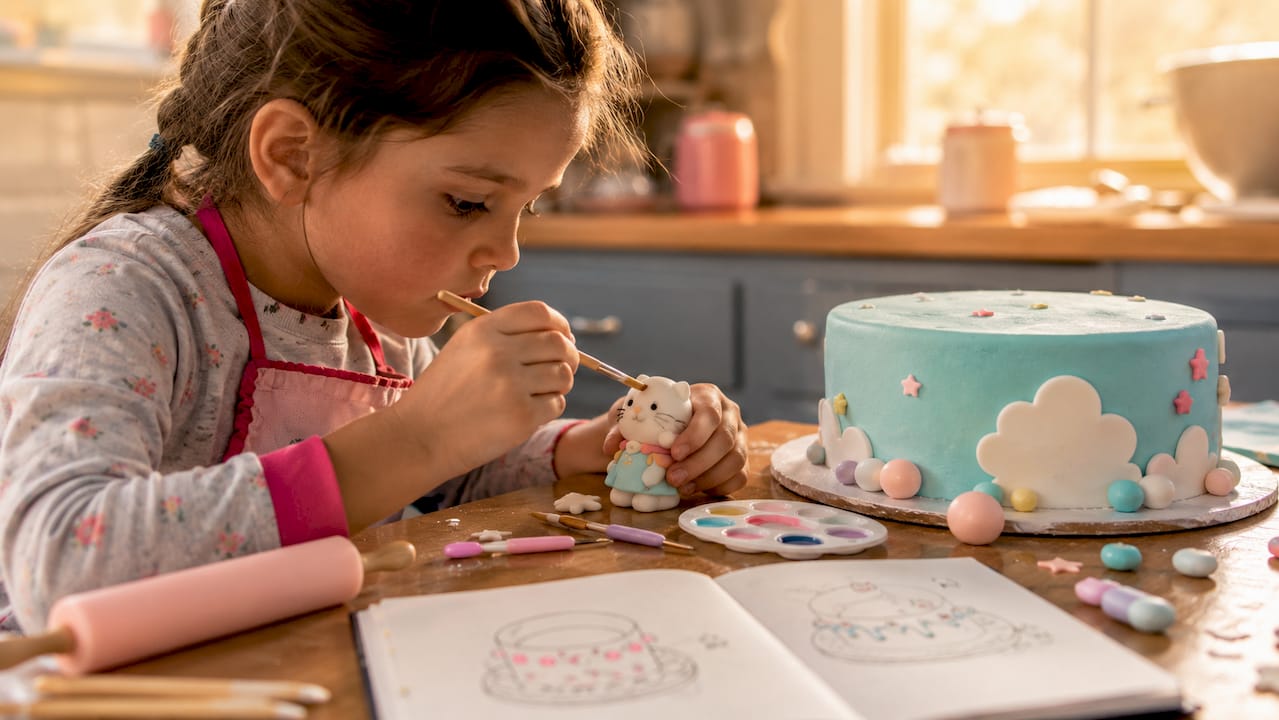
- Children's events: visual theme, bright colors, emotional connection with favorite characters.
Professional tip: If you are organizing an event with several key moments, save the cake for the climax of the celebration. Serving it too early dilutes its symbolic and social impact.
How do cakes create memories and strengthen social bonds?
The cake is the focal point that stops and unifies a celebration. At the events analyzed, the moment of cutting the cake or blowing out the candles marks a pause in the conversation and focuses all attention on the protagonist. This effect does not occur with any other element of the party.
The creation of shared memories follows a clear process:
- The cake appears: all guests look toward it. Conversations naturally pause.
- The ritual begins: everyone sings, makes a wish, blows out the candles, or performs the cut. The group acts in unison.
- It is shared: each slice distributed is an act of generosity and belonging. Eating together reinforces the bond.
- The memory remains: the photograph of the cake, the design, the flavor. All of this becomes part of the collective memory of the event.
Personalized cakes notably amplify this effect. Artisanal baking has become a narrative experience that enriches any social event. A cake that includes the birthday person's photo, their favorite character, or a special message is not just decorative. It is a statement that someone thought of that person in a specific and dedicated way.
Professional tip: Add a personalized visual element to the cake that tells something about the protagonist: their hobby, their favorite character, or a special moment from the year. That detail turns the cake into a story that guests will remember long after the party is over.
You can find concrete ideas for doing this in this guide on how to personalize cakes for unforgettable events.
What trends are shaping cake decoration for celebrations in 2026?
Personalization is the dominant trend in celebration baking in 2026. Choosing personalized cakes that tell a personal story is the most authentic way to add emotional value to the celebration. This trend has gone from being a luxury to becoming a standard expectation at birthdays, weddings, and themed events.
Professional decorating techniques have evolved to meet this demand. Professional decorating requires specific techniques such as the "crumb coat," which prevents imperfections in the crumb from ruining the exterior finish. The use of stable creams such as Italian meringue buttercream or ganache ensures that the cake maintains its presentation during long events. The choice of cream directly affects the durability of the final result.
| Technique or element | Main function | Ideal for |
|---|---|---|
| Crumb coat | Seals the crumb and prepares the surface | All types of decorated cakes |
| Italian meringue buttercream | Heat stability | Weddings and outdoor events |
| Chocolate ganache | Smooth and durable finish | Long-duration celebration cakes |
| Sugar paper or edible image | Precise visual personalization | Themed birthdays and children's events |
| Piping bag with standard tip | Multiple shapes with a single tool | Homemade decoration |
Sugar paper and edible images have gained special prominence. They allow any photograph, character, or design to be transferred directly to the surface of the cake with a professional finish. This technique is especially popular for children's party cakes, where the visual connection with favorite characters creates an immediate emotional reaction in children.
Current trends in the creative personalization of desserts for 2026 point toward designs that integrate real photographs, custom typography, and color palettes coordinated with the overall decoration of the event. The cake is no longer designed in isolation. It is designed as part of a complete visual experience.
Key points
The cake is the only element of a celebration that brings historical symbolism, social function, and emotional personalization together in a single object.
| Point | Details |
|---|---|
| Ritual origin of the cake | The cake originated as a religious offering in Greece and Rome and evolved into the German Kinderfest of the 18th century. |
| Social function of the cake | The cutting or blowing out of candles stops the celebration and focuses collective attention on the protagonist. |
| Symbolism according to the event | At weddings, it represents union; at birthdays, individual focus; at gatherings, group belonging. |
| Personalization as an emotional tool | A cake with a personal story creates more lasting memories than a generic one. |
| Techniques for long celebrations | Italian meringue buttercream and ganache are the most stable creams for prolonged events. |
What no one tells you about the cake at a celebration
I have attended hundreds of celebrations over the years, from intimate weddings to children's parties with fifty children running around the garden. And there is one thing that always happens, without exception: the cake moment stops time.
It is not a metaphor. It is literal. Conversations stop, phones are put down, and everyone looks toward the same point. No other element of the party has that power. Not the music, not the decoration, not the food.
What I find fascinating is that this effect does not depend on the size or price of the cake. It depends on whether that cake speaks to someone. I have seen impeccably designed cakes go unnoticed because they were generic. And I have seen simple cakes with an edible image print bring tears of emotion because they captured something true about the person celebrating.
My recommendation is clear: do not treat the cake as the last detail to be resolved. Treat it as the first element you define. Decide what story you want to tell with it, what it says about the person celebrating, and then build the design from there. Flavor matters, technique matters, but intention is what turns a cake into a memory.
— David
Give your celebration a cake that tells its story
A generic cake fulfills its function. A personalized cake creates the moment everyone remembers.

Funbakery specializes in personalized edible images and sugar paper that transform any cake into the visual centerpiece of your celebration. You can add photographs, names, ages, and favorite characters with a professional-quality finish. From superheroes to adult themes, the catalog covers any type of event. If you are looking for something completely custom, the Funbakery design team creates any image from scratch. Start with a personalized edible image and turn your next cake into something no one will forget.
Frequently asked questions
Why is the cake the center of every celebration?
The cake acts as a social catalyst that stops the celebration and brings everyone together in a shared moment. Its symbolic function, inherited from millennia-old traditions, makes it the most meaningful element of any event.
What is the origin of the ritual of blowing out the candles on the cake?
The ritual originated in the German Kinderfest of the 18th century, where an extra candle called the "light of life" was placed, symbolizing the years to come. The tradition of making a wish before blowing out the candles comes from the Greek belief that smoke carried wishes to the gods.
What cream is best for a long celebration cake?
Italian meringue buttercream and chocolate ganache are the most stable options for prolonged events or outdoor celebrations, as they withstand heat better and keep the visual finish intact.
How do I personalize a cake to make it more special?
Add a visual element that tells something about the protagonist: a photograph, their favorite character, or a specific message. Edible images and sugar paper allow any image to be transferred to the cake with a professional finish and without altering the flavor.
What is the difference between a birthday cake and a wedding cake?
A birthday cake focuses the spotlight on one person and prioritizes visual personalization. A wedding cake symbolizes the union of two people and seeks aesthetic consistency with the event's decoration, being one of the most photographed elements of the celebration.