In summary:
- Wafer paper is a translucent edible paper made from potato starch, used for lightweight decorations. Sugar sheet is opaque, thicker, and ideal for high-quality, long-lasting prints. Each material has specific applications depending on the cake's conditions and the desired effect.
Wafer paper and rice paper are two types of edible paper used in cake decorating, but the difference between wafer paper and rice paper goes far beyond the name. Wafer paper is made from potato starch, water, and vegetable oil, and is thin, lightweight, and translucent. Rice paper, on the other hand, is a popular term that many bakers use to refer to wafer paper in general, but in the technical context of confectionery, the correct term for opaque, durable edible paper is "sugar sheet" or "sugar paper". Knowing this distinction helps prevent purchasing mistakes and disappointing visual results.
What is the difference between wafer paper and rice paper?
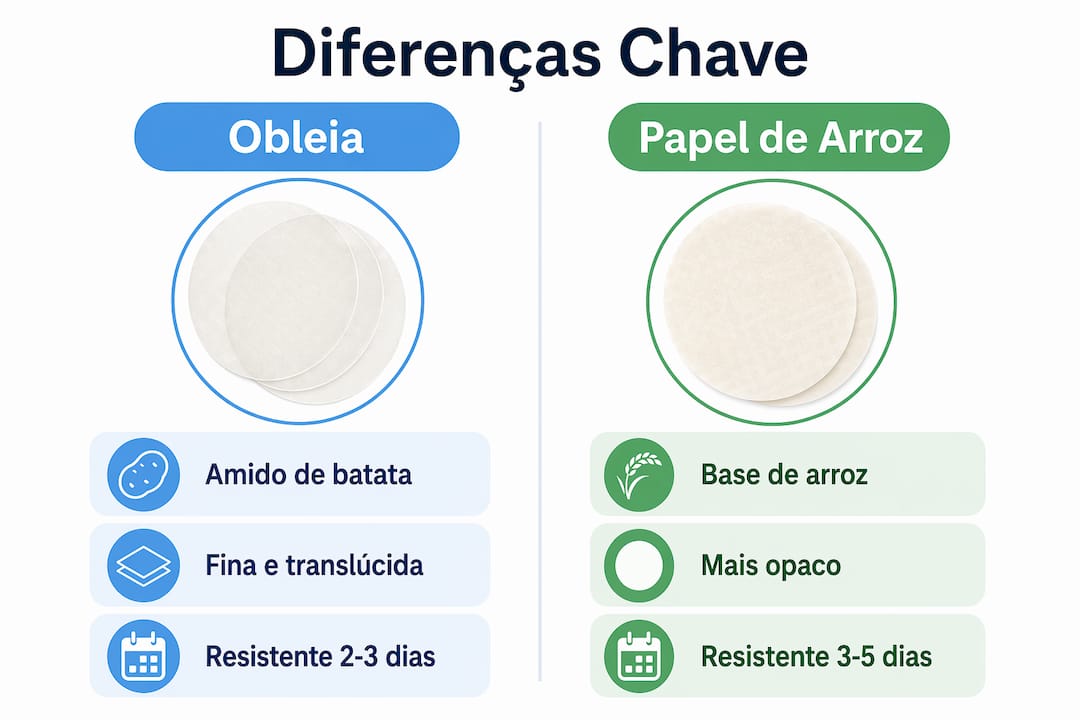
Wafer paper, known internationally as wafer paper, is made from potato starch, water, and vegetable oil. The result is a thin, lightweight sheet with a translucent appearance, almost like parchment paper. Sugar sheet, on the other hand, is opaque, thicker, and designed for high-quality printing, producing sharper, longer-lasting images.
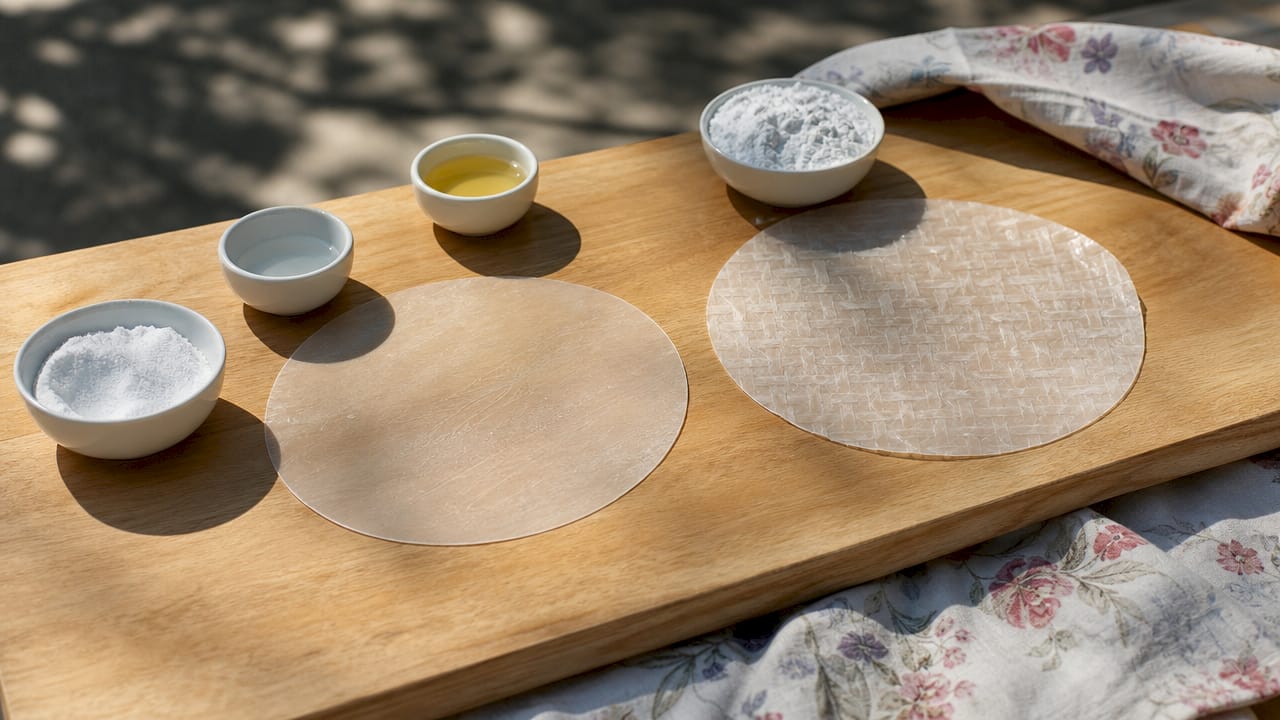
Confusion between the two materials is common. Many beginner bakers use "rice paper" to describe any edible paper, when in fact they are talking about wafer paper. Traditional culinary rice paper, used in Asian cuisine, is not the same product as confectionery wafer paper. Keeping these concepts separate saves time and money.
Composition and physical properties
Wafer paper ranges in thickness from 0.27 to 0.60 mm. This lightness is its greatest advantage for floral decorations and delicate sculptures. Sugar sheet is thicker and denser, giving it greater mechanical strength and better ink adhesion.
| Feature | Wafer paper (wafer paper) | Sugar sheet |
|---|---|---|
| Composition | Potato starch, water, vegetable oil | Sugar and starch base, with backing |
| Appearance | Translucent, almost transparent | Opaque, white |
| Thickness | 0.27–0.60 mm | Thicker and stiffer |
| Applied durability | 2–3 days on the cake | 3–5 days on the cake |
| Best use | 3D flowers, lightweight decorations | Photographic printing, vibrant images |
Durability is a deciding factor. Sugar sheet lasts 3–5 days when applied to a cake, while wafer paper lasts only 2–3 days. For orders with next-day delivery, wafer paper may be sufficient. For cakes displayed during long events, sugar sheet is the safer choice.
How does edible printing work on each paper?
The visual quality of a printed decoration depends directly on the chosen medium. Sugar sheet is opaque and produces more vibrant colors than wafer paper, which is translucent and softens tones. This means that a photograph printed on sugar sheet will have much more visual impact than the same image on wafer paper.
Wafer paper has a clear limitation in printing: its translucency causes the color of the cake's frosting to interfere with the image. On a cake covered in dark ganache, a printed wafer paper decoration may lose definition and look blurred. Sugar sheet solves this problem because its white, opaque base acts as a neutral canvas.
The ink used for printing on sugar paper is denser, ensuring maximum sharpness. On wafer paper, less ink should be applied to prevent wrinkling and distortion of the sheet. This technical difference directly affects the type of printer and color profile used.
Professional tip: When printing on wafer paper, reduce the color saturation in the print file by about 10–15% to compensate for the translucency of the medium and prevent excess ink.
Bakers working with edible printing for cakes should always test a sheet before printing the final decoration. Variations between paper brands can alter the result even with the same printer settings.
What type of decorations is each paper used for?
The choice between wafer paper and sugar sheet depends on the desired visual effect and the conditions of the cake. Each material has its natural territory.
Wafer paper is the right choice when:
- The decoration involves 3D flowers, butterflies, or lightweight sculptures, as its lightness allows it to be shaped and folded without breaking
- The desired finish is delicate and artisanal, with soft colors and an almost ethereal appearance
- The cake has a dry frosting, such as fondant or firm buttercream, that does not dampen the paper
- The budget is more limited, as wafer paper tends to be more economical
Sugar sheet is the right choice when:
- The decoration includes photographs, characters, or images with many details and bright colors
- The cake will be displayed for several hours at an event
- The surface of the cake is moist, such as ganache or whipped cream, and needs a more durable medium
- The customer wants a professional-looking result with striking colors
Wafer paper is sensitive to moisture and can curl or soften when in contact with very moist surfaces. Sugar sheet offers greater resistance on moist cakes and does not curl as easily. For those who want to explore the types of edible paper available in 2026, the variety of formats and thicknesses is already considerable.
Professional tip: Store the wafer paper in an airtight container with a silica gel packet until the moment of use. Ambient humidity, even without direct contact with the cake, can soften the sheet and make it difficult to handle.
How to use wafer paper and rice paper without mistakes
Correct application begins before touching the paper. The surface of the cake must be prepared to receive the decoration without creating bubbles or wrinkles.
To apply wafer paper correctly:
- Make sure the surface of the cake is slightly moist, but not soaked. A thin layer of buttercream or shine gel is enough to create adhesion.
- Place the wafer paper carefully, starting from the center and pressing gently to the sides to expel the air.
- Avoid folding or forcing the sheet. Wafer paper breaks easily if handled roughly.
- Apply a thin layer of shine gel over the decoration to protect the print and provide a finish.
To apply sugar sheet:
- Carefully remove the plastic backing, holding it by the corners.
- Position the sheet on the cake and press from the center outward, without dragging.
- On cakes with ganache, apply the sheet immediately after the ganache reaches room temperature, so that the adhesion is natural.
- Do not use too much shine gel on the sugar sheet, as it can dissolve the surface and smudge the print.
The breakage rate of wafer paper can be high for beginners, but it decreases with practice and the use of thin layers of shine gel to protect and seal. The correct application of shine gel is the step that most bakers ignore and that prevents the most mistakes. For those who want to delve deeper into the uses of edible paper on different types of cakes, practicing with quality materials makes all the difference.
Main conclusions
Wafer paper and sugar sheet are distinct materials with specific uses: wafer paper is used for lightweight and floral decorations, while sugar sheet ensures vibrant, long-lasting photographic prints.
| Point | Details |
|---|---|
| Different composition | Wafer paper uses potato starch; sugar sheet has a sugar base and opaque backing. |
| Durability on the cake | Sugar sheet lasts 3–5 days when applied; wafer paper lasts only 2–3 days. |
| Print quality | Sugar sheet produces more vibrant and sharper colors than translucent wafer paper. |
| Sensitivity to moisture | Wafer paper is damaged on moist surfaces; sugar sheet is more resistant. |
| Choice for beginners | Sugar sheet is easier to apply and forgives handling mistakes better. |
My perspective after years of working with edible papers
There is one mistake I see repeated constantly: bakers who buy wafer paper expecting the same visual result as sugar sheet. The frustration is almost guaranteed. Wafer paper was not made for photographic printing with saturated colors. It was made for lightness, texture, and movement. When you use it for what it really does well, such as delicate flowers or butterflies that seem to fly over the cake, the result is simply impossible to replicate with another material.
The trend for 2026 is clear: the most experienced bakers combine both materials on the same cake. They use sugar sheet for the central image and wafer paper for the decorative elements around it. This hybrid gives visual depth and texture to the whole, something that neither material can achieve alone.
For those who are just starting, my recommendation is straightforward: start with sugar sheet. It is easier to handle, forgives mistakes better, and the visual result is immediate. Wafer paper has a more demanding learning curve, especially in humid environments. Once you have confidence in its application, try wafer paper for flowers. You will quickly understand why the most creative decorators love it.
The type of cake also matters more than it seems. A cake covered in whipped cream on a hot summer day is a hostile environment for any edible paper, but especially for wafer paper. Knowing the conditions of the event before choosing the material is just as important as the application technique.
— David
Custom decorations with wafer paper and sugar paper at Funbakery
Funbakery creates custom edible decorations in wafer paper and sugar paper for cakes, cupcakes, and cookies. You can choose from hundreds of themes, from children's characters to celebrations for adults, or send a photograph and receive a custom-made decoration with a name, age, and personalized text.
The ordering process is simple and done online. Funbakery prints on wafer paper or sugar paper depending on the visual effect you are looking for, with a professional-quality finish. For birthday parties, you can view the available custom cake decorations and choose the format that best suits your cake. If you haven't decided on the decoration yet, Funbakery's design service takes care of everything.
Frequently asked questions
What exactly is wafer paper in confectionery?
Wafer paper, or wafer paper, is an edible sheet made from potato starch, water, and vegetable oil. It is thin, translucent, and used mainly for 3D flowers and lightweight decorations on cakes.
Can I print photographs on wafer paper?
You can, but the result will be less vibrant than on sugar sheet. The translucency of wafer paper softens the colors, and the color of the cake's frosting may interfere with the printed image.
Which lasts longer on the cake, wafer paper or sugar paper?
Sugar sheet lasts 3–5 days when applied to a cake, while wafer paper lasts only 2–3 days. For events held in advance, sugar sheet is the safer option.
How do I prevent wafer paper from wrinkling when applying it?
Apply the wafer paper over a slightly moist surface, press from the center outward with a gentle touch, and seal it with a thin layer of shine gel. Avoid environments with high humidity during application.
What is the best edible paper for a birthday cake with a photo?
Sugar sheet is the best choice for photographic printing. It is opaque, produces vivid colors, and adheres well to most frostings. For guidance on the ideal occasions for sugar paper, the choice also depends on the type of frosting and the display time of the cake.