In summary:
- Wafer sheets are edible sheets made of potato starch, water, and vegetable oil, used in cake decorating. Asian rice paper is a translucent and flexible material, used in savory cooking and is different from wafer sheets. Knowing the distinction avoids mistakes in decorating, ensuring better results and durability.
Wafer sheets are edible sheets made of potato starch, water, and vegetable oil, while true Asian rice paper is a thin and translucent material used in savory cooking. The difference between wafer sheets and rice paper goes far beyond the name: composition, texture, behavior in humidity, and suitability for edible printing are completely distinct. Those who decorate cakes and sweets for parties need to know this distinction before choosing the material, because a selection error compromises both the visual result and the durability of the decoration.
What is the difference between wafer sheets and rice paper?
Wafer sheets, also called oblate paper in European confectionery, are the correct material for decorating cakes with printed images. The term "rice paper" is popularly used to refer to these sheets, but it is technically incorrect. True Asian rice paper and wafer sheets are completely different products in origin, composition, and use.
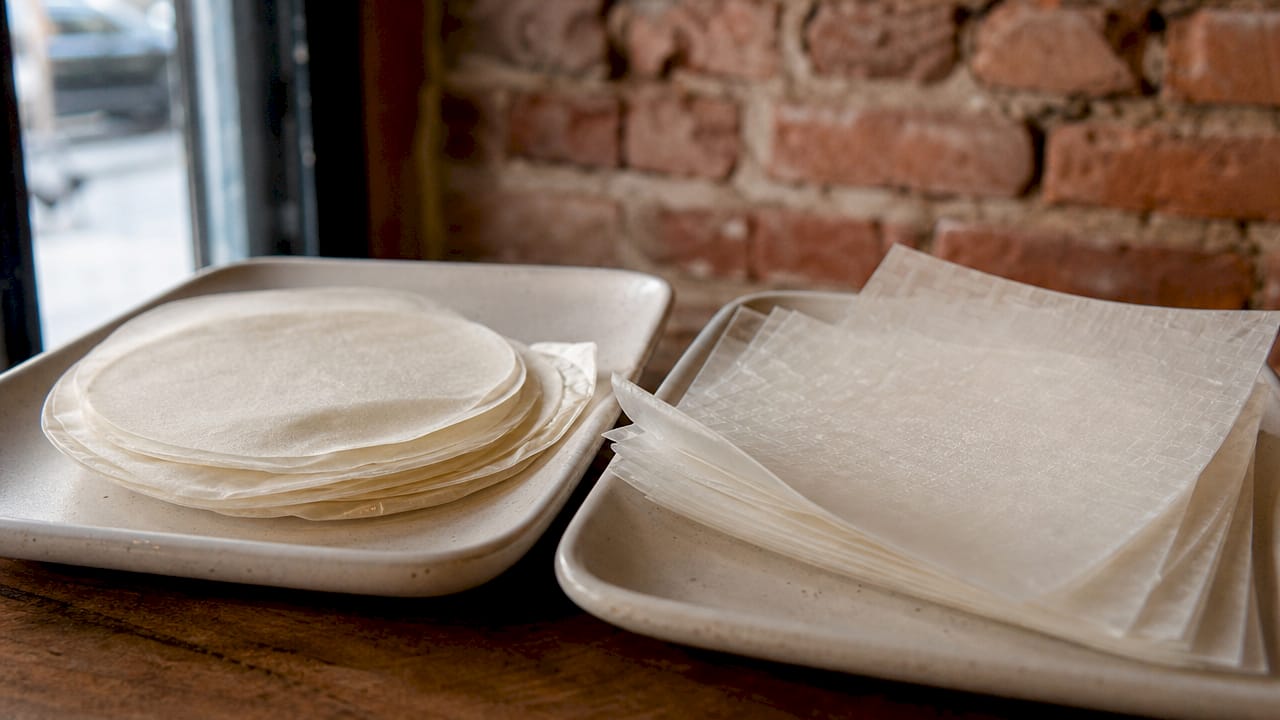
The confusion of nomenclature is common in Portugal, Spain, and Brazil. In German, the product is called "Oblatenpapier" or "Wafer Paper", terms that describe its nature more accurately. Knowing the difference between wafer paper and sugar paper, and between wafer sheets and Asian rice paper, saves time, money, and disappointing results.
What are wafer sheets and how are they used in cake decorating?
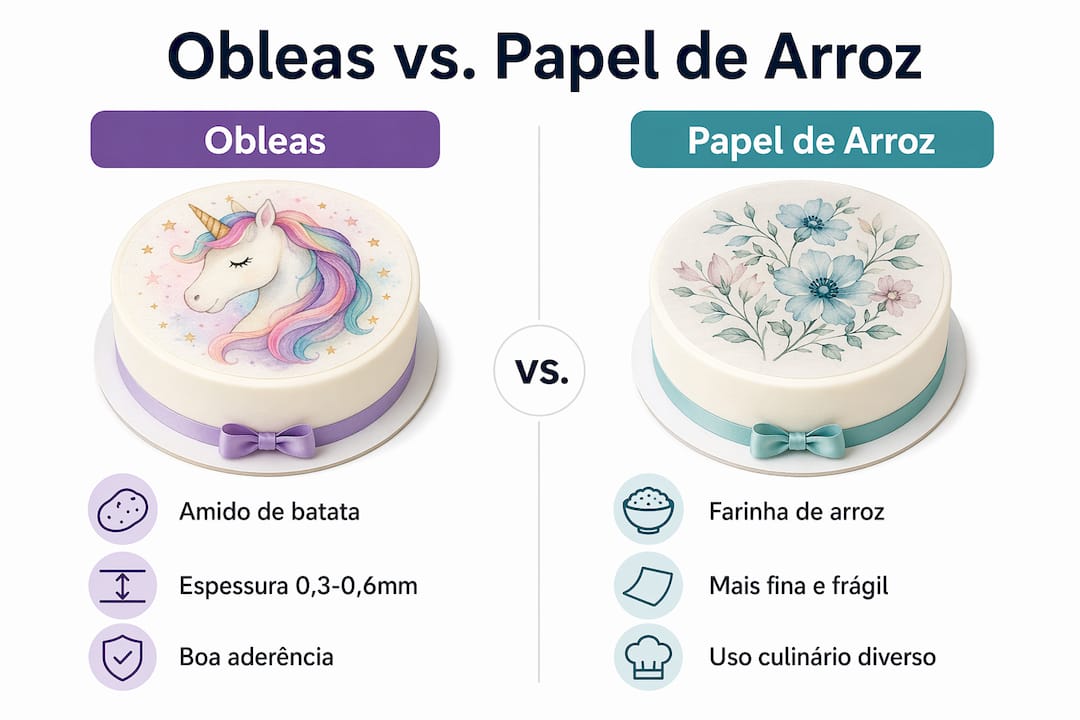
Wafer sheets are edible sheets composed mainly of potato starch, water, and vegetable oil. Their thickness varies between 0.3 mm and 0.6 mm, which determines the rigidity and the most suitable application. They are neutral in flavor, which makes them compatible with any type of cake without altering the final taste.
The main applications of wafer sheets in decorating include:
- Vertical toppers: the 0.6 mm version for toppers is indicated for elements that stand up on the cake, as it offers greater stability.
- Flat decorations: the standard 0.3 mm version adapts well to flat surfaces such as the top of cakes covered with fondant or ganache.
- Flowers and 3D shapes: the professional technique Wafer Paper Floristics uses the light and moldable properties of wafer sheets to create resistant and personalized three-dimensional flowers.
- Printing of photographs and designs: wafer sheets accept food ink from specific printers, allowing the reproduction of images in detail.
The difference between the standard and premium version lies in the density of the surface. The premium version absorbs less ink, which results in more vivid colors and sharper outlines after printing.
Professional tip: Choose the 0.6 mm thickness when you need decorative elements that stand up or hang. For flat decorations applied directly on the cake, the 0.3 mm version is sufficient and easier to cut.
What is true Asian rice paper?
True rice paper is produced from the Tetrapanax papyrifer plant and does not contain rice in its composition. It is a thin, translucent, and flexible material, traditionally used in Asian cuisine in dishes such as spring rolls. To be molded, it needs hydration, unlike wafer sheets, which are used dry.
The differences between Asian rice paper and wafer sheets are clear:
- Composition: rice paper comes from the Tetrapanax papyrifer plant; wafer sheets come from potato starch.
- Appearance: rice paper is translucent and almost transparent; wafer sheets are white and opaque.
- Culinary use: rice paper is used in savory dishes; wafer sheets are intended for confectionery and sweet decorating.
- Behavior with water: rice paper softens and becomes malleable with moisture; wafer sheets degrade quickly if exposed to moisture.
- Printing: Asian rice paper is not suitable for edible printing without specific preparation; wafer sheets are the standard support for this purpose.
The confusion between the two materials is frequent in Western regions. When a recipe or tutorial mentions "rice paper for cakes", it almost always refers to wafer sheets, not Asian rice paper. Using the wrong product results in decorations that do not adhere, dissolve, or do not accept food ink.
How to choose between wafer sheets and rice paper for decorating cakes?
The correct choice depends on the type of cake frosting, the intended visual effect, and the storage conditions. Wafer sheets are the right option for decorating cakes and sweets at parties. Asian rice paper has no practical application in decorative confectionery.
| Criterion | Wafer sheets | Asian rice paper |
|---|---|---|
| Composition | Potato starch, water, vegetable oil | Plant Tetrapanax papyrifer |
| Appearance | White and opaque | Translucent |
| Edible printing | Yes, with a food printer | Not suitable |
| Use on cakes | Decoration, toppers, 3D flowers | Not recommended |
| Behavior with moisture | Degrades quickly | Softens and molds |
Wafer sheets applied on dry surfaces such as fondant, marzipan, or firm ganache ensure better adhesion and greater durability. Moist surfaces or those with fresh cream make the wafer sheet soften and lose shape quickly.
To store wafer sheets before use, keep them in the original packaging, sealed and away from moisture. Proper sealing until use prevents them from becoming brittle and the colors from losing intensity.
Professional tip: Before applying a wafer sheet on the cake, let the fondant or ganache surface dry well. If the frosting is moist, place the wafer sheet only in the final minutes before serving.
Printing and personalization on wafer sheets for parties and celebrations
Food printing on wafer sheets is the most used method to personalize cakes for birthday parties, baptisms, and other celebrations. The quality of the result depends on the porosity of the material and the equipment used.
The porosity of wafer sheets makes the food ink spread slightly, which can reduce the sharpness of the colors compared to sugar paper. The 0.6 mm premium version has a denser surface, which absorbs less ink and produces more vibrant colors. For those who print at home, this detail makes a visible difference.
Points to consider before printing on wafer sheets:
- Equipment: food printing requires specific printers with certified food ink. The use of common household printers is discouraged for food safety reasons.
- Handling: wafer sheets are fragile. Handle them with dry hands and avoid folding or rolling before application.
- Professional quality: specialized suppliers guarantee a better result and are more economically viable for those who produce in small quantities.
| Factor | Standard wafer sheets | Premium wafer sheets |
|---|---|---|
| Thickness | 0.3 mm | 0.6 mm |
| Ink absorption | Higher | Lower |
| Print sharpness | Good | Very good |
| Recommended use | Flat decorations | Toppers and 3D flowers |
For themed parties, Funbakery offers personalized wafer sheet printing with photographs, names, and ages, with a professional quality finish.
Common mistakes when using wafer sheets and rice paper in decorating
The most frequent mistakes happen due to nomenclature confusion or lack of knowledge about the material's properties. Identifying these mistakes before starting saves time and avoids disappointing results.
-
Using Asian rice paper instead of wafer sheets. Asian rice paper dissolves on contact with moist frostings and does not accept food printing. Always confirm that the purchased product is a confectionery wafer or oblate.
-
Applying the wafer sheet on moist surfaces. Fresh creams, whipped cream, and very moist frostings degrade the wafer sheet in minutes. Always use fondant, marzipan, or firm ganache as a base.
-
Storing wafer sheets outside the packaging. Exposure to the air makes wafer sheets brittle and causes the colors to lose intensity. Always keep the packaging sealed until the moment of use.
-
Folding or rolling the wafer sheet before applying. Wafer sheets break easily if folded. Always transport them flat and handle them with care.
-
Printing at home without proper equipment. Food printing requires certified ink and specific printers. Resorting to a professional supplier guarantees food safety and better visual quality.
Knowing the uses of edible paper and its limitations is the first step to obtaining beautiful and durable decorations.
Main conclusions
Wafer sheets are the correct material for decorating cakes with printed images, while Asian rice paper is a completely different culinary product that is not suitable for decorative confectionery.
| Point | Details |
|---|---|
| Composition of wafer sheets | Made of potato starch, water, and vegetable oil, with a thickness between 0.3 mm and 0.6 mm. |
| Asian rice paper | Produced from the Tetrapanax papyrifer plant, used in savory cooking and not suitable for cake decorating. |
| Thickness choice | Use 0.6 mm for vertical toppers and 0.3 mm for flat decorations on fondant or ganache. |
| Correct storage | Keep wafer sheets sealed until use to prevent them from becoming brittle and losing color. |
| Professional printing | Specialized suppliers guarantee better quality and food safety in wafer sheet printing. |
What I learned about using wafer sheets over time
When I started working with cake decorating, I made the same mistake as most: I bought the wrong product because the name "rice paper" was everywhere. It was only when the decoration dissolved on the cake cream that I realized there was a real difference between the materials.
What surprised me most was discovering the Wafer Paper Floristics technique. Creating three-dimensional flowers with wafer sheets seems complicated, but the lightness of the material makes the process surprisingly intuitive. The wafer sheet bends without breaking when slightly warmed, and keeps its shape after cooling. No other edible paper offers this combination.
The advice I give to those starting is simple: do not store wafer sheets outside the packaging, even for a few hours. The humidity of the environment is enough to make them brittle. I learned this the hard way, with a whole box of printed wafer sheets that broke when trying to apply them. Since then, I only open the packaging at the exact moment of use.
For those who want professional results without investing in a food printer, resorting to a specialized supplier is the most sensible decision. The difference in quality is visible, and the cost per unit is much lower than it seems.
— David
Personalized wafer sheets from Funbakery for your cakes
Funbakery is a specialist in personalized edible wafer sheets for cakes, cupcakes, and party sweets. Each wafer sheet is printed with certified food ink, in thicknesses suitable for the application, with a professional quality finish.
The catalog includes ready-to-use themed designs, such as children's characters, superheroes, and special celebrations. For those who want something unique, Funbakery's custom design service creates custom images with photographs, names, and ages. You can choose between personalized wafer sheets for cakes in round, rectangular, or disc format, depending on the type of cake. For birthday parties with a specific theme, the custom designs for cupcakes are a practical option with a lot of visual impact.
Frequently asked questions
What are wafer sheets in confectionery?
Wafer sheets are edible sheets made of potato starch, water, and vegetable oil, used to decorate cakes with printed images or cut shapes. They are neutral in flavor and compatible with fondant, marzipan, and ganache.
What is the difference between wafer paper and sugar paper?
Wafer sheets are thicker, more flexible, and more resistant to handling, while sugar paper is thinner, produces more vibrant colors in printing, and dissolves more easily on contact with moisture. The choice depends on the type of frosting and the intended visual effect.
Can I use Asian rice paper to decorate cakes?
Asian rice paper is not suitable for decorating cakes with edible printing. It is a different culinary product, made from the Tetrapanax papyrifer plant, which softens with moisture and does not accept food ink without specific preparation.
How to store wafer sheets before use?
Wafer sheets should be kept in the original packaging, sealed and away from moisture. Exposure to the air makes them brittle and causes the colors to lose intensity, so the packaging should only be opened at the moment of application.
Where to find wafer sheets for cake decorating?
Wafer sheets are available in confectionery stores and specialized suppliers such as Funbakery, which offers personalized wafer sheets with printing of photographs, names, and themed designs for parties and celebrations.