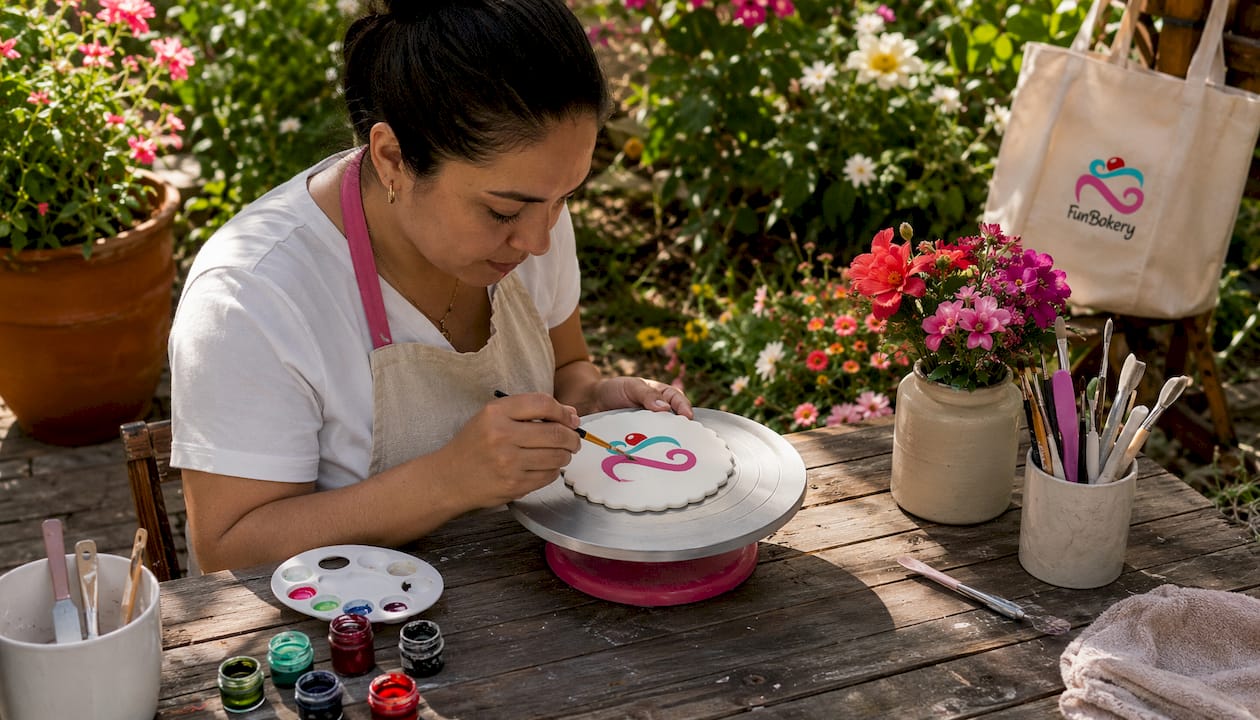
Edible custom toppers are thin sheets of wafer paper (rice paper) or sugar paper printed with safe food-grade inks, used to decorate cakes, cupcakes, and cookies without altering the flavor. The definition of custom toppers boils down to this: an edible image, made from ingredients such as potato starch, water, and vegetable oil, that sits directly on the cake frosting. Unlike cardstock or acrylic ornaments, they do not need to be removed before serving.
- Wafer paper (rice paper): a thin, slightly translucent sheet with a subtle texture.
- Sugar paper: whiter and more opaque, with more vivid colors and stronger contrast.
- Edible ink: non-toxic food coloring approved for consumption by the European Food Safety Authority (EFSA).
Edible toppers blend into the final product and are preferable when you want a decoration that can be eaten without removal, making the experience more convenient and safer for all guests.
Funbakery is a specialist supplier of this type of product, with a catalog of themed designs and a customization service using photographs, names, and text.
Table of Contents
- Wafer paper or sugar paper: what is the difference?
- How does customization and edible printing work?
- How to order custom toppers: steps and deadlines
- How to apply the topper to the cake without mistakes
- Food safety and allergens in Central Europe
- Which designs work best on custom party toppers?
- Key takeaways
- An honest perspective on edible toppers
- Order your custom toppers from Funbakery
- Useful sources and references
Wafer paper or sugar paper: what is the difference?
Both materials have the same neutral base, but they behave differently depending on the cake frosting. Custom rice paper is made from potato starch, water, and vegetable oil, giving it an almost imperceptible flavor and a thin texture that dissolves easily.
| Feature | Wafer paper (rice paper) | Sugar paper |
|---|---|---|
| Base color | Translucent/light beige | Opaque white |
| Color contrast | Moderate | High |
| Texture | Thin and brittle | Slightly thicker |
| Best frosting | Whipped cream, ganache | Fondant, buttercream |
| Flavor | Neutral | Slightly sweet |
Non-edible toppers, such as those made of coated cardstock or acrylic, have a more rigid finish and allow for three-dimensional details, but they must be removed before serving and create waste. For children's parties or events where convenience matters, the edible option eliminates this step and reduces the risk of someone accidentally ingesting a non-food material.
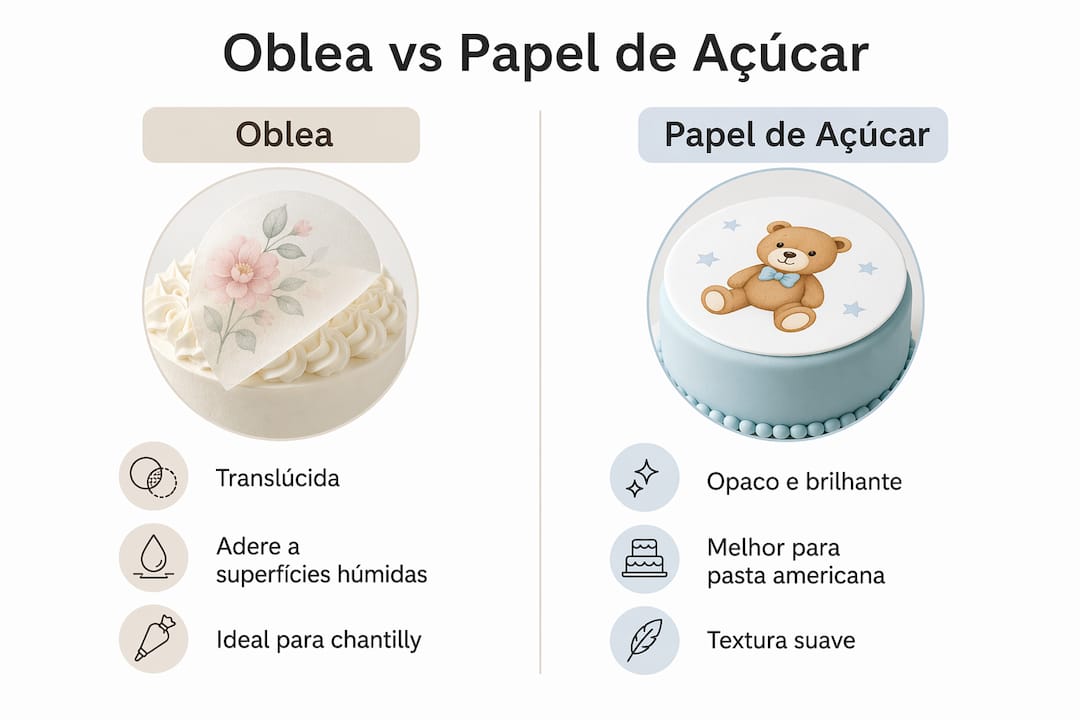
Professional tip: If the cake will have whipped cream or ganache, choose wafer paper: it adheres better to moist surfaces. For fondant, sugar paper provides more vivid colors and sharper edges.
How does customization and edible printing work?
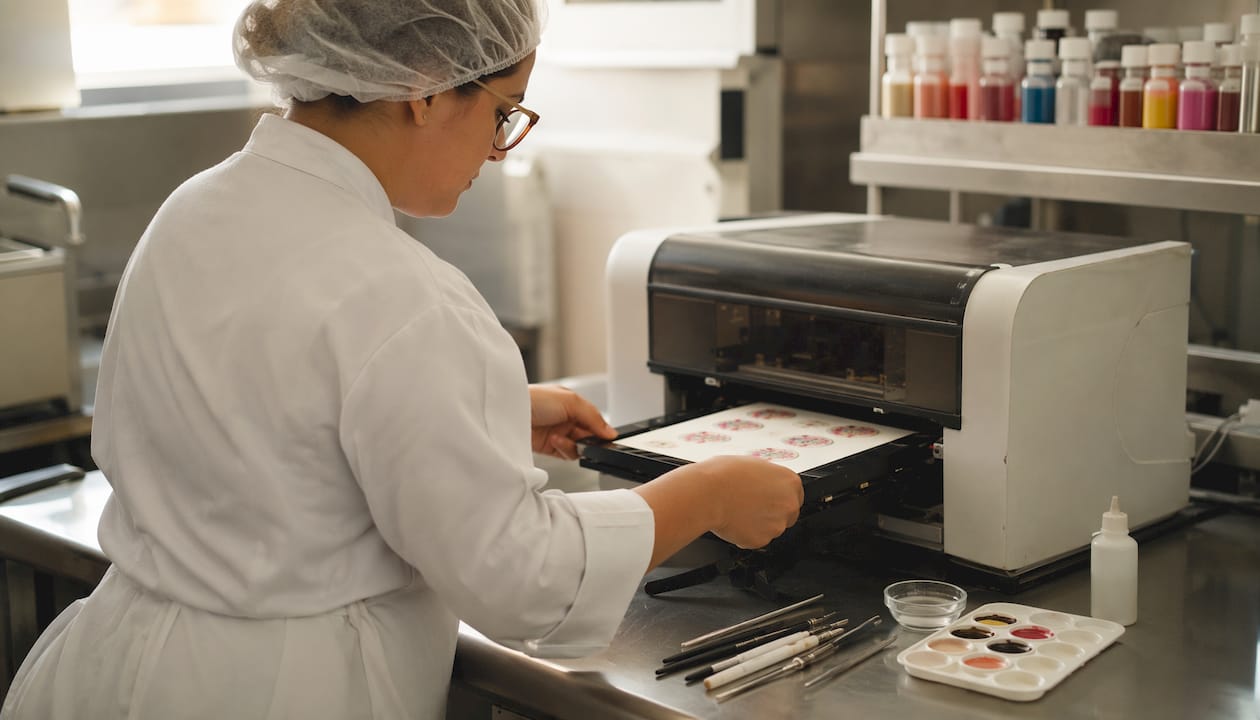
The process begins with the file you send. The food printer reads the image and deposits edible ink onto the sheet, just like an office printer, but with food coloring. The quality of the result depends directly on the resolution and contrast of the original image.
- Accepted formats: JPEG, PNG, and PDF are the most common; PNG is preferable when the image has a transparent background.
- Recommended minimum resolution: 150–300 dpi at the final print size; below this, the image will appear pixelated.
- Bleed margins: leave an extra 2–3 mm margin around the main design to prevent important elements from being cut off.
- Colors: CMYK profiles reproduce better in print; RGB images may have slight color deviations in the final result.
- Copyright: avoid using images taken from the internet without permission; send your own files or ask the supplier for an original design.
The technical process is simple: the file is sent, the printer deposits the ink onto the sheet, and the topper is ready to be packaged and shipped. There is no varnish, no lamination, and no non-edible layer.
Professional tip: For photographs, take the photo in good natural light or against a plain white background. A dark or blurry image will not improve in print; what appears in the file is what will show up on the wafer paper.
How to order custom toppers: steps and deadlines
The ordering process always follows the same logic: you choose the format and size, send the file, confirm the proof, and wait for production and delivery.
Order with enough time before the party date. For customizations with a design created from scratch, allow an extra 2 to 3 days for artwork review and approval.
The most common formats are circles (for cupcakes and round cakes), rectangles (for birthday cakes), and A4 sheets (for cutting to size or decorating larger surfaces). Prices vary depending on the format, material, and quantity, with cupcake circles tending to be the most affordable option per unit. Shipping costs in Central Europe depend on weight and destination, but most suppliers work with couriers that guarantee delivery within a few business days after production.
The packaging for transport must protect the sheet from moisture and mechanical pressure. Toppers usually arrive in sealed bags or between rigid cards to prevent creasing.
How to apply the topper to the cake without mistakes
Application is quick, but moisture is the main enemy. Follow these steps for a clean result:
- Make sure the surface of the cake is smooth and slightly moist (freshly applied whipped cream or ganache is ideal).
- Remove the topper from the packaging only at the moment of application.
- Place it from the center to the edges, pressing gently to expel air bubbles.
- For fondant, apply a thin layer of edible luster dust gel to the back of the topper before placing it; it helps it adhere and prevents wrinkles.
- After placing it, a uniform layer of luster dust gel on top intensifies the colors and protects the ink from drying out.
For whipped cream and ganache, the topper adheres on its own thanks to the moisture of the frosting. For fondant, the luster dust gel is the step that makes the difference between a professional finish and a topper with lifted edges.
Professional tip: Never apply the topper to a cake that has just come out of the refrigerator. Condensation forms quickly and causes ripples. Apply it as close to the time of serving as possible.
Food safety and allergens in Central Europe
The edible inks used in topper printing are non-toxic food colorings, assessed under the European regulation on food contact materials. The EFSA supervises these materials and establishes the safety criteria applicable throughout the European Union, including in Central European markets.
Before ordering, always check the supplier's ingredient list. Wafer paper and sugar paper may contain traces of gluten, eggs, or soy depending on the manufacturing process.
The signs of trust to look for in a supplier include: a declaration of conformity with EU food legislation, a complete list of ingredients and allergens, and documented hygiene policies. A supplier that does not make this information available is not worth your order.
For consumers with allergies or intolerances, the safest path is to contact the supplier directly before ordering and ask for the product's technical data sheet.
Which designs work best on custom party toppers?
Customization allows you to print photographs, names, ages, and specific themes, transforming simple desserts into themed pieces with a professional finish. For children's parties, character and superhero themes are the most requested; for weddings and baptisms, floral patterns and neutral palettes work best.
A topper with the birthday person's photo, name, and age is, in practice, the most requested design and the one that makes the most impact on guests, regardless of age.
Some practical design tips:
- Cupcakes: use 5–6 cm circles; keep the central design simple and with good contrast.
- Single-tier round cakes: a medium-sized circle covers well without dominating the decoration.
- Two-tier cakes or dessert tables: A4 sheets cut into strips or shapes allow you to cover more area with a single print.
- Corporate events: a logo on a white background, with minimal text, always looks good on sugar paper.
Funbakery's custom design service creates any artwork from a photograph or brief, including ideas for unforgettable parties with various themes.
Key takeaways
Custom edible toppers are the most convenient way to transform any cake into a themed piece, without altering the flavor or requiring advanced decorating skills.
| Point | Details |
|---|---|
| Right material for each frosting | Wafer paper for whipped cream and ganache; sugar paper for fondant and buttercream. |
| High-resolution file | Send a JPEG, PNG, or PDF at 150–300 dpi to ensure a sharp print. |
| Order deadline | Allow enough time before the party; extra time for custom design. |
| EU food safety | Check ingredients and allergens with the supplier before ordering. |
| Funbakery | Offers custom wafer paper and sugar paper with design service included, with delivery in Central Europe. |
An honest perspective on edible toppers
What surprises me most about this market is the gap between what people imagine is complicated and what it really is. Many people put off ordering a custom topper because they think the process requires complex technical files or design knowledge. In practice, a photograph taken with a modern smartphone, in good light, is enough to produce an impressive result.
The real differentiator is not the printing technology, which is accessible and reliable. It is the quality of the starting image and the choice of the right material for the cake frosting. These two details determine 80% of the final result. The rest is logistics.
What I also notice is that edible toppers have democratized professional decorating in a way that molded fondant never could: anyone, without pastry training, can get a cake with a display-case finish. This has real value, especially for parents who organize parties at home and want a result worthy of the occasion without hiring a pastry chef.
Order your custom toppers from Funbakery
Funbakery transforms any photograph, name, or theme into an edible topper ready to sit on the cake, without you needing to know design or have special equipment.
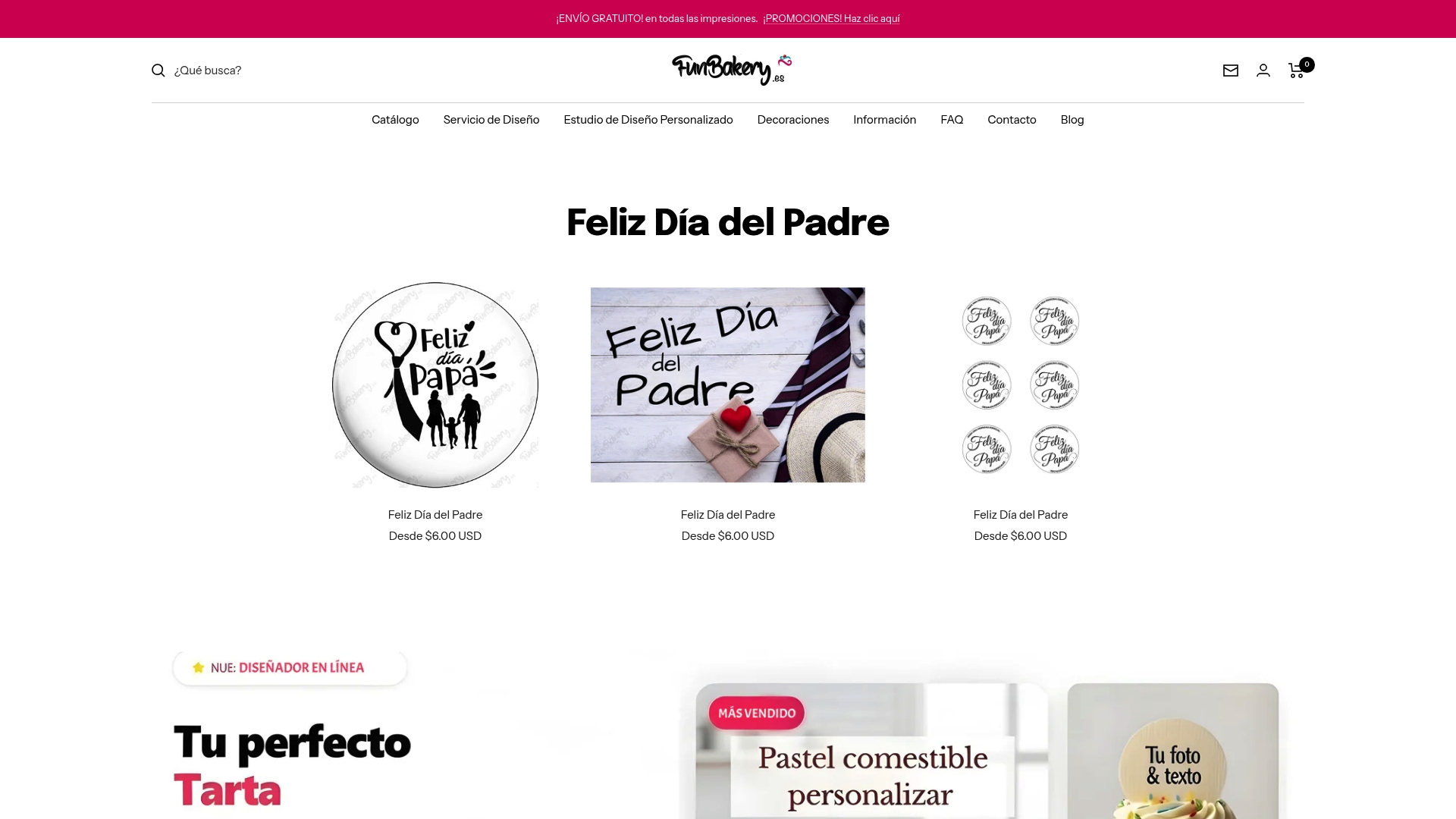
The process is straightforward: you choose the format (circle, rectangle, or A4 sheet), upload the file or ask the team for a custom design, and receive the topper packaged and ready to use. The catalog includes themes such as custom Minecraft, Stumble Guys with photo and name, and dozens of other themed designs for all ages. Order at least 5 days in advance and confirm the allergens before submitting the order.
Useful sources and references
For those who want to confirm safety standards or delve deeper into the topic:
| Resource | What you will find |
|---|---|
| EFSA — Food contact materials | European regulation on the safety of materials and edible inks |
| Wafer topper guide — Adore Decor Sprinkles | Practical design, application, and troubleshooting tips |
| Use of photographs on cakes — Funbakery blog | Complete guide on resolution, size, and image preparation |
- For clarification on allergens, contact the supplier directly before ordering and ask for the product's technical data sheet.
- The Funbakery blog regularly publishes cake decorating trends and practical guides for parties.
- For questions about food standards in Central Europe, consult your country's food safety authority or the EFSA portal.