To store edible wafers, keep them in their original airtight container in a cool, dry place away from direct light. Never put them in the refrigerator or freezer: condensation will ruin them. If they are open, transfer them to a resealable bag, ideally with a desiccant packet inside. When stored properly, they can last several months or even close to a year, depending on the type of paper.
In summary:
- Storing wafers in their original airtight container and away from moisture prevents them from becoming sticky or brittle.
- The ideal storage temperature is between 15 and 22 degrees, in a closed cabinet protected from direct light and temperature fluctuations.
- They should not be stored in the refrigerator or freezer, as condensation will ruin them and alter their texture and color.
- An open wafer can be kept in acceptable condition for several weeks if repackaged in resealable bags with desiccant and stored in a cool, dark place.
- Handling in the 48 hours before the event, mainly during transport and placement, largely determines its final condition, not prior storage.
Table of contents
- Ideal conditions for storing edible wafers
- How to store already opened wafers and prepare them for use
- What to do if the wafer is sticky, brittle, or discolored
- Transporting wafers and decorated cakes without breakage
- Food safety and limits of use for edible wafers
- Funbakery's experience with packaging and storage
- What most guides don't tell you about storing wafers
- How Funbakery helps your wafer arrive perfect
- Sources
- Frequently asked questions
Ideal conditions for storing edible wafers
Sugar paper and wafer paper share the same three enemies: moisture, air, and light. Any of the three is enough to ruin a sheet that cost money and design time. An overly humid environment makes it sticky and deformed; an overly dry one leaves it brittle; direct light fades the printed colors in weeks.
Normal room temperature in a kitchen or pantry, between 15 and 22 degrees approximately, works well as long as the place is dry. A closed cabinet, away from the oven, dishwasher, or a sunny window, is better than any open shelf.
Keeping wafers in their original, airtight container and protected from light prevents them from breaking due to excessive dryness or becoming sticky due to excess moisture, as explained by The Cookie Show. The protective plastic that comes with them is not a packaging whim: it is the first barrier against air.
To protect an unopened sheet, it is advisable to:
- Leave it inside its original sleeve or bag until the day of use.
- Store it horizontally, without heavy objects on top that bend it.
- Place it in a drawer or closed cabinet, not in an area with temperature fluctuations.
- Check the best-before date printed on the package before buying more than necessary.
Professional tip: If you buy several wafers for different events, write down the best-before date of each one on a separate piece of paper. The package is usually stored in a drawer where the printed date remains hidden and you end up using the one that arrived later first.
The best-before date is not an automatic expiration alarm, but an indication of optimal quality: past that point, the wafer may lose color sharpness or flexibility, although it may still be usable if it has been stored properly.
How to store already opened wafers and prepare them for use
Opening the container does not mean the clock suddenly speeds up, but it does mean you need new defenses against air. These are the steps that make the difference:
- Take out only the amount of wafer you will use that day; put the rest back in its original sleeve.
- Place the remaining sheet in a resealable bag (like a Ziploc), pressing to remove the air before closing it.
- Add a sheet of parchment paper between layers if you store several pieces together, so they do not stick to each other.
- Put a desiccant packet inside the bag if you live in a humid area or if you are going to store it for more than a few weeks.
- Store the bag in the same cool and dark cabinet where you had the original container.
Keeping the original plastic sleeve or transferring the wafer to a Ziploc bag, protected from light and moisture, significantly extends its shelf life, according to the blog of María Lunarillos. Combining that bag with a desiccant packet increases the chances that the wafer arrives in good condition on the day of the event, just as that same guide points out.
Once opened and properly repackaged, a wafer usually lasts several more weeks in acceptable conditions, although it is ideal to use it as soon as possible.
To mold the wafer before applying it, never use direct water: humidify the environment with a gentle spray or bring it close to the steam of a pot for a few seconds, without letting the printed surface get wet.

What to do if the wafer is sticky, brittle, or discolored
The three most common problems have concrete causes and, almost always, can be traced back to a storage failure.
A sticky wafer has usually absorbed ambient moisture, due to a poorly closed bag or by being stored near the refrigerator, the sink, or an area with kitchen steam. A brittle wafer, on the other hand, indicates just the opposite: too much dryness or prolonged exposure to a heat source, such as a radiator or direct sunlight through a window. Faded colors are almost always due to light, not moisture.
Some solutions that work, and others that do not:
- If it is slightly sticky, leave it to air out in a dry environment for a while before handling it; sometimes it regains some firmness.
- If it is very brittle and breaks upon touch, it is difficult to save; consider reprinting the design.
- Never try to recover a wafer by putting it in the refrigerator to “cool it down”: it worsens the condensation.
- To stick it to the fondant or the cake, very lightly moisten the contact surface (never the printed side) with a little water or syrup.
Letting the pieces dry completely before storing them and using individual nests in cardboard boxes prevents deformations when working in advance, according to the GASDA guide on fondant cake decoration.
Transporting wafers and decorated cakes without breakage
A perfect wafer can be ruined in the last twenty minutes, during the car ride to the party. Prevention here is as important as storage at home.
- Transport loose wafers in their original airtight bag, inside a rigid and flat box, never loose in a handbag.
- Use cake boxes with a firm base and, if possible, a non-slip support to prevent the cake from moving with the curves.
- Place the box on the car floor, not on the seat or in the trunk, to minimize vibrations and temperature fluctuations.
- If you can, add the wafer to the cake already at the event venue instead of hours before: it reduces the exposure time to bumps and ambient moisture.
- Protect the edges with parchment paper or plastic wrap if the piece has reliefs or thin parts that stick out.
Using padded boxes and individual compartments for dry pieces reduces breakage during transport and prolonged storage, points out the same GASDA guide.
Food safety and limits of use for edible wafers
Edible wafers are not suitable for iced cakes or for putting them in the freezer: extreme cold creates condensation that ruins both the texture and the printed color, confirms The Cookie Show. It is also not advisable to apply them over fresh whipped cream or very moist surfaces, because they dissolve or peel off in minutes.
Before using any sheet, it is advisable to check the manufacturer's label:
- Best-before date and recommended storage conditions.
- Possible allergens, especially if the paper contains traces of gluten or dairy derivatives depending on the type of printing.
- Specific instructions if the material is wafer paper instead of sugar paper, since its best-before date is usually shorter, around five months, as detailed by Postreadicción.
If you have any doubt about whether the wafer has been exposed to moisture, heat, or unhygienic handling, the safest thing is to discard it and reprint the design rather than risking serving it at a celebration.
Funbakery's experience with packaging and storage
At Empaquetamos, we package every order of wafer paper and sugar paper in airtight sleeves designed to protect the contents during shipping. That same logic of resistant packaging is what we transfer to our storage recommendations at home.
The repeated observation in orders and customer inquiries is simple: the wafers that age the worst are those stored near heat sources or in damp drawers, not those that have been bought longer. A well-plasticized design and stored in its original sleeve, in a normal cabinet, usually stays presentable for months.
To facilitate assembly on the day of the event, we recommend ordering the design already adjusted to the exact size of the cake or cupcakes, avoiding last-minute cuts that weaken the edges of the sheet.
What most guides don't tell you about storing wafers
The storage of edible wafers is almost always treated as a chemistry problem: moisture, temperature, point. And it is true, but it falls short. The real failure I see repeated is not storage but planning: buying the wafer weeks in advance “so as not to leave everything for the last day” and then forgetting it in the wrong drawer.
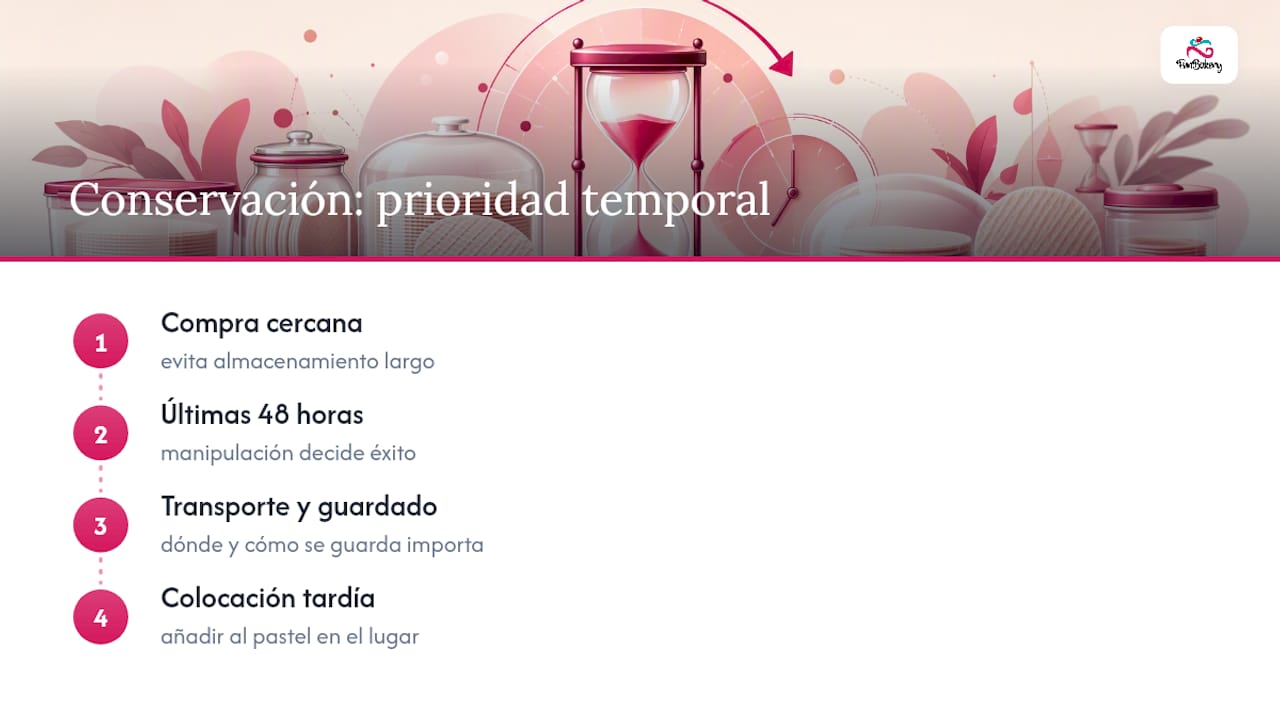
Long-term storage matters less than people think if you buy close to the event date. What really decides if a wafer arrives intact is the handling in the last 48 hours: where it is stored, how it is transported, and at what moment it is placed on the cake. That is where most pieces are lost, not in the month it spent in the cabinet.
If I had to prioritize a single tip from all those mentioned, it would be this: add the wafer to the cake as late as possible, ideally at the celebration venue itself. Everything else (airtight bags, desiccants, padded boxes) reduces risks, but that single habit eliminates most last-minute accidents.
— David
How Funbakery helps your wafer arrive perfect
Funbakery solves the problem at the root: instead of depending only on how you store the wafer at home, it offers you a product designed from the start to arrive in good condition and fit without last-minute cuts.

Our catalog includes wafer paper and sugar paper in multiple designs, plus a custom design service to adapt any image, photo, or text to the exact shape of your cake or cupcakes. Ordering the rectangular, disc, or cupcake design service from 6 € eliminates the need to cut the sheet at home, one of the moments where edges break the most. If you are looking for something more specific, the custom design studio allows you to adjust size, shape, and details before printing. All orders arrive in packaging designed to protect the wafer during shipping. If your next celebration already has a date, enter Funbakery and choose the design you need.
Sources
- Sugar paper | The Cookie Show
- How to decorate a cake and cookies with edible paper - María Lunarillos recipe blog
Frequently asked questions
Can edible wafers be stored in the refrigerator?
No. The condensation that forms when cooling them and then taking them out to room temperature ruins the texture and printed colors.
How long do edible wafers last when stored properly?
Stored in their original container or in an airtight bag, in a cool and dry place, they can last a considerable time, although wafer paper usually has a shorter best-before date.
How do I fix a wafer that has become sticky?
Leave it to air out in a dry environment before handling it; if the stickiness is mild, it usually regains some firmness, although if it is very damaged, the safest thing is to reprint the design.
Can I use edible wafers on iced cakes?
It is not recommended: extreme cold and associated condensation break down the texture and fade the print.
Where to buy wafer paper or sugar paper with a custom design?
At Funbakery you can order wafer paper and sugar paper with catalog designs or ask for a custom design with a photo, name, or text.