In summary:
- Creating edible decorations involves using quality materials and precise techniques. While some require advance preparation and careful application, others, such as edible prints, complement the cake decoration. Food safety is essential and must be ensured by choosing organic ingredients and proper hygiene.
Creating edible decorations is the art of transforming food ingredients into visual elements that embellish cakes, desserts, and party dishes. The technique ranges from fondant flowers and sugar ornaments to rice paper prints and chocolates painted with food coloring. Those who master these methods can personalize any celebration with an artisanal touch that no plastic decoration can replace. Funbakery, specializing in edible wafers and personalized sugar paper, is one of the current references for those who want to elevate the result without starting from scratch.
How to create edible decorations: essential materials and ingredients
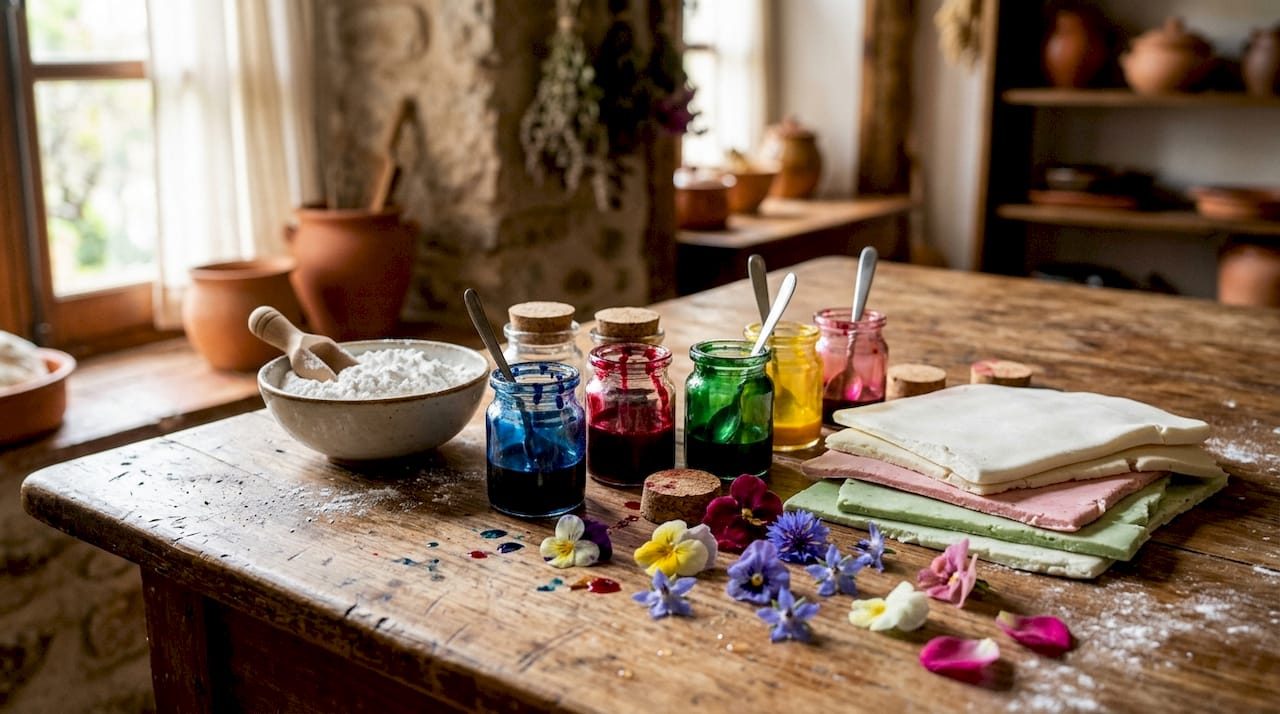
The quality of the materials defines the final result. Without the right ingredients, even the most refined technique produces fragile or colorless decorations.
The basic ingredients and tools to get started are:
- Gum paste and fondant: gum paste is the choice for detailed flowers and figures; fondant covers entire cakes with a smooth finish.
- Icing sugar: the base of almost all modeling pastes; ensures a fine and malleable texture.
- CMC (carboxymethyl cellulose): the agent that gives elasticity and firmness to the paste; without it, the pieces break when they dry.
- Gel or powder food coloring: produces vibrant colors in chocolates and pastes without altering the consistency.
- Organic edible flowers: violets, roses, lavender, daisies, and calendula are the most used; they should always be of organic origin.
- Sprinkles and gummy candies: quick and economical decorations, ideal for children's parties.
- Tools: piping bags, various tips, silicone brushes, silicone molds, and stainless steel cutters.
The versatility of food coloring allows techniques such as marbling and detailed painting, transforming simple ingredients into artistic pieces. Investing in quality coloring is the decision that has the greatest impact on the visual result.
Professional tip: Keep gel coloring away from direct light and with the lid tightly closed. Exposure to air dries out the product and weakens the pigmentation.
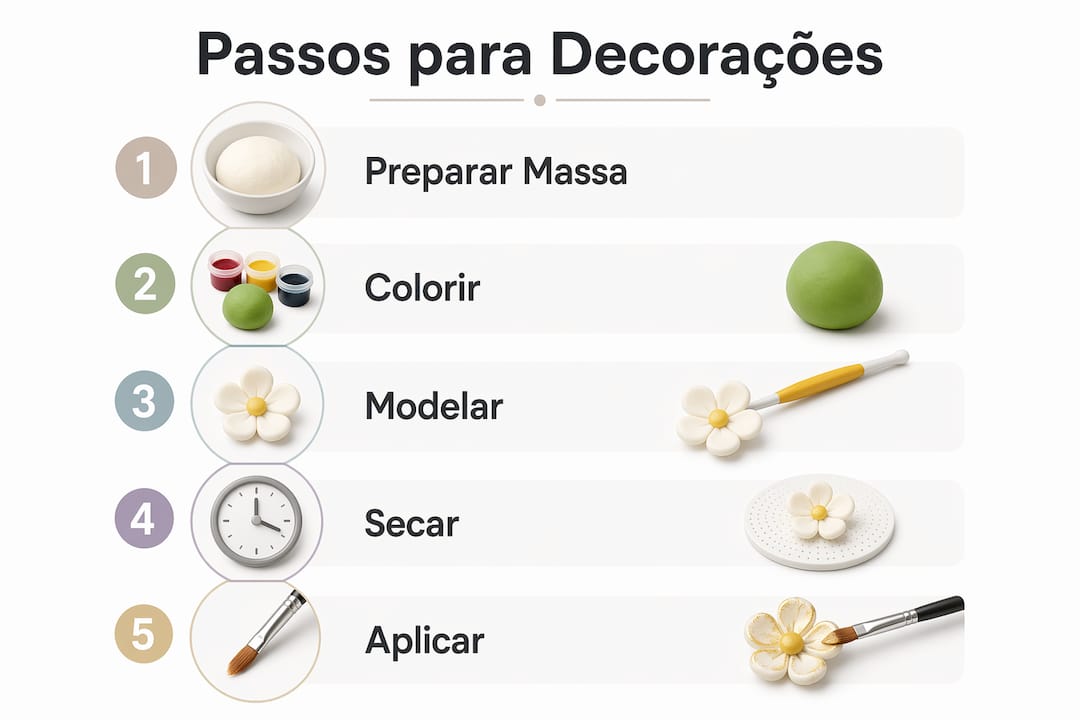
How to prepare pastes for detailed modeling?
The correct preparation of the paste is the step that most beginners ignore. A poorly prepared paste cracks, loses shape, or does not dry in time for the event.
- Base mixture: combine 1 kg of icing sugar with 20 g of CMC to obtain an elastic paste suitable for fine flowers and figures. This ratio is the recommended starting point for temperate climates.
- Adjustment for humid climates: on very humid days, reduce the amount of CMC to about 11 g per kilo of sugar. Too much CMC in a humid environment makes the paste too hard before you can mold it.
- Mandatory resting: gum paste needs 24 hours of resting in the refrigerator to reach the ideal consistency. Do not skip this step; the difference in malleability is immediate.
- Almond paste: unlike gum paste, almond paste only needs 20–30 minutes of hydration before being worked. It is denser and suitable for solid figures and traditional Portuguese-style decorations.
- Modeling: always work with hands lightly oiled with vegetable fat to prevent the paste from sticking. For flowers, use thin cutters and a modeling sponge to curve the petals.
- Applying delicate details: for decorations with sugar flowers or very fine elements, use tweezers and a dry brush to control the direction without crushing the fibers.
The resting and refrigeration time is the factor that most determines the quality of the final texture. A well-rested paste models easily and dries without cracking.
Professional tip: Wrap the paste in plastic wrap before placing it in the refrigerator. Contact with air forms a crust that makes subsequent modeling difficult.
What are the techniques for applying coloring and creating vibrant effects?
Food coloring is the most versatile tool in edible decoration. Used correctly, it creates everything from soft gradients to paintings with illustration detail.
The most effective techniques are:
- Paste dyeing: add gel coloring directly to the paste and knead until the color is uniform. Start with a small amount; it is easier to darken than to lighten.
- Edible painting: mix gel coloring with grain alcohol and apply with a fine brush over dry icing or fondant. The alcohol evaporates quickly and does not leave moisture on the surface.
- Homemade colored sugar: mix granulated sugar with a drop of gel coloring in a bowl and stir until the color is distributed. Store in an airtight jar for up to 3 months.
- Marbling: fold two pastes of different colors without mixing them completely. The marbled effect appears when rolling out the paste with the rolling pin.
| Technique | Material needed | Best application |
|---|---|---|
| Paste dyeing | Gel coloring | Flowers, figures, toppings |
| Edible painting | Gel coloring + grain alcohol | Details on dry icing |
| Colored sugar | Gel coloring + granulated sugar | Cake and cupcake toppings |
| Marbling | Two pastes of different colors | Decorative effects in fondant |
The combination of colors follows the same rules as the color wheel. For children's parties, saturated primary colors work best; for weddings and adult birthdays, pastel tones create a more elegant result.
How to ensure food safety in edible decorations?
Food safety is not optional. A beautiful decoration containing unsuitable ingredients can cause allergies or poisoning.
"All flowers used in edible decorations must be of organic origin, free of pesticides, and thoroughly cleaned before any contact with food. Violets, roses, lavender, daisies, and calendula are safe examples, but only when grown without chemical treatments."
Edible flowers bring aesthetic and gustatory value, but require care in selection. Rose and calendula petals have antioxidant properties and a pleasant flavor, which makes them a choice with a dual function. Never use conventional florist flowers; these are treated with chemicals not approved for consumption.
To preserve the decorations before the event, store the gum paste pieces in a cool, dry place, away from moisture. Fresh flowers should be applied only at the time of serving. Sprinkles and gummy candies remain stable at room temperature for several days, as long as they do not come into contact with moisture.
Professional tip: Always check the labels of the coloring and sprinkles to identify allergens such as gluten, lactose, or tree nuts. Inform the guests about the ingredients used in the decorations.
The importance of edible decorations at parties goes beyond aesthetics. A safe and well-executed decoration conveys care and professionalism, two factors that guests recognize even without knowing how to identify the technique.
What are the practical ideas for decorating different types of parties?
The choice of decoration should match the theme and the audience of the party. What works at a children's birthday is different from what works at an adult party.
- Children's parties with gummy candies: separate the candies by color and create geometric patterns on the frosting. A 150 g portion of candies easily covers a standard cake and the result is immediate, without the need for advanced technique.
- Chocolates with edible flowers: apply violet or calendula petals on tempered chocolate before it solidifies. The effect is elegant and the flavor complements dark or milk chocolate.
- Decorated cookies for Christmas: controlling the butter temperature and avoiding overmixing are the two factors that ensure perfectly shaped cookies after baking. Decorate with colored royal icing and gel coloring.
- Edible sculptures in gum paste: create animal figures, characters, or themed objects to place on the cake. Gum paste dries firm and supports the weight of pieces up to 10 cm tall.
- Funbakery edible prints: for those who want a result with graphic quality, Funbakery's personalized wafers allow you to place any image, photograph, or name directly on the cake. The application is simple and the visual impact is immediate.
For a complete view of the decoration process from start to finish, the step-by-step decoration guide by Funbakery organizes each step clearly. Combining manual techniques with edible prints is the approach that produces the most consistent results, especially for those who are still learning.
Main conclusions
Creating quality edible decorations requires the correct materials, rigorous preparation techniques, and constant attention to food safety.
| Point | Details |
|---|---|
| Gum paste ratio | Use 1 kg of icing sugar to 20 g of CMC as a starting point. |
| Mandatory resting | Gum paste needs 24 hours in the refrigerator for the ideal texture. |
| Safety with flowers | Use only organic flowers, cleaned and identified as edible. |
| Gel coloring | They are the most effective for intense colors in pastes and chocolates. |
| Edible prints | Funbakery wafers simplify personalization with a professional result. |
What I learned about working with edible decorations
When I started exploring edible decorations, I made the mistake that almost everyone makes: I ignored the paste resting time. I thought it was a minor detail. It is not. A paste that has not rested breaks when folded, cracks when drying, and loses shape when transported. I learned this in the most frustrating way possible, the day before a party.
What no one clearly says is that edible decoration has two completely different paces. The preparation of the pastes and structural pieces requires one to two days in advance. The final assembly and fresh elements, such as edible flowers, are done on the day itself. Those who try to do everything on the same day always compromise something.
Another point that changed my approach was realizing that edible prints are not an "easy" alternative for those who do not know how to model. They are a complementary technique. A cake with a personalized Funbakery wafer and gum paste flowers around it has more impact than either of the two techniques used in isolation. The combination is what creates visual depth.
For those who are starting, the most honest advice is this: master one technique before trying to combine several. Learn to make a decent fondant flower. Then learn to paint with coloring and alcohol. Then combine. The rush to do everything at the same time is the biggest obstacle to real progress.
— David
Personalized decorations with Funbakery
Funbakery produces personalized edible wafers and sugar paper for cakes, cupcakes, and cookies, with a range of designs that includes superheroes, children's characters, sports themes, and special celebrations.
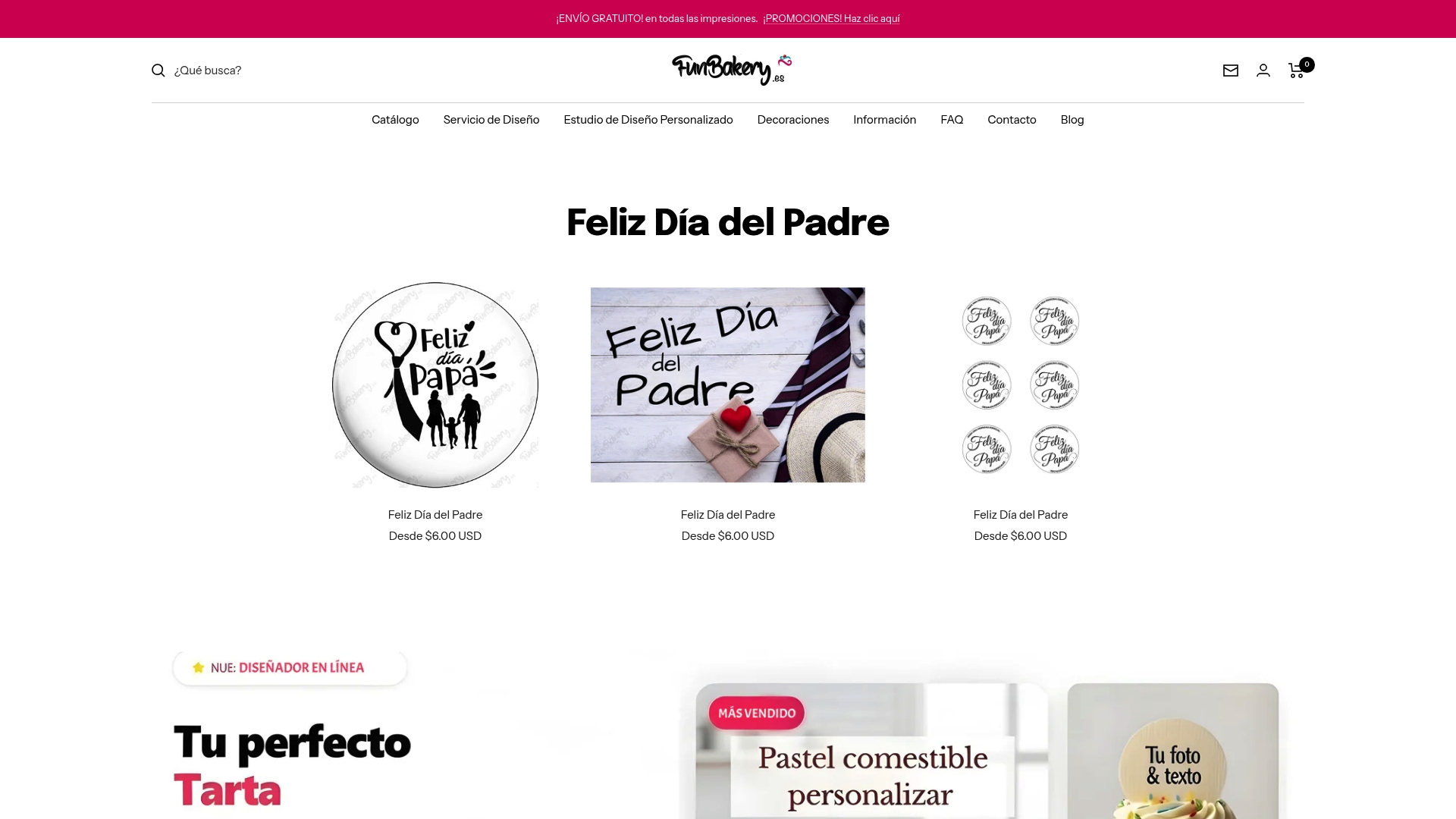
For those who want to personalize a party with the birthday person's photo, name, and age, Funbakery has a custom design service with graphic quality finish. The personalized wafers for cakes are applied directly over frosting or fondant in less than a minute. To explore the full range of decorations for cakes and cupcakes, visit the Funbakery online store and find the right design for the next celebration.
Frequently asked questions
What is the correct ratio of CMC for gum paste?
The base ratio is 1 kg of icing sugar to 20 g of CMC. In humid climates, reduce to about 11 g to prevent the paste from hardening too quickly.
How long does gum paste need to rest?
Gum paste needs 24 hours of resting in the refrigerator. Almond paste only needs 20–30 minutes of hydration before being worked.
What flowers are safe to use in edible decorations?
Violets, roses, lavender, daisies, and calendula are safe edible flowers. They should always be of organic origin, free of pesticides, and cleaned before any contact with food.
How is edible painting done on icing?
Mix food coloring in gel with grain alcohol and apply with a fine brush over completely dry icing. The alcohol evaporates quickly and does not leave moisture on the decorated surface.
How to use Funbakery edible wafers on a cake?
Apply the wafer directly over a layer of frosting or slightly moist fondant. The surface adheres in seconds and the result has professional graphic print quality.