Sealed edible wafers usually last several months from the date of manufacture, and some highly dehydrated varieties last a little longer. The practical difference lies in the material: rice wafer is porous and absorbs moisture quickly, while sugar paper resists softening slightly better. In both cases, the sealed packaging determines the actual expiration; once opened, the clock ticks much faster.
In summary:
- Shelf life in sealed packaging varies between six and twelve months, depending on thickness, residual moisture, and the type of wafer material.
- Ambient relative humidity is the main factor that shortens shelf life, especially in areas with steam or high temperatures.
- It is recommended to keep the wafer in its original packaging and avoid storing it in damp, hot, or sun-exposed places to ensure proper preservation.
- The best-before date indicates when the wafer maintains its visual quality and flexibility, but it generally remains suitable after that date if properly stored.
- It is not advisable to store the wafer in the refrigerator unless the manufacturer states otherwise, as condensation can damage it.
Table of contents
- Expiration of edible wafers by material type
- What shortens or extends the shelf life of a wafer
- How to store edible wafers step by step
- Common mistakes when handling and storing wafers
- What we have learned packaging thousands of wafers
- Order your custom wafer designed to last
- Sources
- Frequently asked questions
Expiration of edible wafers by material type
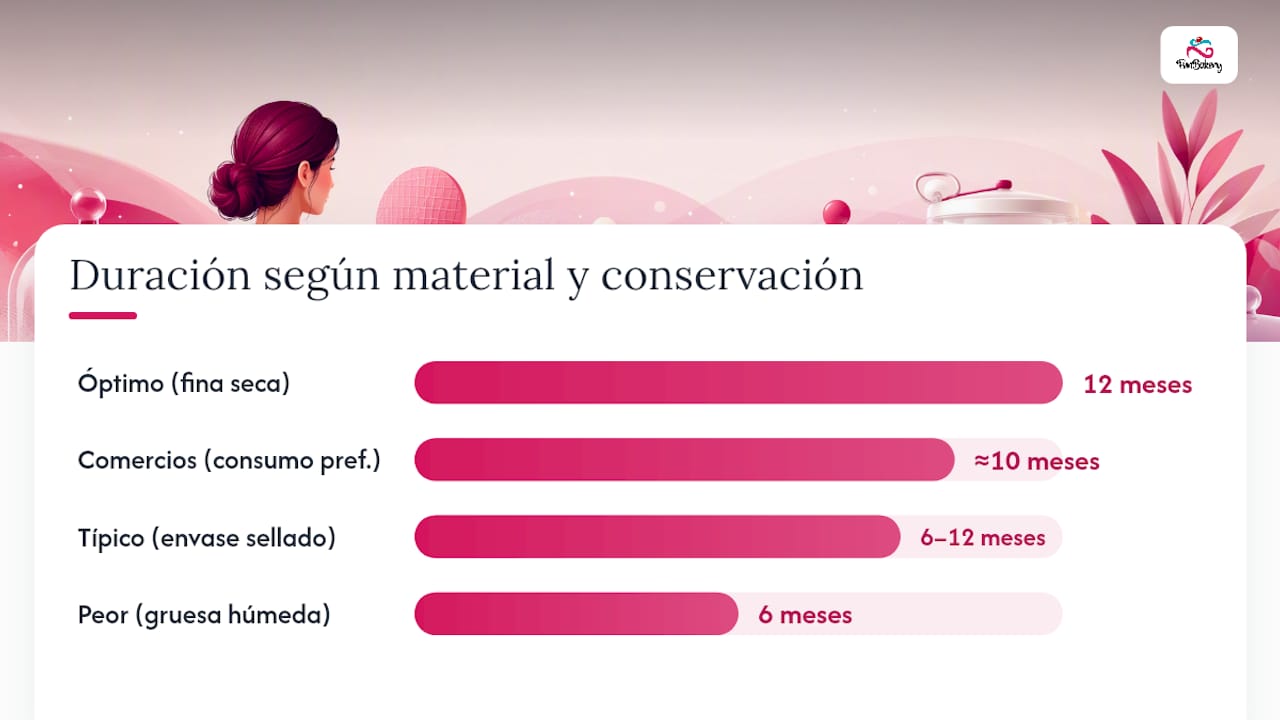
The ranges you will find in most stores and product sheets are between 6 and 12 months in sealed packaging, with some retailers setting the best-before date around 10 months. It is not an arbitrary figure: it depends on the thickness of the sheet, the residual moisture after drying, and how the package is sealed. A very thin and well-dehydrated wafer can last at the upper limit of that range; a thicker sheet or one with higher factory moisture tends to shorten it.
Composition also matters. Technical studies on starch-based edible paper show that the type of starch used (potato, tapioca, or rice) changes the porosity and, with it, the speed at which the material absorbs ambient moisture. That porosity explains why two seemingly identical products expire within different timeframes.
It is useful to distinguish two labels that are easily confused:
- Best-before date: indicates until when the manufacturer guarantees color, flexibility, and good peeling from the backing paper. After that date, the wafer is usually still suitable, but loses visual quality.
- Expiration date: it is rarely used for this product because it is not a perishable food in the strict sense, unless moisture has compromised the sheet prematurely.
In practice, a wafer past its best-before date but properly stored is usually usable, although with less shine and greater stiffness than a freshly printed one.
What shortens or extends the shelf life of a wafer
Ambient relative humidity is by far the most significant factor. A rice wafer exposed to moist air becomes chewy in a matter of hours, because its porous structure absorbs water from the environment almost like a sponge. Sugar paper, being less porous, takes a little longer to show signs, but it is not immune either.
- Relative humidity: storing the wafer in a kitchen with constant steam (near the dishwasher or a boiling pot) reduces its shelf life from months to days.
- Temperature and light: heat and direct light degrade the edible ink, dull the colors, and can dry out the edge of the sheet until it becomes brittle.
- Packaging: a well-sealed protective film, with or without a desiccant packet, delays the absorption of ambient moisture much more than a poorly closed bag.
- Contact with greasy or moist toppings: whipped cream, ganache, or very soft buttercream dissolve the edge of the wafer if it is placed too early or left to rest too long before serving.
None of these factors act alone. A well-printed and well-sealed wafer, stored in a dry cabinet, perfectly withstands the months indicated on the label. The same wafer forgotten near a sunny window can lose quality in weeks.
How to store edible wafers step by step
Upon receiving the order, the first thing is to check two things: that the packaging arrived intact and that the best-before date indicated on the label or in the order documentation is consistent with the use you intend to give it. If the container shows wrinkles from moisture or stains, it is better to inspect the sheet before storing it.
For short-term use (less than a month), it is enough to leave the wafer in its original container, in a kitchen drawer or cabinet away from heat sources and direct sunlight. Nothing else is needed.
For longer storage, these steps make the difference:
- Keep the sheet in its original plastic sleeve until the moment of use.
- If you open the package and are not going to use the entire wafer, wrap it again in cling film, removing as much air as possible.
- Add a desiccant packet if you live in a humid area or store the wafer in summer without air conditioning.
- Avoid the refrigerator unless the manufacturer expressly indicates it: condensation when taking it out of the cold can be worse than ambient humidity.
- Do not store it near the oven, dishwasher, or any source of steam, even occasionally.
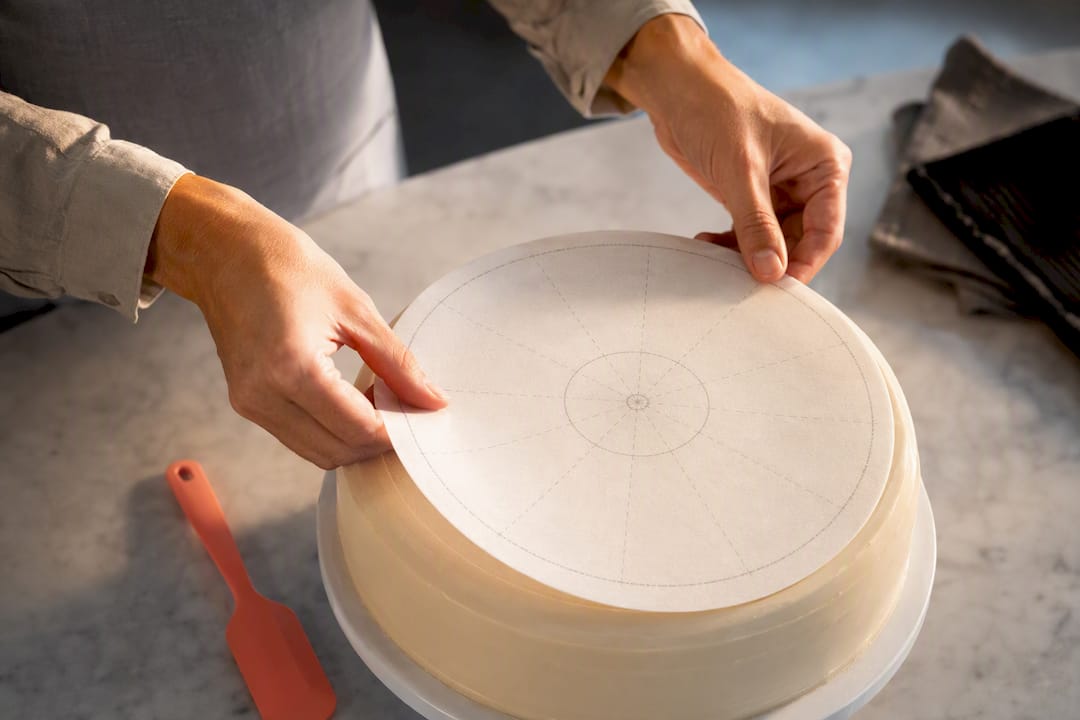
When applying it to the cake, the order matters as much as the material. Place the wafer as late as possible in the assembly process, use a thin layer of edible glue or shiny gelatin (never an excess that soaks the paper), and avoid leaving it resting on moist whipped cream or ganache longer than necessary for it to adhere.
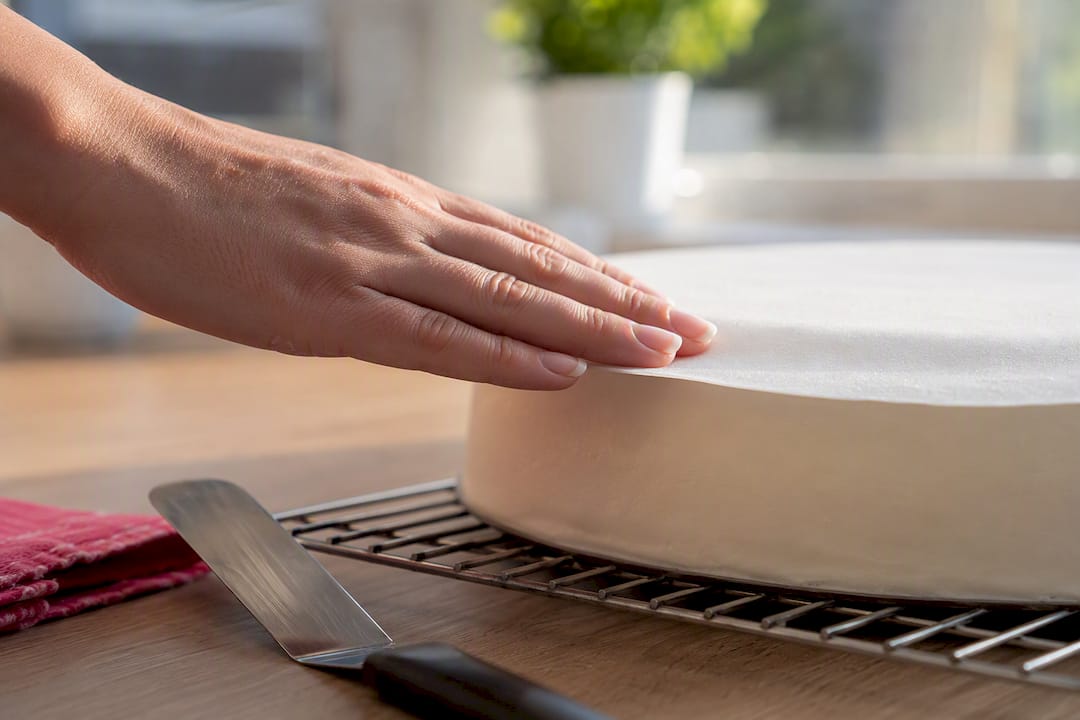
Professional tip: apply the wafer over the already cold and firm surface of the cake, never over freshly made or still hot frosting: residual steam is one of the most frequent causes of the paper wrinkling in the first few minutes.
Common mistakes when handling and storing wafers
The most common failure is leaving the sheet out of its sleeve «so the air can dry it», when in reality the exact opposite happens: the paper absorbs ambient moisture without protection. If it has already become chewy, it can sometimes be rescued by letting it dry at room temperature, away from direct heat, although it will lose some flexibility and will no longer work for decorations that require folding it.
- If two sheets stick together inside the container, a brief trip to the freezer or refrigerator can make it easier for them to separate without breaking, by slightly contracting the materials.
- Dark or translucent stains on sugar paper are usually due to contact with greasy fingers or damp surfaces during handling.
- A wafer that has become brittle, with mold spots or a strange smell, must be discarded without exception: they are signs that moisture has already altered the product inside. For more specific cases, it is advisable to review the common mistakes when using edible paper before decorating an important cake.
What we have learned packaging thousands of wafers
Each wafer is packaged with individual protective film and the best-before date visible on the package, precisely because most complaints do not come from a defective product, but from careless storage after delivery. The difference between a perfect wafer and a wrinkled one is almost never in the order: it is in the days that follow, in whether it was stored near a window or the stove.
There are also our own guides on what edible paper is and its nutritional values, because many customers ask both about the expiration date and why these sheets actually carry them. When ordering a custom design, clear storage instructions are received with the product, without the need to search on your own how to store it.
— David
Order your custom wafer designed to last
If you are going to order an edible image for a cake, the material you choose determines how long it will last before the event. Sugar paper reproduces colors and photographs better; the thicker rice wafer resists volume decorations or those that need some stiffness better.
[IMAGE:cta_image]
Each image is designed to order, with photos, names, and ages, and is sent with sealed packaging and a clear best-before indication so that it arrives in the same conditions it left production. You can choose between custom wafers with photos for cakes and desserts according to the format of your cake, or review examples like this custom wafer with photo, name, and age to get an idea of the finish. Order your design with a margin of a few days before the event: this way the product arrives with plenty of time within its optimal storage window.
Sources
To expand on the technical data about composition and porosity, research on starch-based edible paper and sugar paper comparisons offer good context. For composition and food suitability, it is advisable to review product sheets like that of A4 food wafer paper.
- Work on starch-based edible paper (UTPL)
Frequently asked questions
How long does an edible sheet last on an already assembled cake?
Once placed on the cake, the wafer stays in good condition if the cake is kept fresh and without excess ambient moisture; after a certain time, contact with the frosting usually softens the edge.
How healthy is it to eat edible wafers?
Wafers are usually made of potato, corn, or rice starch, water, and food colorings suitable for consumption, and some product sheets certify them as gluten-free or vegan depending on their exact composition; it is always advisable to check the label if there are allergies or intolerances.
How do I know if a wafer is expired or in bad condition?
Look at the texture: if it is brittle, sticky, with dark spots, or smells strange, it is no longer suitable, even if it has not exceeded the best-before date printed on the packaging.
Can a wafer be stored in the refrigerator to extend its shelf life?
It is not recommended unless the manufacturer states it, because condensation when taking it out of the cold usually generates more moisture on the sheet than leaving it at room temperature in a dry place.
Why does my rice wafer soften faster than a sugar paper one?
Because its structure is more porous and absorbs ambient moisture more easily, while the more compact sugar paper takes a little longer to be affected by the same environment.